
A chatbot drafts an email. An image generator creates a campaign visual in seconds. A coding assistant fixes a bug before a developer finishes describing it. For the past few years, these moments have fed a growing sense that artificial intelligence is no longer a narrow tool tucked inside search bars and recommendation engines. It has become visible, public, and oddly theatrical.
That shift helps explain why one question has moved from research labs into mainstream conversation: What Is AGI?
The term carries a certain electricity. It suggests not just better software, but a machine intelligence that could match — or even exceed — human flexibility across a wide range of tasks. For some, that prospect sounds like the next great technological leap. For others, it sounds like a branding exercise inflated by hype. Both reactions are understandable. AGI sits at the intersection of science, ambition, philosophy, and market narrative, which is exactly why it has become such a powerful idea.
What Is AGI? A Clearer Definition Than the Hype Usually Allows
The simplest answer to What Is AGI? is this: AGI stands for Artificial General Intelligence, a form of AI that can perform many different intellectual tasks at a human-like level rather than excelling at only one narrow function.

Most AI systems today are powerful but specialized. They can translate languages, generate text, classify images, predict protein structures, or recommend products, but they do not possess broad, transferable understanding in the way humans do. A person who learns to drive, write, negotiate, and adapt to a new job is using general intelligence. A machine that could move across those domains with similar flexibility would be much closer to AGI.
That distinction matters. Much of today’s AI is impressive because it feels general to the user, yet under the hood it remains limited in crucial ways. It predicts, imitates, and optimizes within patterns. It does not reliably understand the world as humans do, nor does it possess common sense in a robust and consistent form.
AGI, then, is not just a stronger chatbot. It is the idea of an artificial system that can reason, learn, adapt, and solve unfamiliar problems across domains without needing to be rebuilt for each one.
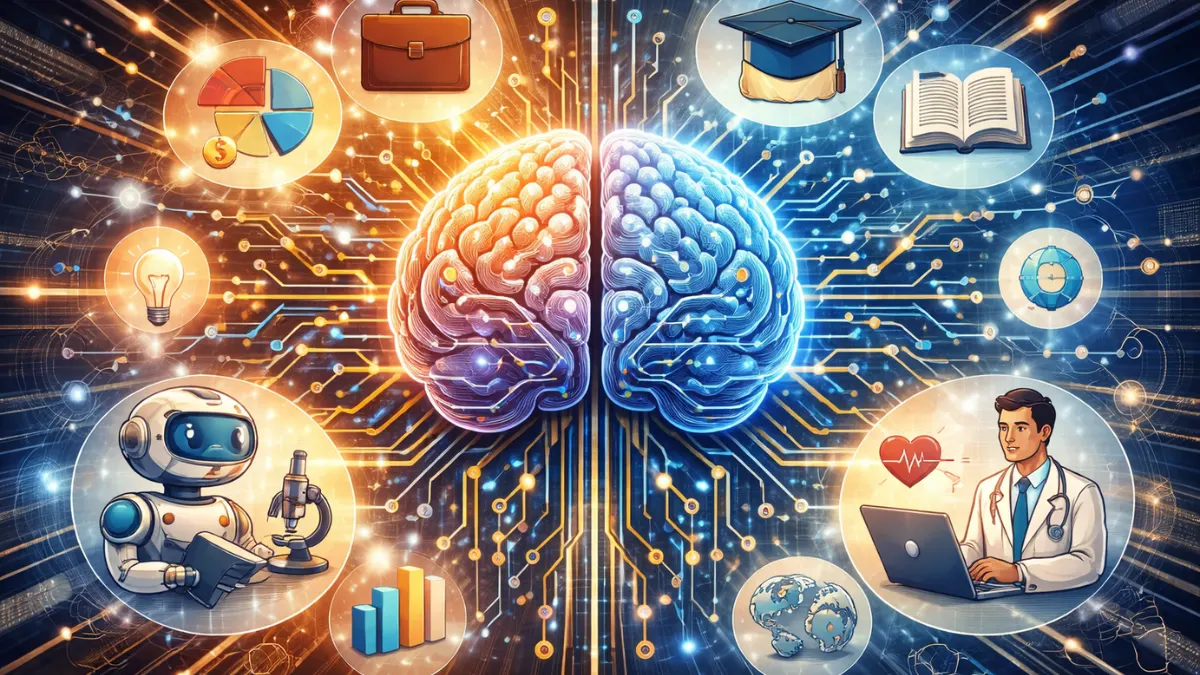
Why the Question “What Is AGI?” Is Everywhere Right Now
A few years ago, AGI still sounded like a distant research concept. Today it appears in earnings calls, startup pitches, policy debates, and dinner-table arguments. That jump did not happen by accident.
Large language models have changed public expectations. When a system can summarize reports, answer questions, generate code, and hold a plausible conversation, people naturally start asking whether general intelligence is already here or just around the corner. The line between “advanced tool” and “machine mind” gets blurry fast, especially when the product interface is designed to feel conversational and capable.

There is also a business reason the term keeps surfacing. AGI is a powerful narrative asset. It promises a future bigger than automation, bigger than productivity software, bigger than the latest app cycle. Companies use it to signal ambition, attract investment, and position themselves as players in a world-changing race. The phrase carries the glamour of scientific destiny.
But the popularity of the term creates a problem. The more AGI is discussed in public, the less precise it often becomes. One company may use it to describe systems that outperform humans economically on most knowledge work. A researcher may reserve the term for a machine with human-level adaptability across nearly all cognitive tasks. A critic may argue that nobody has defined it rigorously enough for the debate to be settled at all.
That fog is part of the story.

The Origins of AGI: An Old Dream in New Clothes
The aspiration behind AGI is older than modern chatbots by decades. Since the early history of computing, researchers and philosophers have been fascinated by the possibility of building machines that think in a broadly human way.
Early AI research in the mid-20th century was often grand in ambition. Some pioneers believed rapid progress toward human-level intelligence was possible. Reality turned out to be messier. Advances came, but mostly through narrow systems built for specific tasks. Chess engines could defeat grandmasters. Expert systems could mimic decision trees in constrained domains. Statistical learning transformed speech and vision. Yet each breakthrough stopped short of producing general intelligence.
That is why AGI remains such a compelling phrase. It names the goal that narrow AI never reached.
Today’s systems are more capable than earlier generations by an extraordinary margin, but the old tension remains. Are we seeing the early stages of genuine general intelligence, or just increasingly sophisticated pattern-matching systems that appear broader than they really are? The answer depends partly on technical evidence and partly on what one believes intelligence itself consists of.
What Is AGI Really Asking About Human Intelligence?
Hidden inside the question What Is AGI? is another, older one: what exactly is intelligence in the first place?
Humans tend to treat intelligence as if it were obvious, but it is not. Is intelligence the ability to solve problems? To reason abstractly? To learn from minimal examples? To understand social context? To transfer knowledge across environments? To pursue goals independently? To possess consciousness?
AGI discussions often slide between these meanings without warning. That is one reason the conversation gets heated so quickly. People are not only arguing about machines. They are also arguing about what counts as intelligence, competence, understanding, and mind.
A system may write a compelling essay without understanding its meaning in any human sense. It may solve a technical problem while failing at something a child can do with common sense. It may outperform humans in benchmark tests but still lack agency, self-awareness, or grounded experience.
This is where AGI becomes as philosophical as it is technical. If a machine can do enough of what humans do, at what point do we say it has general intelligence? And if it reaches that point without resembling human thought internally, does the label still hold?
The Business and Power Stakes Behind AGI
For all the abstract debate, the AGI conversation is also intensely material. Companies are investing vast sums into AI infrastructure, chips, data centers, and model training because the economic upside of increasingly capable systems is enormous. Whoever builds the most useful general-purpose intelligence platform stands to shape everything from office work and software development to logistics, healthcare, education, media, and national security.
That is why the race rhetoric around AGI can feel so intense. It is not just about discovery. It is about market dominance.
There is a familiar pattern here. Every transformative technology arrives wrapped in moral language and commercial incentives at the same time. AGI is framed as a tool for scientific progress, medical breakthroughs, and abundance. It is also framed, more quietly, as a platform business of unprecedented scale.
This matters because incentives shape how technology is developed and described. If the market rewards claims of imminent general intelligence, companies will be tempted to stretch definitions. If the public fears AGI as an uncontrollable super-system, policymakers may regulate on the basis of imagined futures rather than present realities. Hype and panic, despite appearing opposite, often feed each other.
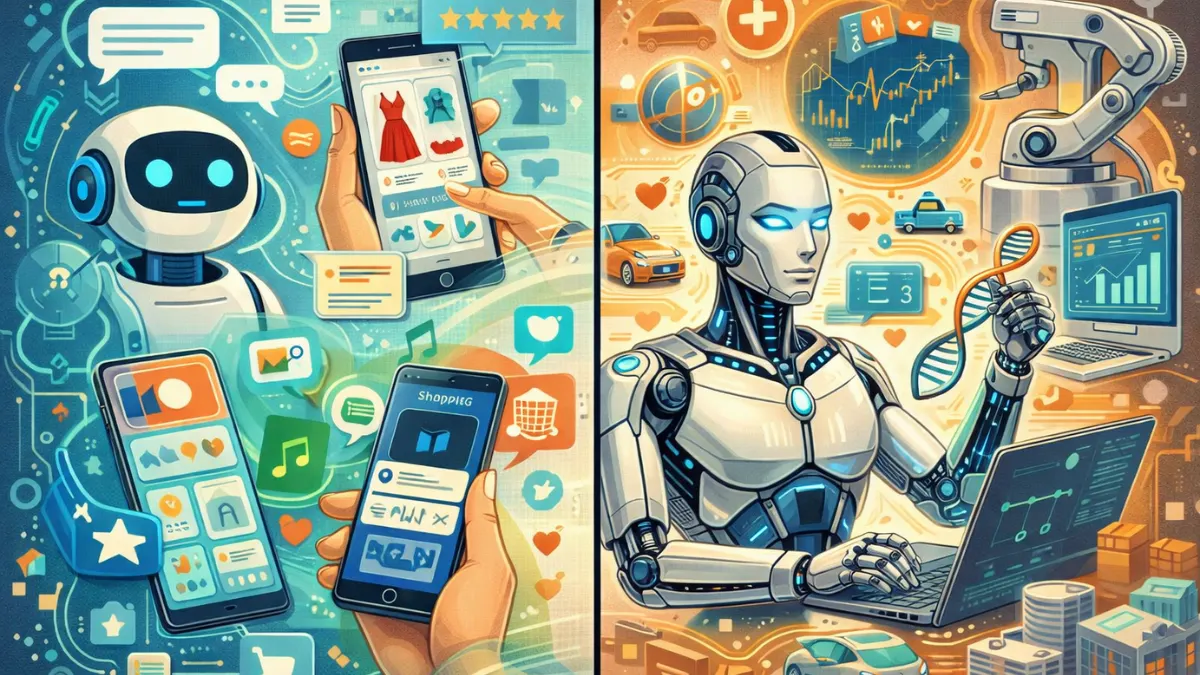
Why AGI Matters Beyond the Tech Industry
Even for people who never touch a machine learning model directly, AGI matters because the idea itself changes behavior. It influences investment, education priorities, government strategy, labor expectations, and cultural mood. Once society begins treating general intelligence as an achievable engineering target, institutions reorganize around that possibility.
Students rethink which careers feel secure. Governments talk more openly about AI sovereignty and compute access. Media narratives swing between utopia and catastrophe. Workers wonder whether the software becoming useful today is a preview of something much broader tomorrow.
There is also a psychological layer here. AGI fascinates people because it pushes on an old human nerve: the possibility of creating something that mirrors and rivals us. The conversation is not only about efficiency. It is about identity. If intelligence can be manufactured, what becomes special about human cognition? If machines can generalize, create, persuade, and problem-solve, what remains uniquely ours?
These are not merely technical anxieties. They are existential ones.
Are We Close to AGI? The Honest Answer Is Messy
This is where certainty tends to outrun evidence. Some technologists argue AGI may arrive within years. Others think current approaches, while commercially powerful, are still missing core ingredients such as grounded reasoning, durable memory, reliable planning, or genuine world models.
The sensible position is probably less dramatic than either extreme. AI capabilities are improving very fast. That much is undeniable. Systems are becoming more multimodal, more useful, and more capable of handling complex workflows. But “useful across many tasks” is not automatically the same as “generally intelligent” in the deepest sense.
The timeline depends partly on breakthroughs that may not yet exist and partly on how the term is defined when the milestone is declared. That ambiguity is not a side issue. It is the issue.
A company could claim AGI under a practical, economic definition long before philosophers or cognitive scientists agree that machines possess anything like human-like intelligence. Public debate will almost certainly lag behind product announcements.
More Read

Conclusion
So, what is AGI? It is both a technical ambition and a cultural mirror. On paper, it refers to Artificial General Intelligence: a machine system capable of broad, flexible, human-like reasoning across many tasks. In practice, it has become something larger — a symbol of where AI research, corporate power, public imagination, and philosophical uncertainty now collide.
That is why AGI draws such intense attention. It is not only about whether machines will become more capable. It is about how society defines intelligence, who controls the tools that imitate it, and how much of our future gets organized around a concept that remains partly unsettled. The technology may still be evolving, but the consequences of the idea are already here.
Final Insight
At The Vue Times, we look past buzzwords to ask what new technologies are really changing — not just in software, but in culture, business, and public life. AGI is one of those terms that sounds futuristic until you notice how strongly it is already shaping the present.
For more sharp, human-centered analysis on AI, digital culture, and the ideas driving tomorrow’s economy, keep reading The Vue Times.
Frequently Asked Questions
What is AGI in simple terms?
AGI stands for Artificial General Intelligence. It describes a hypothetical AI system that can learn, reason, and perform many different intellectual tasks at a human-like level rather than being limited to one narrow job.
What is the difference between AI and AGI?
Most AI today is narrow AI, built for specific tasks like writing, image recognition, or prediction. AGI refers to a more flexible form of intelligence that could adapt across many domains without needing separate systems for each task.
Does AGI exist today?
There is no broad expert consensus that AGI exists today. Current AI systems are highly capable, but they still show important limitations in reasoning, reliability, adaptability, and real-world understanding.
Why is AGI important?
AGI matters because, if achieved, it could reshape industries, labor markets, scientific research, and political power. Even before it exists, the idea already influences investment, regulation, and public expectations about the future.
Will AGI replace human jobs?
If AI systems become more general and reliable, they could automate a wider range of cognitive work. But the extent of job replacement would depend on regulation, adoption speed, business use, and how societies choose to reorganize work.