
Introduction
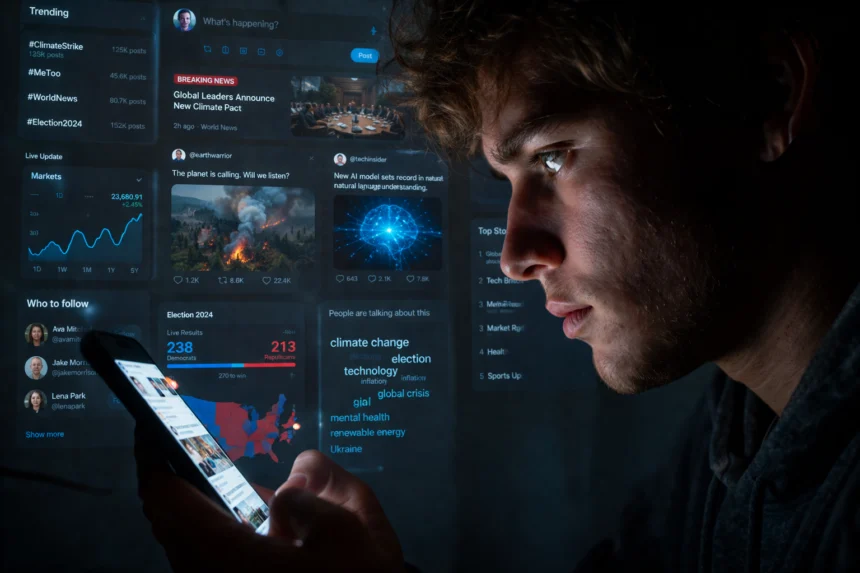
The power of public opinion has always been a strong influence, especially when it comes to elections, market dynamics and even a redefinition of societal norms. However, in the modern hyperconnected world, the dynamics of public opinion digital age is taking new leaps in an unprecedented rhythm. What used to require months or years to turn this way could now do so in hours – sometimes even minutes.
This is not a coincidence of this rapid change. It is fueled by an intricate social media ecosystem, algorithmic amplification, viral content and global connectivity. One tweet, video or post has the potential to become a point of debate, change an opinion, and even influence a policy decision.
It is not only an academic exercise to understand how and why the public opinion changes so fast today but it is also a necessity of business, policymakers and even regular users. The pace of change presents opportunities as well as threats and it is important to investigate the processes behind this change.
This article discusses the underlying forces of current trends in digital age shaping of public opinion, unpacking of controversies, different perspectives and evaluation of what it all means to the future.
Background and Context
Traditionally, the public opinion has been developing in the more sluggish mediums: newspapers, radio-casts, television discussions. These mediums were working under a designed schedule and editorial regulation i.e. dissemination of information was relatively linear and moderated.
The pre-digital period was based on opinion formation that relied on the trusted institutions. Governments, journalists and academic experts were in the forefront in creating the narratives. Limited sources also impacted the discussion in the public, which made the information environment more stable, but by the same token, less diverse.
The trend has been initiated by the emergence of the internet in the late 20 th century. Online forums and blogs brought on-board the voices of decentralization whereby people got to take part in the discourse of the people. But the actual change had come with the introduction of the social media platforms during the 2000s.
Social media such as Facebook, Twitter (since X), and Instagram turned the game upside down. They facilitated real-time communication, user-created content, and access to the entire world. And then, any person can impact the masses, provided that they have access to the internet.
This change initiated a new era, one where social influence online was brought into the mainstream, and the opinion of the people became fluid, dynamic and often unpredictable.
What Is Going on at this moment.
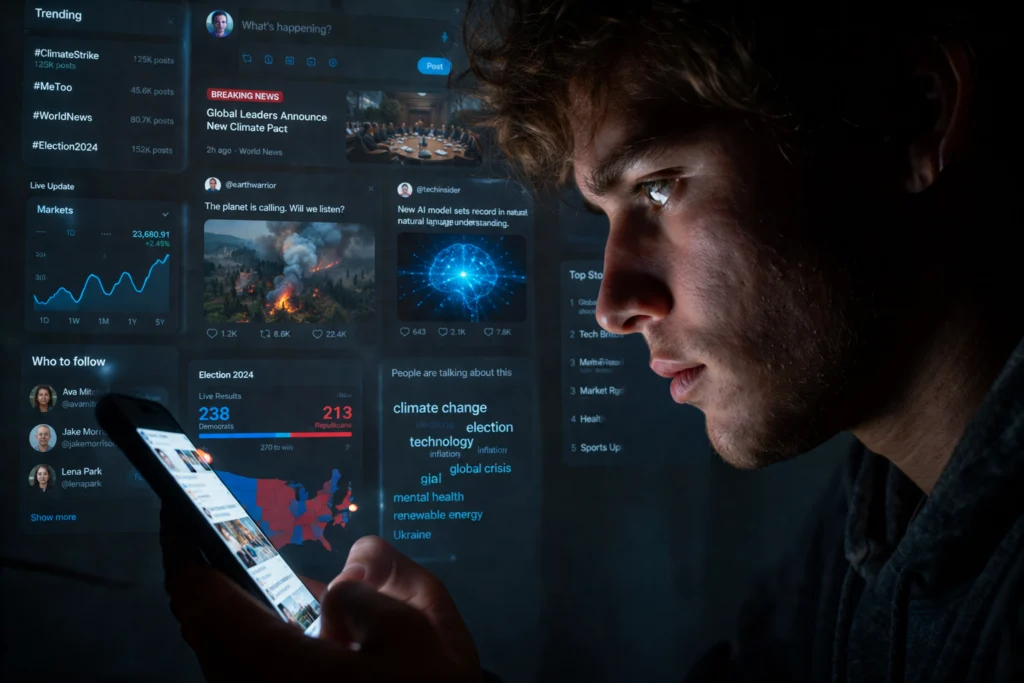
Nowadays the creation of a certain opinion of the population is organized in real time. The narratives can be reshaped in hours with trending hashtags, viral videos, and endorsements of influencers.
There are a number of reasons that are causing this rapid change:
- Algorithms amplify: The platforms have the incentive to promote content that brings attention to users, which can push emotionally resonant or controversial content to more audiences.
- Short-form content: The application of ideas such as TikTok and Instagram Reels promotes fast consumption, which in turn makes it easier to have ideas spread quickly.
- Global connectivity: What happens in one section of the globe at any given moment can immediately impact the opinion in another part of the globe.
- Echo chambers: Consumers tend to be presented with information that supports their prior held beliefs which strengthens and speeds up the opinion change.
In case of a brand controversy, the situation can grow worldwide in a day and boycotts or support movements nearly instantly. On the same note, the narratives of politics may experience a boost or a decline depending on the content that is being viral.
This has resulted in social influence online being more potent than ever before, making ordinary users active contributors towards shaping the discourse of the people.
Why This Key Subject is a Contentious One.
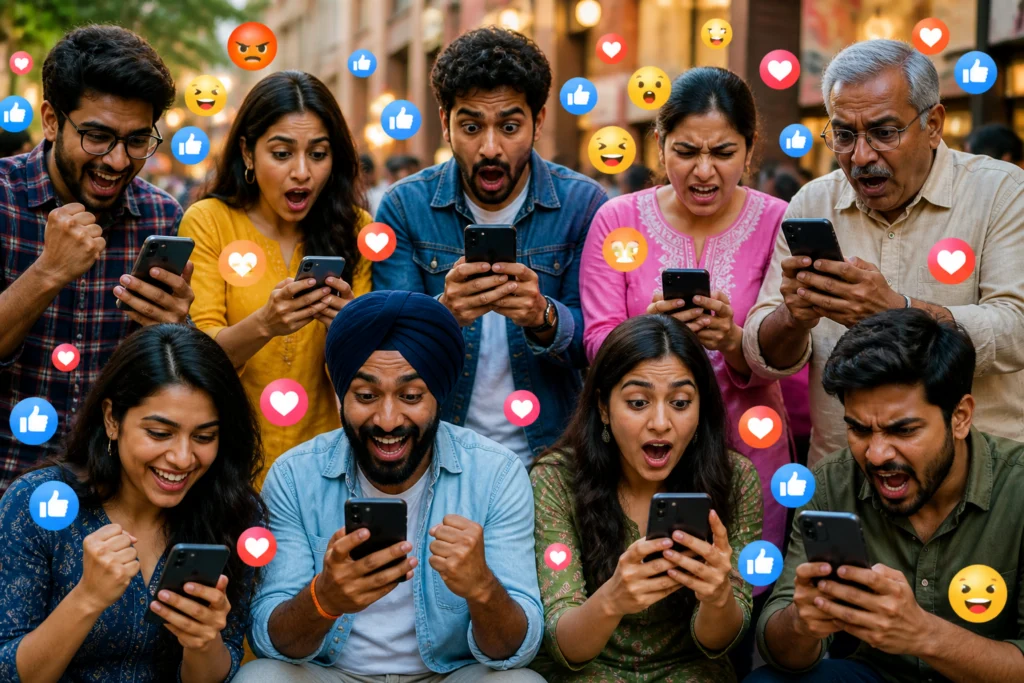
The pace of shifting of the masses in the digital age is not only impressive, but worrying as well. Although it allows quicker enlightenment and mobilisation, it also poses some serious questions.
The controversy is based on a number of main points:
- Precision vs speed: The information is disseminated in a very fast manner, but not necessarily right.
- Risks of manipulation: The organized campaigns may be used to artificially shape the opinion.
- Polarization: Fast changes tend to enhance the divide as opposed to fostering a dialogue.
- Responsibility: It is not evident to whom the responsibility falls when misinformation is spread.
These issues have raised debates among the policy formers, the technological firms as well as the citizenry. Would it be more appropriate to have platforms censor the content more closely? Or would such curtail free expression?
The conflict between liberty and authority is the core of this debatable issue.
Various views on the Digital Age Public Opinion.
Supporters’ View
Advocates of the transformation of the public opinion digital age believe that such a rapid development of opinions is not only natural, but also highly advantageous in a globalized world. They regard the digital platforms as potent instruments that have transformed the manner in which people engage in the public discourse.
The democratization of voice is one of the very potent arguments in favor. Historically, numerous people were largely controlled by the traditional gatekeepers including media houses, political institutions and academic elites. Nowadays anyone who has access to the internet can post his/her opinion, experiences, and perspectives. This change has brought about possibilities to various viewpoints which were underrepresented in the past.
The other main benefit is increased awareness faster. Almost instant attention is now being paid to social issues, global events, and the emerging trends. It can be a humanitarian disaster, a social justice movement, a consumer issue and information is spread rapidly facilitating quick response and action. This urgency can become the force of accountability and a push toward more transparent actions by the institutions.
The collective mobilization is also highlighted by supporters as one of the characteristics of social influence in the Internet. Online platforms enable individuals to organize, promote, and work on a large scale. Online campaigns, petitions and viral movements have proven to have the power to alter real-life results- both in the form of policy changes as well as corporate-level decisions.
In this regard, social influence on the internet plays the role of a booster to inclusivity and involvement. It gives more power to the communities, gives voices to marginalized people and makes the public sphere more dynamic and responsive. In the age of the public opinion digital, those who support the idea believe that power is no longer concentrated but is distributed among the people.
Critics’ View
Nevertheless, with all these benefits, critics pose some serious questions regarding the manner in which the digital environment shapes the opinion of the populace. Accordingly, they claim that the pace and extent of change is usually done at the expense of precision, profundity and credibility.
Among the most burning problems, the misinformation spreading must be mentioned. False or deceptive messages can become viral in minutes, and in many instances can spread to millions before it is corrected. This brings confusion and can go a long way in misrepresenting the population on issues of concern.
Another issue noted by critics is that of superficial involvement. Within a fast-paced digital ecosystem, users can be expected to respond swiftly, instead of being critical in their response. In-depth analysis can frequently be substituted with a short-form content, headlines, viral clips, which often influence the creation of opinion that lacks a full context.
Among the most urgent questions, the dissemination of misinformation should be mentioned. Facts and information that are false or misleading can become viral in just minutes, and it may take millions of people to recognize the truth before it is disproved. This brings about confusion and can go a long way invalidating the way people understand vital issues.
Another issue, namely superficial engagement, is also pointed out by critics. With a digital ecosystem that moves very fast, people will rather have a quick reaction than critically think. Frequently, in place of in-depth analysis, such items as short-form content, headlines, and viral clips are used.
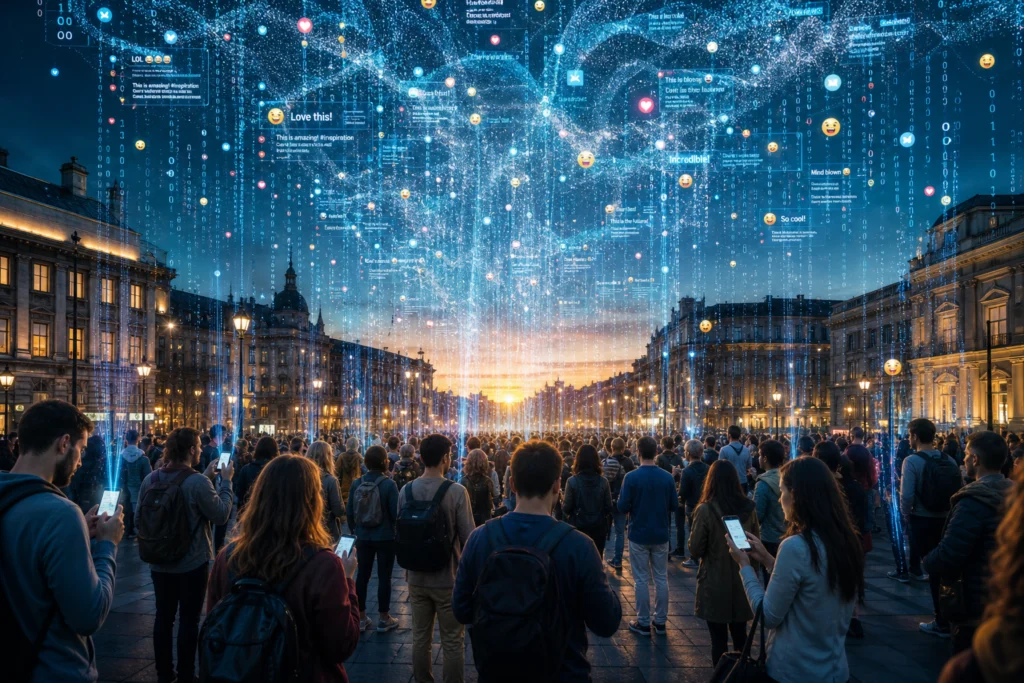
Emotional manipulation is another crucial issue. Algorithms are also more likely to promote those content that elicit a strong response, whether anger, fear or excitement. This is because emotionally-charged information would be more likely to go viral, even though it might not be factual. This may distort the perceptions and increase the levels of division in the society.
Opponents believe that the digital age of public opinion promotes knee-jerking instead of making informed decisions. They caution that such an environment may undermine democratic practices, decrease confidence in institutions and produce a disjointed information environment.
Facts vs Claims in the Public Opinion Digital Age
In order to really comprehend how popular opinion works nowadays, it is absolutely necessary to distinguish the facts which are proved and the statements and stories which are popular nowadays. This difference will assist in creating a balanced and knowledgeable opinion.
Verified Facts
It is well documented that online platforms are at the core of influencing the contemporary popular opinion. The networks of social media play a major role in the creation, dispensation and intake of information.
One of the key aspects of this process is algorithms. They are made to focus more on engagement which in most cases implies the promotion of content that will trigger a high level of emotional responses. This may give some of these opinions more visibility at the expense of the visibility of others.
The other one, which is well established, is that online discussions may have an impact on the real-life consequences. The digital platforms have affected the elections, reputations of the brands, and even government policies due to the public sentiment expressed on them. It is no longer doubted that there is a connection between online discourse and offline action.
Claims and Narratives of the Public.
In addition to these facts, there are many statements that are much discussed in the context of social influence on the Internet, but they are often simplified or exaggerated.
As an example, one should not consider the notion that everything on the Internet is fake as absolutely true. Although misinformation is present, there is so much credible and valuable information present on the internet.
Likewise, the argument that the social media entirely dictates opinions does not take into consideration the individual agency. The users do not simply consume the content they are exposed to; they analyze, ask and even challenge what they are reading.
The other typical story is that swift opinion shift is never beneficial. The fact is, sometimes such sudden changes in the social opinion can result in positive consequences, e.g. creation of awareness or social reform.
Finding the Balance
The truth about the digital age of the public opinion can be between these two extremities. Digital platforms have certainly changed the way in which opinions are formed and shared and come with both opportunities and challenges.
To stay in-between is important to think critically, be media literate and to have an understanding of the flow of information online. Learning about the advantages as well as the risks, people will be able to make their way through this maze more easily.
Ultimately, the point is not to oppose change but to approach it with a sense of responsibility, i.e. in such a way that in the age of digital connectivity, the mass opinion is not only technologically conditioned, but also the responsible actions of the masses influence the technological prerequisites of the mass opinion.
What the People may be missing.
The importance of cognitive biases is one of the aspects that have been overlooked. The human tendency is to believe in information that supports his or her beliefs. This trend is enhanced in the online setting.
Attention economics is another consideration. The platforms are geared towards capturing and holding attention, which determines what content is being promoted. This implies that the most apparent opinions do not necessarily represent and/or are the most accurate.
Also, the pace of opinion should change which may produce an illusion of consensus. The mere trending does not indicate that the majority opinion is represented.
It is important to understand such underlayers to be able to maneuver in the digital age of the public opinion.
Impact on Society / Economy / Users
The blistering development of the popular opinion has far-reaching consequences.
Society
- Enhanced sensitivity of social matters.
- Increased polarization and division.
- Faster collective action
Economy
- Brands suffer more due to a change in perception by the masses.
- The behavior of consumers is fast-changing, depending on trends.
- Reputation management has been brought to critical.
Users
- Increased availability of information.
- Greater exposure to opposing arguments.
- Increased chances of misinformation.
To them this would represent surviving in an information world that is more complex and intricate than ever before.
Media and Narrative role.
The media has been at the centre stage in influencing the opinion of the people, although its role has changed.
In-depth reporting and fact-checking are still carried out in the traditional media. Nonetheless, the digital platforms have become the leading channels of distribution.
Key dynamics include:
- Framing based on narrative: The way that a story is framed affects perceptions.
- Viral amplification: Social media have the potential to amplify certain stories in a short period of time.
- Influencer effect: With such a huge following, the views of people with high following can influence the views of other people greatly.
The inter-relation between the conventional media and social influence on the internet develops a hybrid ecosystem in which the narratives are continuously changing.
Bigger Picture / Future Perspective.
In prospect, the dynamics of public opinion will probably even be more complicated.
Emerging trends include:
- Artificial intelligence: AI-created content might also be used to further hasten the change of opinion.
- Controversies of regulation: Governments could put in place regulations to curb misinformation.
- Evolution of platforms: There are new platforms that can transform the manner in which opinions are formed and distributed.
The future of the digital age of public opinion will be based on the interaction of these factors. Striking a balance between speed, accuracy and accountability will be an important challenge.
Conclusion
The opinion of the populace has entered into a new phase, which is marked by rapidity, connectedness and complexity. The digital era of the public opinion is not necessarily good or bad, it is a consequence of the development of technologies and society.
More Read

Even though quick opinion change can serve as the driver of awareness and change, it also brings about such risks as misinformation, polarization. These dynamics need to be understood so that one can navigate the current information environment.
With the adaptation of people, business and policymaking, the emphasis should continue to be on critical thinking, responsible communication and balanced viewpoints.
In the world where opinions can change overnight, the actual challenge is not only to stay abreast of them, but also to know what, actually, influences the changes.