
It usually starts subtly. Your phone feels a little warmer than usual during a long call. Then one day, it’s almost uncomfortable to hold — especially while scrolling, gaming, or even charging. You check the back panel instinctively, as if heat itself might reveal something hidden beneath the glass and metal.
Overheating has quietly become one of the most common Technology & Digital Issues people face today. Not because phones are failing — but because we’re asking more from them than ever before.
When “Warm” Turns Into a Problem
Modern smartphones are incredibly powerful these days. In many ways, they can really compete with basic laptops. They handle things like streaming 4K videos, running AI-powered apps, and even gaming with top-notch graphics, all from a device that easily fits in your pocket.
But with great power comes a price. Heat is a natural result of all that processing going on. The problem isn’t necessarily that your phone gets warm, but rather how often it heats up, how quickly it gets hot, and just how intense that heat is.
A little bit of warmth is perfectly normal. But if your phone feels hot just from everyday use, starts slowing down, its battery drains super fast, or it keeps showing temperature warnings, then it’s definitely not just a small, random thing anymore. It’s a sign that something’s up.
And like most tech problems, it’s usually not caused by just one single thing.

The Invisible Work Your Phone Is Doing
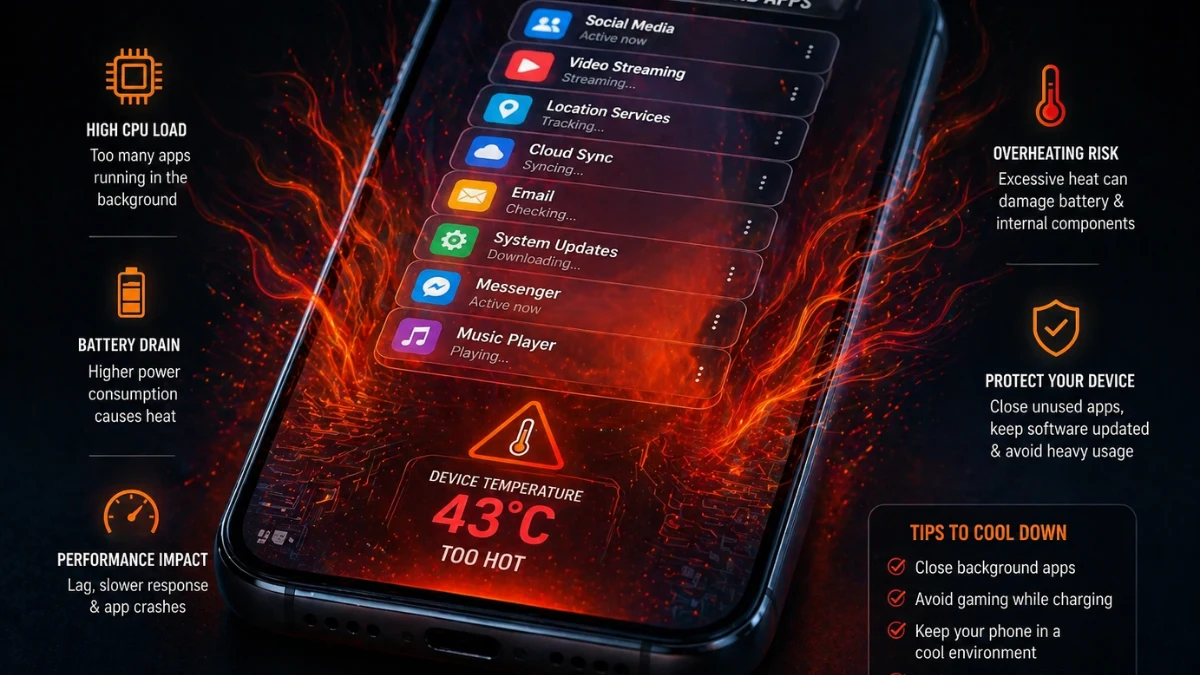
One reason it can feel so random when your phone starts getting hot is that a lot of what it’s doing happens behind the scenes.
Even when you’re not actively using it, your phone is busy with things like:
* Syncing your emails
* Refreshing your social media feeds
* Updating apps
* Using location services
* Running various background tasks
All these tasks add up quietly in the background. Then, if you throw in a few demanding apps or less-than-ideal network conditions, your phone really has to work harder.
Here’s something interesting: weak network signals are often a big cause. When your phone is struggling to hold onto a connection, it cranks up the power just to stay online. And that extra effort turns directly into heat.
So, sometimes, it’s not necessarily about how you’re using your phone—it could just be about where you are and the conditions around you.
Why It’s Becoming More Common
The increase in overheating isn’t just a coincidence; it’s directly connected to how our digital lives have developed over time.
These days, phones are far more than just devices for making calls. They’ve become:
– Portable workstations
– Entertainment centers
– Ways to handle payments
– Navigation aids
– Tools for creating content
All these capabilities really push the hardware to its limits. At the same time, manufacturers keep designing phones that are thinner and more compact, which unfortunately leaves less space for getting rid of excess heat.
This sets up a tricky situation: we’re packing more power into devices, but with less room to keep them cool.
Looking at the bigger picture, overheating points to a larger pattern within the world of technology—where performance improvements are often happening much faster than physical design can keep up.
The Usual Suspects Behind Phone Heating
Not all overheating is equal. Some causes are behavioral, others technical.
Heavy App Usage and Multitasking
Gaming, video editing, or using multiple apps simultaneously can push your processor to peak performance. The longer this continues, the more heat builds up.
Charging Habits
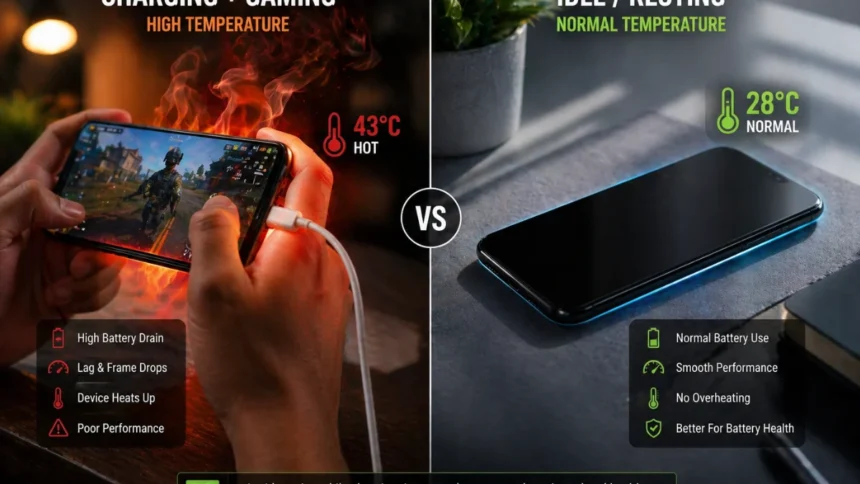
Fast charging is convenient, but it generates more heat than standard charging. Using your phone while charging — especially for gaming or streaming — intensifies this effect.
Poor App Optimization
Some apps are poorly coded or not optimized for your device. They consume excessive CPU and battery, often without you realizing it.
Software Bugs and Updates
Ironically, updates meant to improve performance can sometimes introduce glitches that cause overheating. A sudden spike after an update is often not a coincidence.
External Conditions
Leaving your phone in direct sunlight or inside a parked car can elevate temperatures quickly. Unlike internal heat, this external heat compounds the problem.
The Subtle Signs You Shouldn’t Ignore
Overheating rarely appears overnight. It builds gradually, often accompanied by smaller warning signs:
- Battery draining faster than usual
- Apps lagging or crashing
- Screen dimming automatically
- Phone becoming slow or unresponsive
These are early indicators. Ignoring them often leads to more serious performance issues — or even long-term hardware damage.
How to Fix It Without Overthinking
The good news is that most overheating issues can be managed without technical expertise.
Give Your Phone Breathing Space
Avoid using your phone intensively while charging. Remove heavy cases when gaming or streaming, especially in warm environments.
Manage Background Activity
Check which apps are running in the background. Limit unnecessary permissions like location tracking or constant syncing.
Update — But Observe
Keep your software updated, but pay attention after each update. If overheating starts suddenly, it may be linked to new software behavior.
Avoid Extreme Environments
Simple habit shifts — like not leaving your phone in direct sunlight — can make a significant difference.
Restart More Often Than You Think
A quick restart clears temporary processes and resets system activity. It’s one of the simplest yet most effective fixes.
Rethink Charging Patterns
Use original chargers and avoid overnight overcharging habits. Even though modern devices manage charging smartly, consistent heat exposure affects battery health over time.
The Psychology Behind Ignoring It
There’s a tendency to normalize small inconveniences in digital life. A slightly warm phone becomes acceptable. Then a hotter device becomes “normal.”
This gradual acceptance is part of a broader pattern in Technology & Digital Issues — users adapt to discomfort instead of questioning it.
But overheating isn’t just a comfort issue. It affects:
- Device longevity
- Battery efficiency
- Data security (in extreme cases)
Ignoring it doesn’t make it harmless — it just delays the consequences.
The Business Side of Heat
There’s also a quiet business angle here.
Manufacturers design phones to balance performance and cost. Advanced cooling systems exist — vapor chambers, graphene layers — but they’re often reserved for premium devices.
Mid-range phones, which dominate markets like India, may not have the same thermal management capabilities. Yet they run increasingly demanding apps.
This mismatch creates a cycle where users upgrade more frequently — not always because devices fail, but because they feel slower or unreliable.
Overheating, in this sense, is not just a technical issue. It’s part of a consumption pattern.
Where This Is Headed
The future of smartphones will likely focus heavily on thermal efficiency.
We’re already seeing:
- More efficient chipsets
- Smarter power management
- AI-based performance optimization
- Improved cooling technologies
But as long as usage continues to grow — more apps, more features, more expectations — overheating will remain a relevant concern.
It’s not going away. It’s evolving.
More Read

Conclusion
A heating phone is rarely just about temperature. It’s a reflection of how much we rely on these devices — and how close they operate to their limits.
Understanding the cause isn’t about fixing a single issue. It’s about recognizing patterns — usage, environment, software behavior — and adjusting accordingly.
The solution isn’t always technical. Sometimes, it’s behavioral.
Final Insight
At a glance, a warm phone feels like a minor inconvenience. But look closer, and it tells a bigger story — about modern digital life pushing hardware to its edge. In the world of Technology & Digital Issues, the real challenge isn’t just solving problems. It’s noticing them before they become the norm.-The Vue Times
Frequently Asked Questions
Why does my phone heat up even when I’m not using it?
→ Background processes like app updates, syncing, and location services continue running. These consume power and generate heat even when the phone appears idle.
Is phone overheating dangerous?
→ Occasional warmth is normal, but excessive heat can damage battery health, slow performance, and in rare cases affect internal components.
Does fast charging cause overheating?
→ Yes, fast charging generates more heat compared to standard charging, especially if combined with heavy phone usage during charging.
How can I cool down my phone quickly?
→ Stop intensive apps, remove the case, and keep the phone in a cool environment. Avoid placing it in a refrigerator — sudden temperature drops can cause damage.
Should I worry if my phone heats up during gaming?
→ Not necessarily. Gaming pushes the processor, so some heat is expected. However, extreme heat or lag indicates your phone may be under stress.