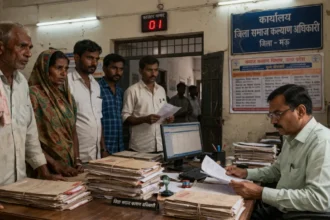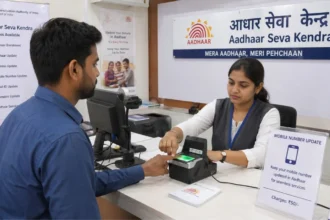

You know that feeling you get when you’re finally ready to file your income tax return? There’s a certain kind of excitement mixed with dread, right? You carefully fill out the forms, check all the numbers twice, maybe even feel a little proud of your responsible self, and then… you wait. For many people, that wait ends up being much longer than they thought it would be. Weeks go by, sometimes even months. Suddenly, that straightforward refund starts to feel like something’s gone wrong with the system.
In India’s ever-changing world of finance and banking, tax refunds are supposed to be faster than ever before. With everything going digital, automated, and processed in one central place, delays were supposed to be a thing of the past. But every year, thousands of taxpayers find themselves refreshing their refund status pages over and over, scratching their heads and wondering what happened.
The reason it’s taking so long isn’t usually simple—and it’s almost never just random.
Where the Delay Actually Begins
Many people think the delay in processing their tax returns starts once they’ve filed them, but that’s not the case. Often, the delay begins much earlier—sometimes even before you’ve finished clicking “Submit.”
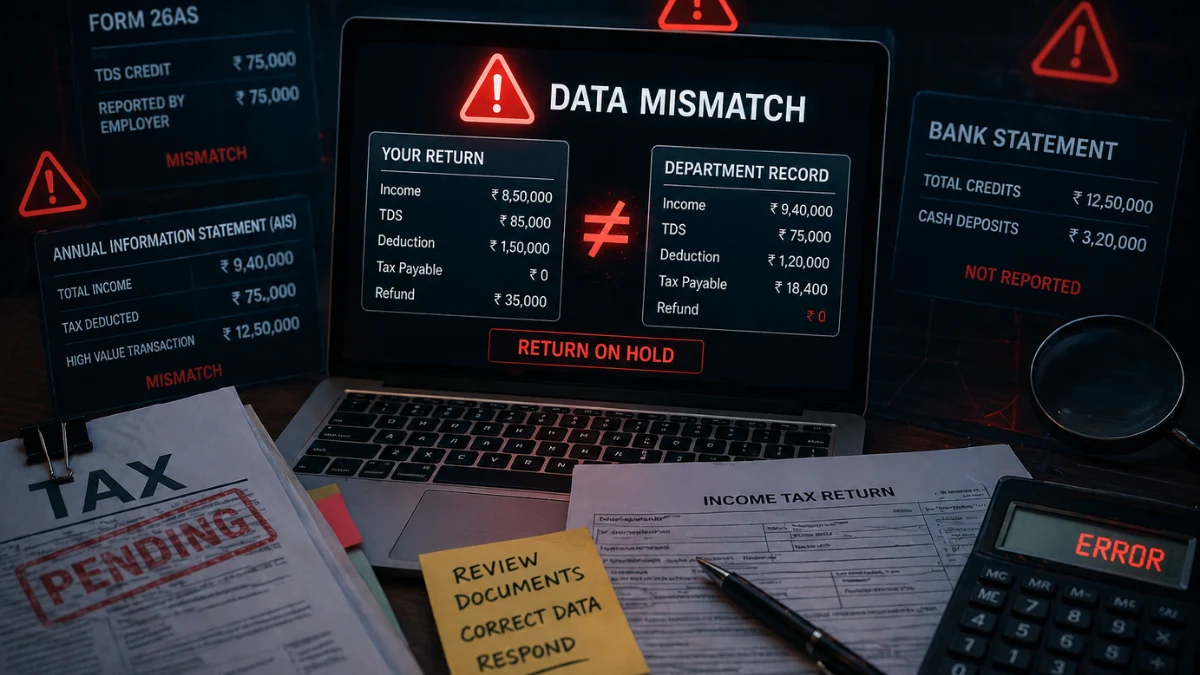
India’s tax system is getting more and more reliant on data. Platforms like the Income Tax Department now check your return against several databases: information from your employer, your bank transactions, Tax Deducted at Source records, and even details about significant financial activities. If anything doesn’t match up, the system puts things on hold.
That hold is what taxpayers feel as a “delay.”
This can happen because of a mismatch between the income you declared and what’s on your Form 26AS, a missing entry in your Annual Information Statement, or even a small mistake in your bank details. On their own, these might seem like small issues. But in a system that demands accuracy, they can set off extra verification steps.
Finance & Banking Systems Are Faster—But Less Forgiving
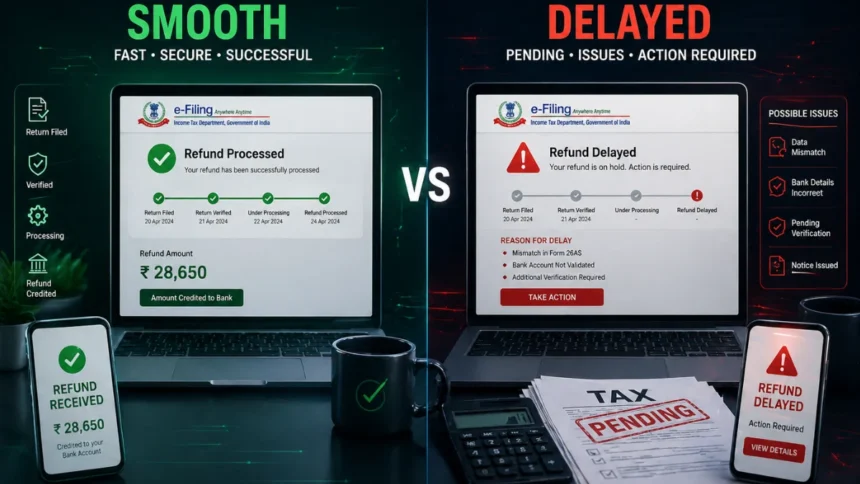
There’s a paradox at play here. Technology has made refunds faster for those who file correctly—but stricter for those who don’t.
The Centralized Processing Centre (CPC) processes returns using automated algorithms. There’s no human discretion at the initial stage. If your return doesn’t match the data available with the system, it doesn’t “try to understand”—it simply flags it.
This is where many taxpayers get stuck.
A freelancer forgets to declare a small payment. A salaried employee misses a TDS entry. A business owner uploads incorrect figures. These aren’t unusual mistakes. But in today’s Finance & Banking environment, even small inconsistencies can stall the entire process.
Common Reasons Your Income Tax Refund Is Delayed
Let’s strip it down to the most frequent causes—not the generic ones, but the ones that actually show up in real cases.
1. Return Not Verified
Filing is only half the process. Verification—through Aadhaar OTP, net banking, or physical ITR-V—is mandatory. Many delays happen simply because taxpayers assume submission is enough.
2. Mismatch in Tax Data
If your reported income doesn’t match Form 26AS or AIS, the system pauses processing. This is one of the most common—and overlooked—issues.
3. Incorrect Bank Details
A wrong IFSC code or inactive bank account can halt refunds entirely. Even if processing is complete, the transfer fails.
4. Pending Notices or Queries
If the tax department has issued a notice (even a minor one), your refund is automatically withheld until resolved.
5. High-Value Transactions Flagged
Large deposits, stock trades, or property transactions can trigger additional scrutiny, especially if not properly declared.
6. Late Filing
Returns filed closer to the deadline—or after—often face backlog delays due to volume spikes.
Why This Matters More Than You Think
At first glance, a delayed refund feels like an inconvenience. But step back, and it reveals something deeper about how Finance & Banking systems are evolving.
Refund delays are not just about inefficiency—they’re about risk control.
Governments globally are tightening financial monitoring to prevent tax evasion and fraud. India is no exception. The integration of financial data—from banks, employers, and investment platforms—means your financial footprint is more visible than ever.
This visibility improves compliance. But it also reduces tolerance for error.
For taxpayers, this shifts the responsibility. Filing taxes is no longer a once-a-year task—it’s an ongoing exercise in financial accuracy.
The Psychology of Waiting for Refunds
There’s also a behavioral layer to this.
People mentally allocate their expected refund before it arrives. It becomes “future money”—used to plan expenses, investments, or even small luxuries. When that money is delayed, it creates a subtle financial strain.
It’s not just about cash flow. It’s about expectation.
This is why refund delays often feel more frustrating than other financial delays. You’ve already “earned” that money in your mind.

What You Should Actually Do (Instead of Just Waiting)
Passive waiting is the worst approach. The system may be automated, but it still responds to action.
Step 1: Check Refund Status
Use the official portal of the Income Tax Department to track your refund. Look for specific status messages—not just “processing.”
Step 2: Verify Your Return
If not already done, complete e-verification immediately. This alone resolves a significant number of delays.
Step 3: Review Form 26AS & AIS
Compare your filed return with these statements. Any mismatch should be corrected through a revised return.
Step 4: Respond to Notices Promptly
Even minor notices can block refunds. Ignoring them guarantees delay.
Step 5: Validate Bank Details
Ensure your bank account is pre-validated and linked for refunds.
Step 6: Raise a Grievance
If the delay is unusually long, file a grievance through the e-filing portal. It signals the system—and sometimes triggers manual review.
The Business Side of Refund Delays
There’s an overlooked angle here—liquidity.
When refunds are delayed at scale, it temporarily increases government cash reserves. While not the primary intent, it does affect short-term fiscal flow.
For businesses, especially small ones, delayed refunds can impact working capital. For individuals, it affects disposable income.
This is why efficiency in refund processing is more than administrative—it’s economic.
What the Future of Finance & Banking Suggests
The trajectory is clear. Tax systems are becoming:
- More automated
- More interconnected
- More predictive
In the near future, refunds may become near-instant for compliant taxpayers—while non-compliant cases face deeper scrutiny.
Pre-filled returns will reduce errors. AI-based checks will flag inconsistencies before submission. The gap between “smooth refunds” and “delayed cases” will widen.
In other words, the system won’t slow down. It will simply expect more accuracy from you.
More Read

Conclusion
A delayed income tax refund is rarely a mystery. It’s usually a signal—of mismatch, oversight, or incomplete action. The modern Finance & Banking ecosystem doesn’t operate on assumptions. It operates on data alignment.
Understanding this changes how you approach taxes altogether. It’s no longer about filing correctly once. It’s about maintaining financial consistency throughout the year.
Because in a system built on precision, even small gaps can echo loudly.
Final Insight
In today’s data-driven economy, your financial identity is constantly being cross-checked—quietly, automatically, and without pause. Refund delays are not failures of the system; they’re reflections of how closely your financial story matches the data trail you leave behind.
At The Vue Times, the real takeaway is simple: the future of Finance & Banking won’t just reward compliance—it will reward clarity.
Frequently Asked Questions
Why is my income tax refund taking so long in India?
→ Delays usually happen due to mismatches in tax data, unverified returns, incorrect bank details, or pending notices from the tax department.
How can I check my ITR refund status?
→ You can track it on the Income Tax e-filing portal using your PAN and assessment year under the refund status section.
What happens if I don’t verify my ITR?
→ Your return won’t be processed at all. Verification is mandatory for initiating refund processing.
Can incorrect bank details delay my refund?
→ Yes. If your bank account isn’t pre-validated or details are incorrect, the refund transfer will fail.
How long does it normally take to get a tax refund?
→ Typically 7–30 days after verification, but delays can extend it depending on discrepancies or backlog.