
Introduction
In the past decade, India has witnessed a dramatic shift in how political narratives are formed, shared, and consumed. What was once shaped primarily by traditional media—television, newspapers, and public rallies—is now heavily influenced by digital platforms. The rise of smartphones, affordable data, and widespread internet access has created a new arena where public opinion is molded in real time. At the center of this transformation lies social media political influence, a phenomenon that is redefining democratic engagement in India.
From election campaigns to policy debates, social media platforms have become powerful tools for political communication. They allow leaders to bypass traditional gatekeepers, connect directly with citizens, and mobilize support at scale. At the same time, these platforms are also spaces where misinformation, polarization, and coordinated campaigns can shape perceptions in subtle yet significant ways.
Understanding how online opinion shaping India operates today is not just important—it is essential for anyone trying to make sense of modern Indian politics. This article explores the depth, complexity, and implications of this evolving landscape.
Background and Context
India’s political communication landscape has evolved alongside technological advancements. Before the internet era, political messaging relied heavily on mass rallies, print media, and state-controlled broadcasting. Public opinion was slower to form and often localized.
The early 2000s saw the introduction of internet-based communication, but it remained limited to urban elites. The real transformation began around 2016 with the introduction of low-cost mobile data, which brought millions of Indians online. Platforms like Facebook, Twitter, and WhatsApp became ubiquitous, even in rural areas.
This digital expansion coincided with a period of intense political competition. Political parties quickly recognized the potential of social media as a tool for outreach, branding, and persuasion. Campaign strategies began incorporating digital teams, data analytics, and targeted messaging.
Over time, social media political influence moved beyond campaign periods. It became a continuous process where narratives are shaped daily. Political discourse is no longer confined to election seasons; it is an ongoing, dynamic conversation influenced by trends, hashtags, and viral content.
What Is Happening Right Now
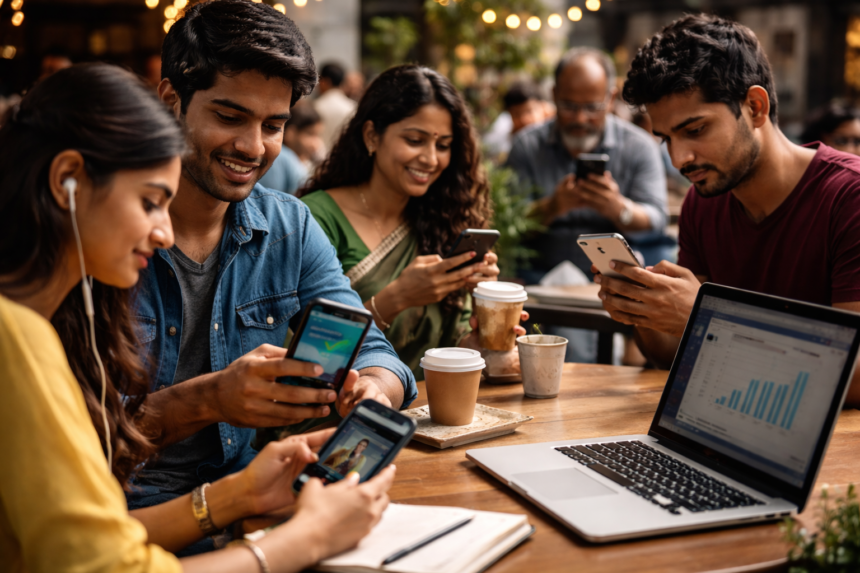
Today, social media is deeply embedded in India’s political ecosystem. Political leaders maintain active profiles, government policies are announced online, and public reactions unfold instantly.
Several trends define the current landscape:
- Direct Communication: Politicians use platforms to communicate without media filters.
- Real-Time Reactions: Public opinion forms quickly based on trending topics.
- Algorithmic Amplification: Content visibility is driven by engagement, not necessarily accuracy.
- Micro-Targeting: Messages are tailored to specific demographics using data insights.
The concept of online opinion shaping India has become more sophisticated. Campaigns are no longer just about visibility; they are about influencing perception at a granular level.
Digital campaigns now include:
- Influencer collaborations
- Meme-based communication
- Coordinated hashtag trends
- Video storytelling
These methods blur the line between organic public sentiment and strategic messaging.
Why This Topic Is Controversial
The growing role of social media in politics has sparked intense debate. While it enhances accessibility and participation, it also raises concerns about fairness, transparency, and accountability.
Key triggers of controversy:
- Spread of misinformation and fake news
- Use of bots and coordinated campaigns
- Data privacy concerns
- Polarization of public discourse
The core issue is not just the presence of social media, but how it is used. The same tools that empower citizens can also be used to manipulate narratives.
Different Perspectives
Supporters’ View
Supporters argue that social media political influence has democratized political participation in India.
Key arguments include:
- Greater Accessibility: Citizens can directly interact with leaders.
- Voice to the Marginalized: Social media allows underrepresented groups to express opinions.
- Transparency: Real-time updates increase accountability.
- Engagement: Younger generations are more politically aware due to digital exposure.
From this perspective, social media is seen as a tool that strengthens democracy by making it more inclusive and participatory.
Critics’ View
Critics, however, highlight significant risks associated with online opinion shaping India.
Key concerns include:
- Misinformation: False narratives can spread rapidly.
- Echo Chambers: Users are exposed only to views similar to their own.
- Manipulation: Coordinated campaigns can create artificial consensus.
- Erosion of Trust: Difficulty in distinguishing fact from opinion reduces trust in institutions.
Critics argue that without proper regulation and awareness, social media can weaken democratic processes.
Facts vs Claims
| Aspect | Verified Facts | Public Claims |
| Reach | Social media usage in India has grown exponentially | “Everyone is influenced equally” |
| Influence | Platforms shape political narratives | “Social media decides elections entirely” |
| Misinformation | Fake news exists and spreads quickly | “All viral content is manipulated” |
| Engagement | Increased political participation online | “Online engagement equals real support” |
A balanced understanding requires separating measurable realities from exaggerated narratives. While social media political influence is significant, it is not the sole determinant of political outcomes.
What People Might Be Missing
Much of the debate around online opinion shaping India focuses on visible trends—hashtags, viral posts, and influencer content. However, several deeper layers often go unnoticed.
Hidden Factors:
- Algorithm Design: Platforms prioritize engagement, which may amplify extreme content.
- Digital Literacy Gaps: Not all users can critically evaluate information.
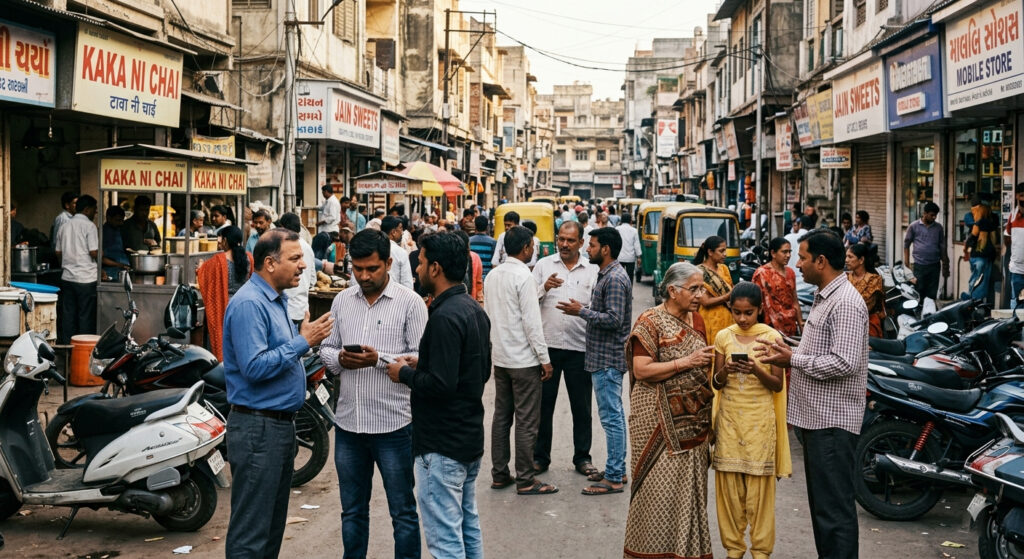
- Regional Variations: Impact differs across urban and rural areas.
- Language Diversity: Content in regional languages plays a major role but is less scrutinized.
Another overlooked aspect is the psychological impact. Repeated exposure to certain narratives can subtly influence beliefs over time, even without conscious awareness.
Impact on Society / Economy / Users
The influence of social media on politics extends beyond elections. It affects society, economy, and individual behavior.
Social Impact:
- Increased political awareness
- Greater participation in discussions
- Rising polarization in some cases
Economic Impact:
- Growth of digital marketing and political consulting industries
- Job creation in content creation and analytics
User-Level Impact:
- Exposure to diverse viewpoints
- Risk of misinformation consumption
- Influence on voting behavior and opinions
The overall impact is complex—both empowering and challenging at the same time.
Role of Media and Narrative
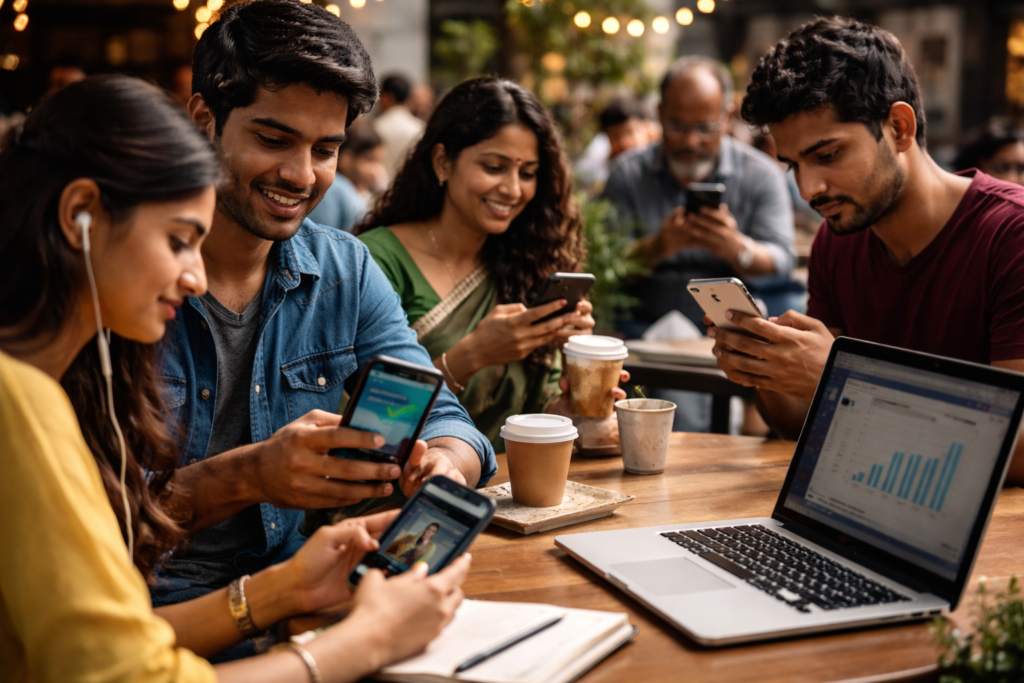
Traditional media and social media now operate in a hybrid ecosystem. News stories often originate on social platforms and are later picked up by mainstream media.
Key dynamics:
- Narrative Amplification: Social media trends influence news coverage.
- Feedback Loop: Media reports feed back into online discussions.
- Agenda Setting: Trending topics can shape public priorities.
In this environment, social media political influence is not isolated. It interacts with traditional media to create a broader narrative ecosystem.
Bigger Picture / Future Outlook
Looking ahead, the role of social media in Indian politics is likely to grow even further.
Key trends to watch:
- Regulation: Governments may introduce stricter rules on digital platforms.
- AI and Automation: Advanced tools could make content creation and targeting more sophisticated.
- Platform Accountability: Increased pressure on companies to manage misinformation.
- Digital Literacy: Greater focus on educating users to critically evaluate content.
The future of online opinion shaping India will depend on how these factors evolve. The challenge lies in balancing innovation with responsibility.
Conclusion
The rise of social media political influence in India represents a fundamental shift in how democracy functions. It has opened new avenues for participation, communication, and engagement, making politics more accessible than ever before. At the same time, it has introduced complexities that challenge traditional notions of truth, trust, and accountability.
This dual nature—empowering yet potentially disruptive—defines the current moment. Social media is neither inherently good nor bad; its impact depends on how it is used by individuals, institutions, and platforms.
As India continues to navigate this digital transformation, the focus must remain on fostering informed participation, ensuring transparency, and maintaining a balance between freedom and responsibility.
The question is no longer whether social media influences politics—it clearly does. The real question is how that influence will shape the future of democracy.
More Read
FAQ
1. What is social media political influence?
It refers to the impact of social media platforms on political opinions, discussions, and decision-making among users.
2. Why is this topic controversial?
Because while it increases participation, it also raises concerns about misinformation, manipulation, and polarization.
3. What are the key facts?
Social media has expanded political reach, increased engagement, and introduced new forms of communication and influence.
4. What does it mean for the future?
It suggests a more digital-driven political landscape, with both opportunities and challenges for democracy.
5. How does online opinion shaping India work?
It involves targeted messaging, algorithm-driven content, and user interactions that influence public perception.
6. Does social media decide elections in India?
No, but it plays a significant role in shaping narratives and influencing voter perceptions.
7. How can users stay informed?
By verifying information, following credible sources, and being aware of biases in online content.