


Introduction
Indian cinema has never been a mere story telling but is a cultural phenomenon, emotional bondage and, most importantly, a political tool. The last few years have seen the discussion of the power of political films in India being heated, and no longer are films considered as harmless entertainment, but as great stories that can influence the mass consciousness.
Since the historical reinterpretations up to the present-day ideological representations, political themes are now present in the mainstream cinema to a significant degree. It can be nationalism, governance, identity, or social conflict, but films are captivating by the issues that directly touch upon real world politics. This has not been unnoticed. Cinema is facing scrutiny by audiences, critics, and policymakers as to its contribution to opinion formation.
The volume and rate of content use is what makes this subject of specific interest in the modern context. Streaming platforms and social media are increasing the reach, which means that one movie can change the lives of millions of people in a few days. The main issue is no longer whether the cinema is the reflection of society but whether it affects it.
The Political History of the Indian Cinema.
In order to appreciate the present, one has to look into the past. Political and social stories have always been part and parcel of Indian cinema, but this has taken a variety of shapes and intensities with time.
Early Cinema: Implicit Resistance and Social Message.
In the pre-independence times, movies were commonly symbolic messages against colonialists. Criticism was not allowed point-blank, thus filmmakers have employed metaphors and allegory to speak out. Justice, oppression, and identity were central themes and were typical of the socio-political climate at the time.
The post-Independence Era: Nation-Building by Cinema.
Cinema contributed to the identity after the year 1947. There were films emphasizing unity, rural development, and social equality. It was more of an optimistic tone and it suited the overall objectives of nation-building.
Liberalization to Modern Era: Difficulty and Critique.
Since the 1990s the economic and social developments introduced new themes. Corruption, failure of governance and political forces of power became primary narratives. Cinema was more critical and less idealistic.
The Ongoing Stage: Face to Face Political stories.
Political story telling is more forthright today. The movies are not merely based on real events, they are also quite ideologically slanted. This change will be a new step in cinema politics in which storytelling and political messages are more visible than ever before.
The Reason that Political Cinema is taking over discussions today.
It is not by chance that political films are increasingly becoming visible. It is propagated by various structural and cultural influences that have changed the filmmaking and the viewership.
Emergent Politically Conscious Audiences.
The current generation audience is more knowledgeable and judgemental. The internet has provided some level of awareness to political issues, which makes a viewer more interested in watching politically related material.
Social Media Amplification
Social media sites such as Twitter, YouTube, and Instagram have reshaped the discussion of movies. A film is not merely viewed anymore, it will be argued, criticized, and (or) even marketed online. This adds even more weight to it beyond the screen.
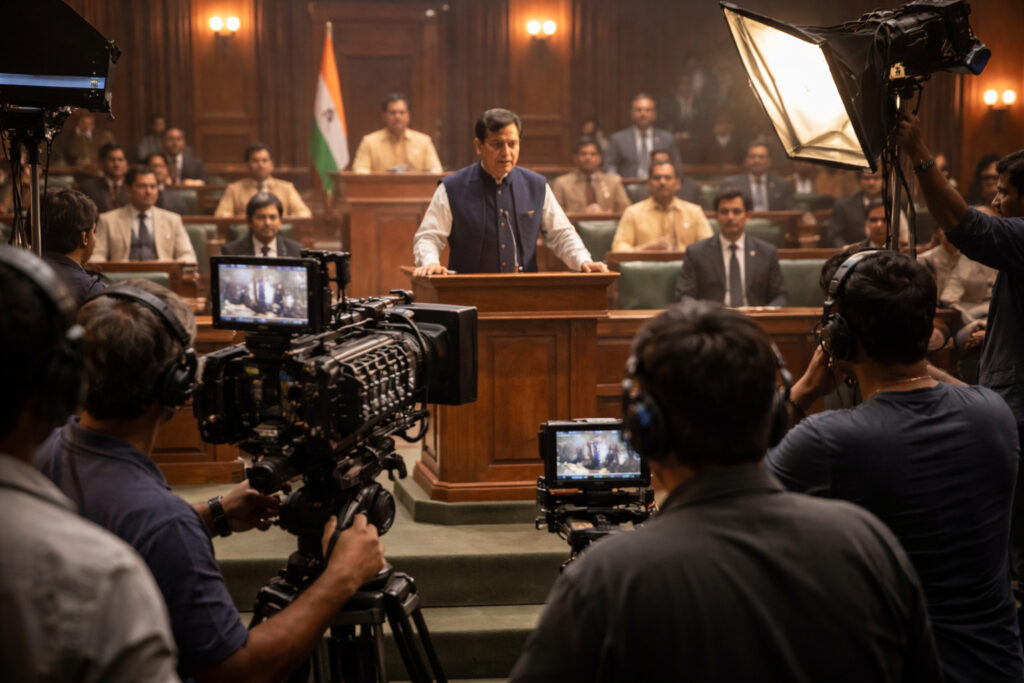
Strategic Content Creation
The creators of the films and their producers are becoming more conscious of the commercial potential of controversial or politically relevant material. Controversial films tend to gain popularity and, thereupon, increased earnings.
Streaming Sites Reaching a wider audience.
The digital platforms have eliminated geographical boundaries. An Indian film that carries political undertones can now be available to the rest of the world, instantly, which exposes it to more exposure and scrutiny.
The Reason why political movies affect India is a debatable subject.
The very core of the debate is a conflict:
Is it reality that is being reflected in cinema or is it being formed?
Fuzzy Border between Narration and Propaganda.
Among the most significant issues is the fact that it is hard to see the difference between the real storytelling and propaganda films in India. When the stories are based too much on particular political ideologies, there are questions of intent that are bound to come up.
Timing and Context
It is always suspected that some movies are released at a particular time, particularly during elections or other important political occasions. This timing can not be achieved by chance, according to critics.
Emotional Power of Cinema
Films, unlike news or articles, involve the audiences emotionally. Narratives are more persuasive through the use of music, visuals and storytelling techniques.
Audience Polarization
Political movies are films that have a tendency to polarize. Some viewers consider them as being honest and nationalistic, but some find them to be partisan or propaganda. Such polarization contributes to the controversy.
The Various approaches to Political Cinema.
Opinions of the Supporters: Cinema as Awareness and Expression.
The advocates believe that political movies are vital in a democratic society.
Their viewpoint is that the expensive problems can be made easier through the medium of film, and be made known to many people. Films to most individuals serve as a point of entry into politics and governance.
The other reason is creative freedom. Filmmakers just like writers and journalists have a right to voice their opinion. It is impractical to expect art to be totally neutral as its proponents argue.
Also, political movies have the ability to maintain history and culture stories. They make people aware of things and aspects that would otherwise go unnoticed.
Critic View: The Cinema as Power and Control.
Opponents are more conservative. They claim that movies have the ability to influence perception in subtle ways especially where the movies give one sided accounts.
One of the issues is biased narration. The movies tend to bring out some facts and neglect the others, thus forming a skewed version of the truth.
Emotional manipulation is another problem. Through dramatic presentation of story, movies are able to gain the emotions of viewers concerning a certain opinion, though not necessarily true.
There is also the concern on the long term effect on democracy by critics. When people use films as a source of political knowledge so intensely, then this may result in ill-informed opinions.
Facts vs Claims: The Division between Reality and Narrative.
The impact of political cinema is best interpreted in a moderate way.
What the Facts Say
- The Indian cinema has grown in terms of political themes.
- Movies cover a large population of different demographics.
- Political films tend to have polarizing effects on the audience.
- Social media contributes significantly to heated debates.
Common Claims
- Films have a direct impact on voting.
- Cinema is also used as propaganda by political parties.
- Films are easy to manipulate audiences.
The Balanced Reality
Although movies have the capacity of creating perception, they are not the only contributor to decision making. Several sources affect the people such as news, personal experiences, and social environments.
Cinema does not always change the existing beliefs, but tends to reinforce them.
Secret Layers That Majority of us do not see.
Political movies that shape India are often viewed through the prism of debate that lacks more profound dynamics affecting the content and perception.
Business Intangibles Underlying Political Message.
Not every political movie is ideologically motivated. Most of them are made due to controversy being a seller. A controversial movie stands more chances of becoming visible and earning money.
Interpretation of Audience is not homogenous.
The same movie would be perceived differently by different viewers. Individual convictions, cultures, and pre-existing knowledge have an effect on the way a story is interpreted.
Content Consumption as an Algorithm.
Streaming services suggest the content depending on how the users act. This may form echo chambers in which the audience is feeded the same content many times, strengthening their convictions.
Influence and Emotional Memory.
Human beings are known to recall the way a movie left them feeling and not any particular details. This emotional memory is capable of a long-lasting effect on perception.
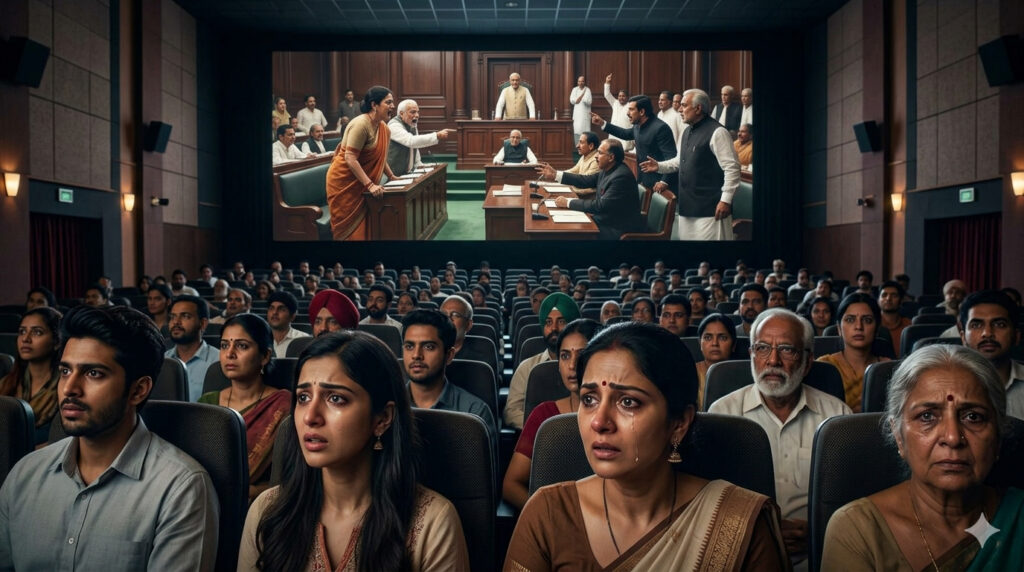
Political Impact of Political Cinema in the Real World.
Social Impact
Cinema influences the discourse of the population. They shape the way individuals talk about such issues as nationalism, identity, and governance.
They may also be the source of social segregation in case they have different meanings to the audiences.
Economic Impact
Scandalous movies tend to do great in the market. This will give more directors an incentive to delve into political topics and this is where demand and profitability are serviced in a loop.
Individual Impact
Films are the information source of some viewers. To others, they merely form entertainment. Yet, some ideas can be passed on to the viewer even in an unintended way.
The Contribution of Media to Cinema Politics.
The media is the intermediary that gets films and viewers to understand the narratives.
Framing the Narrative
The media tends to declare a film as being patriotic or propaganda creating an expectation of this by the audience before they have even watched the film.
Creating Public Discourse
Films are relevant even after their release because of debates, reviews, and social media chats. This has expanded their power beyond the original viewing.
Viral Culture
Clips, dialogue and scenes are regularly viral and reach the audiences that might not necessarily watch the entire movie. This disjointed consumption may still have an impact on perception.
The Bigger Picture: Where Political Cinema is Going.
Technology, awareness among the audiences, and regulatory policies are expected to define the future of cinema politics in India.
Enhancing Multiculturalness of Narratives.
The space is becoming more crowded with regional and independent filmmakers that offer different points of view in political storytelling.
Greater Audience Awareness
Debates are getting more and more critical of audiences. This means that they are doubting stories and not taking them at face value.
Ethical and Regulatory Troubles.
Creative freedom and social responsibility will still be a main challenge. The role in shaping this balance will be played by governments, filmmakers, and platforms.
Long-Term Influence
Cinema Politics will not disappear. On the contrary, it will be refined. The actual transformation will be the changes in the way the audiences will interact with it.
Conclusion
The debate concerning political films that affect India does not revolve around making films as good or bad. It is regarding the strength of a story in creating the perception.
More Read

Cinema can instruct, move and change, yet its effect will be determined by the way viewers read it. Some films can be strong in terms of ideology, but their effect is not absolute and homogenous.
There will always be different points of view in a multi-ethnic nation like India. Political cinema is not the only force that influences the opinion of people.
It is upon the creators and the viewers to be responsible in telling stories and to be responsible in consuming them.
Ultimately, it is not only that cinema is a mirror of the society but it is also a part of the society as well.