

Introduction
Cinema has always been more than just entertainment. It reflects society, shapes opinions, and often challenges deeply rooted beliefs. But in recent years, a recurring pattern has emerged—films triggering intense debates, protests, bans, and widespread public reactions. This raises a critical question: why do movies become controversial, and why does this phenomenon seem to be increasing?
From historical dramas to political narratives and social commentaries, films are now at the center of public discourse. In India especially, cinema is deeply intertwined with culture, religion, and identity, making it a powerful yet sensitive medium. What might be seen as creative expression by filmmakers can be perceived as offensive or provocative by audiences.
Understanding why movies become controversial is not just about analyzing films—it’s about understanding society itself. This article explores the roots of film debates in India, examines the triggers behind public reaction movies generate, and offers a balanced, fact-based perspective on this complex issue.
Background and Context
Cinema has historically played a dual role—entertainment and reflection of society. In India, films are not just consumed; they are emotionally experienced. This deep connection has roots in:
- Cultural storytelling traditions
- Religious narratives
- Social hierarchies
- Political history
From early mythological films to modern political thrillers, cinema has evolved alongside society. However, controversies are not new.
A Brief Historical Perspective
- Early films faced censorship for political content during colonial rule
- Post-independence cinema was scrutinized for moral and cultural values
- In the 1990s and 2000s, globalization introduced new themes, increasing friction
Over time, the rise of mass media and digital platforms amplified reactions. Today, even a trailer release can spark nationwide debates.
Why Context Matters
To understand why movies become controversial, one must consider:
- Cultural diversity
- Religious sensitivities
- Political climate
- Social awareness levels
A single film can mean different things to different groups, making controversy almost inevitable in certain cases.
What Is Happening Right Now
In recent years, controversies around films have intensified. The reasons are not limited to content alone but include how content is consumed and discussed.
Current Trends
- Pre-release controversies
- Teasers and trailers spark outrage before full context is known
- Social media amplification
- Public reaction movies receive is now instant and widespread
- Polarized audiences
- Viewers often interpret films through ideological lenses
- Increased activism
- Organized groups actively campaign against certain films
Why It’s Trending
- Rapid information sharing
- Influencer opinions shaping narratives
- Political polarization
- Increased awareness of representation issues
Film debates in India have become part of a larger ecosystem where cinema intersects with identity, politics, and digital discourse.
Why Movies Become Controversial
Understanding why movies become controversial requires breaking down key triggers. These are not random—they follow identifiable patterns.
Major Triggers
| Trigger Type | Description | Example Impact |
| Religious Sensitivity | Depiction of beliefs or rituals | Protests, bans |
| Historical Interpretation | Alternative or fictionalized history | Academic vs public debate |
| Political Messaging | Direct or indirect political commentary | Polarized reactions |
| Social Issues | Topics like caste, gender, sexuality | Support + backlash |
| Cultural Representation | Stereotyping or misrepresentation | Community outrage |
Core Reasons Behind Movie Controversies
To truly understand why movies become controversial, it is important to go beyond surface-level explanations and explore the deeper psychological, social, and economic factors that drive public reactions. These reasons are often interconnected and reinforce each other, making controversies more intense and widespread.
Emotional Investment
One of the strongest drivers of controversy is emotional connection. In a country like India, where cinema is deeply intertwined with culture and identity, people don’t just watch films—they relate to them. When a movie touches on religion, tradition, or historical figures, it enters a space that is emotionally charged.
For many viewers, these elements are not just stories but part of their personal belief systems. As a result, even minor deviations from accepted narratives can feel like a personal attack. This emotional investment amplifies reactions, turning simple disagreements into large-scale public debates.
Perceived Disrespect
Another major factor is the idea of perceived disrespect. What filmmakers may intend as creative expression can sometimes be interpreted as insensitive or offensive. This gap between intention and perception is where many controversies begin.
Interestingly, the issue is not always about actual disrespect. Often, it is about how content is interpreted by different communities. A scene, dialogue, or portrayal that seems neutral to one group may be deeply offensive to another. This difference in interpretation creates friction, especially in a diverse society with multiple cultural perspectives.
Misinformation
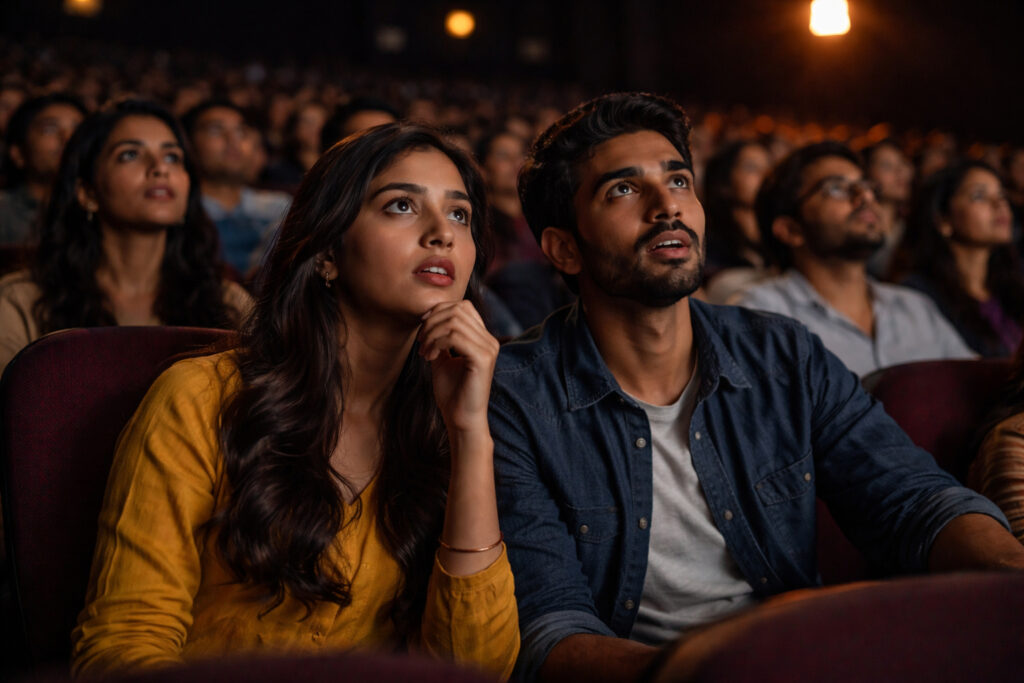
In the digital age, misinformation plays a crucial role in shaping public reaction movies receive. Outrage often spreads faster than facts. Trailers, short clips, or even rumors can go viral, leading people to form strong opinions without watching the full film.
Social media platforms accelerate this process. A single misleading post can trigger thousands of reactions within minutes. By the time accurate information emerges, public perception may already be shaped. This creates a cycle where controversy feeds on incomplete or incorrect information.
Identity Politics
Films today often intersect with identity politics. Issues related to religion, caste, gender, and nationalism are highly sensitive and deeply debated. When a movie touches on these themes, it can quickly become part of a larger ideological battle.
In such cases, the film itself is no longer the central issue. Instead, it becomes a symbol representing broader conflicts between different groups. This shift transforms a cinematic debate into a societal one, making resolution more difficult.
Commercial Strategies
While not always the case, controversy can sometimes be strategically used as a marketing tool. In a crowded entertainment industry, visibility is crucial. Controversy generates attention, media coverage, and curiosity—all of which can translate into higher viewership.
This does not mean all controversies are manufactured, but the possibility of commercial gain cannot be ignored. The line between genuine public outrage and strategic promotion can often become blurred.
Different Perspectives
A balanced understanding of film debates in India requires examining both sides of the argument. Controversies are rarely one-dimensional; they involve multiple viewpoints shaped by values, beliefs, and priorities.
Supporters’ View
Supporters of controversial films emphasize the importance of creative freedom and the role of cinema in society.
1. Freedom of Expression
Cinema is considered a powerful art form, and supporters argue that filmmakers should have the freedom to explore ideas without fear of backlash or censorship. Restricting creative expression, they believe, can limit innovation and storytelling.
2. Social Awareness
Many films address critical social issues such as inequality, corruption, and injustice. Supporters see these films as tools for awareness and change, arguing that discomfort is sometimes necessary to highlight important realities.
3. Creative Interpretation
Stories, especially historical or cultural ones, are open to interpretation. Supporters believe that filmmakers should have the liberty to present alternative perspectives rather than being confined to a single narrative.
4. Audience Choice
Another common argument is that viewers have the freedom to choose what they watch. Instead of demanding bans, individuals can simply avoid content they find objectionable.
5. Progress Through Dialogue
Controversy, according to supporters, is not always negative. It can lead to meaningful discussions, encourage critical thinking, and contribute to societal progress.
Critics’ View
Critics, on the other hand, highlight the potential risks and responsibilities associated with filmmaking.
1. Cultural Insensitivity
Critics argue that films can sometimes misrepresent traditions, leading to hurt sentiments. In a culturally diverse society, sensitivity is essential to avoid unnecessary conflict.
2. Historical Inaccuracy
Distorting historical facts is a major concern. Critics believe that inaccurate portrayals can mislead audiences, especially when films are perceived as factual.
3. Political Bias
Some films are accused of promoting specific political agendas. Critics worry that cinema can be used as a tool for propaganda, influencing public opinion in subtle ways.
4. Commercial Exploitation
Using sensitive topics purely for profit is often seen as unethical. Critics question whether filmmakers are genuinely addressing issues or simply capitalizing on controversy.
5. Social Impact
Negative portrayals can reinforce stereotypes and create divisions. Critics emphasize the broader social responsibility of filmmakers in shaping perceptions.
Facts vs Claims
Understanding public reaction movies generate requires separating verified facts from popular narratives.
Verified Facts
- Films undergo certification processes before release, ensuring basic regulatory compliance.
- Many controversies arise before audiences watch the full film, often based on limited information.
- Social media significantly amplifies reactions, making issues appear larger and more immediate.
- Legal frameworks exist to regulate content and address disputes.
Common Claims
- “Films are intentionally offensive”
- “Cinema is being used for propaganda”
- “Certain groups are always targeted”
These claims often dominate discussions but are not always supported by evidence.

Reality Check
In reality, not all controversies are rooted in the actual content of a film. Many are driven by perception, assumptions, or incomplete information. Context is frequently lost in fast-moving public debates, leading to misunderstandings.
Maintaining neutrality is essential when analyzing these situations. A careful, fact-based approach helps distinguish genuine concerns from exaggerated narratives, allowing for a more informed and balanced understanding of why movies become controversial.
What People Might Be Missing
While debates are loud, deeper insights are often overlooked.
1. Complexity of Interpretation
A film is not a single message—it is open to interpretation.
2. Role of Editing and Promotion
Trailers can misrepresent the actual film.
3. Economic Incentives
Controversy can increase visibility and revenue.
4. Audience Diversity
India’s vast population means varied perspectives.
5. Psychological Factors
People react more strongly to perceived threats to identity.
Impact on Society / Economy / Users
Controversies around films have real-world consequences.
Social Impact
- Increased polarization
- Heightened sensitivity around certain topics
- Public discourse becoming more aggressive
Economic Impact
- Losses due to bans or boycotts
- Increased publicity leading to higher revenue in some cases
- Risk for producers and investors
Impact on Viewers
- Exposure to diverse viewpoints
- Confusion due to conflicting narratives
- Influence on opinions and beliefs
Role of Media and Narrative
The media plays a central role in shaping how controversies unfold.
Traditional Media
- Highlights controversies for viewership
- Frames narratives based on editorial stance
Social Media
- Accelerates public reaction movies receive
- Encourages viral outrage
- Amplifies extreme opinions
Influencer Culture
- Individuals shape public perception
- Opinions often presented as facts
Narrative Building
The way a story is told about a film can be as influential as the film itself.
Bigger Picture / Future Outlook
Looking ahead, the relationship between cinema and controversy is likely to evolve.
Key Trends
- Stronger Regulations
Governments may tighten content guidelines. - Digital Platform Influence
OTT platforms may face similar scrutiny. - Audience Awareness
Viewers may become more critical and informed. - Global Exposure
Films now reach international audiences, adding complexity. - Technological Impact
AI and digital tools may change storytelling methods.
Future Questions
- Will censorship increase or decrease?
- Can creative freedom coexist with social responsibility?
- How will global audiences influence local cinema?
Conclusion
The question of why movies become controversial does not have a single answer. It lies at the intersection of culture, politics, identity, and communication. Films are powerful because they evoke emotion—and emotion often leads to reaction.
In India, where diversity is vast and sensitivities are deeply rooted, film debates are almost inevitable. However, controversy is not inherently negative. It can spark dialogue, challenge perspectives, and push society toward reflection.
The real challenge lies in balancing freedom of expression with responsibility, and reaction with understanding. As audiences, creators, and media continue to interact in this evolving landscape, one thing remains clear—cinema will always be more than just a screen; it will be a mirror, and sometimes, a battleground.