

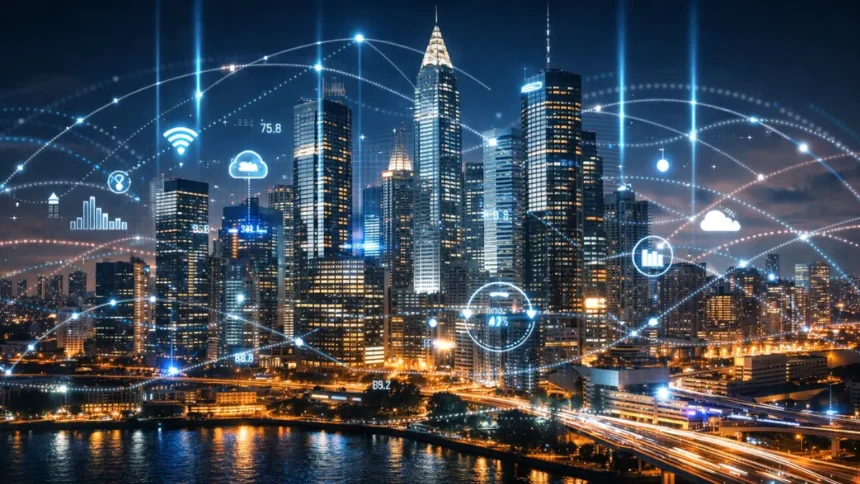
It usually starts in small, almost forgettable ways.
A traffic signal that adapts instead of staying rigid. A streetlight that dims when no one is around. A garbage bin that quietly signals when it’s full. No announcements. No visible transformation. Just subtle efficiency.
And then, over time, the city feels… different.
That shift is where the conversation around What Is Smart Cities? truly begins—not as a futuristic concept, but as a quiet redesign of how cities function, respond, and evolve.
What Is Smart Cities? Understanding the Core Idea
Strip away the buzzwords, and a smart city is not about gadgets—it’s about decisions.
At its core, the answer to What Is Smart Cities? lies in how urban systems use data and technology to improve everyday life. It’s the integration of digital infrastructure—sensors, networks, analytics—into physical systems like transport, energy, water, and governance.
But more importantly, it’s about responsiveness.
A smart city doesn’t just operate; it listens. It observes patterns, predicts problems, and adjusts systems in real time. Traffic flows are optimized. Power consumption becomes efficient. Public services are delivered with fewer delays and less friction.
It is not a city filled with screens. It is a city that thinks.
Why “What Is Smart Cities?” Is Suddenly Everywhere
The growing curiosity around What Is Smart Cities? is not accidental. It’s driven by pressure—demographic, environmental, and economic.
Cities are expanding faster than their infrastructure can handle. Congestion, pollution, and inefficient public services are no longer occasional problems; they are daily realities.
Governments and planners are now forced to rethink urban models. Technology offers a way to manage complexity without endlessly expanding physical infrastructure.
Consider this: instead of building more roads, cities now try to manage traffic better. Instead of increasing electricity production, they optimize consumption.
The shift is from expansion to intelligence.
In countries like India, this shift became formal with the Smart Cities Mission—a policy attempt to modernize urban governance without losing scalability. But beyond policy, the trend reflects a deeper realization: cities cannot grow the old way anymore.

Inside a Smart City: How It Actually Works
The idea sounds abstract until you see the layers working together.
1. Data as the Backbone
Sensors embedded across the city collect information—traffic density, air quality, water usage, electricity demand. This data is transmitted continuously.
2. Integrated Command Systems
Centralized control centers analyze this data in real time. Patterns emerge. Decisions follow.
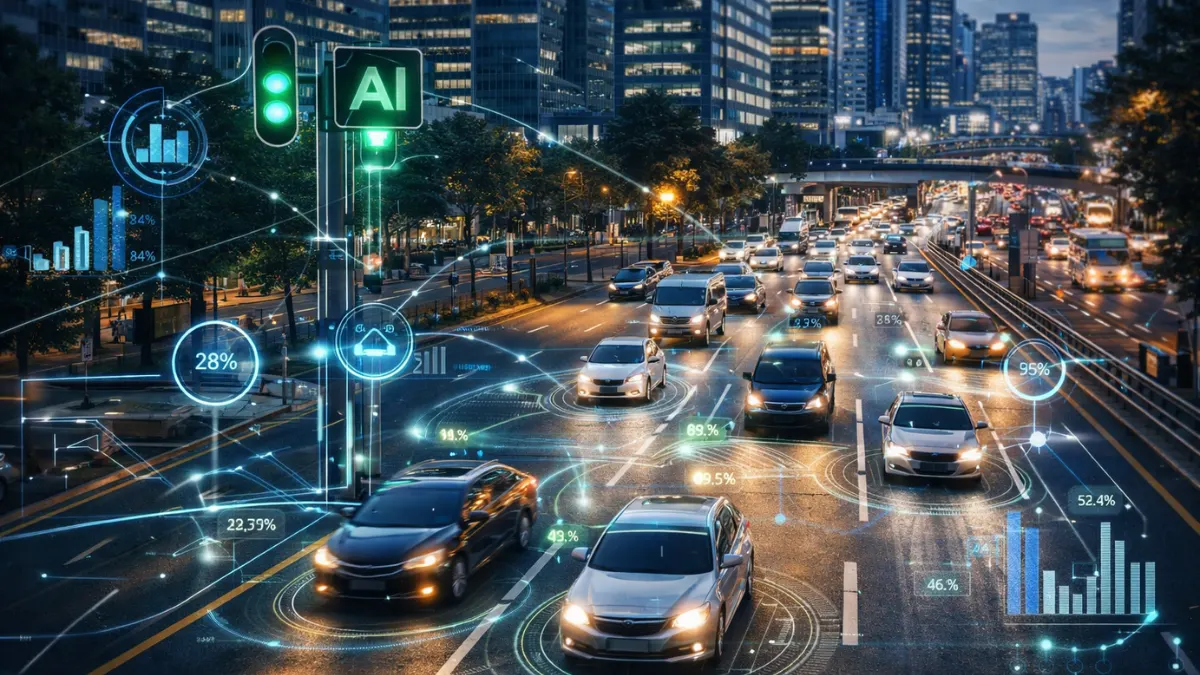
For example, if congestion builds at a junction, signals are adjusted dynamically. If pollution spikes, alerts are triggered, and mitigation steps begin.
3. Citizen-Centric Platforms
Mobile apps and digital portals allow residents to interact with governance—report issues, pay bills, access services. The distance between citizen and administration shrinks.
4. Automation and Predictive Systems
Perhaps the most critical layer. Smart cities don’t just respond—they anticipate. Water leaks are detected early. Energy demand is predicted before peak load. Maintenance becomes proactive instead of reactive.
The system is less about control and more about coordination.
The Psychology of Living in a Smart City
There’s a subtle but important shift that often goes unnoticed.
In traditional cities, inefficiency becomes normalized. People expect delays, power cuts, traffic jams. They adapt their behavior around limitations.
Smart cities disrupt that psychology.
When services become predictable and responsive, expectations change. People start demanding reliability. Governance becomes more accountable—not through pressure, but through visibility.
Transparency increases. Data becomes public. Performance becomes measurable.
This creates a new kind of urban citizen—less tolerant of inefficiency, more engaged with systems.
Business, Economy, and the Smart City Model
The economic implications are deeper than they appear.
Smart cities attract investment—not just because of infrastructure, but because of predictability. Businesses operate better in environments where logistics, energy, and communication are reliable.
Startups thrive in such ecosystems. Data-driven services—mobility platforms, energy solutions, urban analytics—find fertile ground.
Even real estate shifts. Properties in “smart zones” often command higher value, not because of luxury, but because of functionality.
In essence, smart cities are not just urban upgrades—they are economic platforms.
The Sustainability Argument: More Than Just Efficiency
It’s easy to associate smart cities with convenience, but their real promise lies in sustainability.
Urban areas consume a disproportionate share of resources. Energy, water, land—everything is under strain.
Smart systems reduce waste.
Electric grids become intelligent, minimizing losses. Water systems detect leaks early. Public transport becomes efficient enough to reduce private vehicle dependency.
The goal is not just better living—it’s sustainable living.
And increasingly, that distinction matters.
The Limits of the Smart City Narrative
For all its promise, the concept is not without tension.
Technology can optimize systems, but it cannot replace governance quality. A poorly managed city with advanced technology remains poorly managed—just more digitally so.
There are also concerns around data privacy. When cities collect continuous data, questions arise: Who owns this data? How is it used? Who is accountable?
And then there’s inequality.
Not every part of a city becomes “smart” at the same pace. Often, development is concentrated in selected zones, leaving other areas behind.
So the real question is not just What Is Smart Cities?, but also: who benefits from it?
Where It’s Headed: The Next Phase of Urban Intelligence
The next evolution of smart cities will likely move beyond infrastructure into behavior.
Artificial intelligence will play a larger role in predicting urban patterns. Digital twins—virtual models of cities—will simulate decisions before they are implemented. Autonomous systems may reshape transport entirely.
But perhaps the most significant shift will be invisible.
Cities will begin to function less like systems and more like organisms—adaptive, learning, constantly evolving.
And at that point, the distinction between “smart” and “normal” cities may disappear altogether.
More Read

Conclusion
The question What Is Smart Cities? is no longer about definition—it’s about direction.
Cities are being redesigned, not through grand visible changes, but through layers of intelligence embedded into everyday systems. The transformation is gradual, often unnoticed, but deeply structural.
The real story is not about technology. It’s about how cities learn to function better—quietly, efficiently, and with greater awareness of the people who live within them.
Final Insight
Frequently Asked Questions
What is smart cities in simple terms?
A smart city uses technology and data to improve services like transport, energy, and governance, making urban life more efficient and responsive.
What is the purpose of smart cities?
The main goal is to enhance quality of life, improve sustainability, and make urban systems more efficient without constantly expanding infrastructure.
How do smart cities use technology?
They use sensors, data analytics, IoT devices, and digital platforms to monitor systems and make real-time decisions for better management.
Are smart cities only about technology?
No. Technology is a tool, but the real focus is on improving governance, efficiency, and citizen experience.
What are examples of smart city features?
Smart traffic systems, energy-efficient grids, digital governance platforms, real-time surveillance, and intelligent waste management systems.