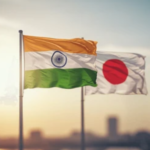

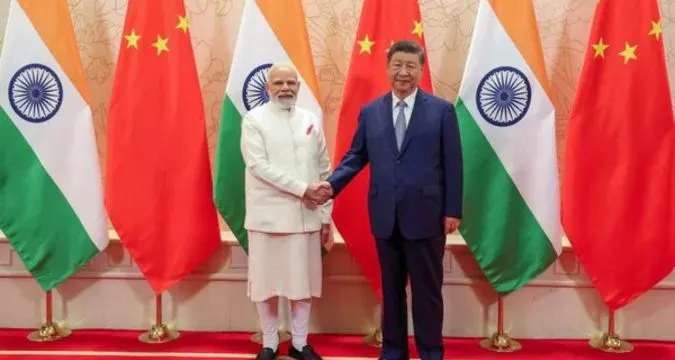
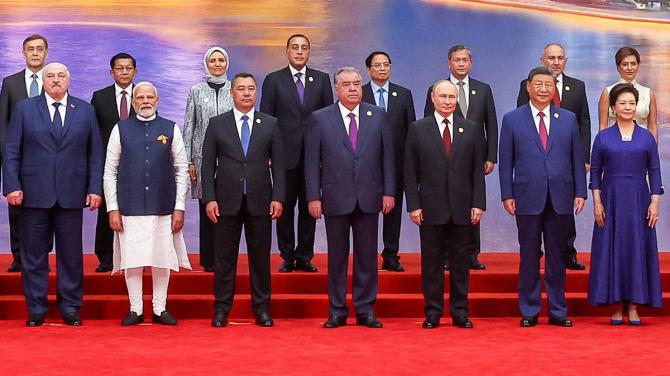
The trip of Prime Minister Narendra Modi to the Shanghai Cooperation Organization (SCO) Summit in Tianjin, China, has raised global debate not only because of the symbolism of India-China discussions after decades of poor relations but also because of the time of the visit in a tense geopolitical environment. The peak is framed against the background of U.S. President Donald Trump tariff policy aggression toward Indian exports, the increasing threat of energy politics within the world, and the balancing act Indians must play between Washington, Moscow and Beijing.
This SCO conference marked the first visit by Modi to China since the deadly border disputes of 2020 that severed bilateral ties. It is also the first time the Indian Prime Minister and the Chinese President, Xi Jinping have held a bilateral meeting on Chinese land since that standoff. The Tianjin summit hence bears both a symbolic and strategic role within the higher sphere of Asian changing geopolitics.
The Significance of the SCO Platform
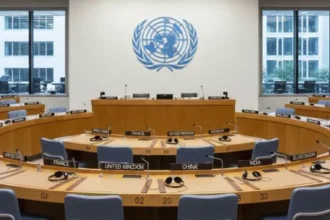
The Shanghai Cooperation Organization was formed in 2001 by China, Russia, Kazakhstan, Kyrgyzstan, Tajikistan and Uzbekistan but has since then added India, Pakistan and most recently Iran. It has asserted that its missions are to promote security in the region, economic collaboration and political stability.
As an SCO member, India has an excellent opportunity to:
- Get near China and Russia, two powers that are at the center of the European strategic balance.
- Enhance its ties with Central Asian nations, which would be central to Indian energy and connectivity goals.
- Demonstrate a multilateral approach at a time when the Western powers, in particular, the United States, is seeking extreme trade and security positions.
The active membership within SCO has been reexamined numerous times concerning the manner in which it complies or fails to comply with the duty that it owes to other unions like the Quad which categorizes India among the United States, Japan and Australia. In Tianjin, Modi wanted to show the world that India was determined to engage in multilateral dialogue, regional stability and balanced diplomacy.
Modi–Xi Meeting: A Fragile Reset
One of the summit highlights included the meeting of Prime Minister, Modi, with Chinese President, Xi Jinping. The handshake between the two leaders had a heavy symbolism bearing in mind the bitter history of border tensions in the Ladakh and Arunachal sectors.
In his introduction speech, Modi indicated that the relations between India and China have made a positive move and disengagement has occurred in some of the areas of tension along the Line of Actual Control (LAC). He noted that an amicable environment within the frontiers is vital to broader cooperation, and this is an indication of a kind of guarded optimism that relations will ease between India and the U.S.
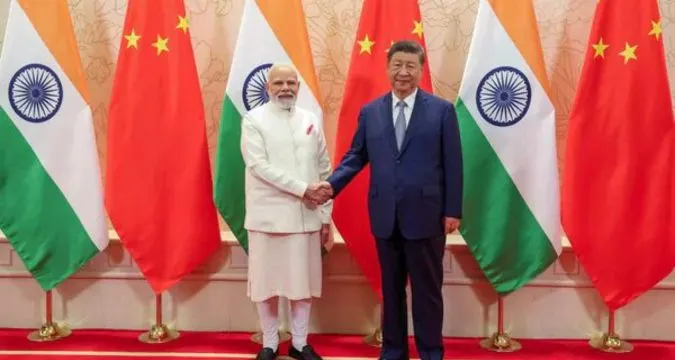
President Xi, expressing his mood to the Chinese state broadcaster CCTV, stated that the meeting will serve as the next step towards bilateral relationship and promote long-term, healthy and stable development of bilateral relationships.
Why This Meeting Matters
- Border Stability: As of 2020, tens of thousands of troops in each of the two countries are stationed in high-altitude locations. A major de-escalation is a partial disengagement.
- Economic ties: India-China has been able to trade at USD 135 billion in 2024 despite political strains, but it has increasingly become one-sided towards Beijing. It is difficult to re-balance economic relations.
- Geopolitical Environment: The security calculations of India are becoming tricky given that China is rapidly improving its ties with Pakistan and Belt and Road initiative in South Asia. However, discussion is necessary to prevent confrontations in the future.
It is indicated by the Tianjin dialogue that both parties are seeking to separate issues in compartments whilst increasing collaboration in areas that are less contentious like trade, climate change and multilateral development programs.
Modi–Putin Meeting: Energy and Strategic Continuity
The other notable encounter was the meeting of the Russian President, Vladimir Putin, with Modi. The long-established India-Russia ties, based on industrial and energy collaboration, are under scrutiny, as India began buying in greater quantities of discounted Russian crude, after the Ukrainian war.
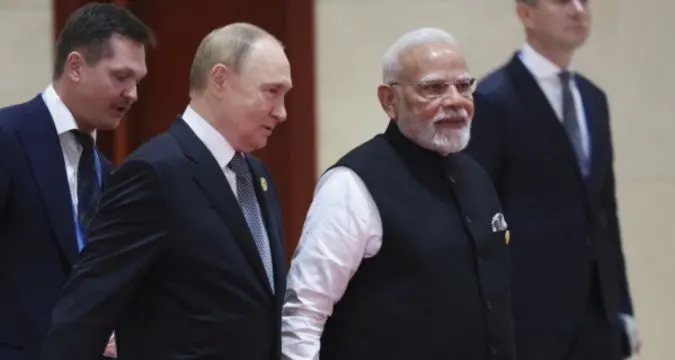
The United States is pursuing Indian Russian oil trade with the new tariff regime under Trump, and 50 percent tariffs have been proposed on Indian products entering American markets, the highest tariffs in Asia. That move has placed New Delhi in a quandary: between its long-term defense-energy relations with Moscow on the one side and the economic cost of its relations with Washington on the other.
Key Takeaways from Modi–Putin Engagement
- Energy Security: Russia is also one of the leading suppliers of crude oil in India. Modi will likely reiterate the requirement of India to have affordable energy in a global context of price volatility.
- Defense Cooperation: India is still dependent on Russian equipment, but is increasingly diversifying to Western sources. The talk will probably cover the outstanding defense agreements and co-production prospects.
- Geopolitical Balancing: The message between the optics of Modi and Putin is clear: despite American tariffs, New Delhi will not turn its back on Moscow. Rather, India is trying to pursue a separate path in world geopolitics.
The U.S. Factor: Tariffs and Pressure
Perhaps the most important context to the SCO summit is the United States aggressive tariff policy under President Trump. In August 2025, Washington announced a blanket 50 per cent tariff on Indian exports including the textile, chemical and machinery industries.
The sanctions have largely been considered the natural reaction to the reality that India still brings energy to Russia, despite the U.S. encouraging the matching of sanctions. It could have a significant economic effect on India. The Ministry of Commerce estimates that there would be USD 65-70 billion worth of Indian exports annually that would be affected by the new tariffs.
India’s Dilemma
- Reliance on the U.S. Markets: The United States is the largest export destination of India, with the United States accounting close to 18 per cent of the total exports in 2024-25.
- Russian Energy Security: Russian oil imports have been used to stabilize domestic fuel prices in India and ensure that inflation is kept at a check.
- Strategic Autonomy: India has always had an independent foreign policy and has not been affiliated with any power bloc. The tariff crisis is putting the strength of this strategy to the test.
Maldives Engagement: Neighborhood First in Action
The Maldives President Mohamed Muizzu also met with Modi on the sidelines of the summit. The meeting comes at the right time, because over the past few years, Male has been edging towards Beijing in terms of relations with India.
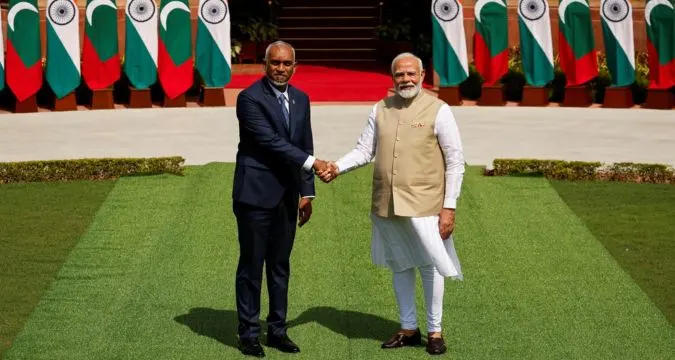
Modi emphasized that the developmental relations between the island country and India are beneficial to the people of the two nations. This is Indian subsidizing infrastructure, medical and renewable energy projects in Maldives.
To New Delhi the participation was a means of reasserting its policy of Neighborhood First and to counter the China impact on the Indian Ocean.
What This Summit Means for India
The example of the Tianjin SCO Summit 2025 demonstrates the ambiguity of the Indian foreign policy situation:
- The engagement of China despite mistrust: This is a way of ensuring that the borders are stable and there is no possibility of war.
- Enhancing Russia relationship despite the pressure of the U.S.: It is key to energy and defense sustainability.
- Dealing with the U.S. despite tariffs: India cannot be able to do without Washington, but needs to indicate its freedom to make its own decisions.
- Strengthening regional leadership: By holding meetings with smaller neighbors such as the Maldives.
The approach that India has adopted is of multi-alignment, or not taking sides but rather seeking occasions of collaboration, depending on the issues at hand. This policy is a reflection of the desire of India to become not only a balancing power but a shaping power in world politics.
Looking Ahead
The results of the SCO summit will not have solved the underlying conflicts or protect India completely against U.S. tariff shocks. Nevertheless, the aggressive diplomacy of Modi in Tianjin proves that India wants to be the epicenter of the European and the world discussion.
The next section of the Indian foreign policy is now dominated by three questions:
- Is it possible to establish genuine trust between India and China over short-term disengagement?
- Will India’s energy ties with Russia trigger further U.S. economic retaliation?
- What can India do to use multilateral forums such as the SCO to improve its long-term international position?
Since the dust has settled on Tianjin, there is one thing that is evident; India is grappling with one of the most multifaceted strategic environments of the 21st century. It takes diplomatic dexterity, economic strength and the political determination to balance Washington, Beijing and Moscow in one move. The participation of Modi in the SCO summit is an indication that New Delhi is ready to walk that thin line on its conditions.