
There’s a subtle moment that’s becoming increasingly common in modern workplaces. A decision is made—not after a long meeting, not after debate, but after someone glances at a dashboard and says, “The system suggests this.” There’s no drama, no resistance. Just quiet acceptance.
That moment says more about the rise of Next-Gen AI Systems than any headline ever could.
We are no longer dealing with software that simply responds to commands. Something deeper is unfolding—systems that interpret, predict, and increasingly influence how decisions are made. And the shift is happening faster than most people realize.
When AI Stops Assisting and Starts Deciding
The earlier generation of artificial intelligence was easy to define. It automated tasks. It reduced manual work. It followed instructions with increasing efficiency. But it still needed direction.
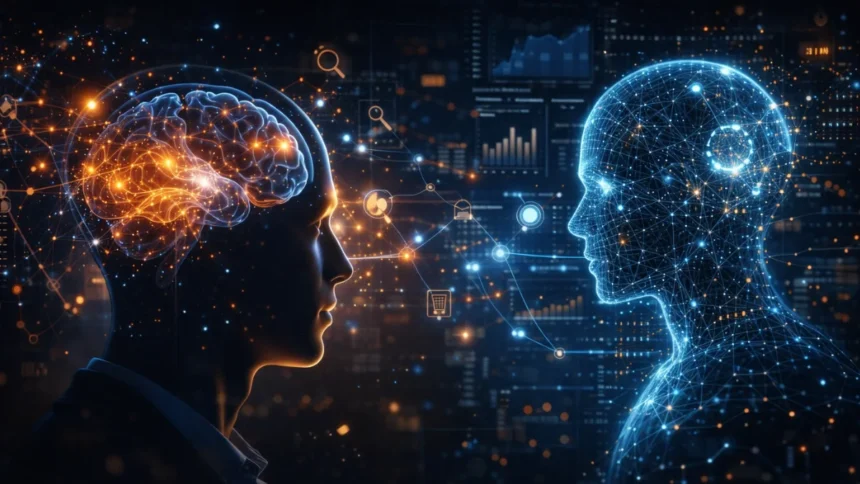
Next-Gen AI Systems, however, operate differently. They are not just reactive—they are proactive. They don’t wait for instructions; they generate options, prioritize outcomes, and sometimes even recommend actions with surprising confidence.
Think about recommendation engines that feel eerily accurate. Or financial systems that flag risks before humans notice patterns. Or customer service bots that don’t just respond but anticipate needs based on behavior.
This isn’t just automation. It’s interpretation.
And once systems begin interpreting, they inevitably begin influencing.

The Rise of Context-Aware Intelligence
One of the defining characteristics of Next-Gen AI Systems is their ability to understand context. Earlier systems processed inputs in isolation. Today’s systems analyze patterns across time, behavior, and environment.
A simple example: a navigation app no longer just shows the shortest route. It factors in traffic patterns, driver habits, time of day, and even likely delays based on historical data. It’s no longer just mapping—it’s predicting.
This contextual awareness is what makes modern AI feel almost intuitive. It mirrors human reasoning—not perfectly, but convincingly enough to earn trust.
And trust, in technology, is everything.
Why Next-Gen AI Systems Are Suddenly Everywhere
The rapid rise of these systems isn’t accidental. It’s the result of three forces converging at once: data abundance, computational power, and business urgency.
Organizations today are overwhelmed with data but under-equipped to interpret it. That gap has created a perfect opportunity for AI systems that can extract meaning at scale.
At the same time, businesses are under pressure to move faster. Decisions that once took days now need to happen in minutes. In such an environment, relying solely on human judgment is no longer efficient.
So companies turn to systems that can process complexity instantly.
And once they do, going back becomes difficult.
The Business Shift: From Efficiency to Strategy
Initially, AI adoption was driven by efficiency—reduce costs, automate processes, improve output. But Next-Gen AI Systems are shifting the conversation toward strategy.
Companies are now using AI not just to do things faster, but to decide what should be done in the first place.
Marketing campaigns are shaped by predictive insights. Supply chains are adjusted based on anticipated demand. Hiring decisions are increasingly influenced by algorithmic screening.
This introduces a new dynamic: businesses are no longer just using tools. They are collaborating with systems.
That collaboration, however, raises an important question—who is actually in control?

The Human-AI Balance: Confidence vs. Dependence
There’s a fine line between trusting a system and depending on it.
As Next-Gen AI Systems become more accurate, humans naturally begin to rely on them more. Over time, this reliance can turn into quiet dependence. Decisions feel safer when backed by data-driven recommendations.
But here’s the complication: AI systems are only as good as the data they are trained on. Bias, gaps, and limitations still exist.
The danger is not that AI will make mistakes—it will. The real concern is whether humans will notice those mistakes when they become too accustomed to trusting the system.
In many ways, the challenge of the AI era is not technological. It’s psychological.
The Invisible Influence of AI
Perhaps the most fascinating aspect of Next-Gen AI Systems is how quietly they shape behavior.
Unlike traditional technologies that demanded attention, modern AI blends into the background. It nudges rather than commands. It suggests rather than forces.
And those suggestions, over time, influence choices.
From what we watch to what we buy, from how we work to how we communicate—AI is subtly guiding decisions in ways that often go unnoticed.
This is not control in an obvious sense. It’s influence in its most refined form.
What Comes Next: Adaptive, Autonomous, and Integrated
Looking ahead, the trajectory is clear. AI systems will become more adaptive, more autonomous, and more deeply integrated into everyday life.
Future systems won’t just respond to environments—they will learn continuously from them. They will adjust in real time, personalize interactions at scale, and operate with minimal human intervention.
This raises profound questions about responsibility, accountability, and decision ownership.
If a system recommends a strategy that fails, who is responsible?
If an AI-driven decision leads to unintended consequences, where does accountability lie?
These are not theoretical concerns. They are becoming practical realities.
More Read

Conclusion
The evolution of Next-Gen AI Systems is not loud or dramatic. It’s subtle, steady, and deeply transformative.
We are witnessing a shift from tools that assist to systems that influence—and sometimes even decide. The change is not just technological; it’s cultural. It’s altering how we think, how we trust, and how we act.
The real question is not whether AI will shape the future. It already is.
The question is whether we will remain conscious participants in that process—or quietly hand over more control than we realize.
Final Insight
At The Vue Times, we see Next-Gen AI Systems not as a distant future, but as a present reality unfolding in layers. The smartest approach isn’t resistance or blind adoption—it’s awareness. Because in a world where machines are learning to think, the real advantage lies in how humans choose to respond-The Vue Times
Frequently Asked Questions
1. What are Next-Gen AI Systems?
Next-Gen AI Systems are advanced AI technologies that go beyond automation to interpret data, predict outcomes, and assist in decision-making with contextual understanding.
2. How are Next-Gen AI Systems different from traditional AI?
Traditional AI focuses on task automation, while Next-Gen AI Systems analyze patterns, learn continuously, and provide insights or recommendations that influence decisions.
3. Why are Next-Gen AI Systems important today?
They help businesses and individuals process large amounts of data quickly, improve efficiency, and make smarter, data-driven decisions in real time.
4. Can Next-Gen AI Systems replace human decision-making?
Not entirely. They support and enhance decisions, but human judgment is still essential for context, ethics, and critical thinking.
5. What industries are using Next-Gen AI Systems?
Industries like healthcare, finance, marketing, logistics, and technology are активно using these systems to improve performance and decision-making.