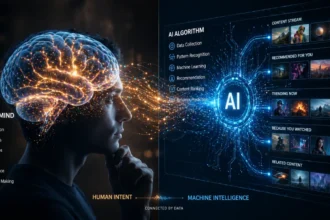

There’s a quiet shift happening in India’s digital landscape. It doesn’t look dramatic—no protests, no sweeping announcements dominating headlines. Instead, it’s visible in smaller moments: a student in a Tier-2 town using an AI tool to draft a scholarship essay, a government officer experimenting with automated translation for regional documents, a small business owner relying on AI-generated marketing copy to compete with bigger brands.
What ties these moments together is access. And that’s exactly where the question begins to sharpen: Should AI tools be treated like public infrastructure—available, affordable, and accessible to all?
The Idea Behind the Debate
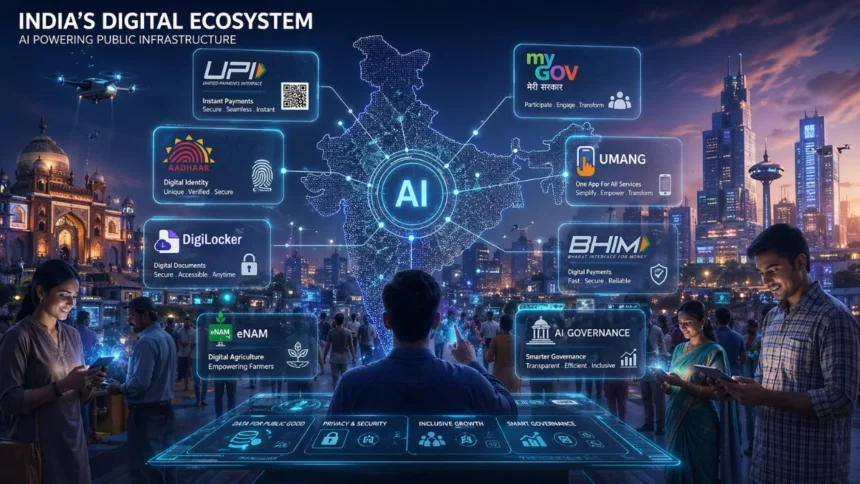
The phrase public infrastructure in India carries weight. It’s not abstract. It means systems like Aadhaar, UPI, or India Stack—platforms that changed how people transact, identify themselves, and interact with the state.
Now, policymakers and technologists are asking whether AI could follow a similar path.
At its core, the argument is simple: if AI is becoming essential to productivity, education, governance, and economic participation, then leaving it entirely in the hands of private companies may widen inequality rather than reduce it.
But simplicity is deceptive. Because the moment you move from idea to implementation, the debate becomes far more complicated.
Why This Question Is Trending Now
India is at a unique inflection point. The country is simultaneously a massive user base, a growing developer ecosystem, and an emerging policy voice in global tech governance.
The rise of large language models and generative AI tools has accelerated this conversation. These tools are no longer niche—they’re becoming embedded in everyday workflows.
At the same time, concerns are growing:
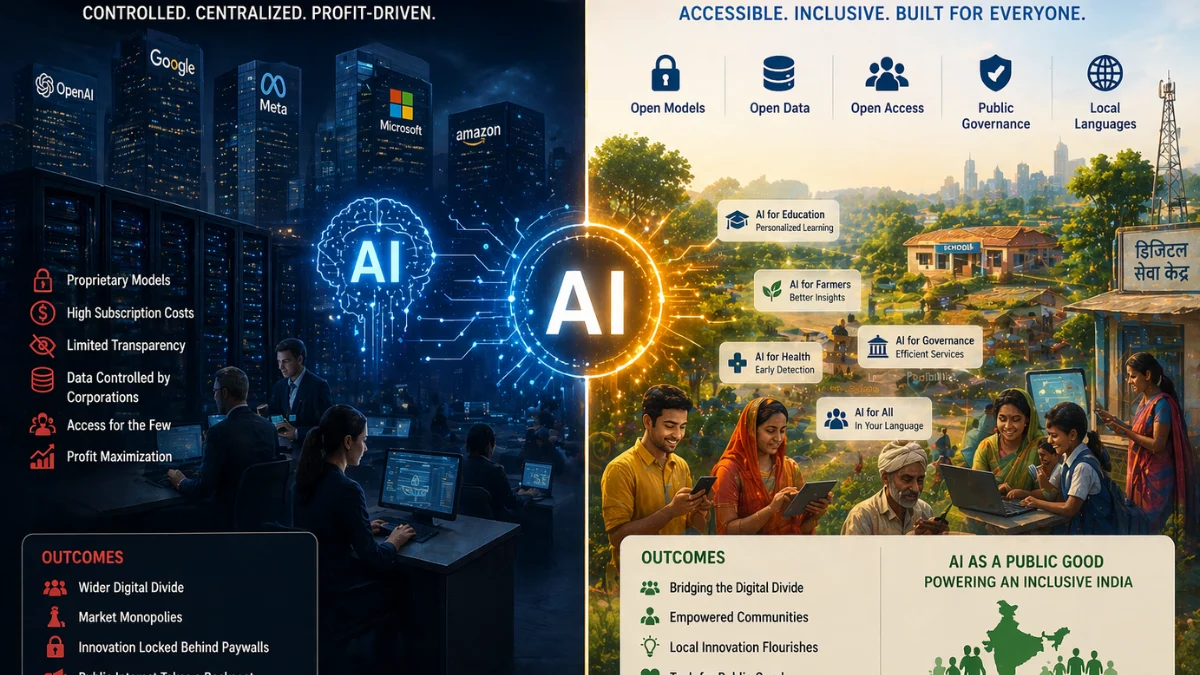
- High-quality AI tools are often behind paywalls
- Data used to train AI systems is largely controlled by private entities
- Language and cultural representation remain uneven
- Smaller players risk being locked out of AI-driven growth
For a country that has already demonstrated the power of open digital systems, the idea of AI as public infrastructure feels both logical and urgent.
The Case for Treating AI as Public Infrastructure
Supporters of this approach often point to India’s own success story.
When digital payments were democratized through UPI, it didn’t just improve convenience—it reshaped the entire financial ecosystem. Startups flourished, transaction costs dropped, and even small vendors became part of the digital economy.
A similar transformation is imagined for AI.
1. Democratizing Access
If AI tools are treated as public goods, they could be made accessible at low or no cost, especially for students, small businesses, and rural communities.
This isn’t just about fairness. It’s about economic participation. When access barriers drop, innovation tends to spread horizontally rather than concentrating at the top.
2. Language Inclusion
India’s linguistic diversity is often underrepresented in global AI models. A public infrastructure approach could prioritize training datasets and models in regional languages, making AI more usable across the country.
3. Reducing Dependency
Relying heavily on foreign AI platforms raises questions about data sovereignty and long-term strategic autonomy. Public AI systems could reduce that dependency, at least partially.
4. Enabling Government Efficiency
From document processing to citizen services, AI has the potential to streamline governance. Public infrastructure models could ensure these tools are integrated directly into public systems rather than outsourced entirely.
The Concerns That Complicate the Picture
For every optimistic projection, there’s a counterpoint—and some of them are hard to ignore.
1. Who Builds and Maintains It?
Public infrastructure is not just about access—it’s about reliability, scalability, and constant updates. AI systems require enormous computational resources and continuous improvement.
Can the government realistically keep pace with private sector innovation?
2. Risk of Centralization
Ironically, treating AI as public infrastructure could lead to centralization of control. If a few state-backed systems dominate, it might limit diversity in innovation.
3. Quality vs Accessibility Trade-off
Free or subsidized AI tools might struggle to match the performance of cutting-edge private models. This could create a two-tier system where premium users still have a significant advantage.
4. Ethical and Political Risks
When AI becomes part of public infrastructure, questions around bias, surveillance, and misuse become even more critical. Who decides what the AI says—or doesn’t say?
The Business Angle: Competition or Collaboration?
For private companies, this debate is not theoretical. It directly affects market dynamics.
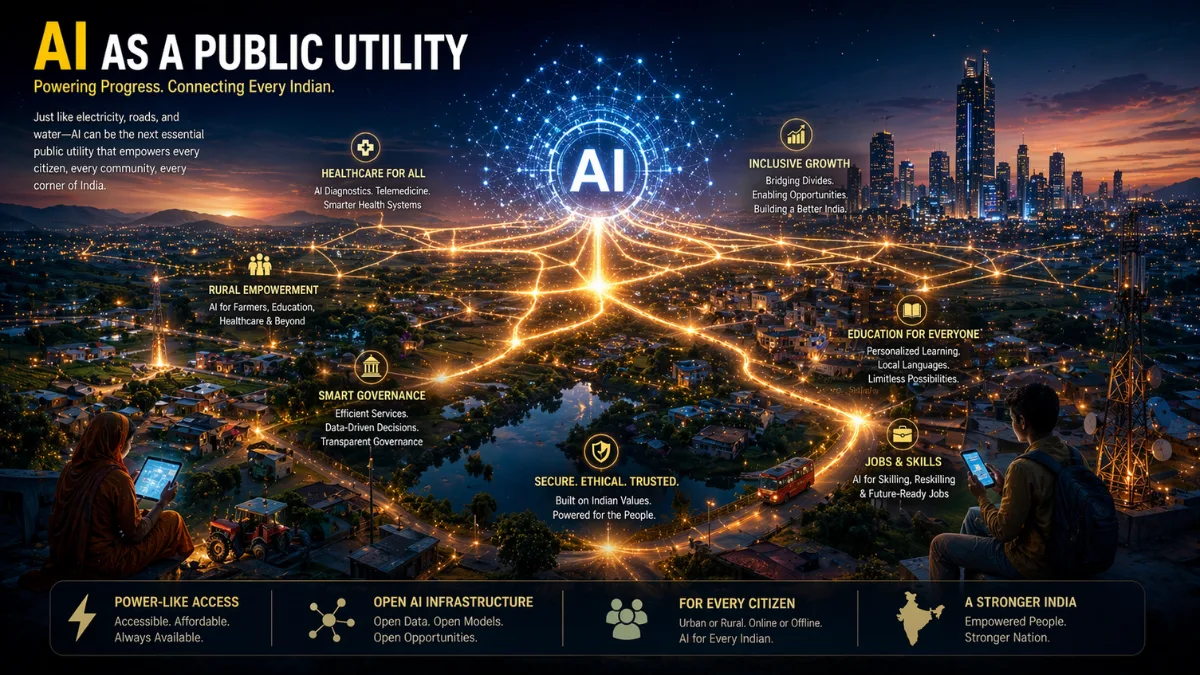
If AI becomes public infrastructure, it could:
- Lower entry barriers for startups
- Reduce monopolistic advantages of large tech firms
- Shift competition toward specialized applications rather than core models
At the same time, it could also create opportunities for collaboration. Just as fintech companies built on top of UPI, AI startups could build services on top of public AI layers.
The outcome depends less on ideology and more on design.
A Middle Path Emerging
What’s increasingly clear is that India is unlikely to adopt a binary approach.
Instead of fully nationalizing AI tools or leaving them entirely to the private sector, a hybrid model is taking shape:
- Government-supported foundational models
- Open datasets and APIs for developers
- Private companies building specialized applications on top
- Regulatory frameworks ensuring fairness and accountability
This layered approach mirrors the architecture of India Stack—a public core with private innovation at the edges.
The Global Context
India is not alone in this conversation. Countries across the world are grappling with similar questions.
The difference lies in scale and urgency. With its population size and developmental diversity, India cannot afford a purely market-driven AI ecosystem that excludes large sections of society.
At the same time, it cannot ignore the pace and efficiency of private innovation.
Balancing these forces is less about choosing sides and more about designing systems that align incentives.
What This Means for the Future
If AI tools do become part of public infrastructure, the implications could be far-reaching.
Education could shift from rote learning to assisted problem-solving. Small businesses could compete with larger firms using AI-driven insights. Government services could become faster and more responsive.
But the risks will evolve alongside the benefits.
Access alone does not guarantee empowerment. The real challenge will be ensuring that people know how to use these tools effectively—and critically.
There’s also a deeper psychological shift underway. As AI becomes more embedded in daily life, the line between human decision-making and machine assistance will blur.
Public infrastructure, in that sense, is not just about technology. It’s about shaping how a society interacts with intelligence itself.
More Read

Conclusion
The question “Should AI Tools Be Public Infrastructure? India’s Policy Debate Explained” is not just about policy—it’s about direction.
India has already shown that when digital systems are designed with openness and scale in mind, they can redefine entire sectors. AI could be the next frontier.
But unlike payments or identity systems, AI carries a different kind of power—the power to influence thought, creativity, and decision-making.
Treating it as public infrastructure could democratize that power. Mishandling it could concentrate it in new ways.
The debate, therefore, is not about whether AI should be public or private. It’s about how to ensure it remains useful, fair, and accountable in a world where intelligence itself is becoming a shared resource.
Final Insight
At its best, public infrastructure doesn’t just provide access—it reshapes possibility. If India chooses to treat AI that way, the real test won’t be technological. It will be whether access translates into opportunity for those who need it most.-The Vue Times
Frequently Asked Questions
What does it mean for AI tools to be public infrastructure?
→ It means AI systems are developed or supported in a way that ensures broad access, affordability, and integration into public services, similar to digital identity or payment systems.
Why is India discussing AI as public infrastructure now?
→ The rapid growth of AI tools and their impact on education, jobs, and governance has made access and control critical policy concerns.
Will public AI replace private AI companies?
→ Not necessarily. A hybrid model is more likely, where public systems provide a base layer and private companies build specialized solutions.
What are the risks of making AI public infrastructure?
→ Risks include centralization, potential misuse, slower innovation compared to private players, and challenges in maintaining high-quality systems.
How could this impact everyday users in India?
→ It could make AI tools more accessible for students, businesses, and government services, potentially improving productivity and digital inclusion.