
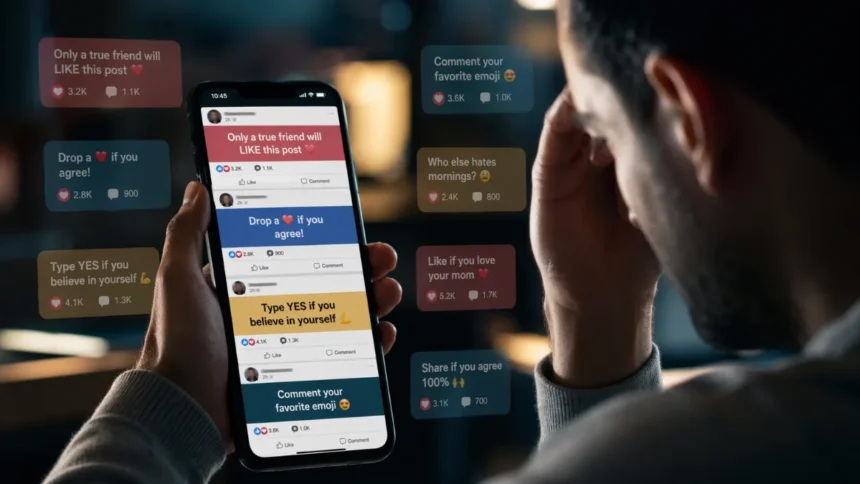
It starts innocently enough. A post appears on your feed—“Type YES if you love your mother.” Another asks, “Drop a ❤️ if you agree.” You pause, maybe smile, maybe scroll. But sometimes, almost instinctively, you engage. A tap, a comment, a reaction. Multiply that across millions of users, and suddenly, something trivial becomes algorithmically unstoppable.
That’s not accidental. That’s Engagement Farming at work.
What Engagement Farming Really Means
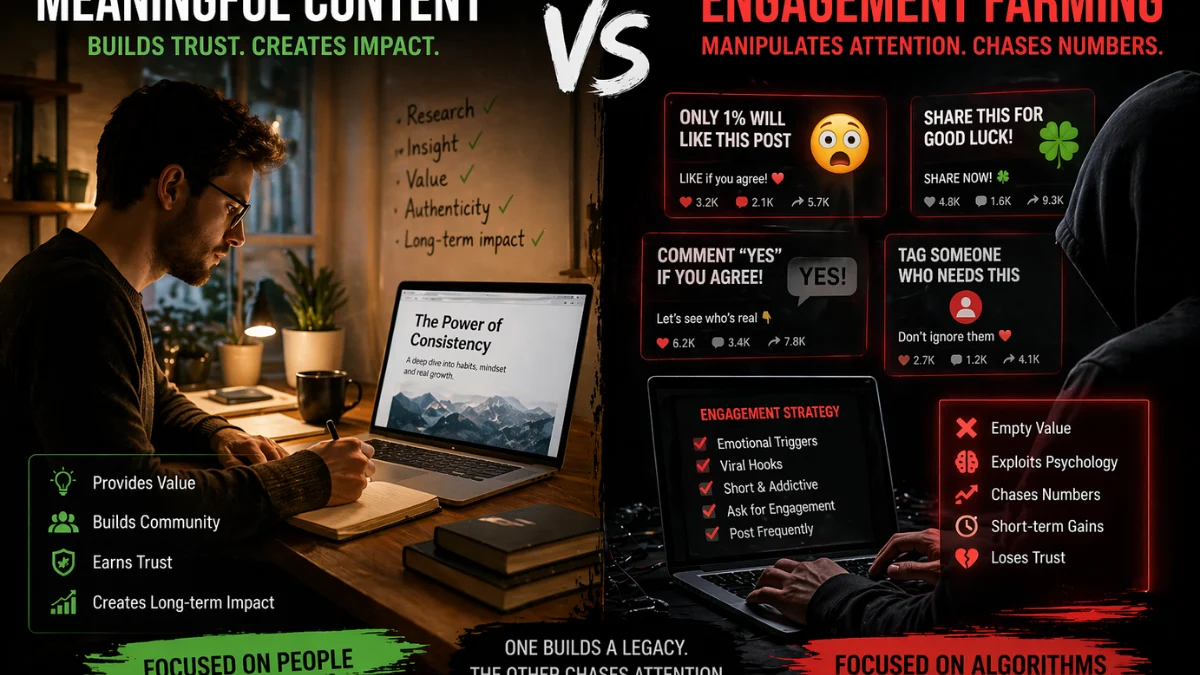
At its core, Engagement Farming is the practice of deliberately designing content to maximize likes, comments, shares, and reactions—often without offering real value. It’s less about meaningful interaction and more about triggering reflexive responses.
Unlike genuine content that earns engagement through insight, humor, or storytelling, engagement farming relies on psychological shortcuts. It exploits the way platforms like Facebook, Instagram, and TikTok reward visibility.
The result? Posts that aren’t necessarily good—but are engineered to spread.
The Origins: From Clickbait to Algorithm Gaming
Engagement farming didn’t appear overnight. It evolved from earlier internet tactics—clickbait headlines, sensational thumbnails, exaggerated claims. But something changed when platforms shifted from chronological feeds to algorithm-driven ones.
Algorithms began prioritizing engagement as a signal of relevance. More likes? More reach. More comments? More visibility.
Content creators adapted quickly. If engagement equals distribution, then engagement itself becomes the product.
That’s where the shift happened—from creating content for people to creating content for algorithms.
Why Engagement Farming Is Everywhere Right Now
Scroll any platform today, and you’ll see the pattern repeating:
- Emotional triggers (“Only real friends will share this”)
- Binary choices (“Tea or coffee? Comment below”)
- Identity bait (“Only 90s kids remember this”)
- Artificial urgency (“This will disappear soon!”)
The reason is simple: it works.
Platforms are crowded. Attention is scarce. And in a system where visibility is earned through interaction, even low-quality engagement becomes valuable.
For creators, it’s a shortcut. For brands, it’s a temptation. For users, it’s often invisible.
The Psychology Behind Engagement Farming
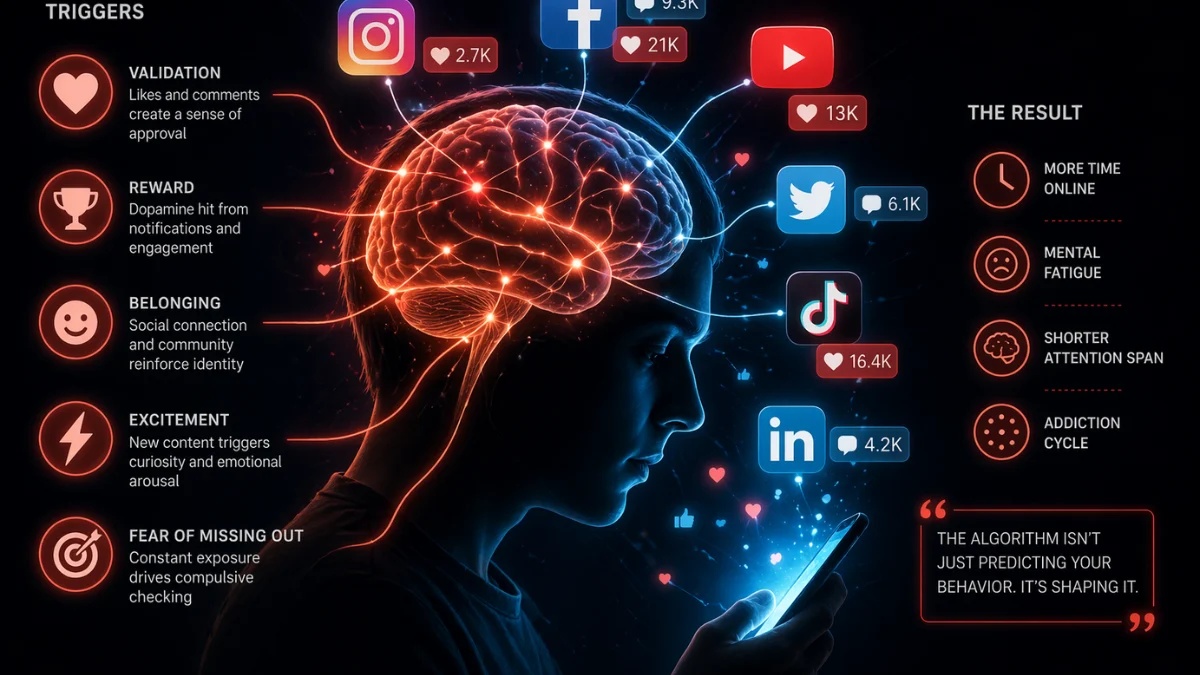
The effectiveness of Engagement Farming isn’t just technical—it’s deeply psychological.
Humans are wired to respond to:
- Belonging: We want to feel included (“Comment if you agree”)
- Recognition: We like being seen (“Tag someone who needs this”)
- Emotion: Strong feelings drive quick reactions
- Simplicity: Easy actions lower resistance
Engagement farming compresses all of this into a few words or visuals. It doesn’t ask you to think. It asks you to react.
And reaction, in the algorithm’s eyes, is everything.
The Business of Engagement: Numbers Over Meaning
Here’s where things get more complicated.
For influencers, engagement metrics are currency. Brands often evaluate creators based on likes, comments, and shares—not necessarily depth or quality.
This creates a feedback loop:
- Engagement farming boosts metrics
- Metrics attract brand deals
- More creators adopt the same tactics
In this system, authenticity becomes optional. Performance becomes measurable. And content becomes optimized not for truth—but for traction.
Even legitimate businesses sometimes fall into this trap, chasing visibility at the cost of credibility.
The Hidden Cost: When Feeds Lose Meaning
At first glance, engagement farming feels harmless. A few extra likes. A viral post. No big deal.
But over time, it reshapes the ecosystem.
Feeds become cluttered with low-value content. Meaningful posts get buried under high-engagement noise. Conversations become shallow.
More importantly, it changes user behavior. People start interacting less thoughtfully. Engagement becomes automatic rather than intentional.
And gradually, the line between genuine interaction and manipulated response begins to blur.
How to Spot Engagement Farming
Once you recognize the patterns, it becomes easier to identify:
- Posts that demand interaction without offering value
- Overuse of emotional triggers with no substance
- Content that repeats across pages with slight variations
- “Engage-first, think-later” messaging
It’s not always malicious. Sometimes it’s just strategy. But the distinction matters.
Because once you see it, you realize how much of your feed is designed—not to inform you—but to use you.
Is Engagement Farming Always Bad?
Not necessarily.
There’s a gray area. Not all engagement-driven content is harmful. Interactive posts, polls, and community prompts can genuinely connect people.
The difference lies in intent.
- Healthy engagement: Encourages discussion, adds value
- Engagement farming: Prioritizes reaction over substance
The problem isn’t engagement itself. It’s the emptiness behind it.
The Future of Engagement Farming
Platforms are beginning to respond. Algorithm updates increasingly attempt to prioritize meaningful interactions over superficial ones.
But it’s a constant cat-and-mouse game.
As platforms evolve, so do tactics. What worked yesterday gets refined today. Engagement farming doesn’t disappear—it adapts.
Looking ahead, we might see:
- Stronger detection of low-value engagement tactics
- Greater emphasis on content quality signals
- More user control over feed relevance
But the fundamental tension remains: attention is valuable, and wherever value exists, it will be optimized.
Where Users Fit In
In the end, engagement farming only works because users participate.
Every like, comment, and share feeds the system.
That doesn’t mean users are responsible for the problem—but they are part of the equation.
The more consciously we engage, the more we influence what rises to the top.
More Read

Conclusion
Engagement Farming isn’t just a content strategy—it’s a reflection of how digital attention works today. It reveals a system where visibility can be engineered, reactions can be predicted, and interaction can be manufactured.
But it also raises a deeper question.
If everything is optimized for engagement, what happens to meaning?
Because attention, once captured too easily, starts losing its value.
And in a world where everyone is trying to be seen, the rarest thing might not be visibility—but authenticity.
Final Insight
The next time a post asks for your reaction, pause for a second longer than usual. That small moment of awareness might be the only resistance left in a system designed to bypass it. Stay Informed Stay Updates-The Vue Times
Frequently Asked Questions
What is Engagement Farming?
Engagement Farming is a social media tactic where content is designed primarily to generate likes, comments, and shares rather than provide meaningful value or information.
Why do creators use Engagement Farming?
Creators use it to boost visibility, as social media algorithms prioritize posts with higher engagement, leading to more reach and potential monetization.
Is Engagement Farming harmful?
It can be. While not always negative, excessive engagement farming can flood feeds with low-quality content and reduce meaningful interactions.
How can I identify Engagement Farming posts?
Look for posts that push for reactions without offering real content—such as “comment YES,” emotional bait, or repetitive viral templates.
Does Engagement Farming affect social media algorithms?
Yes. High engagement signals algorithms to promote content, even if the interaction is shallow or artificially triggered.