

You open your phone for a minute—just to check one message. Twenty minutes later, you’ve scrolled through short videos, skimmed headlines, watched something you didn’t intend to, and somehow forgotten why you picked up the phone in the first place.
It doesn’t feel dramatic. It feels normal.
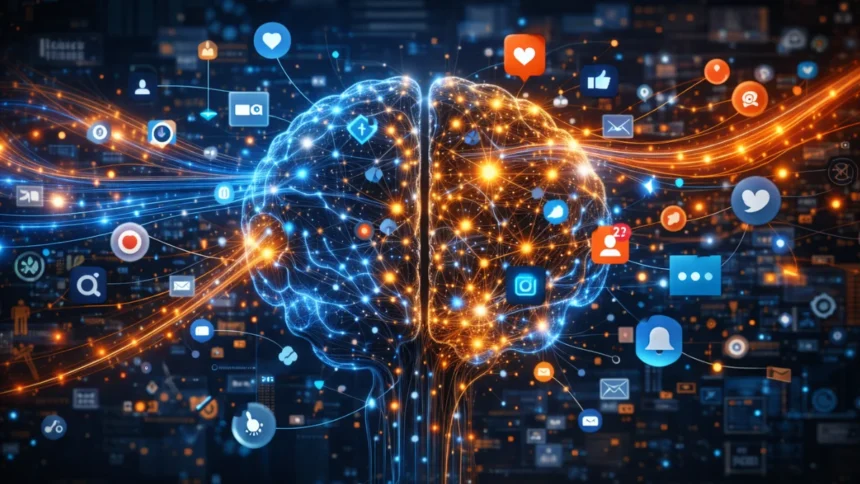
That normal is what defines the rise of the Content Brain—a subtle but powerful shift in how our minds process, prioritize, and react to information in a world saturated with content.
We are not just consuming content anymore. We are being shaped by it.
Understanding the Content Brain
The idea of a Content Brain isn’t rooted in biology textbooks—it’s emerging from behavior. It describes how constant exposure to digital content reshapes our thinking patterns, attention span, and decision-making habits.
At its core, the Content Brain is a response system. It adapts to:
- Rapid information bursts
- Algorithm-driven relevance
- Emotional triggers (likes, shares, reactions)
- Infinite scrolling environments
Think about how differently you read today compared to five years ago. Long paragraphs often feel heavier. Short, sharp information feels easier. Visuals feel faster. Headlines feel more important than details.
That’s not accidental. It’s adaptation.

Where the Content Brain Comes From
The Content Brain didn’t appear overnight. It evolved quietly alongside platforms like Instagram, YouTube, and TikTok—spaces designed not just to host content, but to optimize engagement.
These platforms operate on a simple principle: show users what they are most likely to react to.
Over time, this creates a loop:
- Content is optimized for attention
- Users adapt to that format
- Platforms further refine what works
Eventually, the brain starts expecting:
- Faster delivery
- Higher stimulation
- Immediate relevance
This expectation becomes a habit. That habit becomes a mindset.
And that mindset becomes the Content Brain.
Why the Content Brain Feels So Natural
There’s a reason this shift doesn’t feel alarming. It feels efficient.
The Content Brain rewards:
- Quick understanding
- Instant emotional payoff
- Minimal cognitive effort
It reduces friction. You don’t have to search deeply—content finds you. You don’t have to analyze everything—your brain filters quickly.
But that efficiency comes with trade-offs.
Deep reading becomes harder. Patience weakens. Complex thinking starts feeling like effort rather than engagement.
It’s not that intelligence is decreasing—it’s being redirected.
The Psychology Behind the Content Brain
At a deeper level, the Content Brain operates on reinforcement.
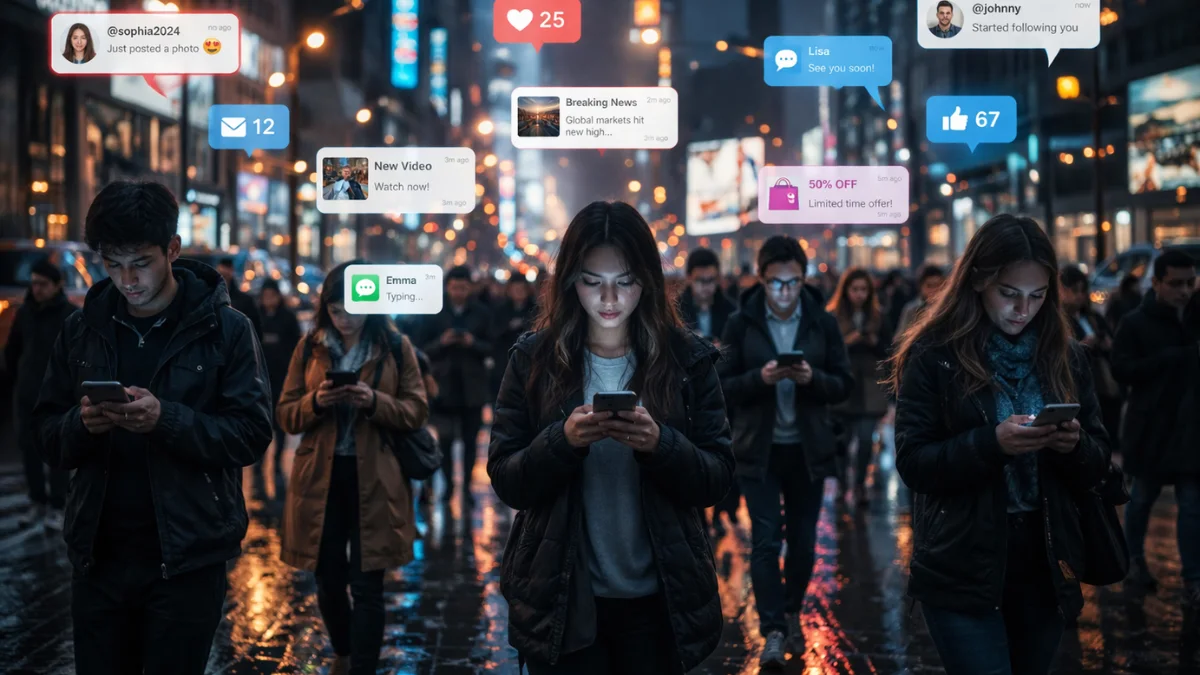
Every notification, every scroll, every “next video” suggestion taps into reward systems in the brain. Small bursts of satisfaction—often linked to dopamine—encourage repetition.
Over time:
- The brain starts craving novelty
- Predictability becomes boring
- Silence feels uncomfortable
This explains why people often check their phones without a reason. It’s not about information—it’s about stimulation.
The Content Brain is not just consuming content. It is trained to seek it.
How the Content Brain Is Changing Behavior
The most visible impact of the Content Brain is not on screens—it’s in daily life.
You see it when:
- Conversations are interrupted by notifications
- People prefer summaries over full explanations
- Opinions are formed quickly, sometimes instantly
Decision-making has also shifted. Instead of deep analysis, people rely on:
- First impressions
- Viral narratives
- Repeated exposure
If something appears frequently enough, it starts feeling true.
This is where the Content Brain intersects with influence.
The Business of Content Brain
From a business perspective, the Content Brain is not a side effect—it’s the foundation.
Companies today don’t just compete for customers. They compete for attention.
Content is no longer marketing support. It is the product.
Brands design strategies around:
- Scroll behavior
- Engagement metrics
- Watch time
The success of a campaign is often measured not by depth, but by how long it holds attention.
This has created a shift in content creation:
- Simplicity over complexity
- Emotion over explanation
- Speed over depth
The Content Brain rewards what is easy to consume, not necessarily what is important to understand.
The Hidden Cost of Content Brain
There’s a quiet cost to this transformation.
When the brain becomes accustomed to constant stimulation:
- Focus becomes fragile
- Memory becomes selective
- Critical thinking becomes reactive
People may feel informed because they consume more content, but the depth of understanding can decline.
It creates an illusion of knowledge.
You know a little about many things—but struggle to go deep into one.
That’s the paradox of the Content Brain.
Is the Content Brain a Problem or an Evolution?
It’s easy to frame this as a negative shift, but that would be incomplete.
The Content Brain is also:
- Faster at processing patterns
- Better at filtering information
- More adaptable to dynamic environments
In many ways, it reflects the demands of the modern world.
The problem isn’t the Content Brain itself—it’s imbalance.
When speed replaces depth entirely, thinking becomes shallow. When content replaces reflection, understanding weakens.
The challenge is not to reject this evolution—but to control it.
What the Future Looks Like
The future of the Content Brain will not slow down—it will intensify.
With advancements in AI, personalization, and immersive content, digital environments will become even more tailored, even more engaging.
Content will feel:
- More relevant
- More immediate
- More difficult to ignore
The question is not whether the Content Brain will grow—it already has.
The real question is whether individuals will remain in control of how they think, or whether content will define that for them.
More Read

Conclusion
The Content Brain is not a distant concept—it is already shaping how we read, react, and decide.
It doesn’t announce itself. It integrates quietly into habits, preferences, and everyday behavior.
The smartest individuals in the future won’t necessarily be those who consume the most content.
They will be the ones who know when to pause, when to question, and when to go deeper.
Final Insight
The future of thinking will not be decided by how much content you consume, but by how consciously you engage with it. In a world designed to capture your attention, awareness becomes your most powerful advantage.-The Vue Times
Frequently Asked Questions
What is Content Brain?
Content Brain refers to how constant digital content consumption reshapes thinking patterns, attention span, and decision-making behavior.
How does Content Brain affect attention span?
It encourages shorter attention cycles by training the brain to prefer quick, high-stimulation content over long, detailed information.
Is Content Brain harmful?
Not inherently. It becomes harmful when it reduces deep thinking, focus, and the ability to process complex ideas.
Why is Content Brain trending now?
Because of the rapid growth of social media platforms and algorithm-driven content that continuously adapts to user behavior.
Can you control the Content Brain effect?
Yes. By consciously managing screen time, engaging in deep reading, and limiting passive consumption, you can maintain cognitive balance.