
There’s a moment most people don’t notice.
You unlock your phone, open an app, scroll for a few seconds—and somehow, it already knows what you want to see. Not just broadly, but specifically. The kind of content you didn’t search for, but still engage with. It feels intuitive, almost invisible. That’s not just better design. That’s the early signal of the Future of Internet quietly unfolding.
We often imagine the future as something dramatic—flying cars, holograms, or virtual worlds replacing reality. But the real transformation is subtler. It’s happening in the architecture beneath the screen, in how data flows, how decisions are made, and how human behavior is interpreted.
The internet is no longer just a tool. It’s becoming an environment.
The Future of Internet Is Already Here—Just Unevenly Distributed
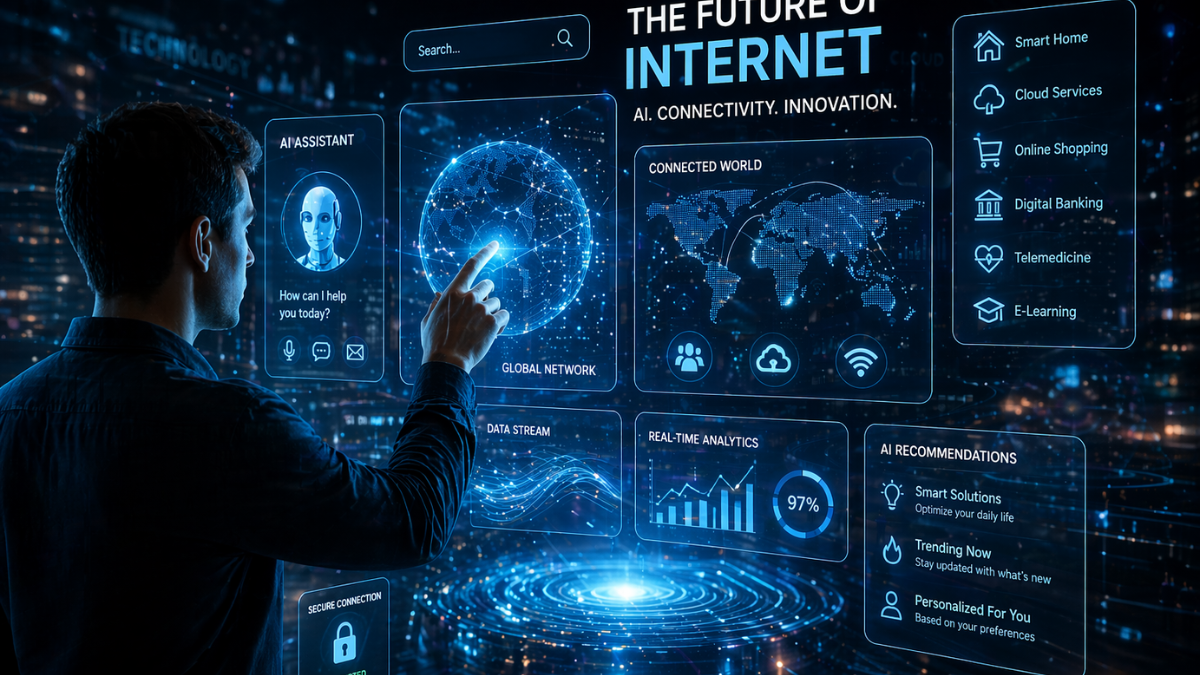
The phrase “Future of Internet” might sound distant, but its foundations are already in place. Artificial intelligence, decentralized systems, edge computing, and immersive interfaces are no longer experimental concepts—they’re active forces reshaping digital interaction.
What’s changing isn’t just speed or access. It’s the nature of control.
Earlier versions of the internet were about information. Then came platforms, where attention became currency. Now, the next phase is about intelligence—systems that don’t just host content but actively interpret, predict, and respond.
Consider how recommendation engines now influence not just entertainment choices, but news consumption, purchasing behavior, even political perspectives. The internet is no longer neutral infrastructure. It’s a participant.
From Static Web to Living Systems
The early internet was static. Websites existed, users visited them, and information moved in one direction. Then came Web 2.0—interactive platforms where users generated content.
The Future of Internet moves beyond both.
It’s shifting toward systems that adapt in real time. Algorithms learn continuously, interfaces evolve dynamically, and experiences become personalized to the point where no two users see the same digital world.
This raises an uncomfortable question: if everyone experiences a different version of the internet, what happens to shared reality?
That question is no longer philosophical—it’s practical.
Why the Future of Internet Matters Right Now
There’s a reason conversations around digital regulation, AI ethics, and data privacy are intensifying globally. The stakes are rising.
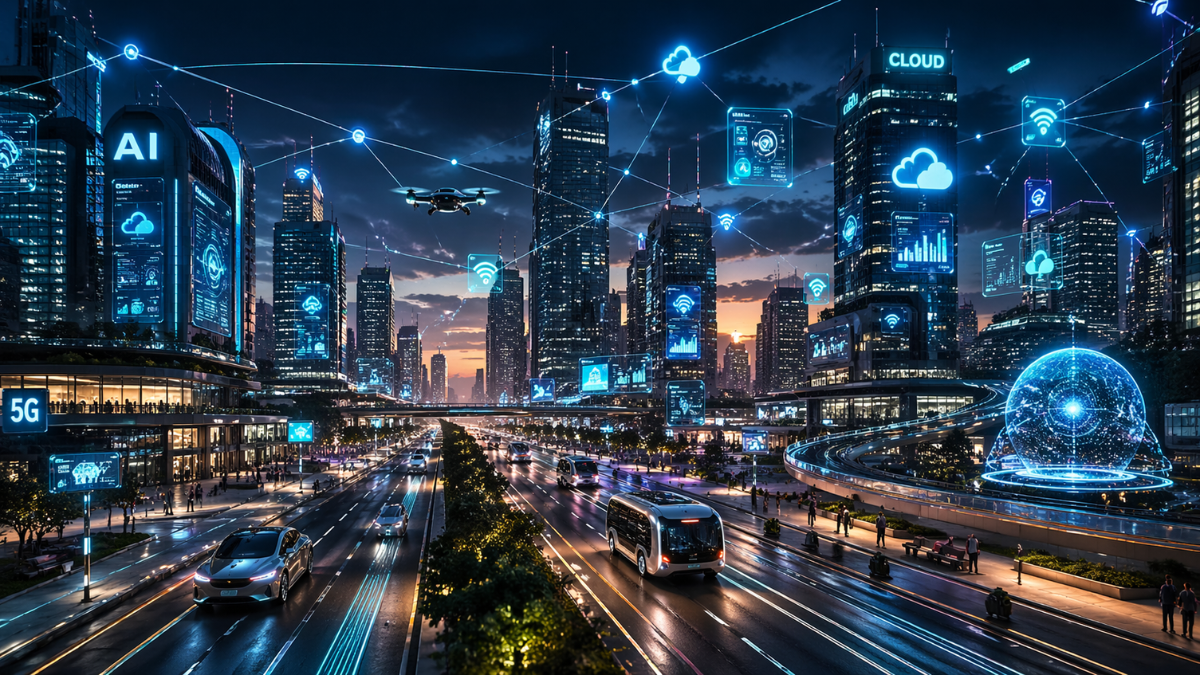
The internet is no longer confined to screens. It’s entering physical spaces—through smart homes, wearable devices, autonomous systems, and augmented environments. Decisions once made by humans are increasingly influenced—or replaced—by machine logic.
For businesses, this means a shift from visibility to predictability. It’s no longer enough to be seen; brands must anticipate behavior.
For individuals, it means convenience paired with dependency. The more the internet understands us, the more we rely on it—and the less aware we become of its influence.
The Rise of Invisible Interfaces
One of the most defining features of the Future of Internet is that it may become less visible, not more.
Voice assistants, AI agents, and ambient computing are reducing the need for traditional interfaces. Instead of searching, we ask. Instead of browsing, we receive.
This shift seems minor, but it changes power dynamics. When you type a query, you see multiple results. When you ask an AI, you often get one answer.
Choice narrows. Trust increases. Influence concentrates.
The interface disappears—but control doesn’t.
Decentralization vs Control: The Internet’s Ongoing Tension
While AI centralizes intelligence, another movement pushes in the opposite direction: decentralization.
Blockchain technologies and Web3 frameworks aim to redistribute ownership—of data, identity, and digital assets. The idea is simple: users should control their digital presence, not platforms.
But reality is more complex.
Decentralization promises freedom, yet often struggles with usability. Centralized systems offer convenience, but at the cost of control. The Future of Internet will likely not belong entirely to either model—it will be a negotiation between them.
And that negotiation will shape everything from finance to communication.
The Psychology of a Smarter Internet
There’s a deeper layer to this transformation—one that goes beyond technology.
A smarter internet doesn’t just respond to behavior; it shapes it.
When algorithms optimize for engagement, they naturally favor content that triggers strong reactions—curiosity, outrage, excitement. Over time, this subtly alters how people think, consume, and interact.
The Future of Internet isn’t just about faster networks or better tools. It’s about the feedback loop between humans and machines.
And that loop is becoming tighter.
Business in the Age of Predictive Internet
For companies, the implications are significant.
Marketing is shifting from targeting demographics to predicting intent. Customer journeys are no longer linear—they’re adaptive. Platforms analyze behavior in real time and adjust messaging instantly.
This creates efficiency, but also competition at a different level. Businesses aren’t just competing for attention—they’re competing within algorithms.
The winners won’t necessarily be those with the biggest budgets, but those who understand how digital systems interpret value.
SEO itself is evolving. It’s no longer just about keywords—it’s about context, behavior, and relevance within intelligent systems.
Where the Future Is Headed
The Future of Internet is likely to unfold across three major directions:
1. Hyper-Personalization:
Every digital experience tailored to individual behavior, preferences, and context.
2. Immersive Environments:
Virtual and augmented realities blending with everyday life, making the internet spatial rather than screen-based.
3. Autonomous Systems:
AI agents performing tasks, making decisions, and interacting with other systems without direct human input.
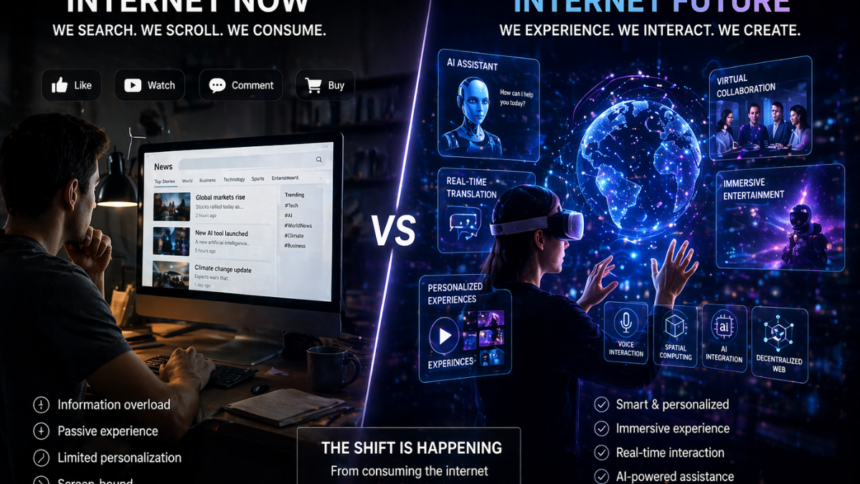
Together, these shifts point toward an internet that is less about access and more about interaction—less about searching and more about experiencing.
The Trade-Off We Rarely Talk About
Progress always comes with trade-offs.
A more intelligent internet offers convenience, efficiency, and personalization. But it also raises concerns about privacy, autonomy, and control.
When systems know us better than we know ourselves, the question isn’t just what they can do—it’s what they should do.
The Future of Internet will not be defined solely by innovation, but by the boundaries we set around it.
More Read

Conclusion
The internet’s next chapter won’t arrive with a single breakthrough moment. It’s unfolding quietly, through countless small shifts that collectively redefine how we connect, think, and live.
What began as a network of information is becoming a network of intelligence—one that doesn’t just serve us, but increasingly understands us.
And perhaps the most important question isn’t how advanced the Future of Internet will become.
It’s whether we’ll remain aware of the systems shaping our reality as they become more seamless, more predictive, and more invisible.
Final Insight
At The Vue Times, we see the Future of Internet not just as a technological evolution, but as a human story unfolding in real time. The tools may change, the platforms may evolve—but the real challenge lies in how we choose to interact with a system that is learning to interact back. The future isn’t waiting ahead. It’s already quietly rewriting the present.
Frequently Asked Questions
What is the Future of Internet?
→ The Future of Internet refers to the next phase of digital evolution, where AI, immersive technologies, and decentralized systems reshape how people interact, communicate, and access information.
How will AI impact the Future of Internet?
→ AI will make the internet more personalized and predictive, enabling systems to understand user behavior, automate tasks, and deliver tailored experiences in real time.
What is Web3 in the Future of Internet?
→ Web3 is a decentralized version of the internet where users have more control over their data, identity, and digital assets, reducing reliance on centralized platforms.
Will the internet become fully immersive?
→ Partially. Technologies like virtual reality and augmented reality will create immersive experiences, but traditional interfaces will still exist alongside them.
Is the Future of Internet safe for privacy?
→ It depends on how regulations and technologies evolve. While new systems offer better security options, increased data collection also raises privacy concerns.