
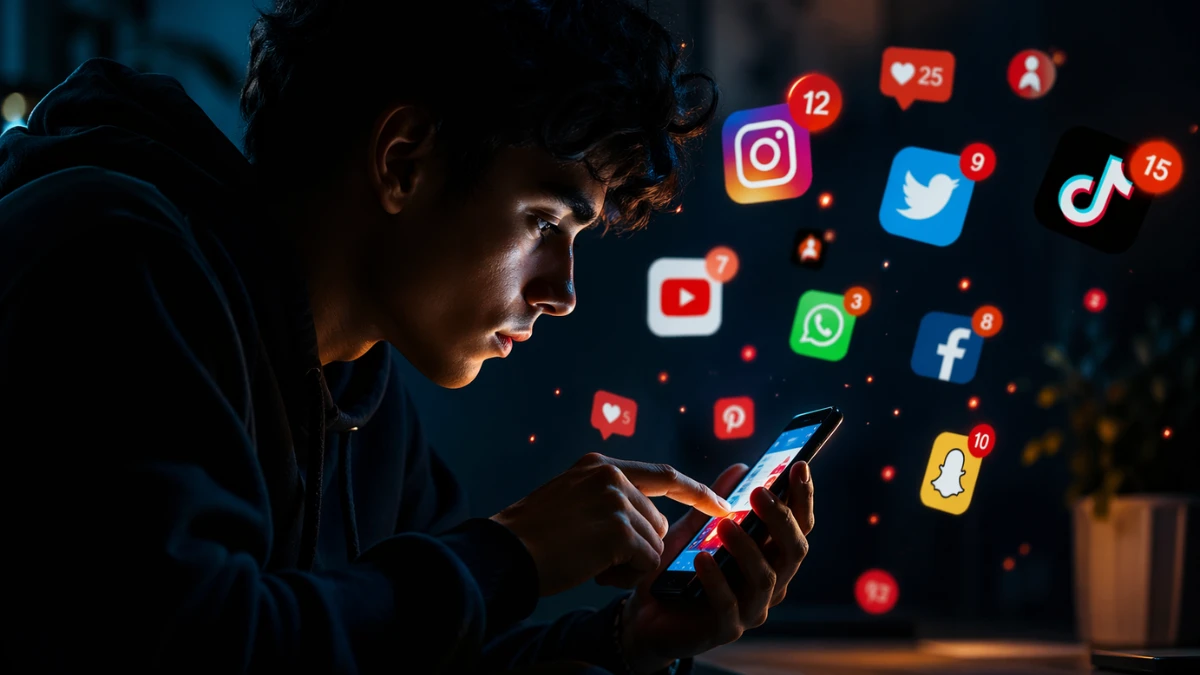
You know that familiar moment? When you open your phone to check one quick message, and before you know it, minutes have turned into hours. Suddenly, you’re scrolling through short videos, lost in a sea of comments, watching things you never meant to see. Time just seems to disappear.
But this isn’t some random happenstance. It’s carefully designed to happen.
Welcome to the age of the Platform Attention Wars, where the real prize isn’t data or even cash—it’s your time.
The Rise of Platform Attention Wars
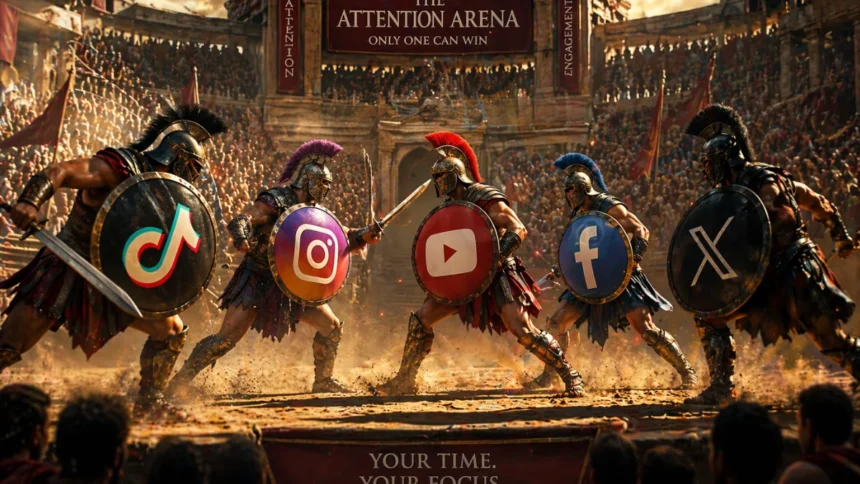
Platform Attention Wars” is the term used to describe the continuous competition among digital platforms like TikTok, Instagram, YouTube, and X (formerly Twitter) to grab, keep, and make the most of your focus. These companies aren’t just about sharing content; they’re locked in a high-stakes race to keep you hooked for as long as they possibly can.
It wasn’t always like this. The early days of the internet were all about utility—think email, search engines, and basic social connections. But everything shifted when smartphones became an inseparable part of our lives. Platforms transformed from mere tools into immersive environments, then into comprehensive ecosystems, and eventually into systems that shape our behavior.
Once attention became something that could be measured, it naturally became something that could be fine-tuned and optimized.
Why Platform Attention Wars Are Intensifying
At the core of this intense competition is a straightforward business idea: the more attention a platform captures, the more money it makes.
These digital platforms turn our attention into revenue through ads, subscriptions, or by offering services that rely on user data. The more time you spend on a platform, the more ads you see, the more data you generate, and the more valuable you are to that platform.
But there’s a catch—our attention is limited.
We only have 24 hours in a day, and increasingly, these platforms are all vying for the same slivers of our time. This has pushed them to get really creative with content formats, algorithms, and how users interact with their apps.
Short-form video is a clear example of this. What started out as just a feature has now become the go-to format across many platforms. Things like infinite scroll, autoplay videos, and feeds tailored just for you aren’t just nice-to-haves; they’re deliberate tactics to keep you engaged.
And, it turns out, these tactics really do work.
Inside the Psychology of Platform Attention Wars
What makes Platform Attention Wars so effective isn’t just technology—it’s psychology.
Platforms are designed to tap into cognitive patterns: curiosity, reward anticipation, social validation. Every notification, like, or new piece of content acts as a small trigger. Not overwhelming, but persistent enough to keep users coming back.
The unpredictability is key. You don’t know what the next swipe will bring—a funny video, breaking news, or something emotionally engaging. That uncertainty creates a loop similar to variable reward systems seen in behavioral psychology.
It’s not about addiction in the traditional sense. It’s about habit formation.
Over time, users don’t consciously decide to spend more time—they simply find themselves doing it.
Platform Attention Wars and the Business Strategy Shift
The competition has also reshaped how platforms operate internally.
Content is no longer just hosted—it’s curated, ranked, and amplified by algorithms trained to maximize engagement. The shift from chronological feeds to algorithmic feeds marked a turning point. Platforms stopped showing users what was new and started showing what was most likely to keep them engaged.
Creators have adapted accordingly. Content is now designed not just for audiences, but for algorithms. Hook in the first three seconds. Maintain pacing. Encourage interaction.
The result? A feedback loop where platforms optimize for engagement, and creators optimize for platform signals.
The line between organic content and engineered content is increasingly blurred.
The Cultural Impact of Platform Attention Wars
Beyond business and technology, Platform Attention Wars are shaping culture itself.
Trends move faster. Content cycles are shorter. Virality has become both more accessible and more fleeting. What dominates attention today may disappear tomorrow.
This creates a paradox. There’s more content than ever, but less time spent on each piece. Depth often gives way to immediacy.
Even communication patterns are shifting. People consume information in fragments—clips, highlights, summaries. Attention spans aren’t necessarily shrinking, but they’re being redistributed across multiple streams.
And in this environment, platforms act as gatekeepers of visibility.
What you see isn’t just what exists—it’s what wins the attention battle.
The Cost of Constant Competition
While Platform Attention Wars drive innovation, they also come with trade-offs.
For users, there’s the subtle erosion of focus. Constant switching between platforms fragments attention, making sustained concentration harder. It’s not always noticeable, but over time, it adds up.
For creators, the pressure to remain visible can be relentless. Algorithms reward consistency and frequency, often pushing creators into a cycle of continuous output.
For platforms themselves, the stakes keep rising. As competition intensifies, the cost of acquiring and retaining attention increases. This leads to even more aggressive strategies—more notifications, more personalization, more experimentation.
The system feeds itself.

Where Platform Attention Wars Are Headed
Looking ahead, the next phase of Platform Attention Wars will likely be defined by deeper personalization and immersive experiences.
Artificial intelligence is already playing a central role. Recommendation systems are becoming more precise, predicting not just what users want, but when they want it.
Emerging technologies—augmented reality, virtual environments, interactive media—could further blur the line between digital and physical attention spaces.
At the same time, there’s growing awareness among users. Digital well-being tools, screen time tracking, and conscious usage habits are gaining traction. Not as a rejection of platforms, but as an attempt to rebalance control.
The battle for attention isn’t going away. But the rules may evolve.
More Read

Conclusion
Platform Attention Wars aren’t just about apps competing with each other. They represent a broader shift in how time, focus, and value are defined in the digital age.
What used to be passive consumption is now an active battleground—one where every swipe, click, and pause carries weight.
The question isn’t whether platforms will keep competing for attention. They will.
The real question is whether users will begin to compete for it too—protecting it, managing it, and deciding where it truly belongs.
Final Insight
At The Vue Times, we believe understanding trends like Platform Attention Wars isn’t just about staying informed—it’s about staying in control. In a world designed to capture your attention, awareness becomes your strongest advantage.
Frequently Asked Questions
What are Platform Attention Wars?
Platform Attention Wars refer to the competition between digital platforms to capture and retain user attention through content, algorithms, and design strategies.
Why do platforms compete for attention?
Because attention directly translates into revenue through ads, subscriptions, and data insights, making it the most valuable resource in the digital economy.
How do algorithms influence Platform Attention Wars?
Algorithms prioritize content that keeps users engaged longer, shaping what people see and driving competition between platforms and creators.
Are Platform Attention Wars harmful to users?
Not inherently, but excessive engagement can lead to reduced focus, increased screen time, and fragmented attention if not managed consciously.
What is the future of Platform Attention Wars?
The future will likely involve AI-driven personalization, immersive content experiences, and a growing focus on user control and digital well-being.