

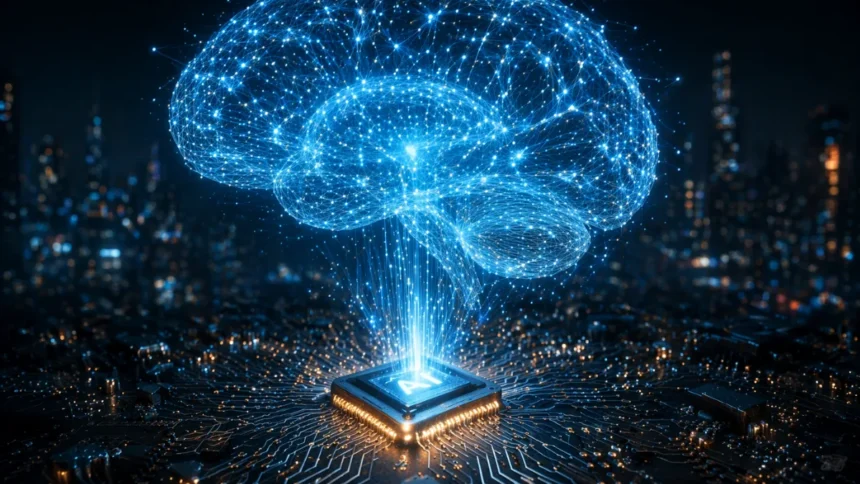
There’s a peculiar moment happening in tech right now. Everyone is talking about artificial intelligence—chatbots writing essays, algorithms generating art, machines predicting what we’ll click next. The spotlight is firmly on software, on intelligence that feels almost human.
But somewhere beneath all that noise, quietly doing the heavy lifting, sits something far less glamorous: the chip.
If AI is the main character dominating headlines, then chips are carrying unmistakable side character energy—essential, overlooked, and absolutely irreplaceable. Which raises a deceptively simple question: What Is AI Chips? Side Character Energy, and why does it suddenly matter so much?
What Is AI Chips? Side Character Energy Behind the Scenes
At its simplest, AI chips are specialized processors designed to handle artificial intelligence workloads—tasks like pattern recognition, machine learning, and real-time data processing.
Unlike traditional CPUs that handle general computing tasks, AI chips are optimized for parallel processing. They’re built to handle thousands—sometimes millions—of calculations simultaneously. That’s what allows an AI model to recognize faces, translate languages, or generate text in seconds.
But describing them technically misses the point.
The idea of “side character energy” fits because AI chips rarely get public attention. People don’t credit a GPU when a chatbot gives a brilliant answer. No one applauds a tensor processing unit when an AI diagnoses a disease faster than a doctor.
And yet, none of it works without them.
They’re the infrastructure behind the illusion of intelligence.
The Origin Story: From General Chips to AI Specialists
To understand why AI chips are suddenly everywhere, it helps to rewind a bit.
For decades, computing relied heavily on CPUs—versatile, reliable, but not designed for massive parallel workloads. Then came GPUs, originally meant for rendering graphics in video games.
It turned out that the same architecture used to process millions of pixels could also process massive datasets. Researchers quickly realized GPUs were ideal for training neural networks.
That discovery quietly changed everything.
Soon after, companies began designing chips specifically for AI tasks:
- TPUs (Tensor Processing Units) for machine learning
- NPUs (Neural Processing Units) in smartphones
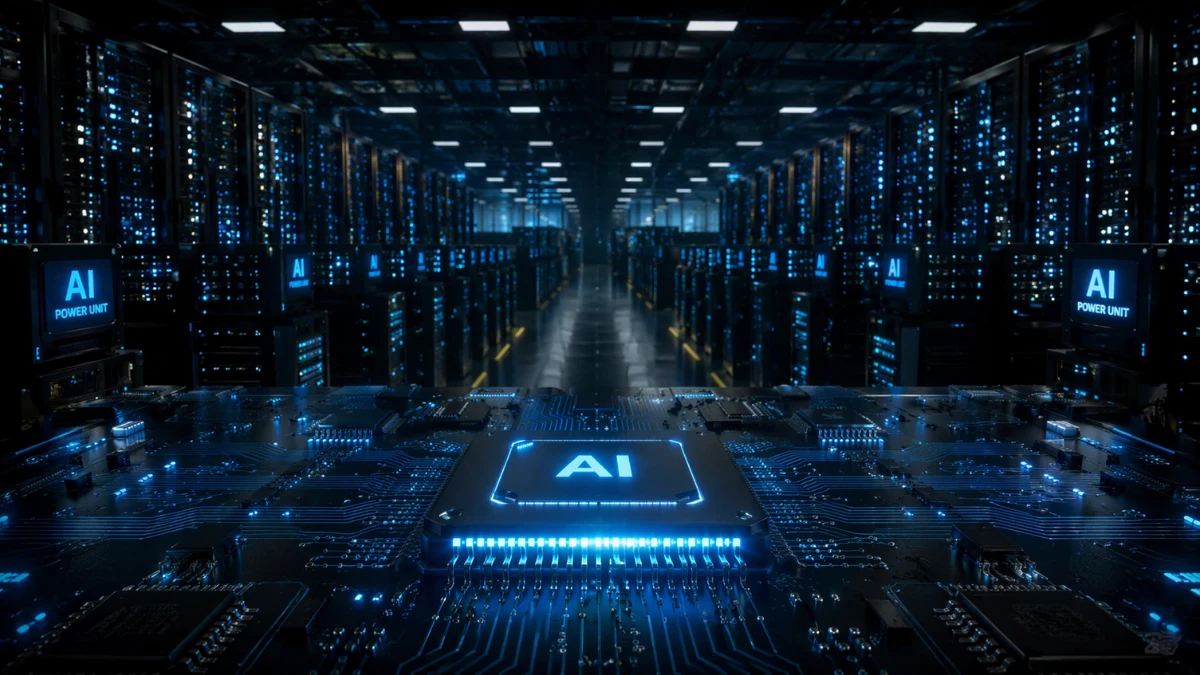
- Custom AI accelerators in data centers
What started as an optimization became a full-blown industry shift. AI wasn’t just software anymore—it was becoming hardware-dependent.
Why AI Chips Matter More Than Ever
Here’s where the conversation gets real.
AI is no longer experimental. It’s infrastructure. It powers search engines, recommendation systems, financial models, healthcare diagnostics, and even national security frameworks.
And every one of these applications demands speed, efficiency, and scale.
That’s where AI chips step in.
1. Speed Defines Intelligence
An AI system is only as useful as its response time. Whether it’s a voice assistant or an autonomous vehicle, milliseconds matter. AI chips enable real-time processing—without them, AI would feel slow, impractical, even unusable.
2. Efficiency Is the New Currency
Training AI models consumes enormous energy. AI chips are designed to optimize power usage, reducing costs and environmental impact. In a world increasingly conscious of sustainability, this is not a minor detail—it’s a defining factor.
3. Scale Is Everything
Modern AI models are massive. They require immense computational resources. AI chips allow companies to scale operations—from small applications to global systems—without collapsing under computational weight.
In short, AI chips are not just supporting technology. They are enabling it.
The Business Angle: Why Companies Are Racing for AI Silicon
If you follow the money, the importance of AI chips becomes even clearer.
Tech giants are investing billions into chip design. Why? Because controlling hardware means controlling the future of AI.
- Owning AI chips reduces dependency on third parties
- It improves performance optimization
- It creates long-term competitive advantage
This is why companies are building custom silicon instead of relying solely on external manufacturers.
There’s also a geopolitical layer to this. Semiconductor supply chains have become strategic assets. Nations are investing heavily in chip manufacturing, recognizing that AI leadership is directly tied to hardware capabilities.
AI might look like software on the surface, but the real power struggle is happening at the hardware level.
The Psychology of “Side Character Energy” in Tech
There’s something interesting about how we perceive technology.
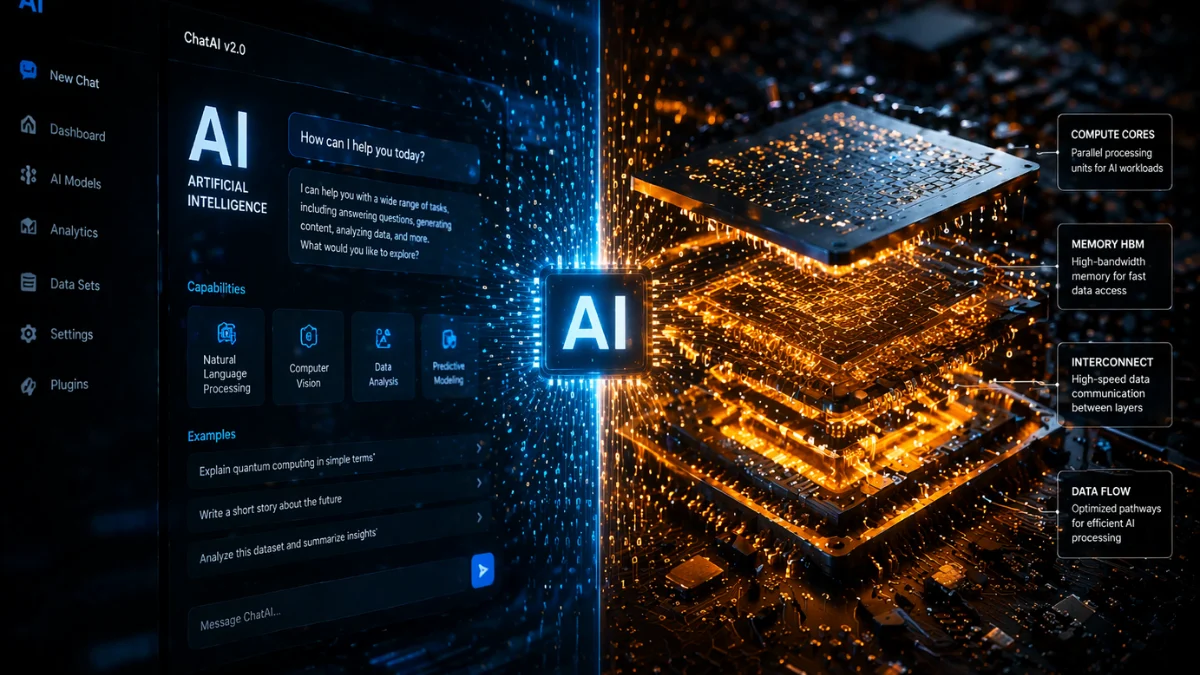
We tend to celebrate what we can see and interact with. Interfaces. Apps. Outputs. That’s where attention naturally goes.
But infrastructure—the systems that make everything possible—remains invisible.
AI chips fall squarely into this category.
Calling it “side character energy” isn’t just trendy phrasing. It reflects a deeper truth about modern technology culture:
- We undervalue foundational systems
- We prioritize visible innovation over enabling innovation
- We forget that breakthroughs often depend on unseen layers
In a way, AI chips are a reminder that the most important parts of any system are often the least visible.
What Is AI Chips? Side Character Energy and the Future of Computing
Looking ahead, the role of AI chips is only going to expand.
1. Edge AI Will Redefine Devices
Instead of relying on cloud servers, devices will process AI locally. Smartphones, cars, even household appliances will have built-in AI chips. Faster responses, better privacy, lower latency.
2. AI Will Become More Specialized
As AI applications diversify, chips will become more tailored—designed for specific industries like healthcare, finance, or robotics.
3. Energy Efficiency Will Drive Innovation
Future AI development will depend on reducing energy consumption. Chips that can deliver more performance with less power will dominate the market.
4. Hardware Will Shape AI Capabilities
There’s a growing realization that software innovation is limited by hardware. The next leap in AI might not come from better algorithms—but from better chips.
In that sense, AI chips are not just supporting the future—they’re shaping it.
More Read

Conclusion: The Quiet Force Behind the Loudest Technology
There’s a certain irony in how we talk about artificial intelligence.
We focus on intelligence, creativity, and automation. We debate ethics, jobs, and societal impact. But rarely do we pause to consider the machinery making all of it possible.
AI chips don’t demand attention. They don’t produce visible output. They don’t trend on social media.
But they make everything else work.
Understanding What Is AI Chips? Side Character Energy is really about shifting perspective. It’s about recognizing that behind every “smart” system lies a layer of engineering that rarely gets credit.
And maybe that’s the point.
Not every essential player needs to be in the spotlight. Some just need to keep the system running.
Final Insight
The future of AI won’t just be written in code—it will be etched in silicon. As the world chases smarter algorithms, the real advantage may lie with those who build faster, more efficient, and more powerful chips.
Stay with The Vue Times as we continue to decode the technologies shaping tomorrow—beyond the headlines, into the systems that actually matter.