

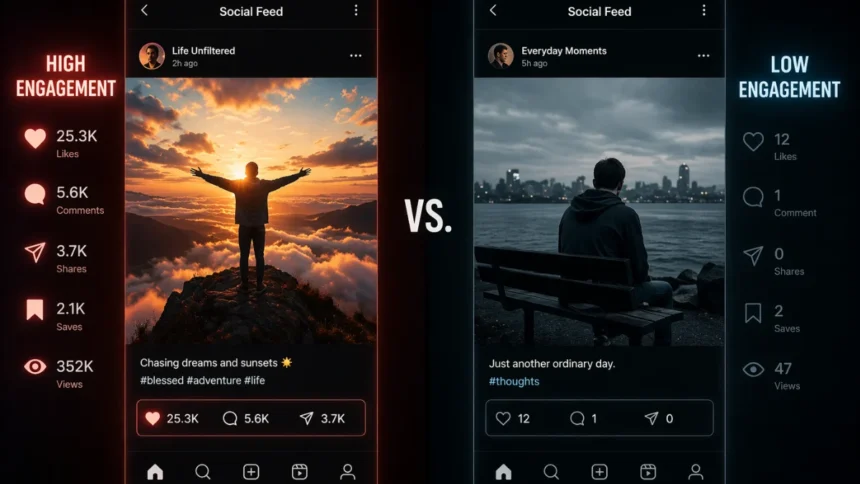
There’s a familiar kind of silence that doesn’t come from being alone. It comes from being present — in a room, on a call, inside a group chat — and still somehow feeling peripheral. You speak, but the conversation moves past you. You post, but the algorithm shrugs. You show up, but the spotlight seems reserved for someone else.
This is where Side Character Energy begins to make sense — not as a joke, but as a quiet diagnosis of how many people are experiencing modern life.
Understanding Side Character Energy in Today’s Digital Culture
At its simplest, Side Character Energy describes the feeling of being secondary in your own story — like someone who exists more as a supporting role than the protagonist.
The phrase emerged from internet humor, often used self-deprecatingly. Someone might say they have “side character energy” after being overlooked in a social setting or watching others dominate attention online. But like many viral phrases, it carries more weight than it initially lets on.
It reflects a subtle shift in how identity is perceived. In a world where everyone is constantly performing — through posts, stories, and curated moments — the idea of being “main character” has become aspirational. By contrast, Side Character Energy becomes the label for those who feel unseen, uncentered, or quietly drifting in the background.
And increasingly, that feeling isn’t rare.

Side Character Energy vs Main Character Mindset
The internet loves contrasts. If there’s a “main character,” there must be a supporting cast. But reality doesn’t work that way — at least, not until digital platforms began structuring attention like a spotlight.
The “main character energy” trend encouraged people to romanticize their lives, to see everyday routines as cinematic moments. It was empowering, at least on the surface. But it also created a hierarchy of presence — where visibility equals importance.
Those who don’t perform, don’t post often, or simply don’t receive engagement can start feeling like they’re fading into the edges.
The result? A quiet internal narrative:
Maybe I’m not meant to stand out. Maybe I’m just… part of the background.
That’s the psychological space where Side Character Energy thrives.
Why Side Character Energy Is Trending Right Now
This isn’t just another passing trend. It’s emerging at a time when attention has become one of the most valuable currencies online.
Social platforms reward visibility. Algorithms amplify certain personalities, aesthetics, and behaviors. Over time, users begin to internalize these signals. High engagement becomes validation. Low engagement becomes something else — often interpreted as invisibility.
But there’s more to it than algorithms.
There’s a growing exhaustion with performance. Not everyone wants to narrate their life, document every moment, or compete for attention. Yet in a culture built around visibility, opting out can feel like disappearing.
That tension — between wanting authenticity and being measured by visibility — is exactly why Side Character Energy resonates.
The Psychology Behind Feeling Like a Side Character
Feeling like a side character isn’t always about actual invisibility. Often, it’s about perception.
Psychologically, humans are wired to seek acknowledgment. When social interactions — both offline and online — don’t reflect that, it creates a disconnect. You start questioning your presence, your relevance, even your voice.
There’s also a comparison loop at play. People don’t just observe others anymore; they observe highlighted versions of others. Carefully edited, selectively shared, and algorithmically boosted.
Against that backdrop, an ordinary day can feel insignificant. A quiet personality can feel overlooked. A private life can feel like absence.
But here’s the catch: the system rewards amplification, not necessarily authenticity. So the comparison itself is fundamentally uneven.
Side Character Energy and the Business of Attention
Beyond psychology, there’s a structural angle worth examining.
Digital platforms are designed around engagement — likes, shares, comments, watch time. Content that grabs attention rises. Content that doesn’t, disappears.
This creates an implicit hierarchy where some voices dominate while others remain peripheral. Over time, users begin to map their self-worth onto these metrics.
It’s not accidental. It’s a byproduct of a system where attention is monetized.
Brands, influencers, and creators operate within this system intentionally. But everyday users? They’re often navigating it unconsciously. When their content doesn’t perform, it can feel personal — even though it’s largely algorithmic.
Side Character Energy, in this context, becomes more than a feeling. It becomes a reflection of how digital systems distribute visibility.
Is Side Character Energy Always a Bad Thing?
Not necessarily. In fact, there’s an argument to be made that stepping away from the “main character” narrative can be liberating.
Being a “side character” in internet terms often means less pressure to perform, fewer expectations to maintain a persona, and more freedom to exist without constant validation.
It can allow for a quieter kind of presence — one that isn’t measured by metrics.
The problem isn’t the role itself. It’s the perception that being less visible equals being less significant.
That’s where the narrative becomes limiting.

Reframing Side Character Energy
Instead of treating Side Character Energy as a downgrade, there’s space to reinterpret it.
Not everyone needs to be the loudest voice. Not every moment needs to be documented. Not every life needs to be optimized for visibility.
In many ways, the obsession with being the “main character” is itself a performance — one shaped by trends, aesthetics, and algorithmic preferences.
Reframing the idea means shifting focus from how visible you are to how present you feel.
Because the truth is, life doesn’t operate on audience engagement. It operates on experience.
Where This Trend Is Headed
Like many internet concepts, Side Character Energy will evolve. It might fade as a phrase, but the feeling behind it is unlikely to disappear anytime soon.
As digital spaces continue to grow, the gap between visibility and reality will only become more pronounced.
At the same time, there’s a growing push toward authenticity — less curated content, more real conversations, and a rejection of constant performance.
If that shift continues, the idea of “main vs side character” might lose its hold altogether.
Or perhaps it will simply change form.

Conclusion
Side Character Energy isn’t just a trend — it’s a reflection of how modern identity is being shaped in a world where attention is unevenly distributed.
The feeling of being unseen isn’t new. But the scale at which it’s experienced today — amplified by platforms, metrics, and constant comparison — is.
The real question isn’t whether you’re the main character or a side character.
It’s whether you’re defining your role based on your own experience — or someone else’s spotlight.
Final Insight
At The Vue Times , we go beyond trends to examine what they reveal about how we think, behave, and interact in a digital-first world. If Side Character Energy feels familiar, it’s not because you’re invisible — it’s because the system is louder than it needs to be.
Frequently Asked Questions
What is Side Character Energy?
Side Character Energy refers to the feeling of being less important or visible in your own life, often compared to others who appear more central or attention-grabbing.
Why do people feel like side characters?
This feeling often comes from social comparison, low online engagement, or being in environments where others dominate attention or recognition.
Is Side Character Energy a negative thing?
Not always. It can actually reduce pressure to perform and allow for a more authentic, low-key way of living without constant validation.
What is the difference between main character and side character energy?
Main character energy emphasizes visibility and centrality, while side character energy reflects a quieter, less attention-focused presence.
How can someone overcome Side Character Energy?
By shifting focus from external validation to personal experience, reducing comparison, and redefining what visibility and importance mean on an individual level.