

It usually starts with something deceptively simple—a phone unlocking the moment it recognizes your face, a recommendation that feels oddly precise, or a chatbot replying in a tone that almost mirrors your own. None of this feels mechanical anymore. It feels… intuitive.
That shift—from programmed logic to something resembling “understanding”—is where the real story begins. And at the center of it lies a concept that often sounds more complicated than it actually is: What Is Neural Networks?
What Is Neural Networks? A Practical Way to Understand It
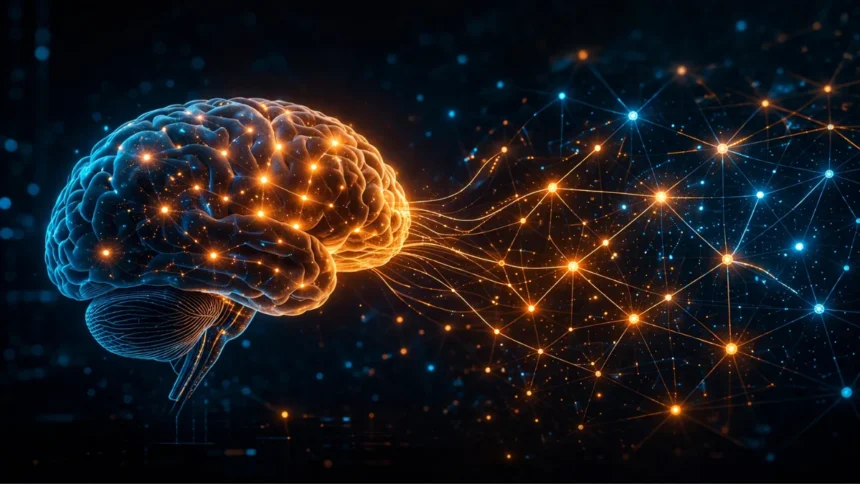
Strip away the jargon, and neural networks are essentially systems designed to mimic how the human brain processes information—though in a far more limited and structured way.
A neural network is made up of layers of connected “nodes” (or artificial neurons). Each node takes in data, processes it, and passes it forward. Individually, they are simple. But when thousands—or millions—of them work together, patterns begin to emerge.
Think of it like this: if you’ve ever learned to recognize handwriting, you didn’t memorize every possible variation of each letter. You subconsciously picked up patterns. Neural networks do something similar, but with numbers.
They don’t “understand” in a human sense. They recognize correlations at scale—and that’s often enough.
How Neural Networks Actually Work (Without Overcomplicating It)
At a functional level, neural networks operate in three layers:
- Input Layer: Receives raw data (an image, text, sound, etc.)
- Hidden Layers: Where the real processing happens—patterns are identified, refined, and weighted
- Output Layer: Produces a result (prediction, classification, decision)
What makes them powerful isn’t just structure—it’s learning through iteration. Each time the network makes a mistake, it adjusts its internal weights slightly. Over time, those adjustments compound into accuracy.
Imagine teaching someone to identify cats in images. At first, they’ll guess randomly. Then they’ll notice ears, whiskers, shapes. Eventually, recognition becomes almost automatic. Neural networks follow a similar learning curve—only faster and at a much larger scale.

Why “What Is Neural Networks?” Is Suddenly Everywhere
There was a time when neural networks were mostly confined to research labs. Today, they’re embedded in daily life—quietly running in the background.
That shift didn’t happen overnight. It was driven by three key factors:
- Explosion of Data: More digital data than ever before
- Computing Power: GPUs made large-scale processing feasible
- Improved Algorithms: Better training methods increased accuracy
The result? Neural networks moved from theory to infrastructure.
When people search for What Is Neural Networks?, they’re often reacting to something they’ve already experienced—AI-generated images, voice assistants, or predictive algorithms that feel increasingly personal.
Real-World Applications That Make It Tangible
It’s easy to think of neural networks as abstract. They’re not.
They’re behind:
- Healthcare diagnostics: Detecting diseases from medical scans with surprising accuracy
- Finance systems: Fraud detection that adapts in real time
- Search engines: Ranking results based on intent, not just keywords
- Content platforms: Recommending videos, posts, or products
The common thread isn’t intelligence—it’s pattern recognition at scale.
And in a world flooded with data, that capability is incredibly valuable.
The Deeper Layer: Why Neural Networks Feel “Human”
There’s a psychological angle here that’s often overlooked.
Neural networks don’t think. They calculate. But the outcomes—fluid language, contextual suggestions, visual interpretations—mirror human-like behavior closely enough to blur the line.
That’s why people often anthropomorphize AI systems. When a model responds conversationally or generates creative content, it triggers a familiar response: we assume intention where there is none.
This is less about technology and more about perception. Neural networks are powerful not just because of what they do—but because of how they appear to do it.

Business and Industry: The Quiet Power Shift
From a business standpoint, neural networks are no longer experimental—they’re strategic.
Companies are using them to:
- Predict customer behavior
- Automate decision-making processes
- Personalize user experiences at scale
- Optimize operations in real time
The advantage isn’t just efficiency. It’s adaptability.
Traditional systems follow rules. Neural networks evolve with data.
That difference is subtle—but it’s redefining how companies compete.
Limitations: What Neural Networks Still Struggle With
Despite their capabilities, neural networks are far from perfect.
They struggle with:
- Explainability: It’s often unclear why a model made a decision
- Bias: They inherit biases from the data they’re trained on
- Data dependency: Poor data leads to poor outcomes
- General reasoning: They excel at patterns, not true understanding
In other words, they’re powerful—but not inherently intelligent.
And that distinction matters, especially as reliance on AI systems grows.
What Is Neural Networks? And Where It’s Heading Next
If the past decade was about adoption, the next one will be about refinement.
We’re already seeing:
- Smaller, more efficient models replacing massive ones
- Greater focus on ethical AI and transparency
- Integration into everyday tools—from education to governance
- Hybrid systems combining neural networks with symbolic reasoning
The trajectory isn’t toward machines becoming “human-like.” It’s toward systems becoming more context-aware, efficient, and aligned with real-world needs.
More Read

Conclusion: The Real Story Behind Neural Networks
The question What Is Neural Networks? sounds technical, but the answer is surprisingly grounded.
It’s not about machines thinking like humans. It’s about machines learning patterns in ways that scale beyond human capacity.
That difference—subtle but profound—is what makes neural networks so impactful.
They don’t replace human intelligence. They extend it.
Final Insight
Neural networks aren’t a glimpse of artificial consciousness—they’re a reflection of how much intelligence can emerge from patterns alone. The real question isn’t whether machines can think like us, but how we choose to think alongside them.-The Vue Times
Frequently Asked Questions
What is a neural network in simple terms?
A neural network is a computer system designed to recognize patterns in data. It works similarly to how the human brain processes information but in a simplified, mathematical way.
Why are neural networks important in AI?
They allow machines to learn from data instead of being explicitly programmed. This makes AI systems more flexible, accurate, and capable of handling complex tasks.
Where are neural networks used in real life?
They are used in facial recognition, voice assistants, recommendation systems, medical diagnostics, and even self-driving technology.
Are neural networks the same as deep learning?
Deep learning is a subset of neural networks. It involves using multiple layers (deep networks) to process complex data and achieve higher accuracy.
Can neural networks think like humans?
No, they don’t think or understand like humans. They process data and identify patterns, which can sometimes appear intelligent but lack true reasoning.