
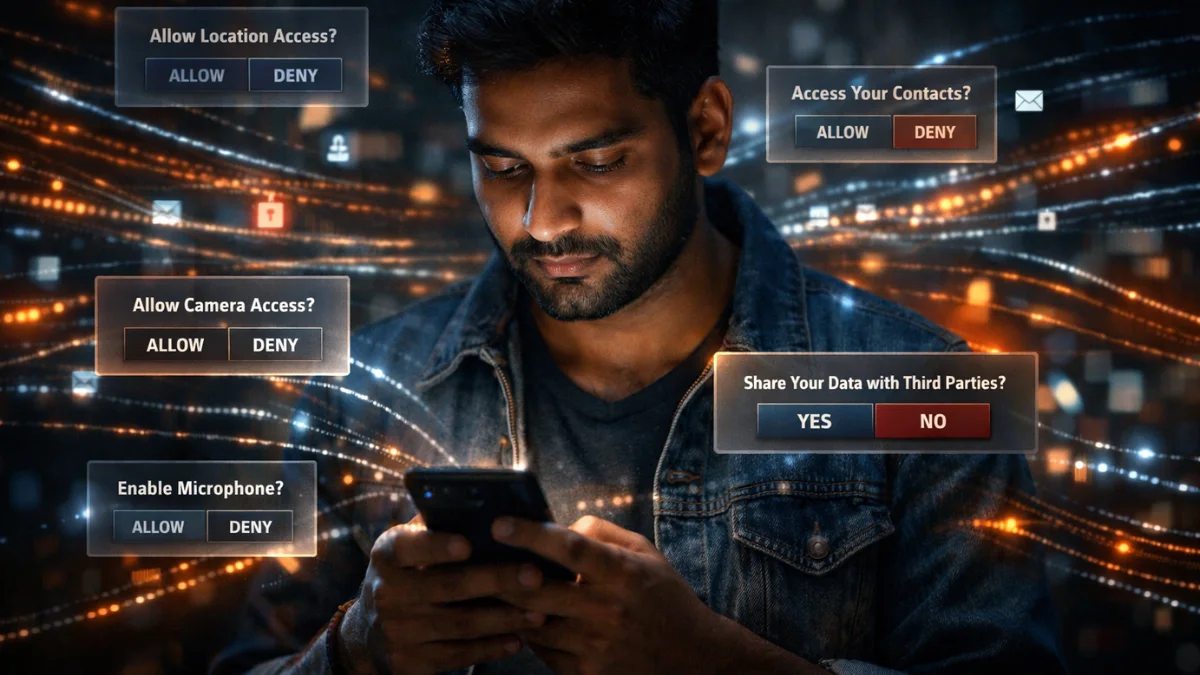
There’s a moment most people barely notice. You open an app, it asks for permissions—contacts, location, camera—and without thinking twice, you tap “Allow.” It takes less than a second. But that second has quietly become one of the most debated battlegrounds in India’s digital future.
The conversation around Data Privacy in India: What Policymakers Are Saying Right Now isn’t unfolding in abstract legal documents alone. It’s happening in parliamentary debates, policy drafts, tech boardrooms, and increasingly, in everyday conversations. What was once seen as a niche legal concern has turned into a defining question: who really controls your data?
Data Privacy in India: What Policymakers Are Saying Right Now — A Shift in Tone
For years, India’s approach to data privacy was fragmented. Rules existed, but they lacked the clarity and enforceability seen in global frameworks. That began to change after the landmark recognition of privacy as a fundamental right by the Supreme Court in 2017.
Since then, policymakers have been trying to build a system that balances three competing forces—individual rights, economic growth, and national security.
The introduction of the Digital Personal Data Protection (DPDP) Act marked a turning point. On paper, it promises a structured approach: companies must take consent, users have rights over their data, and penalties for misuse can be steep. But what policymakers are saying right now reveals a more complex reality.
Some emphasize flexibility—arguing that overly strict rules could slow down India’s booming digital economy. Others push for stronger enforcement, pointing out that without real accountability, laws risk becoming symbolic.
The tone, in other words, is no longer about whether India needs data privacy laws. It’s about how strict they should be—and who they should protect first.
Why This Debate Is Suddenly Everywhere
The timing isn’t accidental. India is now one of the largest digital markets in the world. UPI transactions, Aadhaar-linked services, e-commerce, health tech platforms—data is no longer just information. It’s infrastructure.
Every digital interaction creates a trail. And that trail has value.
Policymakers are increasingly aware that data isn’t just about privacy—it’s about power. Control over data shapes markets, influences elections, and even determines how citizens interact with the state.
Recent statements from policymakers reflect this urgency. Concerns about data breaches, cross-border data flows, and the growing influence of global tech companies have pushed privacy into the spotlight.
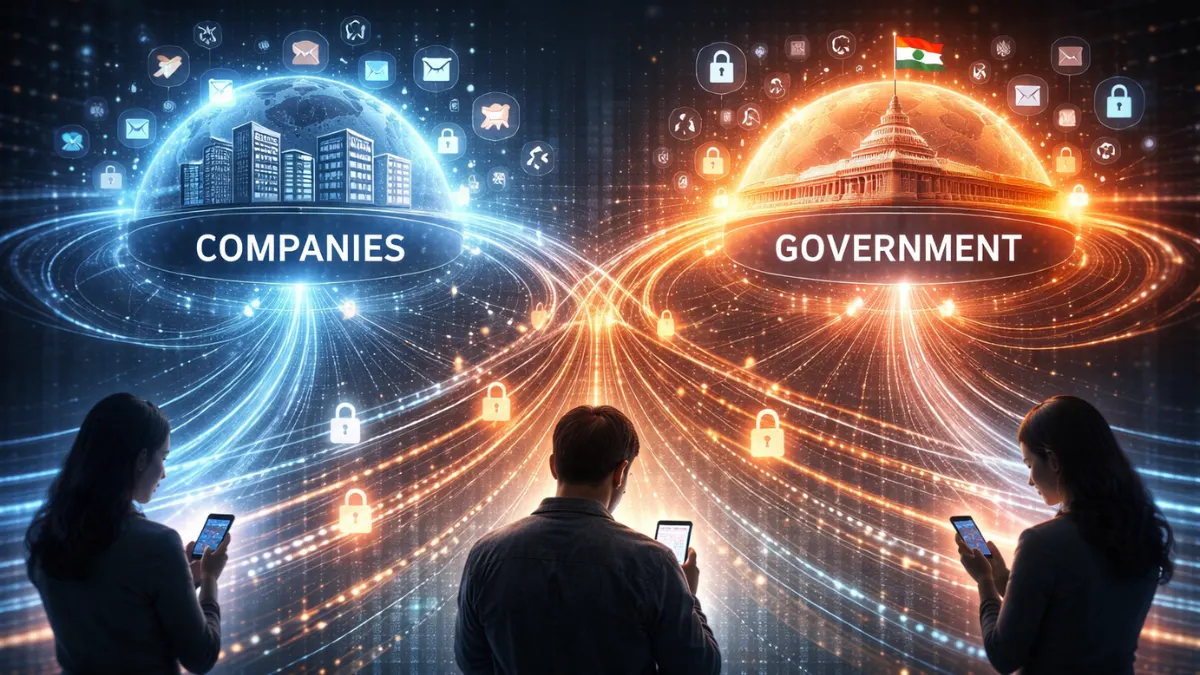
At the same time, there’s a political dimension. Data protection is being framed not just as a consumer issue, but as a question of digital sovereignty. Who owns Indian data—Indian users, Indian companies, or global platforms?
The Balancing Act: Growth vs Protection
One of the most interesting aspects of Data Privacy in India: What Policymakers Are Saying Right Now is how often the word “balance” appears.
India is trying to do something ambitious—build a privacy framework that doesn’t choke innovation.
On one side, startups and tech companies argue that strict compliance requirements can increase costs and slow down growth. For a country positioning itself as a global tech hub, that’s a serious concern.
On the other side, privacy advocates warn that weak enforcement could lead to misuse of personal data at scale—especially in sectors like fintech, health tech, and edtech, where sensitive data is constantly being processed.
Policymakers seem to be walking a tightrope. The DPDP Act includes provisions for consent and user rights, but also gives the government certain exemptions in the interest of national security and public order.
That dual approach has sparked debate. Is it pragmatic governance—or selective accountability?
The Business Angle: Data as the New Competitive Edge
Beyond law and policy, there’s a quieter shift happening in the business world.
Companies are beginning to treat data privacy not just as a compliance issue, but as a trust factor. In an environment where users are becoming more aware, how a company handles data can influence brand perception.
Policymakers have hinted at this as well. There’s growing recognition that strong privacy standards can actually strengthen India’s global position, especially when dealing with regions like the European Union, where strict data laws already exist.
But there’s also caution. If regulations become too rigid, smaller businesses may struggle to keep up, creating an uneven playing field.
So the question becomes: can India build a system that protects users without excluding smaller players?
Where the Gaps Still Exist
Despite progress, several concerns continue to surface in policy discussions.
First, enforcement remains a key issue. Laws are only as strong as their implementation. Policymakers have acknowledged the need for robust institutions to oversee compliance, but the structure and independence of such bodies are still under scrutiny.
Second, awareness is uneven. While urban users may have a growing understanding of privacy rights, large parts of the population still operate in a low-awareness environment. That makes meaningful consent difficult.
Third, the question of government access to data continues to generate debate. While exemptions exist for security purposes, critics argue that these need clearer boundaries to prevent overreach.
These aren’t minor gaps. They go to the heart of what data privacy is supposed to achieve.
Data Privacy in India: What Policymakers Are Saying Right Now — The Global Context
India isn’t shaping its data policies in isolation.
Globally, data privacy has become a strategic issue. The European Union’s GDPR set a high benchmark. The United States continues to operate with a sectoral approach. China has taken a state-centric model.
India’s approach appears to be somewhere in between—a hybrid system that combines user rights with state flexibility.
Policymakers have repeatedly pointed out that India’s model needs to reflect its unique context. A billion-plus population, rapid digitization, and diverse socio-economic realities make a one-size-fits-all approach impractical.
At the same time, global alignment matters. As Indian companies expand internationally, compatibility with global privacy standards becomes essential.
What This Means for Everyday Users
For most people, policy debates feel distant. But their impact is immediate.
Stronger privacy laws could mean clearer consent mechanisms, better control over personal data, and greater accountability for companies.
But there’s also a behavioral layer. Even the best laws can’t fully protect users who casually share personal information across platforms.
Policymakers are increasingly emphasizing digital literacy as part of the solution. Privacy isn’t just about regulation—it’s also about awareness.
And that might be the most overlooked part of the conversation.
The Road Ahead: More Questions Than Answers
The current phase of India’s data privacy journey feels transitional.
Policies are evolving. Institutions are being shaped. Interpretations are still fluid.
What policymakers are saying right now reflects both ambition and caution. There’s a clear desire to build a system that works at scale—but also an acknowledgment that getting it right will take time.
The next few years will likely determine whether India becomes a model for balanced data governance—or another case study in regulatory compromise.
More Read

Conclusion
The debate around Data Privacy in India: What Policymakers Are Saying Right Now is no longer confined to experts and lawmakers. It’s becoming a defining issue of how India’s digital future will function.
Every app permission, every data request, every policy draft adds another layer to this evolving story.
The real question isn’t whether data privacy will shape India’s future—it already is. The question is whether that future will be built on trust, transparency, and accountability, or on convenience that comes at a cost we barely notice.
Frequently Asked Questions
What is data privacy in India?
Data privacy in India refers to the protection of personal information collected by companies, platforms, and government systems, ensuring it is used responsibly and with user consent.
What is the DPDP Act in India?
The Digital Personal Data Protection (DPDP) Act is India’s primary law governing how personal data is collected, processed, and stored, including user rights and penalties for misuse.
Why is data privacy important right now in India?
With rapid digital growth, more personal data is being collected than ever before, making privacy a key concern for security, trust, and user rights.
Can companies use my data without permission?
Under current laws, companies are required to obtain user consent before collecting and using personal data, though enforcement remains a key issue.
Does the government have access to personal data?
Yes, under certain conditions related to national security and public interest, the government can access data, which is a major point of ongoing debate.
Final Insight
Data is often described as the new oil. But unlike oil, it doesn’t sit in one place—it flows through lives, systems, and decisions. How India chooses to regulate that flow will define not just its digital economy, but the everyday experience of being online
The next phase of this debate won’t be about laws alone. It will be about whether those laws actually change how power operates in the digital world. Stay Updated Stay Informed-The Vue Times