
Tesla Robotaxi Expands Into More Cities as AI Ambitions Accelerate
Tesla has taken another major step toward its long-promised autonomous transportation future by expanding its Tesla Robotaxi service into two additional U.S. cities. The latest rollout brings the company’s self-driving ride-hailing network to Orlando and Tampa, reinforcing CEO Elon Musk’s vision of transforming Tesla from an electric vehicle manufacturer into an artificial intelligence and robotics powerhouse. The expansion comes just ahead of Tesla’s quarterly earnings report, where investors are expected to focus heavily on the company’s progress in autonomous driving rather than vehicle sales alone.
The move represents Tesla’s most significant Robotaxi expansion in recent months. After initially launching the service in Austin before gradually adding Dallas, Houston, and Miami, Tesla is now extending operations deeper into Florida as it attempts to prove that its autonomous ride-hailing model can scale beyond limited pilot markets.
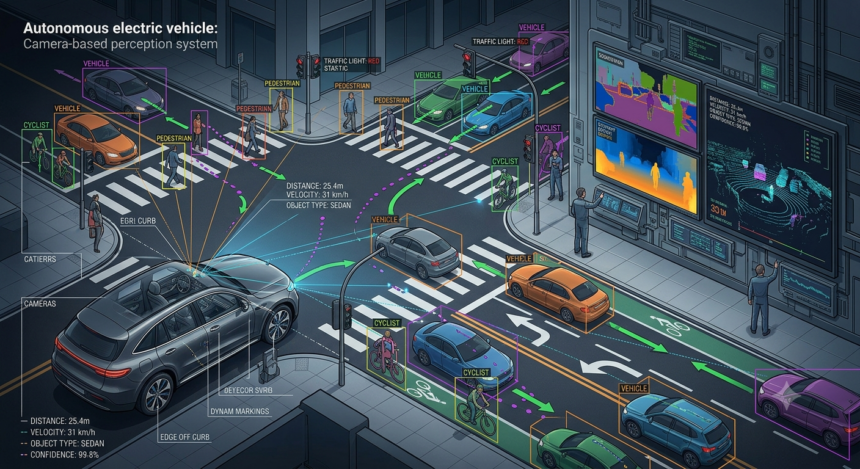
Unlike traditional ride-sharing platforms, Tesla Robotaxi relies entirely on Tesla’s Full Self-Driving software and AI-powered computer vision. Instead of using expensive lidar sensors like many competitors, Tesla’s system depends primarily on cameras and neural networks, a strategy Elon Musk has repeatedly defended as the most scalable path toward fully autonomous transportation.
Tesla Robotaxi Enters Orlando and Tampa
The newest expansion adds Orlando and Tampa to Tesla’s growing autonomous ride-hailing network, increasing the company’s presence across the United States. While Tesla has not disclosed fleet sizes or exact operating boundaries in each city, the rollout signals continued confidence in its self-driving platform as the company works toward wider commercial deployment.
The expansion follows months of gradual testing and service improvements. Tesla first introduced unsupervised Robotaxi operations in Austin before expanding coverage across the entire metropolitan area. Earlier this year, Dallas and Houston joined the program, while Miami became the company’s first Florida market. Orlando and Tampa now represent the latest additions as Tesla continues building its autonomous transportation footprint.
Although the rollout remains relatively limited compared with traditional ride-hailing services, industry analysts view each new city as an important milestone. Expanding into multiple metropolitan areas allows Tesla to gather more real-world driving data, improve its AI models, and demonstrate that its autonomous software can operate under a wider variety of road conditions and traffic environments.
Why Investors Are Watching Tesla Robotaxi Closely
For years, Tesla’s valuation has extended far beyond its electric vehicle business. Increasingly, investors view Tesla Robotaxi as one of the company’s most valuable long-term growth opportunities.
During recent earnings calls, Elon Musk has repeatedly emphasized artificial intelligence, autonomous driving, and robotics as Tesla’s future. Rather than competing solely as an automaker, Tesla is positioning itself as an AI company capable of generating recurring revenue through autonomous transportation services.
This latest expansion arrives just before Tesla reports quarterly financial results, making Robotaxi progress one of the most closely watched topics among analysts. While vehicle deliveries and profit margins remain important, Wall Street is increasingly focused on whether Tesla can successfully commercialize autonomous driving at scale.
Tesla Robotaxi Faces Growing Competition
While Tesla continues expanding its autonomous ride-hailing network, it is entering an increasingly competitive market. Companies such as Waymo, Cruise, Zoox, and several Chinese autonomous driving firms have spent years testing driverless technology, with some already operating commercial robotaxi services in select cities.
Tesla’s approach, however, differs significantly from many of its competitors.
Instead of relying on expensive lidar sensors and high-definition mapping systems, Tesla Robotaxi is powered primarily by cameras, neural networks, and the company’s end-to-end artificial intelligence software. Elon Musk has long argued that a vision-based system more closely resembles how humans drive, making it the most scalable solution for autonomous transportation.
Supporters believe Tesla’s camera-first strategy could eventually lower operating costs and allow the company to deploy robotaxis much faster than rivals. Critics, however, argue that relying solely on cameras may present greater challenges in adverse weather conditions or complex traffic environments.
The debate has become one of the most closely watched topics in the autonomous vehicle industry, as companies race to prove which technological approach can safely deliver fully driverless transportation at scale.
Regulatory Challenges Remain
Despite the expansion into additional cities, Tesla still faces significant regulatory hurdles before Tesla Robotaxi can become a nationwide service.
Autonomous vehicle regulations vary across U.S. states, with different testing requirements, reporting standards, and safety approvals. Some jurisdictions require extensive permitting before companies can deploy fully driverless vehicles, while others have adopted more flexible frameworks to encourage innovation.
Safety regulators also continue monitoring autonomous vehicle performance following several high-profile investigations involving advanced driver assistance systems across the automotive industry.
Tesla maintains that its Full Self-Driving platform continues to improve through billions of miles of real-world driving data collected from customer vehicles. The company believes this data advantage enables its AI models to learn more quickly than competing systems that operate with comparatively smaller fleets.
Nevertheless, expanding into new cities means Tesla must demonstrate consistent performance across a wider range of road layouts, traffic patterns, weather conditions, and driving behaviors.
Why Robotaxis Could Transform Tesla’s Business
For much of the past decade, Tesla’s success has been measured primarily through electric vehicle deliveries and manufacturing growth. Today, investors increasingly believe the company’s long-term value depends on artificial intelligence and autonomous mobility.
A successful Tesla Robotaxi network could fundamentally change Tesla’s business model by generating recurring ride-hailing revenue rather than relying solely on vehicle sales. Instead of selling one vehicle to one customer, Tesla envisions every autonomous vehicle serving multiple passengers throughout the day, dramatically increasing revenue potential.
The concept also aligns with Elon Musk’s broader vision of turning Tesla owners’ vehicles into income-generating assets. In the future, privately owned Teslas could potentially join the Robotaxi network when not in personal use, creating a decentralized fleet that operates similarly to existing ride-sharing platforms but without human drivers.
If realized, the model could reshape urban transportation while opening an entirely new revenue stream for both Tesla and its customers.
To explore another emerging technology poised to reshape industries, read our article on Quantum Computing in India: Dream or Near Future?. For official updates on Tesla’s autonomous driving technology and AI initiatives, visit the Tesla AI.
What Tesla Robotaxi Means for the Future of Transportation
The latest Tesla Robotaxi expansion demonstrates that Tesla is steadily moving beyond pilot projects toward broader commercial deployment. Although the service remains limited compared with traditional ride-hailing platforms, every new city provides valuable operational data that helps improve the company’s autonomous driving technology.
Whether Tesla can successfully scale Robotaxi operations nationwide will depend on several factors, including regulatory approvals, public trust, software reliability, and continued advances in artificial intelligence.
For now, the expansion into Orlando and Tampa represents another milestone in Tesla’s long-term AI strategy. It reinforces the company’s ambition to lead the autonomous mobility revolution while intensifying competition across one of the fastest-evolving sectors in the global automotive industry.
As investors await Tesla’s latest earnings report, one message is becoming increasingly clear: the future of Tesla may depend as much on Tesla Robotaxi and artificial intelligence as it does on electric vehicles.