
There’s a particular kind of urgency that hits when money runs tight. A hospital bill. A sudden rent demand. A business payment stuck somewhere in the system. In that moment, a notification offering “instant loan in 5 minutes” doesn’t feel suspicious—it feels like relief.
And that’s exactly where the problem begins.
Across India, thousands of users have downloaded what appeared to be legitimate loan apps, only to find themselves trapped in a cycle of harassment, hidden charges, and privacy invasion. The rise of these apps isn’t accidental. It’s built on speed, desperation, and a growing gap in Cybersecurity & Safety awareness.
The New Face of Financial Scams
Once upon a time, scams mainly involved phone calls from people pretending to be officials. Nowadays, though, they’ve gotten much slicker. Scammers now create mobile apps that look incredibly professional. They have shiny interfaces, names that sound legitimate, and promises that seem just too good to be true—and often are.
Many of these apps manage to slip through the cracks of regulations. They look just like real financial tech platforms but skip out on the usual checks and balances. What’s more, they’re often hosted on servers located outside of India. The end result? A digital pitfall disguised as a helpful solution.
India’s quick jump into all things digital has played a big part in this. With millions of people, especially in smaller cities, depending on mobile apps for their finances, it’s become easier than ever for scammers to swoop in and take advantage.
Why Fake Loan Apps Are Thriving Right Now
The timing isn’t random. Several factors are converging:
- Instant gratification culture: People expect services quickly—loans included
- Data access loopholes: Apps exploit permissions users casually grant
- Economic pressure: Post-pandemic financial strain has increased demand for quick credit
- Low awareness of digital risks: Cybersecurity conversations rarely reach everyday users
What makes these apps dangerous isn’t just the financial loss—it’s the control they gain over personal data.
Contacts. Photos. Messages. Once access is granted, it becomes leverage.
The Subtle Red Flags Most People Miss
Fake loan apps don’t look fake. That’s their strength.
But if you slow down and observe closely, certain patterns begin to emerge.
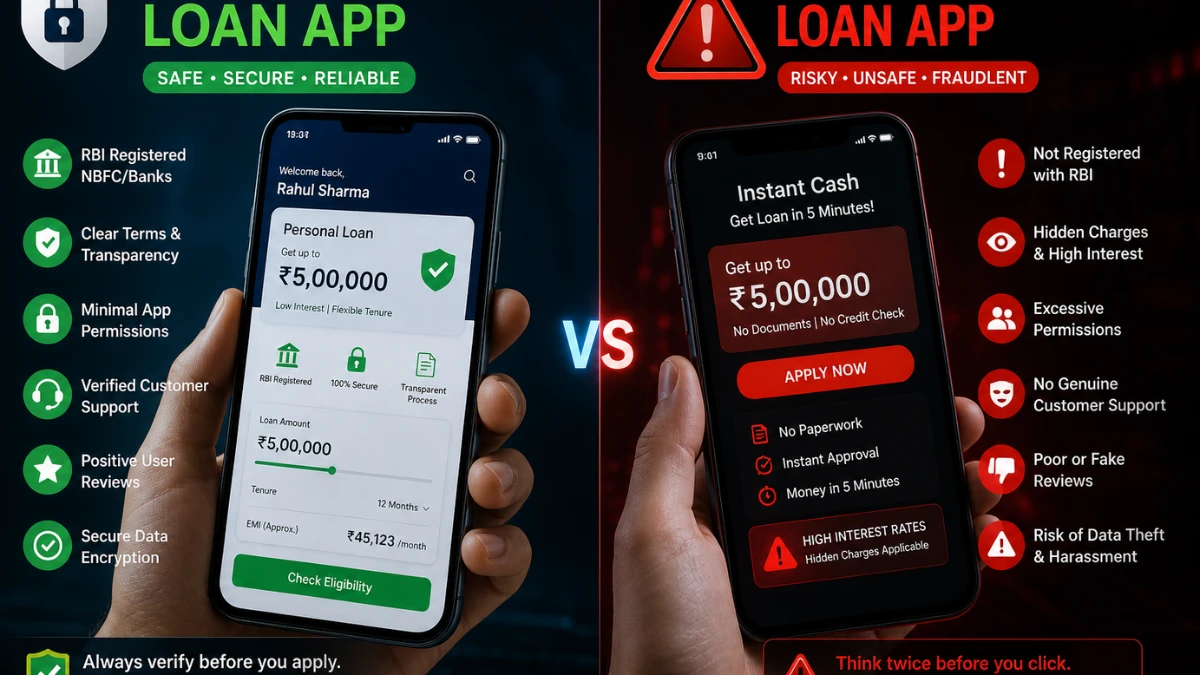
1. Unrealistically Fast Loan Approval
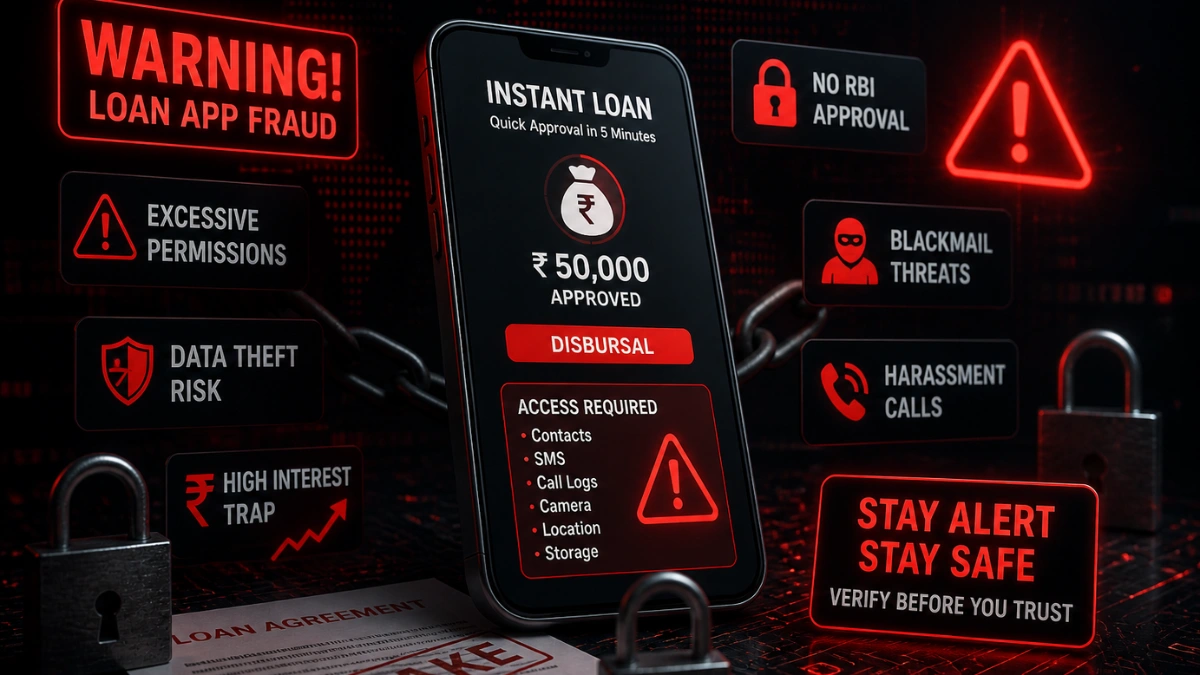
Promises like “₹50,000 in 10 minutes, no documents needed” should raise immediate concern. Legitimate lenders follow compliance checks—KYC, credit verification, and risk assessment.
Speed without scrutiny is rarely legitimate.
2. Excessive App Permissions
One of the most overlooked aspects of Cybersecurity & Safety is permissions. Many fake apps demand access to:
- Contact lists
- Photo galleries
- SMS and call logs
This isn’t required for loan processing. It’s a strategy to build pressure later—by threatening to leak personal data.
3. Hidden Charges and Confusing Terms
The loan might appear generous upfront, but users often receive less than promised. The difference? Deducted as “processing fees,” “platform fees,” or vague service costs.
Repayment timelines are short. Penalties are steep. Transparency is missing.
4. No Clear Company Identity
A legitimate financial service will have:
- Registered office details
- Customer support channels
- Regulatory disclosures
Fake apps often operate under generic names with no verifiable presence. A quick search yields little to no credible information.
5. Harassment as a Recovery Method
This is where things turn aggressive. Once repayment is delayed—even slightly—users report:
- Threatening calls
- Messages sent to contacts
- Morphed images used for blackmail
At this point, it’s no longer a financial issue. It’s a digital safety crisis.
Understanding the Psychology Behind the Trap
Fake loan apps don’t just exploit technology—they exploit behavior.
They rely on urgency. When someone is under financial stress, decision-making becomes reactive rather than rational. Add to that a clean interface and reassuring language, and the brain fills in the gaps with trust.
There’s also a subtle social factor. People don’t talk openly about financial distress. That silence creates isolation, making individuals more vulnerable to quick, private solutions—like these apps.
In many ways, the success of these platforms reflects not just a cybersecurity gap, but a societal one.
The Business Model No One Talks About
Behind the scenes, fake loan apps operate like highly efficient data-extraction systems.
The actual loan amount is secondary. The real value lies in:
- User data harvesting
- High-interest short cycles
- Psychological pressure for quick repayments
Many of these apps are part of larger networks. If one gets banned, another appears under a different name. The ecosystem is fluid, adaptive, and difficult to regulate in real time.
This is why awareness becomes more important than enforcement.
Practical Ways to Protect Yourself
Avoiding fake loan apps isn’t about paranoia—it’s about discipline.
Verify Before You Install
Stick to apps listed by trusted sources or regulated entities. Check reviews, but don’t rely solely on ratings—they can be manipulated.
Check RBI Compliance
Ensure the lender is registered or partnered with an RBI-approved NBFC or bank. This single step filters out a large number of fraudulent platforms.
Limit App Permissions
If a loan app asks for access beyond basic identification, it’s a warning sign. Deny unnecessary permissions.
Read the Fine Print
Look beyond the headline numbers. Interest rates, repayment duration, and penalty clauses reveal the true cost.
Trust Your Instincts
If something feels rushed or unclear, pause. Fraud thrives on speed; safety thrives on hesitation.
What Happens If You’ve Already Used One
Not everyone spots the warning signs in time. And that’s important to acknowledge without judgment.
If you’ve already interacted with a suspicious app:
- Do not panic or comply with threats immediately
- Disconnect app permissions from device settings
- Report the app to cybercrime authorities (cybercrime.gov.in)
- Inform your contacts proactively if harassment begins
The goal is to regain control—not escalate the situation.
Where This Is Headed
India’s fintech space is only going to grow. Digital lending will become faster, more accessible, and more integrated into everyday life.
But with that convenience comes responsibility.
Regulators are tightening norms. Platforms are being monitored. Awareness campaigns are slowly gaining traction. Still, technology evolves faster than regulation.
The future of Cybersecurity & Safety in India won’t be defined solely by policies—it will depend on how individuals interact with digital tools.
Because ultimately, the weakest link in any system isn’t software.
It’s trust.

Conclusion
Fake loan apps aren’t just a financial nuisance—they’re a reflection of how digital convenience can be weaponized. They sit at the intersection of technology, behavior, and vulnerability.
Recognizing them requires more than technical knowledge. It requires awareness, patience, and a willingness to question what looks easy.
Because in the digital world, ease often comes at a hidden cost.
Final Insight
At The Vue Times, we see digital literacy as more than a skill—it’s a form of self-defense. As India’s digital economy expands, understanding the risks becomes just as important as embracing the opportunities. The smartest users aren’t the fastest—they’re the ones who pause, verify, and stay one step ahead.
Frequently Asked Questions
What are fake loan apps in India?
Fake loan apps are unauthorized digital lending platforms that offer quick loans but misuse personal data, charge hidden fees, or harass users for repayments.
How can I check if a loan app is genuine?
Verify if the app is linked to an RBI-registered NBFC or bank, check company details, and review permissions before installing.
Is it safe to give contacts access to loan apps?
No. Legitimate loan apps do not require access to contacts. This is often used by fraudulent apps for harassment and blackmail.
What should I do if a fake loan app threatens me?
Avoid engaging with threats, remove app permissions, and report the incident to India’s cybercrime portal immediately.
Are all instant loan apps unsafe?
No, but caution is necessary. Some are legitimate, but users should always verify credentials and terms before applying.