India, once in a year, when winter starts to allow the grip, as the sun turns to take another turn, India swivels all its eyes on Makar Sankranti. This festival, celebrated, however, on January 14, is somewhat unique in its own way–most Indian festivals are lunar, whereas this is a solar one.
However, why nearly all months of Makar Sakramenti are celebrated on the same day of the year?
What about its Hindus and nature makes it to be so major within their Indian culture, spirituality, and agriculture?
And why then does this festival bring India together but in a different name, rites as well as traditions?

Here, in this deep explanation, we can see the answer of the question as to why Makar Sankranti is celebrated on January 14 every year, the astronomical logic of the festival, its historical background, its religious symbolism, its practices in different regions, theories behind the festival and its continued use and significance today.
Learning Makar Sankranti: Not a Festival but more
Makar Sankranti is not only a religious celebration. It is a universal phenomenon, a thanks day festival, and a cultural indicator of the change of seasons.
In comparison to the Diwali or Holi that has changing dates every year, the date of Makar Sankranti is fixed and most of the time it is on January 14 (or Jan 15).
This is a consistency which is founded on astronomy.

Fundamentally Makar Sankranti is the date that indoors the movement of Sun to the zodiac Capricorn (Makar). This cycle is termed as Surya Sankraman.
In simple terms:
- Makar means Capricorn
- Sankranti means transition
Collectively, Makar Sankranti means the arrival of the Sun in Capricorn.

What Is Makar Sankranti and Why Do We Celebrate It on 14th January Every Year
The greatest effect behind Makar Sankranti on January 14 is the Indian ancient astronomical calculations.
There are two Indian calendars used in the festivals:
- Lunar calendar (moon-based)
- Solar calendar (sun-based)
The majority of festivals follow the lunar cycle and this leads to a change in dates each year.
Makar Sankranti is however on the solar cycle.
It requires the Sun about 365.24 days to revolve round the earth. The movement was determined very precisely by ancient astronomers of India.
where the Sun enters Capricorn:
- This is an almost year round occurrence starting near January 14.
- This renders the Makar Sankranti a polygraphic festival.
This is due to the fact that at that time, this will be the only solar alignment day on which Makak Sankranti 2026 will also be celebrated in most places in India.
The Astrological meaning Mukhataka Makar Sankranti
A very interesting fact about Makar Sankranti is that it is associated with the Uttarayan phase.
The northwards flow of the Sun is called Uttarayan. According to Hindu belief:
- Uttarayan is a blessed occasion.
- It is a representation of light, progress and spiritual awakening.
In the period of Makar Sankranti the Sun occupies Dakshinayan which means darkness and interior.
After January 14:
- Days become longer
- Nights become shorter
- The Sun’s energy intensifies
The fact that Makar Sankranti has such a strong impression of spiritual importance and seasonal valence is due to this change.
The history of Makar Sankranti: Traditions of Ancient India
Makar Sankranti history can be traced thousands years ago and it is mentioned in:
- Vedic literature
- Puranas
- Ancient astronomical texts
Authors such as the Surya Siddhanta give clear descriptions of conduct of the Sun through seasons.
And Makar Sankranti was employed in times past:
- A market indicator of farmers.
- A reference time of scholars.
Check point of sages: spiritual.
Here, the plan of kings and agrarian communities:
- Crop cycles
- Tax collections
- Temple festivals
with this change of solar swiftness.
Makar Sankranti and the Reason It is a Festival of Indian Harvest
Makar Sankranti is not only associated with harvest season but also India is an agrarian nation.
By mid-January:
- Winter crops are harvested
- Granaries are full
- At the end of months of work, farmers feel relieved.
This is the reason Makar Sankranti festival is a Hindu harvest festival in India and in particular:
- Punjab
- Haryana
- Maharashtra
- Karnataka
- Tamil Nadu
- Andhra Pradesh
Each region thanks:
- The Sun
- Nature
- Cattle
- Soil
for agricultural abundance.

Regional Names, One Festival
Despite the fact that still the time is January 14, the festival of Makar Sankranti in India happens under other names:
- Pongal in Tamil Nadu
- Uttarayan in Gujarat
- Magh Bihu in Assam
- Lohri in Punjab (a day earlier)
In Rajasthan, Gujarat, and Maharashtra, there are only a handful of congregants, particularly at the sizable Revoli hill stations and mountain ranges; they choose to bequeath their land to siblings in the next generation rather than face the pollution of their property by railways or others.
The essence of it is the same, despite regional variety:
- Gratitude
- Renewal
- Transition
Makar Sankranti (religious) Virtual
Makar Sankranti is spiritually regarded as very fortunate.
According to belief:
- Gifts given on this day give a lifetime merit.
- Pure river baths remove sins.
- Surya dev worship gives prosperity.
- The Makar sankrati translation consists of:
- Leaving ignorance, and levying wisdom.
Adopting order and balance (enacted by Capricorn)
Makar Sankranti Rituals explained
Rituals that are common in India entail:
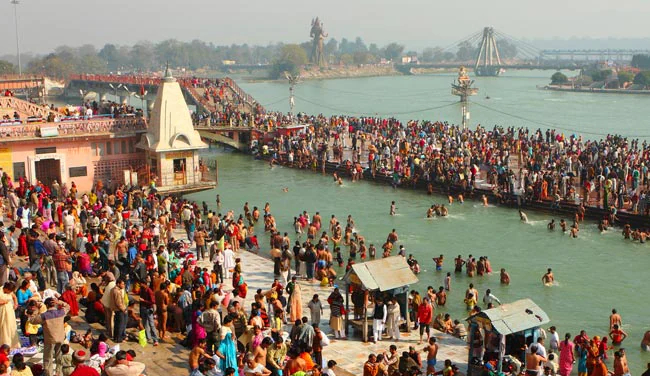
- Morning bathing in rivers in holy bath.
- Praying to the sun deity.
- Charity and donations
- The preparation of traditional foods.
- Community feasts
Til (sesame) and jaggery are variously consumed in most of the areas.
Why?
- Bailey plans are warming in wintertime.
- Jaggery boosts energy
- Their united bodies represent sweet relationships.
Puja Time and Shubh Muhurat Makar Sankranti
The Makar Sankration puja time is equal to the time of Surya Sankraman.
Generally:
- The performance of Puja is done in the daytime.
- Several hours following transitioning usher in the shubh muhurat.
In the case of Makar Sankranti 2026, Panchangs and priests will compute the exact time going by the movement of the sun.
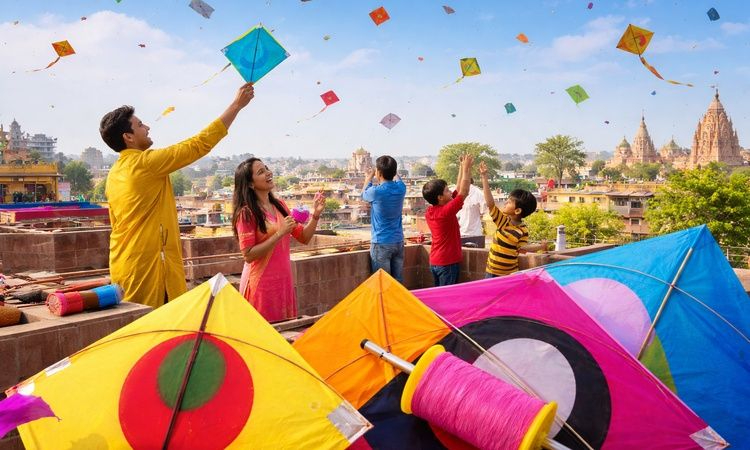
Social Traditions, Kite Flying
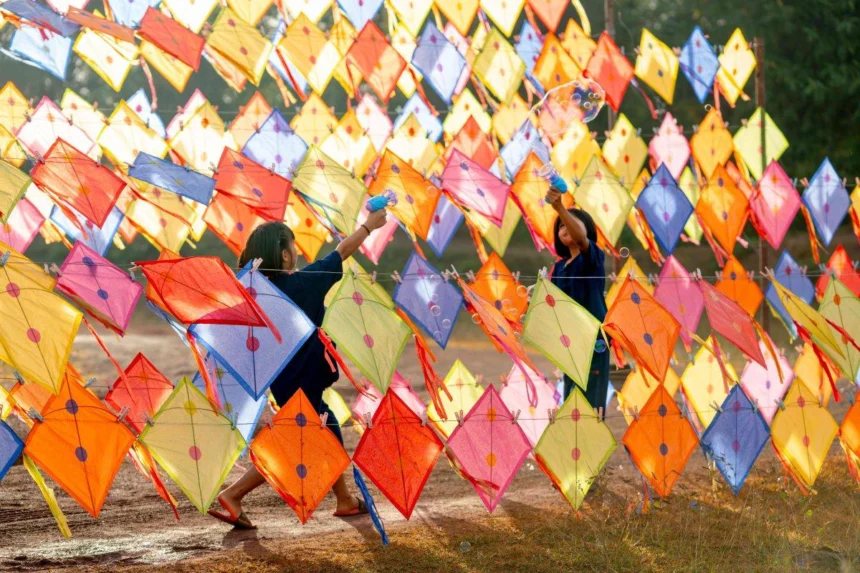
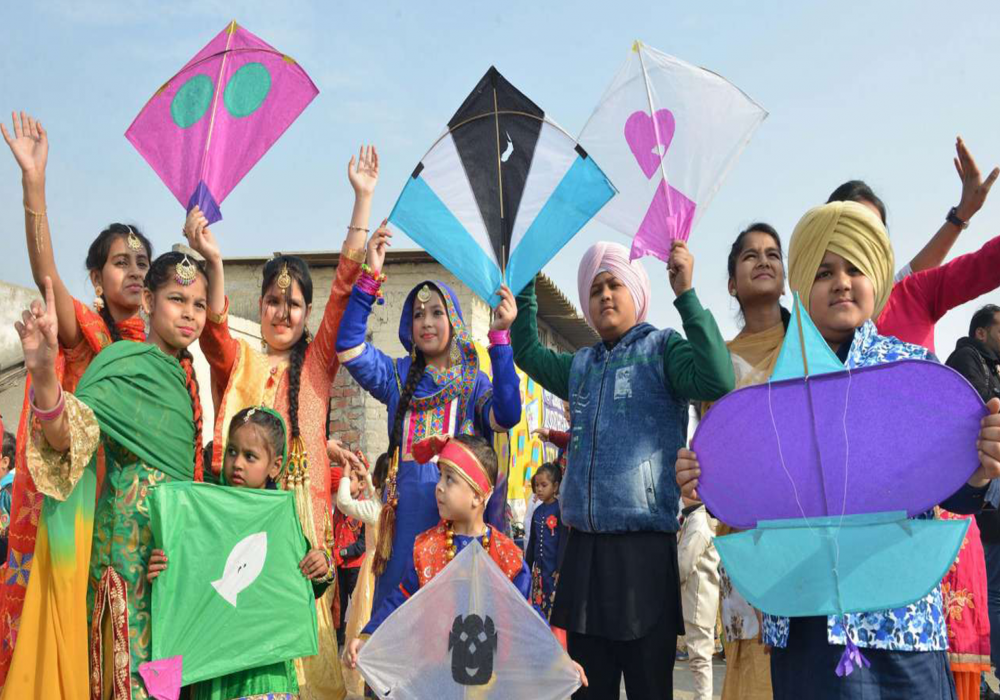
Makar Sankranti kite flying is not simply any form of recreation.
Historically:
- Health was promoted by sun exposure.
- People were guaranteed outdoor time through kite flying.
- It assisted in the absorption of vitamin D when there was winter.
Kite festivals have become a big culture in some states such as Gujarat and Rajasthan.
The Makar Sankranti Relevance nowadays
Makar Sankranti is still developing in present day India.
There are now celebrations in the city which involve:
- Cultural programs
- Eco-friendly kite campaigns
- Digital greetings
But still it is the same message:
- Balance with nature
- Respect for cycles
- Gratitude for abundance
Reasons making Makar Sankranti relevant even in the modern world
In the times of global warming, and bombast of the city life, Makar Sankranti reminds India of:
- Seasonal awareness
- Sustainable living
- Community bonding
Another characteristic that makes Makar Sankranti stand out as compared to the majority of Indian festivals is the fact that it is an uncommon type of solar festival. In India, most of the religious festivals are supported by the lunar calendar, which is based on the moon phases. That is why there are festivals like Diwali, Holi, Eid and Navratri, the dates of which change annually. Makar Sankranti is however observed based on the fixed astronomical course of the Sun. This distinction makes it stand out and the reason why the nationwide populace subconsciously links January 14 with this festival, every year.
We can see by comparing Makar Sankranti and other seasonal markets how scientific their basis is. As an illustration, Vasant Panchami is a festival celebrating the beginning of spring and Sharad Purnama is a festival that honors the autumn harvest during a full-moon. Seasonal moods are reinforced in these festivals and not the exact solar transfer. Makar Sankranti however is based on an absolute heavenly occurrence. It does not only celebrate a season but also a change in the level of movement of the Sun, further affirming the ancient knowledge of the Indian people on astronomy and time keeping.
The festivals calendar of India can generally be classified into harvest festivals, spiritual festivals and community festivals and Makar Sankranti can be interestingly discussed in each of the three categories. It is a festival of gratitude to nature like Onam in Kerala or Baisakhi in Punjab. It is closely associated with Sun worship just like Chhath Puja. And also, similar to Diwali, it has been turned into a community wide festival that cuts across religion, caste and region.
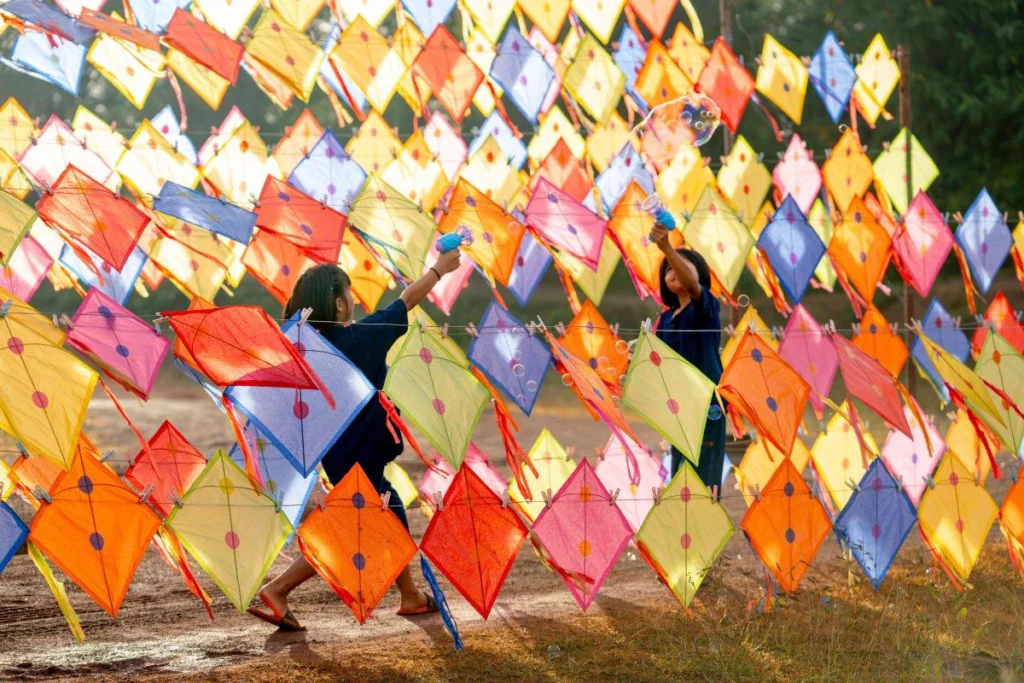
It can also be compared or nearly compared with Lohri that is celebrated one day before Makar Sankranti in northern India. Whereas Lohri highlights bonfires, folk songs as well as when winter is over-, Makar Sankranti symbolizes the cosmic attestation of the latter. These two are symbolic and again symbolic that the Indian culture blends both the emotional celebration with the scientific time: Lohri is the embodiment of human happiness, whereas Makar Sankranti is the embodiment of the heavenly order.
Pongal in southern India exemplifies how Makar Sankranti is fitted in the Indian local traditions without its spirit fading away. Pongal is not celebrated on one day, but it is an extended event that glorifies the Sun and cattle and the land. Although the rituals do not align with the rituals practiced in the North, the beliefs there emphasize the respect towards the natural cycles and appreciation of agricultural prosperity. Such flexibility is among the reasons why Makar Sankranti endured centuries of social and political transformations.
Compared to the festivals which have connection with mythology mostly, Makar Sankranti has, in relation, a pan-Indian logic that the people who are not of religious background can use. Not only the ideology of increased days, the warmer sun and the fresh life of the agriculture has echoingness outside of religion. That is why despite urban India where farmers and their farming are too far apart in their day-to-day life, people still celebrate the festival by installing kites, charity and traditional Indian food.
The other identifying characteristic of Makar Sankranti is the importance it places on daan (charity). This is contrary to the consumption festivity, as consumption is, but the giving in this festival is encouraged. It is said that the more food, clothing, and necessities one gives away on this day, the more he or she will have lucky events. This is a social element that enables Makar Sankranti to be not only a personal festival, but also a community one.
Makar Sankranti is also a valuable teaching experience as far as education is concerned as a lesson in applied science. The festival is frequently used to describe the tilt of the earth, solar cycles and changes in seasons at schools. There are not many festivals that offer this close of a connection between cultural practice and scientific learning and this is where the festival is especially applicable to younger generations.
With India going more urban and digitally pleased, such an event as Makar Sankranti becomes a cultural foil. They make people remember that time is not only defined by the clocks and calendars but also by sunshine, by seasons and rhythm of nature. This relationship is particularly relevant in the age wherein artificial settings prevail in daily existence.
Lastly, in comparison to other Indian festivals, Makar Sankranti now comes to the light as a festival of moderation– of science and faith, tradition and practicality, celebration and moderation. It is not based on spectacle but knowledge. And that is what makes it still being celebrated on January 14 each year, without any change of heart or irrelevancy.

Key Takeaways for Readers
- Makar sankranti is observed on 14th January because the Sun goes to Capricorn.
- It is also a solar year, as compared to most Indian festivals.
- Uttarayan is a favorable period celebrated by the festival.
- It is closely connected to the agriculture and harvest periods.
- Even though it has regional names, it still has a universal product.
Makar Sankranti 2026 will be keeping this inexhaustible tradition.