
There’s a quiet moment most people have experienced but rarely think about.
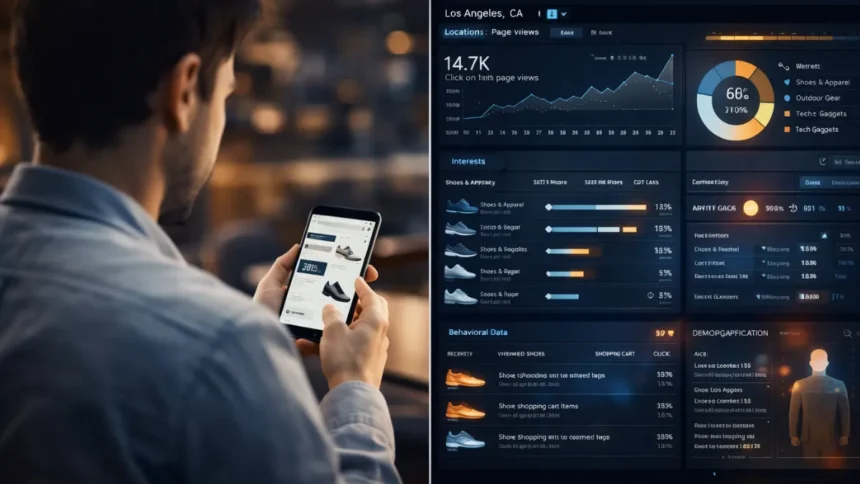
You search for a product once—maybe a pair of shoes—and suddenly it follows you everywhere. Instagram, news websites, even unrelated apps. It feels less like coincidence and more like surveillance dressed up as convenience. The modern internet doesn’t just respond to your actions; it remembers them, organizes them, and quietly builds a version of you that exists entirely in data.
That discomfort is where the question begins: What Is Data Privacy?
It’s no longer a technical concept reserved for IT professionals or legal experts. It has become a personal, almost emotional issue—something tied to trust, control, and the invisible boundaries of modern life.
What Is Data Privacy? A Practical Explanation, Not a Technical One
At its simplest, What Is Data Privacy? refers to your ability to control how your personal information is collected, used, stored, and shared.
But that definition feels incomplete. Data privacy isn’t just about protecting passwords or hiding sensitive details. It’s about ownership—who gets to decide what your digital identity looks like.
Think about it this way:
Your browsing history, your location, your purchase habits, even the time you spend looking at a post—these are not random fragments. They are data points. When combined, they tell a story about who you are, what you want, and sometimes even what you might do next.
Data privacy is the boundary that decides who gets access to that story.

How Data Privacy Became a Modern Concern
A decade ago, data collection felt like a background process—necessary, maybe even harmless. Platforms needed information to function, and users traded some privacy for convenience without much resistance.
That equation has shifted.
High-profile breaches, misuse of personal data, and increasing digital dependency have changed how people perceive privacy. When personal information becomes currency, trust becomes fragile.
Consider how often apps ask for permissions today—location, contacts, camera access. Individually, each request seems reasonable. Collectively, they form a detailed map of your life.
The rise of regulations across the world—like stricter data protection frameworks—reflects a growing recognition: personal data is not just technical metadata; it’s an extension of individual identity.
What Is Data Privacy? And Why It’s Trending Now
Search interest around What Is Data Privacy? isn’t rising by accident.
Three forces are driving the conversation:
1. The Data Economy Has Become Visible
Companies have always collected data, but now users are beginning to see how it translates into targeted ads, recommendations, and even pricing strategies.
People are starting to connect the dots.
2. Digital Dependency Has Deepened
Work, communication, entertainment, finance—everything lives online. The more digital your life becomes, the more valuable your data becomes.
And value attracts attention.
3. Breaches Are No Longer Rare
Data leaks are not occasional headlines anymore; they’re recurring events. Each breach chips away at the assumption that personal data is safely stored somewhere out of reach.
The result? Awareness mixed with unease.
The Psychological Side of Data Privacy
There’s a subtle psychological shift happening when people think about data privacy.
It’s not just fear of hacking or identity theft. It’s the feeling of being watched—even when no one is actively watching.
When algorithms anticipate your choices, it raises an uncomfortable question: How much of your behavior is truly yours?
That’s where data privacy intersects with autonomy.
If your preferences are constantly tracked, analyzed, and influenced, the line between choice and suggestion begins to blur. The issue isn’t just about exposure; it’s about influence.
Data privacy, in this sense, becomes less about secrecy and more about independence.
What Is Data Privacy in the Business World?
From a business perspective, data privacy sits at a complex intersection of opportunity and responsibility.
Companies rely on data to:
- Improve user experience
- Personalize content
- Optimize marketing strategies
- Predict consumer behavior
But there’s a tension here.
The same data that enables better services can also erode trust if misused. And in a competitive market, trust is not a soft metric—it’s a business asset.
Organizations that treat data privacy as a compliance requirement often struggle to maintain credibility. Those that treat it as a value tend to build stronger, longer-term relationships with users.
In other words, data privacy is no longer just a legal obligation. It’s a strategic differentiator.

The Risks of Ignoring Data Privacy
When data privacy is compromised, the consequences extend far beyond inconvenience.
Identity Exposure
Personal details—names, addresses, financial information—can be exploited for fraud.
Behavioral Manipulation
Data-driven insights can be used to influence decisions subtly, from shopping habits to political opinions.
Reputation Damage
For businesses, a single data breach can undo years of brand-building.
Loss of Control
Perhaps the most overlooked risk is psychological—the realization that your personal information is circulating beyond your awareness.
The damage isn’t always immediate, but it’s cumulative.
What Is Data Privacy? The Legal and Ethical Shift
Governments worldwide have started responding to privacy concerns with stricter regulations. Laws are evolving to ensure:
- Transparency in data collection
- User consent before usage
- Accountability for breaches
- Rights to access and delete personal data
But laws alone don’t solve the problem.
Ethics play a crucial role. A company can comply with regulations and still operate in ways that feel intrusive. True data privacy goes beyond legality—it requires restraint.
Just because data can be collected doesn’t always mean it should be.
The Future of Data Privacy: Control or Convenience?
The next phase of data privacy will likely revolve around a central tension: control versus convenience.
Users want personalized experiences—but not at the cost of feeling exposed. Businesses want data—but not at the cost of losing trust.
Emerging technologies may redefine this balance:
- Privacy-first design models that limit unnecessary data collection
- Decentralized systems where users retain control over their information
- AI-driven privacy tools that monitor and manage data exposure automatically
But technology alone won’t determine the outcome. User awareness will.
The more people understand What Is Data Privacy?, the more they demand transparency—and the harder it becomes for opaque systems to operate unnoticed.

Conclusion
Data privacy isn’t disappearing into the background anytime soon. If anything, it’s moving closer to the center of how digital life is understood.
The question What Is Data Privacy? no longer belongs to a niche audience. It belongs to anyone who uses a smartphone, logs into an account, or interacts with a digital platform—which is almost everyone.
And perhaps the most important realization is this:
Data privacy isn’t just about protecting information. It’s about protecting the space where your choices remain your own.
Final Insight
The conversation around data privacy is often framed as a trade-off: give up some control for better convenience. But that framing misses something essential.
Control, once lost quietly, is rarely regained easily.
The real shift isn’t technological—it’s cultural. The moment users begin to question how their data is used, the power dynamic starts to change.
And in that shift lies the future of the digital world.
Frequently Asked Questions
What Is Data Privacy?
Data privacy refers to the right of individuals to control how their personal information is collected, used, and shared by organizations or digital platforms.
Why is data privacy important today?
With increasing digital activity, personal data is constantly being collected. Protecting it helps prevent identity theft, misuse, and loss of personal control.
What are examples of personal data?
Personal data includes names, email addresses, phone numbers, location data, browsing history, and financial information.
How can individuals protect their data privacy?
Using strong passwords, enabling two-factor authentication, limiting app permissions, and avoiding suspicious links can help protect personal data.
Can companies use my data without permission?
In many regions, companies must obtain user consent before collecting or using personal data, though practices vary depending on local laws.