In an ever growing tense situation in the Middle East, The Vue Times describes a possible new and aggressive round of the Israel-Gaza conflict when Prime Minister Benjamin Netanyahu directs the army to launch immediate and forceful attacks on Gaza following a series of recent hostility and intelligence discoveries of radical movement activity.
A Night That Changed the Course of the Conflict
Towards the end of October 28, 2025, the Israeli Prime Ministers Office issued a short remark, but one worthy of its impact: The prime Minister Benjamin Netanyahu has ordered the Israel Defense Forces (IDF) to launch immediate and retaliatory attacks on Gaza. The air raid sirens echoed in the besieged enclave within hours, and the sky of Gaza City was saturated with the strikes of the heavy artillery and air-to-surface missiles.
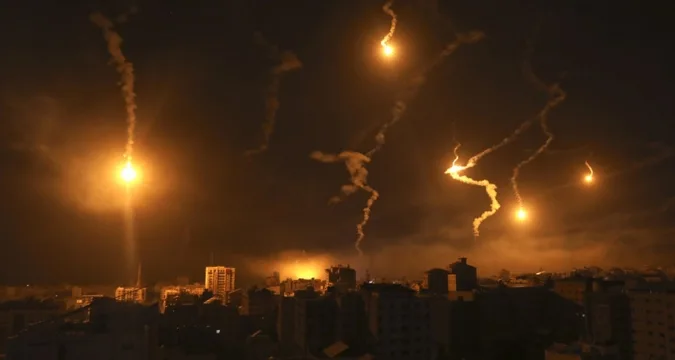
Early Israeli military press releases said that the operation focused on what it claimed to be -Hamas command and logistical centres- in central and northern Gaza. Palestinian officials however reported civilian losses, saying that at least 32 civilians, including women and children had been killed during the overnight raids.
The hostilities are also one of the bloodiest nighttime attacks in recent history and an indication of failure in the backchannel negotiations had Egypt and Qatar helped and mediated the fragile truce in the first half of the year.

Timeline of Events: From Renewed Rocket Fire to Military Mobilization
October 25–27:
Reports of sporadic rocket launches from Gaza began surfacing across Israeli border towns near Sderot and Ashkelon. Though most were intercepted by the Iron Dome system, one rocket reportedly caused property damage in Netivot, reigniting domestic debate over the security situation in southern Israel.
October 28, 6:00 PM (Jerusalem Time):
Following an emergency security cabinet meeting, Israeli intelligence briefings suggested that Hamas and Islamic Jihad operatives were regrouping near Khan Younis and Rafah. Defense Minister Yoav Gallant reportedly pushed for a preemptive operation, warning that “any delay will embolden further aggression.”
8:15 PM:
Netanyahu authorized Operation Iron Resolve, instructing the IDF to launch precision strikes on “strategic militant hubs” using both fighter jets and drones.
9:30 PM:
The IDF Spokesperson’s Unit confirmed active operations over Gaza, stating:
“Israeli aircraft are targeting terror infrastructure, including command centers, weapons depots, and tunnels. All actions are being taken to minimize civilian harm.”

11:00 PM:
Palestinian media reported explosions in multiple districts including Al-Rimal, Beit Lahia, and Jabalia. Gaza’s Health Ministry declared a “mass casualty situation,” with hospitals already facing severe shortages of fuel and medical supplies.
October 29, 2:30 AM:
The Israeli Prime Minister’s Office reiterated Netanyahu’s order, adding that “Israel will not tolerate terror threats along its borders.” By dawn, more than 60 strikes had been confirmed.
Military Operations and Ground Positioning
No official ground invasion has been proved to take place, but there have been reports of the IDF armored brigades on the Erez crossing and Beit Hanoun being put on high alert. Israeli military sources on record (their anonymity) informed local outlets that an attack with a limited-entry operation could still be used in the event Hamas creates counter-attacks.

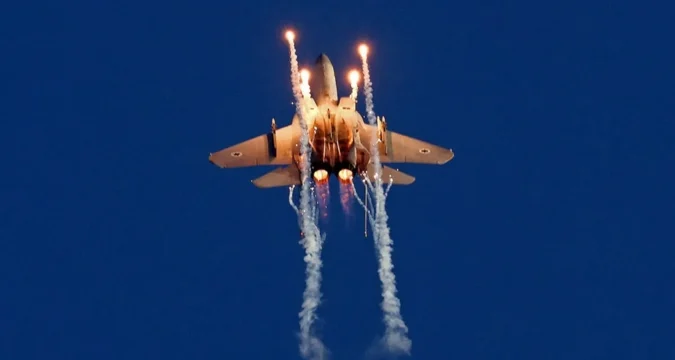
It is reported that the Israeli Air Force (IAF) had deployed F-15I Ra’am and F-35I Adir fighter jets in addition to the unmanned aerial vehicles to guarantee precision in targeting underground tunnels. Defense scholars opine that this wave of attacks is a change of approach towards rapid saturation attacks – planned to shatter militant command centres before the international community can raise its voice.
Official Statements and Political Messaging
Prime Minister Netanyahu addressed the nation early on Tuesday morning, stating:
“Israel will act decisively against those who seek our destruction. We will respond to terror with the full force of our defense capabilities. The safety of our citizens is non-negotiable.”
Opposition leader Yair Lapid criticized the government’s response, urging for restraint and renewed dialogue:
“We cannot allow this cycle of escalation to destroy what little stability remains in the region. Israel must act wisely, not only forcefully.”
Meanwhile, Defense Minister Gallant defended the air campaign, asserting it was “based on verified intelligence” and aimed at “neutralizing immediate threats.”
Humanitarian Impact in Gaza
The Gaza Health ministry claimed that there was massive destruction of residential areas especially in Al-Rimal and Zeitoun. According to the officials of the United Nations Relief and Works Agency (UNRWA), at least three of their facilities were partially damaged and hundreds of displaced families needed to find protection elsewhere.
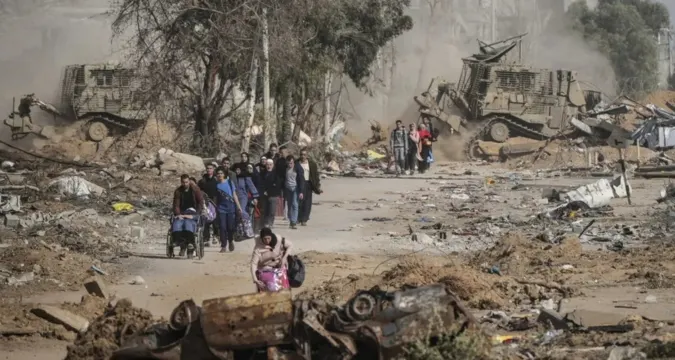
Power outages and water shortages had hit various locations in Gaza City. Field reports show that power plants almost run out of fuel superpower plants that were just about to run out of fuel, a phenomenon that has been recurrent since the blockade restrictions were tightened at the beginning of this year.
It was at the emergency level of operation in hospitals that were already faced with chronic shortages. The Palestine Red Crescent Society complained that the number of casualties overwhelmed medical teams, which requested urgent help from the international organizations.
Global and Regional Reactions
United Nations:
UN Secretary-General António Guterres expressed “deep concern” over the escalation, urging both parties to exercise maximum restraint and avoid further civilian suffering.
“The spiral of violence in Gaza risks igniting a wider regional confrontation. Diplomacy must prevail over retaliation,” he said in a statement issued through his spokesperson.
United States:
The White House confirmed that President Kamala Harris was briefed on the situation and remains in contact with Israeli and Egyptian officials. National Security Adviser Jake Sullivan stated:
“Israel has the right to defend itself from attacks, but it must do so within the bounds of international humanitarian law.”
Egypt and Qatar:
Both nations have suspended their ongoing ceasefire mediation efforts until “the situation stabilizes.” Cairo reportedly summoned the Israeli ambassador to express “strong disapproval of the disproportionate use of force.”
European Union:
EU foreign policy chief Josep Borrell condemned the civilian deaths and called for an immediate ceasefire, describing the strikes as “a setback to any peace initiative in the Middle East.”
The Broader Context: Why the Conflict Has Rekindled
Analysts reckon that the revitalized animosity is due to overlap of several pressures that have been overtime; political instability in the coalition within Israel, the increased militant activities in Gaza and the failure of the post ceasefire aid negotiations.
Ever since the beginning of 2025, the two claim they have been breaking the peaceful truce against one another. Israel states that militant groups are reestablishing tunnels and arming themselves, and Palestinian leaders state that Israeli fuel and construction supplies put their restoration initiatives at a standstill.
Current Situation on the Ground
The IDF reported that operations are still underway, but aimed, as of the morning of October 29. People in Israel, in the southern part are being advised to be close to shelters, schools in the border towns are also closed.
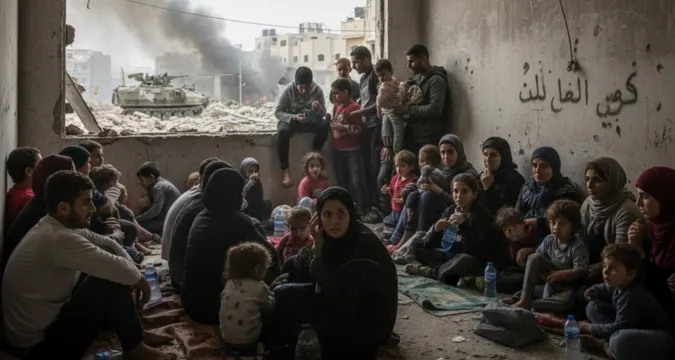
Eyewitnesses in Gaza said that drone surveillance and periodic attacks were occurring well into the early hours. Communications infrastructure has been compromised, and journalists and humanitarian agencies are hard pressed to make verifications on the ground.
Outlook: What Comes Next
Military campaigns may be extended even though restraint is being urged by the Israeli political insiders in case of the resumption of rocket firing. Without a swift diplomatic intervention, the conflict may escalate to one of the most intense ones since 2021, which issues a warning to the international observers.
The poor relations between Israel and the international community are about to challenge the military goals of Israel and the capacity of the international community to facilitate peace in a region that has already been exhausted with periods of violence.
Read More: Israel Take Over Gaza
More Read

Conclusion
The recent spike in violence can also be said to be coupled with instability in the region coupled with Hezbollah activities along the northern border of Israel raising concerns of a two front escalation.
With Israel escalating its military campaigns in Gaza, the issue of proportionality, civilian protection and strategy thereof heads global discussion again. Whereas the government led by Netanyahu persuades that these strikes are an act of self defense, the humanitarian price keeps increasing – and with it, the doubt of peace in one of the most turbulent parts of the world.
To be sure, the world is waiting with anticipation as the smoke above Gaza augurs not only another night of war, but also a lesson that peace in the Middle East is a farfetched dream, marred with the suspicion of political naughtiness and human carnage.