


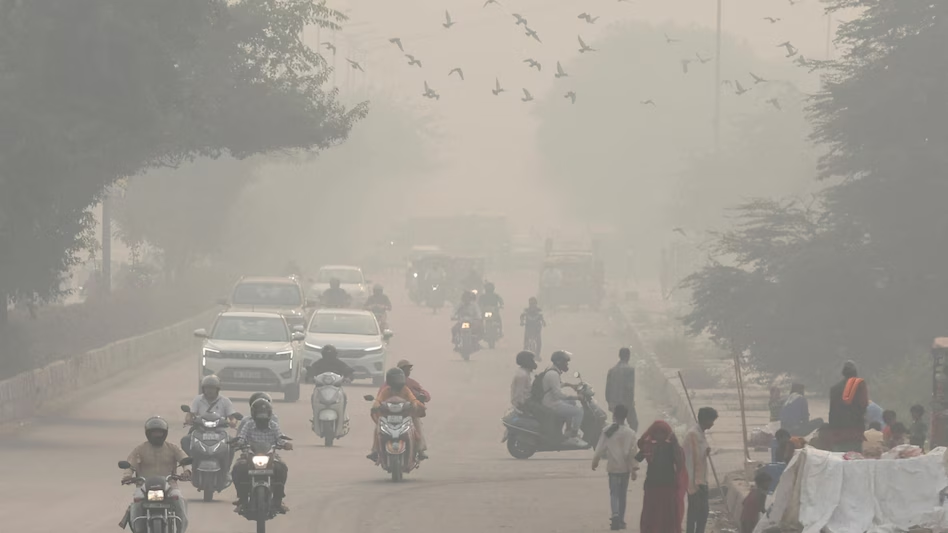
India’s national capital, Delhi, stands at the crossroads of innovation and desperation. Every winter, as smog chokes the skyline and air quality plummets to hazardous levels, millions of residents brace themselves for what feels like an annual environmental emergency. But this year, the city has turned to the skies — literally.
For the first time in India’s history, Delhi has initiated a large-scale cloud-seeding experiment to induce artificial rain, in collaboration with IIT Kanpur. The trial, if successful, could mark a turning point in how India approaches air pollution and urban climate resilience.
As Delhi battles another season of toxic smog and alarming AQI levels, the city has turned to an innovative and scientific solution — artificial rain through cloud seeding. This historic experiment, led by IIT Kanpur in collaboration with the Delhi government, marks India’s first large-scale attempt to use artificial rainfall as a weapon against air pollution. The project involves spraying silver iodide and sodium chloride particles into moisture-laden clouds to stimulate precipitation, helping to settle suspended pollutants and dust particles that blanket the city each winter. Experts believe that even a few hours of moderate rainfall could reduce PM2.5 and PM10 levels by up to 30–40%, offering temporary but much-needed relief to millions struggling with poor air quality. Beyond immediate results, this trial also symbolizes India’s growing commitment to blending technology, innovation, and climate resilience in public policy. If successful, the Delhi cloud-seeding model could pave the way for similar environmental interventions in other polluted metros like Mumbai, Kolkata, and Lucknow — making it a defining moment in India’s national fight for cleaner skies.

This article takes you deep into the heart of this groundbreaking project — its science, strategy, execution, and implications for national development.
1. The Need for Artificial Rain in Delhi
Delhi’s pollution crisis isn’t new. Each year, post-Diwali, a toxic haze settles over the capital. Vehicular emissions, industrial waste, and stubble burning in nearby states like Punjab and Haryana create a deadly cocktail that pushes the Air Quality Index (AQI) to “Severe” levels, often exceeding 500 µg/m³ of PM2.5.
For residents, it means red eyes, coughing fits, and emergency health advisories. For policymakers, it means finding urgent, out-of-the-box solutions.
Artificial rain, or cloud seeding, is now being seen as a potential game changer — a scientific method that can help bring immediate relief by cleansing pollutants from the atmosphere.
2. The Science Behind Cloud Seeding
Cloud seeding is not a new concept globally, but its application in India has remained limited until now. The process involves dispersing chemicals such as silver iodide, potassium chloride, or sodium chloride into the atmosphere to encourage condensation and precipitation.
In simpler terms:
- Special aircraft release seeding materials into clouds.
- These particles attract water droplets.
- The droplets merge and grow heavy enough to fall as rain.
When done right, it can artificially trigger rainfall even under marginal weather conditions — providing temporary relief from extreme pollution.
3. IIT Kanpur’s Role and Scientific Framework
The Indian Institute of Technology (IIT) Kanpur has spearheaded India’s research on cloud seeding since 2018. The institute, known for its expertise in atmospheric science, partnered with the Delhi Government to execute this operation.
The project aims to seed cumulus clouds over northern and western parts of Delhi using specially equipped aircraft. Scientists at IIT Kanpur are using high-resolution weather radar data to identify the most promising cloud formations.
According to researchers, two aircraft equipped with advanced cloud-seeding systems will release a mixture of salt particles and dry ice into pre-identified cloud zones.
The data from these trials will be analyzed over several weeks to measure how effectively the technique can reduce PM2.5 and PM10 concentrations in the air.
4. Why This Trial Is a National Milestone
This is not merely a Delhi experiment — it is a symbol of India’s scientific evolution in climate and pollution management.
The Union Environment Ministry, IMD (India Meteorological Department), and DGCA (Directorate General of Civil Aviation) all coordinated to grant permissions for this project — a rare cross-departmental synergy in Indian policy implementation.
If successful, this model could be replicated in other major polluted cities like Lucknow, Kanpur, and Varanasi.
It aligns closely with India’s National Clean Air Programme (NCAP), which aims to reduce PM2.5 and PM10 levels by 40% in 131 cities by 2026.
5. The Cost, Planning, and Execution
The Delhi artificial rain project has been allocated approximately ₹3.2 crore for its initial phase.
The operation is divided into five main steps:
- Cloud Identification: Meteorological data is used to find moisture-rich clouds.
- Aircraft Preparation: Cessna 206H planes modified with seeding dispensers are deployed.
- Chemical Seeding: A precise mix of salts and silver iodide is released.
- Monitoring: Weather radars track rainfall and droplet formation.
- Impact Analysis: IIT Kanpur scientists evaluate pollution levels before and after rainfall.
Each stage involves precision timing and coordination with ground-based pollution monitors across Delhi’s air quality stations.
6. Lessons from the Past: Global Cloud-Seeding Experiments
Cloud seeding has been used in countries like China, UAE, and the United States to enhance rainfall or clear smog.
- China conducted massive cloud-seeding operations before the 2008 Beijing Olympics to reduce pollution levels.
- UAE uses seeding regularly to address water scarcity.
- Thailand has used it to mitigate drought.
However, India’s challenge is unique — it’s not about increasing rainfall for agriculture, but about clearing toxic air over dense urban populations.
7. The Environmental and Ethical Debate
While the Delhi government’s intent is clear — to reduce pollution and safeguard health — some environmentalists have raised concerns.
Critics warn that long-term use of chemical seeding agents could impact soil and water quality. The accumulation of silver iodide, though used in small quantities, must be closely monitored to prevent ecological imbalance.
Moreover, experts caution that cloud seeding can only work if clouds are already present — it cannot generate moisture in a completely dry atmosphere.
In essence, it’s a short-term measure, not a permanent fix for Delhi’s pollution.
8. The Human Side: What Residents Are Saying
For Delhi residents, hope is mingled with skepticism.
Local shopkeepers, schoolchildren, and office-goers all share the same sentiment — “Anything that brings some relief is worth trying.”
Rashmi Gupta, a schoolteacher from Pitampura, said she felt encouraged to see science being used for public benefit.
Meanwhile, Arjun Mehta, a delivery rider, expressed worry: “We need real solutions, not just experiments. Pollution makes it hard to breathe every winter.”
Such voices underline the emotional and social impact of Delhi’s environmental crisis. The artificial rain project is not just about weather — it’s about the lives that hang in the balance every smog season.
9. How Cloud Seeding Could Transform Indian Policy
This trial may influence broader national policies on climate resilience and pollution control.
The NITI Aayog and Ministry of Earth Sciences are closely observing the outcomes to integrate weather-engineering techniques into urban environmental management.
In the long term, India could establish a National Artificial Rain Program, bringing together meteorologists, climate scientists, and policymakers to deploy such interventions during peak pollution periods across major cities.
10. The Political and Administrative Framework
The Delhi Government, led by the Chief Minister, has emphasized that cloud seeding is a pilot, not a replacement for long-term policy reforms.
The initiative reflects a growing trend in Indian governance — the blending of technology, sustainability, and policy innovation.
The Centre’s support for these trials reflects India’s intent to experiment boldly while remaining grounded in data-driven decisions.
This synergy between state and central agencies represents a model for cooperative federalism in environmental policy.
11. Potential Impact on Delhi’s Air Quality
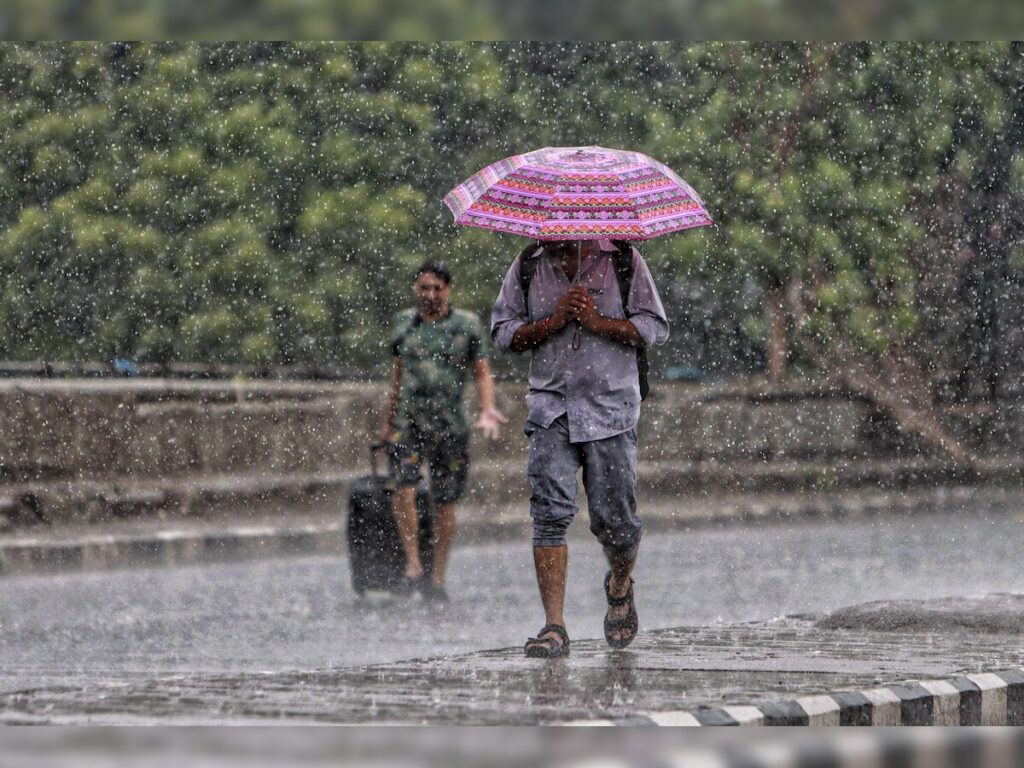
If successful, the artificial rain could bring down PM2.5 levels by 30–50% for several days, providing immediate respite.
The cleansing effect of rain can help:
- Reduce suspended particles.
- Improve visibility.
- Ease respiratory conditions.
- Cool surface temperatures.
Though temporary, even a week of cleaner air can make a difference during peak smog season.
12. Long-Term Vision: Integrating Cloud Seeding with Green Policy
To make the project meaningful, experts suggest integrating it with:
- Electric vehicle expansion under the Delhi EV Policy.
- Crop residue management programs in northern states.
- Green building regulations for construction pollution.
- AI-based forecasting systems for early detection of smog formation.
By combining artificial rain with sustainable reforms, Delhi can create a balanced, multi-pronged approach to pollution control.

13. The Science of Hope: What Success Could Mean for India
If the trial yields measurable results, it would be a landmark in India’s climate innovation journey.
Delhi could become a global case study in using atmospheric engineering to combat urban pollution.
It could also inspire other cities like Mumbai, Kolkata, and Hyderabad to experiment with environmental technology as a rapid-response mechanism during seasonal air quality crises.
14. India’s Climate Future and the Path Ahead
As the world faces escalating climate emergencies, India’s proactive stance in adopting cloud seeding reflects a deeper national transformation — a willingness to experiment, innovate, and adapt.
From space research to renewable energy, and now to weather modification, India is emerging as a country that leverages science for societal good.
Delhi’s artificial rain trial is not just about weather control — it is about reclaiming the right to breathe clean air, to live without masks, and to look at the sky with hope instead of haze.
More Read

15. The Rain of Change
Artificial rain may not be the final answer, but it represents a bold step in the right direction.
It shows that India is ready to apply technology to its most pressing challenges — and that government, science, and citizens can work together toward national development.
The trial symbolizes India’s evolution from reactive pollution control to proactive environmental engineering.
If clouds cooperate and rain finally falls, Delhi’s skies could mark a historic moment — a shower of science, policy, and collective willpower.