

1. Introduction
The long-time haven of peace, these hill stations in India and around the world used to be known as a quiet resting place in the bosom of nature, but nowadays they are headlining the news under a more dire situation: floods. Whether it is the serene valleys of Himachal Pradesh or pilgrimage routes of Uttarakhand, the raging rains, and devastating flash floods have become a commonplace. What was previously the peace of mornings with mist and morning birds, is now more and more being substituted by madness, non-functioning roads, landslides and rescue operations.
This rising number of floods brings with it a harsh question, are we just merely using global warming as a scapegoat to take responsibility for nonsense development and hasty planning. One thing is definite as governments, citizens and climate experts argue on the causes, paradise is under attack.
This article focuses on the scientific, human, and political levels of increased floods in hill stations, and whether the anthropogenic climate-changing process commonly referred to as global warming is an inevitable reality or a convenient fiction in the changing climatic realities of India and the globe today.
2. The Fragile Beauty of Hill Stations
The ecology of Hill stations in India, be it Himalayan, Western, or Eastern ranges are fragile balances but hot spots in their own right. These regions are characterized by rugged terrain, great biodiversity, unstable soils and microclimates. They took the form of summer destinations in places such as Manali, Nainital, Darjeeling, Ooty, and Munnar which were originally developed under British rule. Its undisturbed natural resources and thin populations meant that they could make a good escape place.
But after independence and particularly during the 21st century, there has been a building spree, tourism explosion and infrastructural exaggeration in these regions. Mountains have been tunneled to make ways without environmental impact assessment. Hotel zones were formed in river valleys. Rivers that were sacred and glacial lakes were diverted, plugged, or dammed.
This ecological disorder, which is oftentimes in the name of progress or pilgrimage tourism, has weakened natural buffers that used to cushion these areas against calamity. In essence, the hill stations we once revered as “heaven on earth” are now ticking time bombs.
3. Recent Flood Events in Hill Stations (2022–2025)
A series of disastrous floods in recent years has created a shift in perception of people regarding hill safety.
India:
● Uttarkashi Cloudburst (2025 aug)
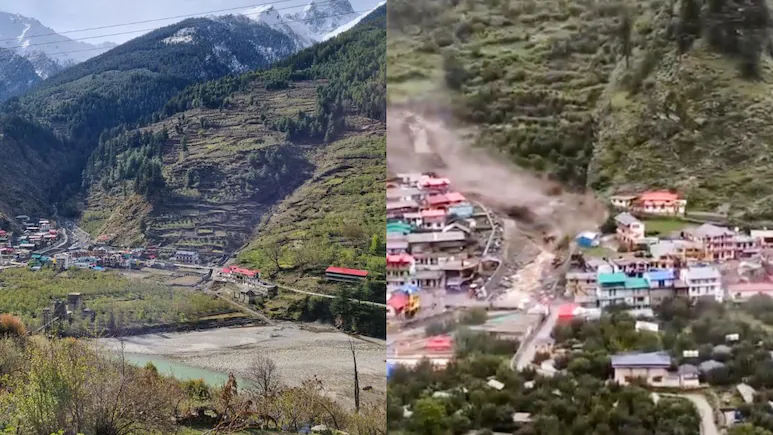
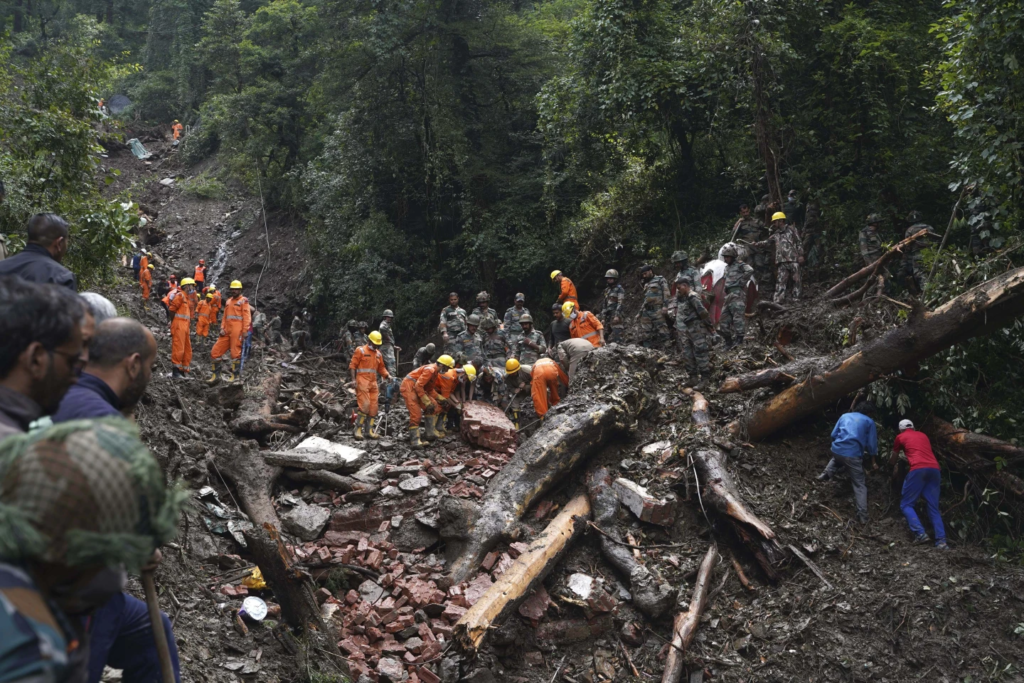
Flash floods caused by a sudden cloudburst over the village of Dharali in the Uttarkashi district washed away roads, bridges, and villages. Scores were feared trapped; 4 dead confirmed. The witnesses also described the torrent as a wall of water that came down with no prior warning.
● Kedarnath Floods (2023, 2024 small Events):
Landslides and frequent floods were reported in the Char Dham Yatra route. These sensitive areas have faced growth of development projects despite the disaster that happened in 2013.
● Manali Floods (2022):
A huge landslip caused the Beas River to be blocked giving way to abrupt flooding of low-lying regions. Lodgings along the river were flooded and thousands of vacationers needed to be transported by aircraft.
● Sikkim Glacial Lake Outburst Flood (GLOF) (2023):
Failure of the South Lhonak Lake caused by the high rates of glacial melting resulted in destruction in lower areas claiming the lives of over 50 people besides destroying sections of Teesta Dam.
Global Examples:
● Alps, Europe (2024):
Rain and warming climate resulted in floods in hill towns of Switzerland and Austria. Ski resorts and tourism towns were affected as glacial lakes overflowed.
● Rocky Mountains, U.S.(2023):
Spring melt of more than normal snow cover as well as sudden heatwaves resulted in record flooding in Colorado and Montana.
● An example is the Hilly Kyushu Region of Japan (2022):
Extremely heavy rainfall that set a new record was followed by flash floods that caused the deaths of more than 60 people.
The cases are not singular occurrences. They represent a trend–a trend that needs to be scrutinised critically both in its climatic and anthropogenic causes.
4. Is Global Warming the Only Culprit? Let’s Break It Down
The Climate Connection:
Climate scientists concur that global warming is a reality and it is contributing to extreme weather. Steaming up of warmer air means more moisture hence stronger and abrupt rainfall episodes, particularly in mountains where orographic lift boosts rainfall.
Also, the glaciers in the Himalayas are melting in a drastic manner. As a 2023 report by ICIMOD records:
- More than 40 percent of the ice mass of glaciers in the Eastern Himalaya has decreased since the 1990s.
- It currently has 350+ glacial lakes in danger of rupturing, 50 of which are marked as critical.
The warming has also upset the monsoon mechanism resulting in bizarre rainfall either inadequate or smothering resulting in rivers in hills regions to oscillate wildly.
But Is That the Whole Story?
Although climate change is, no doubt, a macro-level force, its local effect is enhanced or alleviated by human decisions. Hotels were not constructed on riverbeds by climate change. It did not clear away the forests and it was not heedless of geological explorations.
What we term as climate disasters are in most instances climate assisted human disasters.
5. The Human Hand in Natural Disasters
The creation of hill stations has been marked by a model of economic short-term success at the expense of ecological long-term stability. The main mistakes done by people are:
Unregulated Construction:
- Hotels with multi-storeys constructed on landslides susceptible slopes
- Replacing porous forest floors, which contributes to poor drainage by concrete.
- The mountain sides were weakened by narrow roads opened up thoughtlessly
Deforestation and Slope Destabilization:
Forest trees are natural anchors, which hold the soil together and gather rainwater. The tourism, road cuts and settling activity have made hills unstable through deforestation of hills.
Tunneling and Blasting Projects:
These are the hydropower and the tunnel projects, where it is necessary to break through the rock and the geological layers are weakened. There are more than 25 big tunnel-based projects operating within the seismic zones of Himachal Pradesh itself.
Too many tourists and religious rush:
Pilgrimage in such cases as Char Dham Yatra has become a mass experience. More than 15 lakh pilgrims arrived in May-June 2023 in a 30 days span only already, failing the local ecology and logistics.
Destruction is bound to occur in such a weakened environment as soon as nature strikes, and on a big scale.
6. The Myth of “Natural” Disasters
Natural disaster is a misleading term implying that it was unavoidable. That is no longer true.
A UNDRR (UN Disaster Risk Reduction) report published in 2019 has claimed that more than 90% of disaster losses are caused by human vulnerabilities that are prone to be mitigated by better organisation, enforcement and awareness.
- Floods in the hill stations are no longer entirely natural:
- Cogged drains clogged with plastic waste and rubbish
- Hill cutting hill cuts without any retaining walls
- Acts of illegal encroachments along rivers made them narrow
Moderate rains can be disastrous, especially when policies are weak, enforcement weaker, and ecological wisdom non-existent.
7. Voices from the Ground
Experts Speak:
● Dr. Anil Kulkarni, Glaciologist (IISc):
“We are seeing the collapse of mountain hydrology. Warming is accelerating meltwater, but it’s the lack of planning that makes it fatal.”
● Sunita Narain, Environmentalist:
“Call it global warming if you must, but first look at your construction permits.”
Locals Speak:
● Champa Devi, Dharali villager:
“We told officials not to build too close to the river. They laughed. Now the river has taken everything.”
● Tour Guide, Manali:
“In season, there’s so much traffic that emergency vehicles can’t even move. We need rules, not ribbon-cuttings.”
These voices reveal the essential point, disasters aren’t natural they are created.
8. The Role of Global Climate Trends
Global oscillations such as El Ni o and La Ni a have started influencing India on climate. These cycles influence:
- The timing and strength of monsoon Monsoon timing and strength
- Thawing spring and winter snows
According to the World Meteorological Organization (WMO), Asia, and especially the Himalayas, is one of the most rapidly warming mountain systems worldwide.
It is not just warming, though. Unpredictable weather- sudden changes in weather between dry periods and rainstorms are on the rise, making forecasts and planning more difficult.
The countries afflicted by such hill-based disasters include Nepal, Switzerland and Japan to mention some countries worldwide. The difference lies in their response structures and regulating rigidity where India requires a quick fix.
9. Policy Paralysis or Progress?
India has numerous frameworks:
- National Disaster Management Authority (NDMA)
- State Disaster Response Forces (SDRFs)
- Eco-Sensitive Zone Regulations
- Hill Area Development Programs
But implementation remains spotty.
During an audit in 2024 by CAG, it was found out:
- 45% of hill towns had no effective flood drainage schemes
- At the state-level, only half of the disaster plans had been revised after 2020 (22%)
- Violation of ecological clearance increased by 32% in Himalayan zones between 2021-2024.
It already has had some success, such as early warning systems, Doppler radars and disaster drills, although they tend to be reactive, as opposed to the preventive.
More Read

10. Way Forward – A Sustainable Hill Future
A comprehensive strategy is necessary to best undo the harm and gear up toward a more turbulent climate:
Green Construction:
Use local resources, light footprint buildings and slope-sensitive architecture. Avoid use of concrete close to rivers and slopes.
Wetland and Forest Restoration:
Reclaim bare slopes. Conserve the high-altitude wetlands that serve the purpose of a natural sponge when it rains heavily.
Smart Tourism:
Control the number of tourists in high seasons. Encourage eco and off season tourism. Impose plastic bans and movements.
Information Technology and the Data:
Increase satellite monitoring. Digitize sensors on flood and landslides in at-risk regions.
Community Ownership and Training:
Drill up locals in preparedness in case of disaster. Including them in planning, they are more familiar with the land than external parties.
India has the option of gaining some success in the short term or staying alive in the long run. That is why the price of ignorance is too great as floods demonstrate.