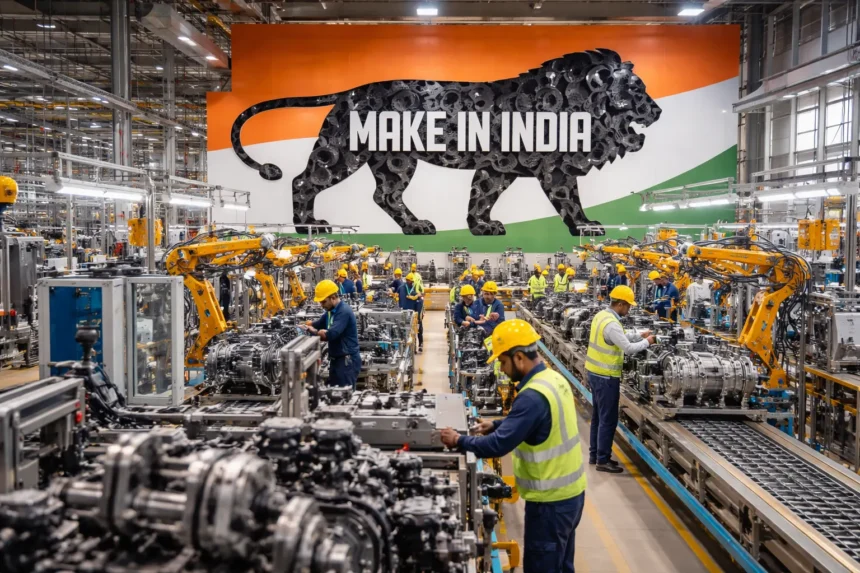
Make in India Initiative: Manufacturing Policy Evaluation
Within the landscape of India’s economic reforms, the Make in India Initiative stands as one of the most frequently asked themes in GS Paper III. Yet, despite its importance, many aspirants fail to convert this topic into high-scoring answers. The issue is not lack of knowledge—but lack of structured evaluation.
Problem Statement
A common mistake aspirants make while writing on the Make in India Initiative is treating it as a descriptive topic rather than an analytical one.
Typical issues include:
- Listing objectives without evaluation
- Ignoring data or outcomes
- Missing linkage with industrial policy India
- Writing generic “pros and cons” answers
The UPSC expectation is clear: policy evaluation, not narration.

Students often write:
“Make in India aims to boost manufacturing and create jobs.”
This adds no value unless followed by measurable outcomes, sectoral performance, and structural challenges.
Concept Clarity
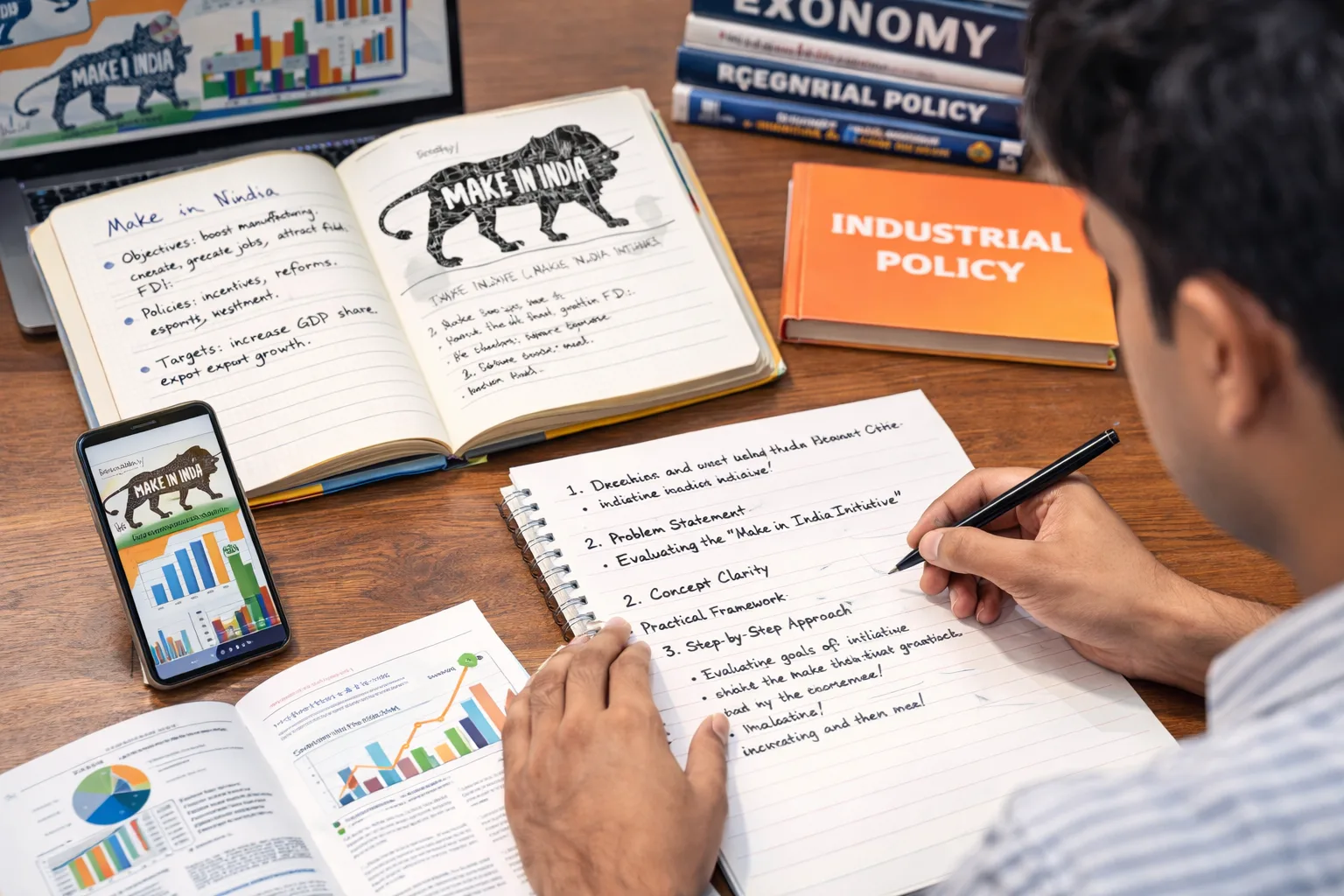
To score well, aspirants must understand that Make in India Initiative is not just a campaign—it is a policy framework linked to broader industrial policy India.
Key dimensions to focus on:

1. Objective Layer
- Increase manufacturing share to 25% of GDP
- Job creation
- Attract FDI
2. Policy Tools
- Ease of Doing Business reforms
- Production Linked Incentive (PLI) schemes
- Sector-specific incentives
3. Outcome Indicators
- Manufacturing GDP share (~16-17%)
- FDI inflows
- Export competitiveness
4. Structural Constraints
- Infrastructure gaps
- Skilling issues
- Global competition
Understanding this layered approach allows you to move from static content to dynamic evaluation.
Practical Framework
Step-by-Step Answer Writing Approach
Step 1: Define (1–2 lines)
Briefly introduce the Make in India Initiative
Step 2: State Objectives (2–3 points)
Mention core goals

Step 3: Evaluate Performance (Data-backed)
- FDI growth
- Sectoral progress
- Manufacturing share
Step 4: Identify Challenges
Link with real constraints
Step 5: Way Forward
Policy-based, not generic suggestions
Example Answer Structure
Introduction:
The Make in India Initiative, launched in 2014, aims to transform India into a global manufacturing hub.
Body:
- Achievements:
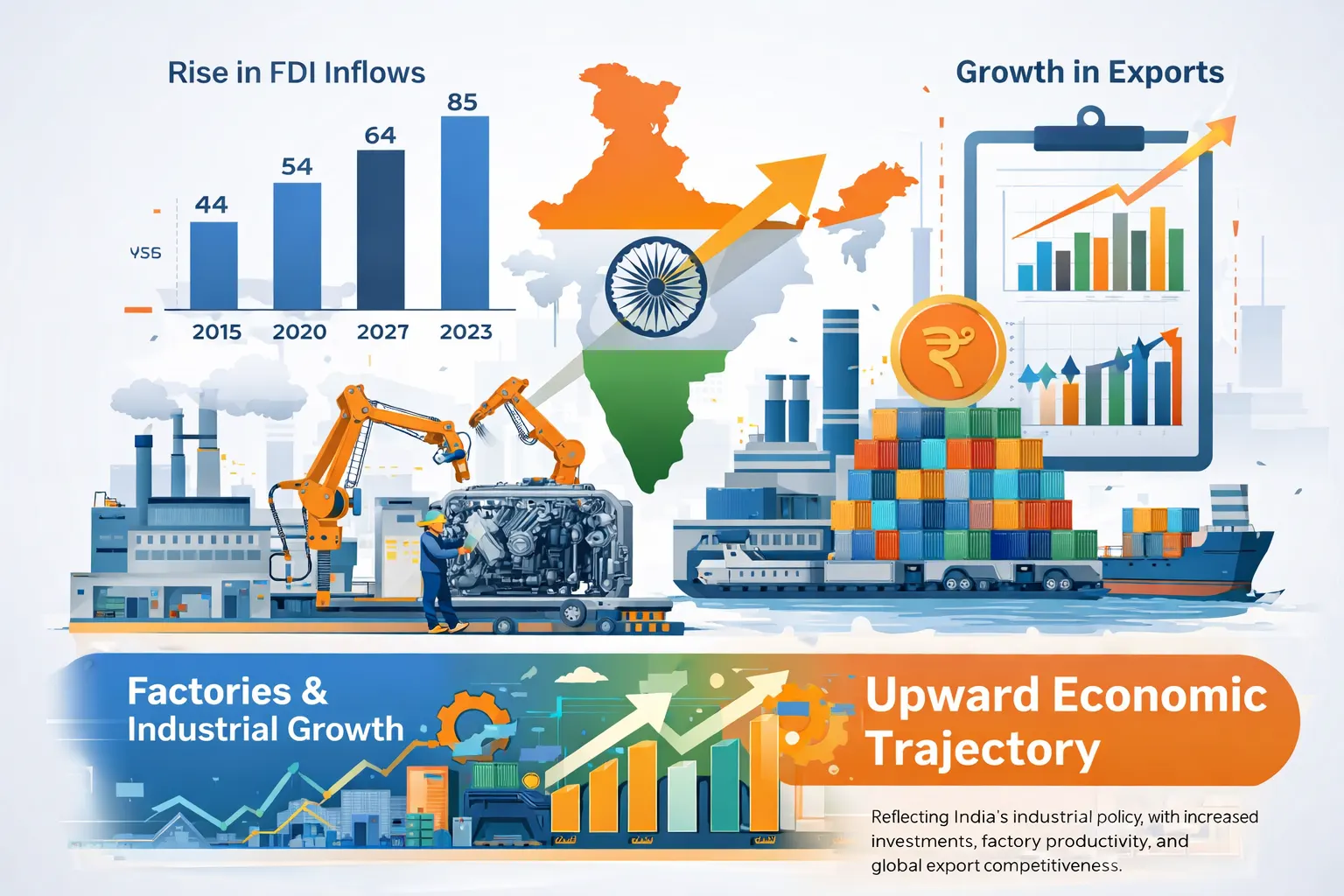
- Rise in FDI inflows
- Growth in mobile manufacturing
- Limitations:
- Manufacturing share stagnant
- Infrastructure bottlenecks
Conclusion:
Balanced evaluation with policy suggestions
Mistake vs Correct Approach
| Mistake | Correct Approach |
| Writing only objectives | Adding outcome-based evaluation |
| No data usage | Including statistics |
| Generic challenges | Specific structural issues |
| No policy linkage | Linking with industrial policy India |
Model Answer Snippet (Exam Ready)
The Make in India Initiative has improved India’s attractiveness for foreign investment, as seen in rising FDI inflows. However, its core objective of increasing manufacturing share in GDP remains unmet due to structural bottlenecks such as logistics inefficiencies and skill gaps. A recalibrated industrial policy India focusing on supply chain integration and technological upgrading is required.
Common Errors
1. Over-description
Students explain schemes but do not evaluate them.
2. Lack of Data
Answers without facts appear weak.
3. Ignoring Global Context
No mention of China+1 strategy or global supply chains.
4. Static Preparation
Relying only on old notes without current updates.
5. No Structure
Unorganized answers reduce readability and marks.
Tactical Application
Applying this structured approach directly improves marks in:
GS Paper III
- Economy questions
- Industrial growth topics
Essay Paper
- Development and policy essays
Interview
- Analytical discussion on reforms
Why it works:
- Shows clarity of thought
- Demonstrates policy understanding
- Improves answer presentation
Improvement Plan
Daily Practice (30 minutes)
- Pick one policy topic
- Write 150-word answer
- Focus on structure
Weekly Plan
- Revise industrial policy India topics
- Add latest data (FDI, GDP share)
- Practice 2 full-length answers
Monthly Strategy
- Attempt mock tests
- Analyze feedback
- Improve weak areas
Internal Linking (For The Vue Times)
- [Industrial Policy Reforms in India – Complete Guide]
- [How to Write High-Scoring GS Answers]
- [Indian Economy Strategy for UPSC Preparation]
More Read

Conclusion
The Make in India Initiative is not just a factual topic—it is a test of analytical ability. Aspirants who move beyond description and adopt a structured evaluation approach aligned with industrial policy India consistently score higher. The difference lies in clarity, data usage, and answer structure—not in the amount of content written.
Final Insight
Understanding the Make in India Initiative is not about memorizing facts—it’s about learning how to evaluate policies like an examiner expects. If you want consistent marks in GS answers, start practicing structured, data-backed analysis.
Stay updated with The Vue Times for focused strategies, exam-ready frameworks, and real answer-writing improvement—because in UPSC, clarity is what ranks.
Frequently Asked Questions
1. What is the Make in India Initiative?
The Make in India Initiative is a government program launched in 2014 to boost manufacturing, attract investment, and increase India’s share in global production.
2. Why is Make in India important for UPSC exams?
It is a key topic in GS Paper III under economy and industrial policy India, often asked in analytical and evaluation-based questions.
3. How should I write answers on Make in India Initiative?
Focus on structured evaluation—include objectives, achievements, challenges, and a policy-based way forward with relevant data.
4. What are the major challenges of the Make in India Initiative?
Key challenges include infrastructure gaps, skill shortages, logistics costs, and global competition affecting manufacturing growth.
5. How can I improve answers on industrial policy India topics?
Practice answer writing regularly, use updated data, follow a clear structure, and link policies with real outcomes and economic impact.