Introduction
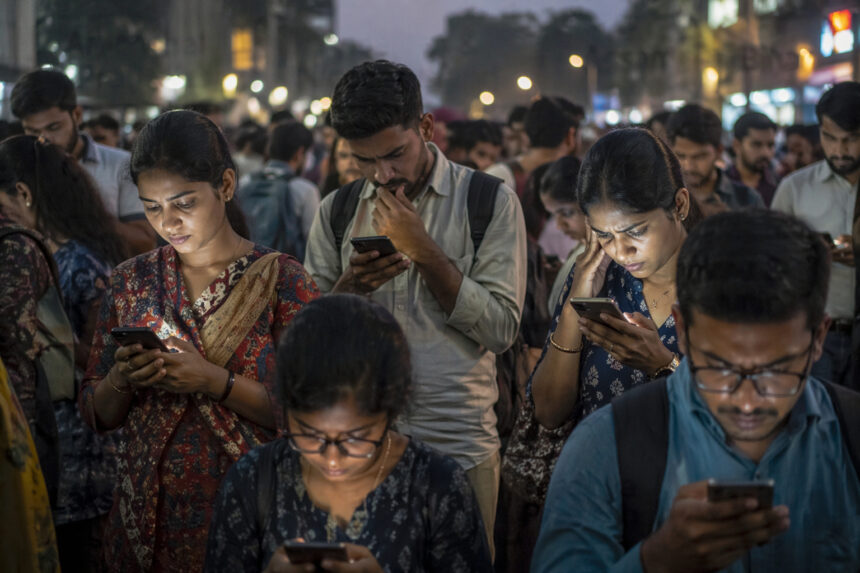
Nowadays, with the usage of smartphones and instant communication, the information spreads quicker than ever. Speed however, can come at the expense of accuracy. The issue of the spread of fake news in India has become one of the most acute in the digital environment of the country. Since viral WhatsApp forwards, doctored social media posts, and so on are the new norm.
India with its large population and a variety of languages is a special place where the information can be easily manipulated and distributed among the population. The effects are not just about confusion or misinformation, but in most cases, the effects result in real life damages, such as social unrest, political polarization and even violence.
It is important not only to policymakers and the media professionals but to all digital users to understand the origins, processes and consequences of this problem. This paper discusses the misinformation India generates, controversies, its views, and long term effects of the same and presents a thorough, balanced and thoroughly analytical perspective of the topic.
Background and Context
The fake news is not a recent occurrence. Traditionally, propaganda and misinformation have been in different shapes, be it political pamphlets or prejudiced news. But the extent and rate of the spread of misinformation nowadays is unprecedented.

In India, with the emergence of cheap internet, particularly following the introduction of low cost data services, the penetration of digital has gone through the roof. The number of first time internet users was in millions and they were introduced to the online world without having a clue about media literacy. This gave the fertile ground for misinformation to flourish.
This can be due to a number of structural factors:
- Digital illiteracy: A wide range of users will be unable to tell the difference between valid sources and fake information.
- Language diversity: Content that is translated into various languages can become contextually inaccurate.
- Platform design: Algorithms are designed to focus on engagement, rather than accuracy.
The fake news developed over the years to include rumors into advanced campaigns of edited videos, deepfakes, and networks.
What Is Going on at the Moment in Spread of Fake News in India.
The disinformation that India shares nowadays is actively developing, as the social media platforms like WhatsApp, Facebook, Instagram, and YouTube are used by the majority of people. These platforms have become the main avenues, through which misinformation is being spread all over the country, as millions of active users read and share content on them every day.
The messaging applications such as WhatsApp have a prominent role to play. There is a lot of trouble in tracing the source of fake information because their nature is encrypted and discrete. This has led to the spread of illogical messages, pictures and videos without any check in closed communities and thus regulating this has been a big challenge.

The recent trends indicate that there are a number of alarming trends in the misinformation India causes. Among the most prominent ones is the emergence of AI-generated content, such as deepfakes and altered images which seem to be most convincing. These technologies have facilitated the ability to come up with realistic but false stories that can easily deceive even those who are knowledgeable.
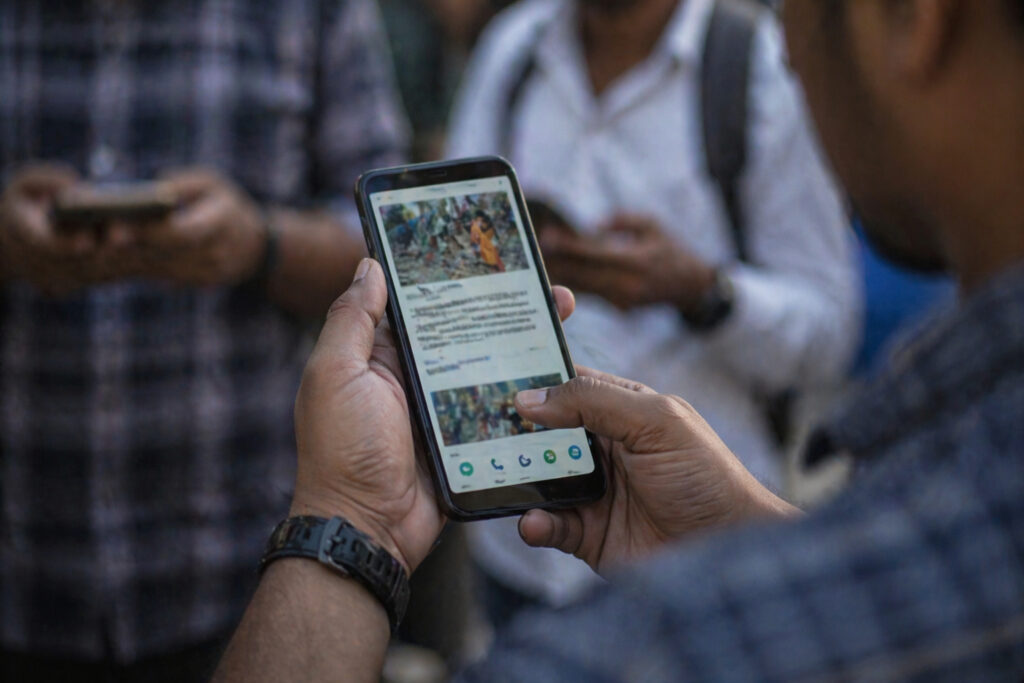
The other major trend is the high rate of the viralization of politically sensitive information, particularly around the election period or when unfolding major policies. The misinformation is frequently employed in order to impact the masses opinion, to formulate stories and to confuse the electorate. Equally, when faced with a crisis like a pandemic or natural calamity, misinformation is propagated very fast, which in most cases causes panic and makes decisions that are detrimental.

The fact-checking groups all over India have noted that there has been a sudden rise in the number of misleading content in the fields of health, governance, religion, and communal matters. Regardless of attempts on social media sites to implement forwarding restrictions, warning signs, and content regulation guidelines, the issue remains.
The problem lies in the fact that it is not only the matter of the fake information but the matter of the believability and involvement. Content that supports some beliefs or emotions of a user is likely to go viral. This forms an echo chamber where such misinformation continues to be reinforced, and it becomes more difficult to have factual information spread.
The issue of fake news spreading in India is controversial.
The controversy of the fake news, which was disseminated by India, is very intricate and controversial. The main conflict of this matter is a simple contradiction between limiting the spread of misinformation and freedom of speech.
Among the most controversial issues is how to balance freedom of speech and regulation. Although some claim that the only way to avoid the negative impact of misinformation is to take stringent action, some are afraid that such controls might result in censorship and stifling of dissent.
Another key issue is the intervention of the government. Others feel that more powerful laws, and regulations are needed to check the proliferation of fake news. Nevertheless, critics believe that overuse of control might be abused, and the authorities might perceive undesirable views as misinformation.
Another significant factor in this debate is platform accountability. The social media corporations are accused of not actively trying to censor the misinformation, but they are put in a difficult position where they must moderate the mass of content without adding to it and creating bias. Meanwhile, user responsibility and the necessity to check information prior to sharing it are increasingly becoming a topic of discussion.
To make matters worse, there has not been a universally accepted definition of fake news. What one group will deem as misinformation, the other will term as opinion, satire or other aspect. This uncertainty contributes to the fact that it is hard to establish concrete policies and implement them properly.
Misinformation India Causes According to various Perspectives.
Supporters’ View
The advocates of more stringent actions believe that the fake news that India is distributing is a severe threat to society, democracy, and even to people. They emphasize some of the real-life implications of misinformation.
Among the most powerful ones is the one, connected with the question of public safety. Incidences of mob violence, panic and social unrest have been caused by false information. In these situations, digital harm does not stop and has physical repercussions.
The other issue is the integrity of elections. Advocates feel the false narratives of politics can affect voters, erode faith in democracy and corrupt the political discourse.
The occurrence of health-related misinformation is also a significant one. False information about treatments, vaccination or preventive measures can have disastrous outcomes during the conditions of a health crisis, such as the loss of life, during such times as pandemics.
To overcome these issues, the advocates of the movements believe in the need to have stricter regulations, enhanced accountability of platforms, and extensive digital literacy programs. On their part, regulating misinformation has nothing to do with the issue of freedom- it is about ensuring the society is not hurt.
Critics’ View
The critics however warn that there should be no over regulation and over control in solving the problem of misinformation caused by India. The reason is that they believe that having strict measures can cause more problems than solutions.
The possibility of abuse of power is one of the issues of concern. The government may consider any differing opinions or criticisms to be fake news, and thus, legitimate discussion is suppressed. This brings in question transparency and fairness.
The other problem is the chilling effect of free speech. When users are threatened with punishment or censorship, then they might not be able to express their views freely and this could restrict the freedom of speech and debate; all of which are important in democratic society.
There are also criticisms of the issues of content moderation. The social media sites might enforce their rules unequally, which will result in discrimination or discrimination. This may destroy the confidence in online platforms and cause additional misunderstandings.
The critics put more emphasis on education, awareness and transparency as opposed to having strict regulation. They state that a more long-term solution to the issue of fake news is to enable users to think critically, and be media literate.
Facts vs Claims
| Category | Verified Facts | Common Claims |
| Spread Mechanism | Social media is the primary channel | Only political groups spread fake news |
| Impact | Linked to real-world violence in some cases | It is harmless and only online |
| Regulation | Platforms have introduced limits and labels | Government fully controls all content |
| Users | Both urban and rural users are affected | Only uneducated users believe fake news |
It is somewhere between reality and un-reality. Although misinformation is commonplace, it has different effects, based on contexts and audience.
What We may be missing.
A more in-depth examination shows that there are a number of neglected factors about how misinformation India is causing:
- Emotional Triggers
The fake news tends to make use of emotions, that is, fear, anger, or pride. This increases shareability.
- Confirmation Bias
A person would tend to believe information which supports their existing beliefs.
- Micro-targeting
Certain misinformation campaigns target certain communities, and are more difficult to detect.
- Economic Incentives
The motivation of misleading content is by clickbait and ad revenue.
Knowing these layers can give an idea as to why misinformation is still prevalent even after awareness campaigns.
Influence on Society / Economy /Users.
The consequences of the fake news India propagated spans more than the cyberspace.
Social Impact
- Increased polarization
- Communal tensions
- Lack of trust in institutions.
Economic Impact
- False rumours about the company/brand.
- Unstable markets as a result of misinformation.
- Expenses relating to fact-checking and regulation.
Individual Impact
- Misinformed decisions
- Emotional distress
- Loss of confidence in the media.
The overall impact is a disjointed information ecosystem in which it is more challenging to discern the truth.
Media and Storytelling role.
The media has a twofold contribution towards misinformation spreading and control.
Traditional Media
Though it tends to be more regulable, at times it can give false claims more prominence in the race to be the first.
Social Media Platforms
Algorithms are more concerned with engagement, and tend to push sensational content.
Narrative Building
Perception depends on the manner of framing of information. How content is received is influenced by headlines, visuals and tone.
The fact-checking organizations have become important actors, but they are not far reaching as compared to viral misinformation.
Better Future / Big Picture.
In the future, the situation with fake news is bound to get worse.
Emerging Trends
- AI-generated deepfakes
- More advanced false information.
- Increased platform regulation
Possible Solutions
- Improved digital literacy
- Transparent algorithms
- Jurisdictional cooperation between the governments, platforms, and the civil society.
The future will be based on freedom, responsibility and technology.
Conclusion
The problem of fake news India is not only about the fake information, but also about the attitude, perception and the nature of communication as it changes. With the digital platforms ever-influencing the way individuals take in information, the distinction between the truth and false information is further being blurred.
More Read
This difficulty needs to be dealt with in a multi-layered manner. Neither regulation nor individual awareness can help to solve the problem. It requires cooperation among users, platforms, media organizations and policymakers.
Finally, the struggle against misinformation is not to exercise control over information, but rather to enable individuals to challenge, seek verification and have critical thinking. In such a world, where there is a lot of information, the only important thing is to see the truth in all the noise.