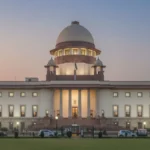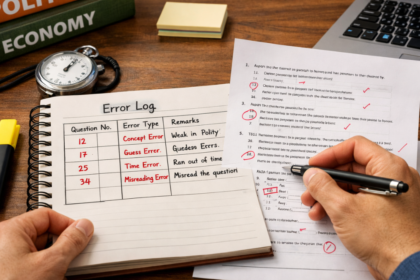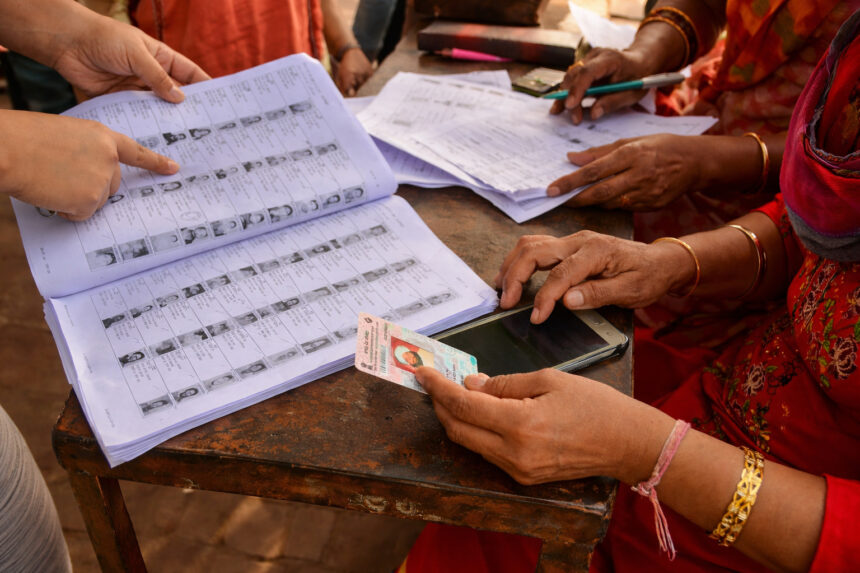
Over the past few months, a single term kept on appearing in the election reports, Supreme Court hearings and political arguments all over India – SIR. The abrupt emergence of this technical term of this election has become a source of confusion and concern to many citizens, first-time voters and people who aspire to secure government jobs. What exactly is SIR? Why is it controversial? Then what is its impact on Indian elections?
Special Intensive Revision (SIR) is a procedure that is undertaken by the Election Commission of India to check, rectify and revise electoral rolls. Although the process is not new, its magnitudes, time and political outcomes have given it political prominence in the c-scale of the country.
This paper describes what SIR is, what SIR means in elections, why it has been a controversial issue, why the Election Commission, the judicial case of the Supreme Court over it, and how this voter list amendment may be directly used to influence the participation of democracy in India.
How to Interpolate Meaning of SIR in Elections
SIR or Special Intensive Revision is the complete and door to door verification of voter lists. This is unlike the normal accounting of registers since SIR is a massive undertaking that seeks to purge the voter circle comprehensively prior to major elections.

SIR has the following main goals:
- Removing duplicate voters
- Crossing off names of dead voters.
- Fixing flaws of names, age, or addresses.
- Enlisting missing voters of prior elections.
- Making sure that the voter list has only real citizens.
Ideally, SIR will enhance democracy through the precision of the electoral register. Practically however, its execution has brought up grave political and constitutional objections.
Historical Perspectives of Voter List Revision in India
In order to appreciate why SIR is viewed as controversial in the current world, one should come to know about its background.
Electoral rolls were revised subsequently every few years since the beginning of Indian democracy. Structuring of elections: The Election Commission is the body that is in charge of the following functions:
- Revisions of the summary after six years.
- Several intense revisions at times.
- Exceptional Circumstances Special Intensive Revisions.
Formerly, SIR exercise was conducted following a census, significant migration, or even significant elections. These were mostly administrative exercises that rarely found their way to the mainstream political discussion.

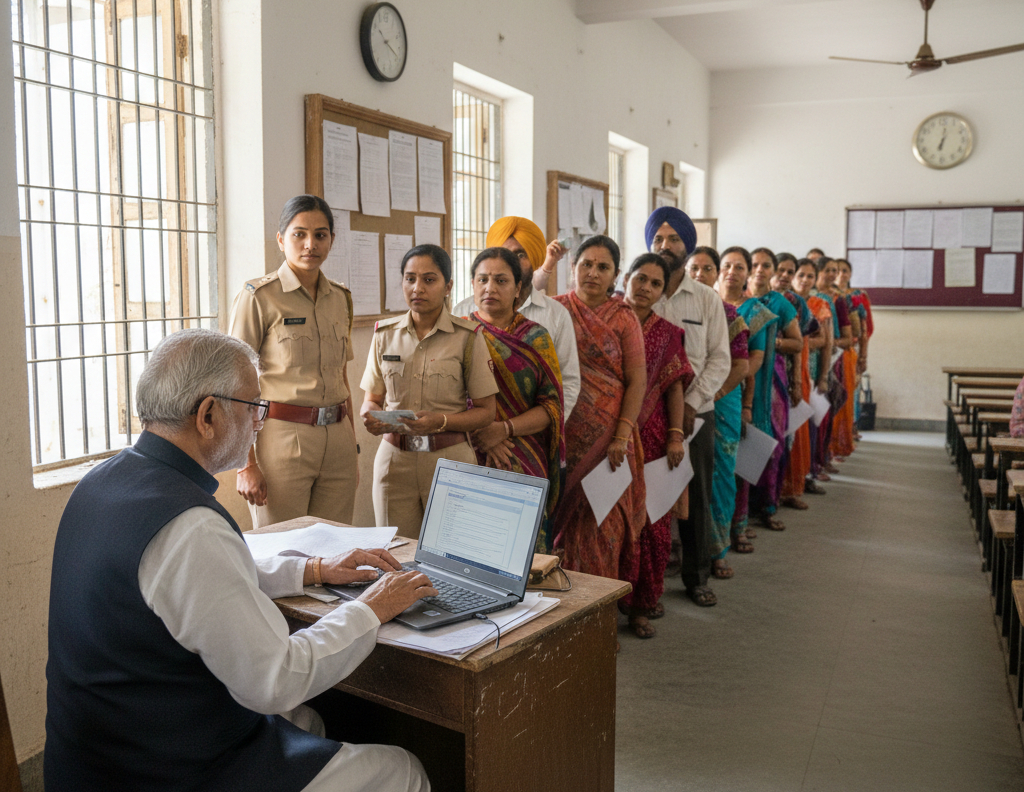
But new challenges are posed to modern India:
- Mass migration on a labor basis.
- Slums in the cities lacking addresses.
- Digital voter databases
- More polarization of politics.
All these reasons have made SIR not a normal process, but a politically burning one.

Why SIR Is Making News in India
SIR was the headline issue because it has three significant developments:
To start with, there were mass voter verification notices in more than a few states which covered lakh and even crore voters. A significant number of citizens found out that their names were initiated either to be checked or removed.
Secondly, political parties expressed concerns that the SIR process would disproportionately impact on some communities, migrant workers, and economically weak folks.
Third, it had to be taken to the Supreme Court of India because it was a constitutional, but not an administrative problem.
All these combined resulted in SIR entering the national news cycles and prime time debates.
The Working Process of Special Intensive Revision Process
It is first important to know about the SIR election process in order to know how confusing it is.
The involved steps normally involve:
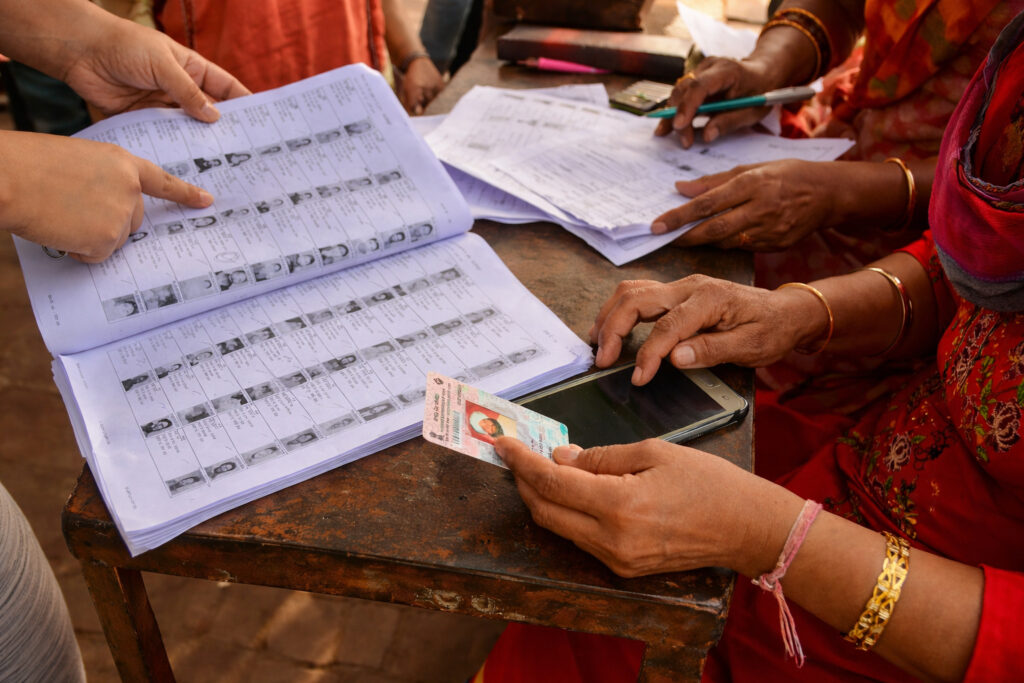
- Booth Level Officer House-to-house verification.
- Comparison of voter information with official responses.
- Sending of notices to voters whose information is not clear.
- Voter presentation of documents to be checked.
- Publication of draft voter list.
- Objection and claims deadline.
- Publication of final list of voters.
Paperwork has safeguards to this process. As a matter of fact, experience differs widely in regard to administrative capacity and levels of awareness.
Real-Life SIR Effect on the Voter of Ordinary People
A rural Indian farmer who has gone out temporarily to work can not be available during verification. In the cities, a house help residing in a rented house will not have any formal address documentation. In both examples, names are liable to be crossed off.
To illustrate, an example of the same happened with an old woman in a small village in eastern India who had cast her vote in every election since childhood only to discover that her name was not listed in the draft voter list. She had not been notified since she was not able to read official language in which form she had been given.
These tales underscore the reasons why SIR voter verification has been turned into an emotion-laden and political problem.
Why SIR Is Controversial in India
There are various issues in the SIR debate in India.
Issues Over Lock-Out of Bonafide Voters.
Critics say that SIR puts responsibility on the electorate as opposed to the state. Marginalized communities, poor citizens and migrants usually find it challenging to be able to do some document production within limited deadlines.
Timing of the SIR Exercise
Another concern is timing. The Special Intensive Revision carried out close to elections makes it suspect. The political parties also claim that the revision of the voter lists are not supposed to interfere with the electoral participation.
Claims of Political favoritism.
The parties that oppose have complained that SIR may be applied selectively by bypassing the voter bases in varied ways. Even though the Election Commission refutes such allegations, perception is very influential in democratic trust.
Administrative Overload
BLOs are mostly overworked resulting in mistakes. Errors in the process of verification may lead to innocent deletions.
Election Commission of India in SIR
Conducting free and fair elections which are quite constitutional is the responsibility of the Election Commission of India. It is legally empowered to amend the electoral roll according to laws about elections.
The Election Commission according to official sentiments contends that:
- SIR enhances election sanity.
- It prevents fake voting
- It ensures transparency
According to the Commission, every voter is not removed without the due process. The magnitude of the present SIR exercise has however presented a challenge with regard to enforcement.
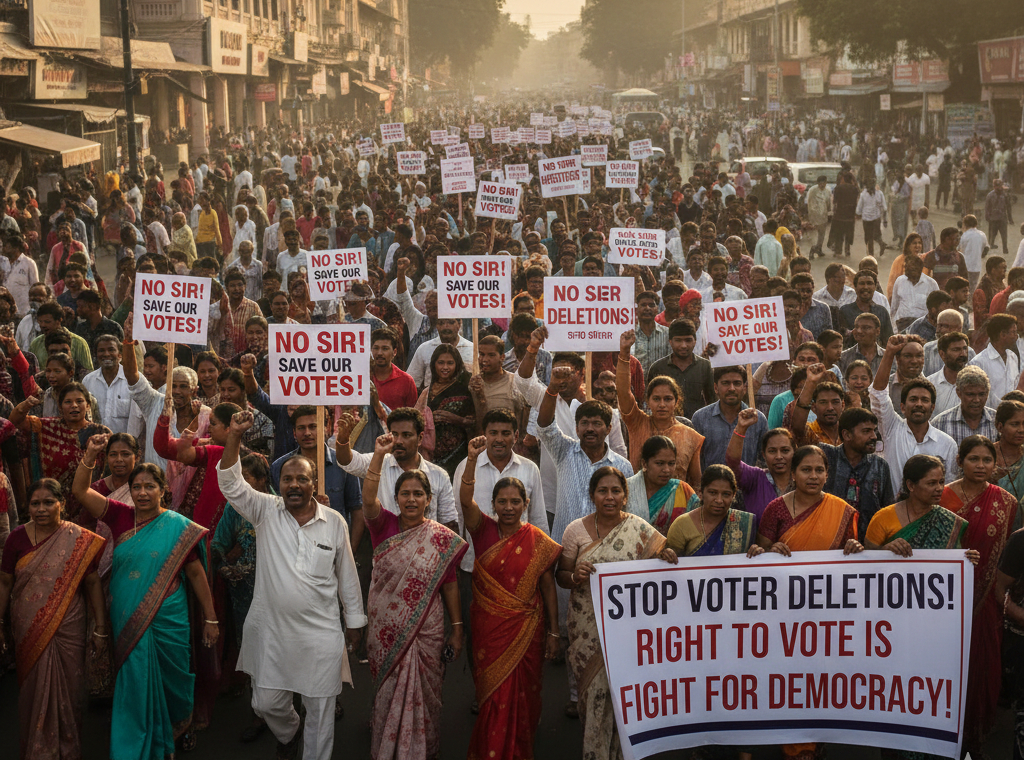
What the Supreme Court Case on SIR Means in the Simplest Way
The case of SIR Supreme Court is a turning point to the debate.
Questions in petitions submitted to the Supreme Court are:
- Whether SIR is guilty of the right to vote.
- The existence of sufficient safeguards.
- Whether the Election Commission overstepped its mandate.
The Court posed such critical questions as the issue of procedural fairness, voter awareness, and timelines. Although the final verdicts are still expected, even the hearings present the severity of the problem.
To government job seekers, this case to-know is that:
- Judicial review
- Authorities of constitutional institutions.
Striking a balance between the administration and basic rights.
The Problem of how SIR influences elections in India
SIR has both an indirect and direct effect on elections.
Direct Impact
- Removal of names off the voter lists decreases voter turnout.
- The waits in the verification can deter it.
- Mistrust to the election process comes about through confusion.
Indirect Impact
- Political discourse changes the issue of governance to legitimacy.
- The results of the elections can be doubted.
- Democratic confidence can be undermined.
Winning seats is not the only thing in elections but also in trust of the people. Any suspicion to voter lists influences the legitimacy of results.
Comparison between Special Intensive Revision and Routine Revision
Routine voter list revision:
- Happens annually
- Minimal verification
- Less disruption
Special Intensive Revision:
- Large-scale verification
- Door-to-door checks
- Increased probabilities of mistakes and scandal.
This is a very important distinction as far as conceptual clarity is concerned.
The Way Forward: How India could better the SIR Process
Specialists recommend a number of changes:
- Campaigns to raise voter awareness.
- Prolonged verification of transactions.
- Multilingual notices
- Application of electronic verification with security.
- Independent monitoring
When done properly, SIR will have the ability to enhance democracy rather than undermine it.
Prospective Analysis: Will SIR Alternate Future Elections?
SIR will probably be applicable as the elections in India move forward. As the urbanization process and migration continue to rise, it will be more difficult to maintain the correct voter lists.
The technology will be able to assist, but with human sensitivity and constitutional values.
The SIR debate encapsulates a larger issue, How can India be electorally honest and at the same time inclusive democratic?
Simple lessons to Citizens, Students, and Professionals
For citizens:
- Never forget to examine your name in the voter list.
- Reply to notification of verification timely.
For students and aspirants:
- Case Study SIR as a case study of current affairs.
- Link it with polity concepts
To practitioners and policymakers:
- Promote open and participative procedures.
- Enhance the confidence in institutions.
More Read

Final Thoughts
The question “What is SIR?” is no longer an administrative question. It has already turned into a symbol of the way democratic systems under strain work. The Special Intensive Revision scandal indicates that even good intentions of making changes may cause chaos when they are not being done properly.
With India still emerging into the biggest democracy in the world, issues such as SIR are a wake-up call that each vote counts and so does the process that safeguards that vote.
Frequently Asked Questions (FAQs)
Were the abbreviations used in elections?
The acronym of SIR is Special Intensive Revision. This is a procedure that involves the Election Commission of India to carefully check, revise and rectify the voter list prior to elections. This involves the addition of eligible voters, deletion of duplicate and dead voters, and correction of voter details.
What is the controversy of SIR in India?
SIR is also contentious since most individuals are afraid of true voters losing their names in the electoral list either as a result of documentlessness or immigration, or through administrative mistakes. Political parties have also expressed their concern over the timing of SIR just before the elections and the likelihood of voter lock-out to influence the outcome of elections.
What is the direct impact of SIR on the voters?
SIR is able to influence the voters when their names are checked or removed off the voter list. Voters might be requested to provide documents to identify eligibility. Failure to do so within the stipulated time would mean they will not have a right to vote in future elections until their name is reinstated.
What does the Election Commission Do at SIR?
Sir is conducted by the Election Commission of India which is in charge of elections laws. It formulates the process, gives instructions, assigns Booth Level Officers to verify and publishes draft and final voter lists. According to the Commission, SIR is supposed to guarantee free, fair, and transparent elections.
How come that the Supreme Court listened to SIR cases?
The petitions, which were presented to the Supreme Court, were connected to SIR due to the fact that it concerns such vital questions of the constitution as the right to vote, equity in the elections, and boundaries of the administrative authority. The petitioners claimed that a massive voter disenfranchisement would be the result of improper applying SIR.