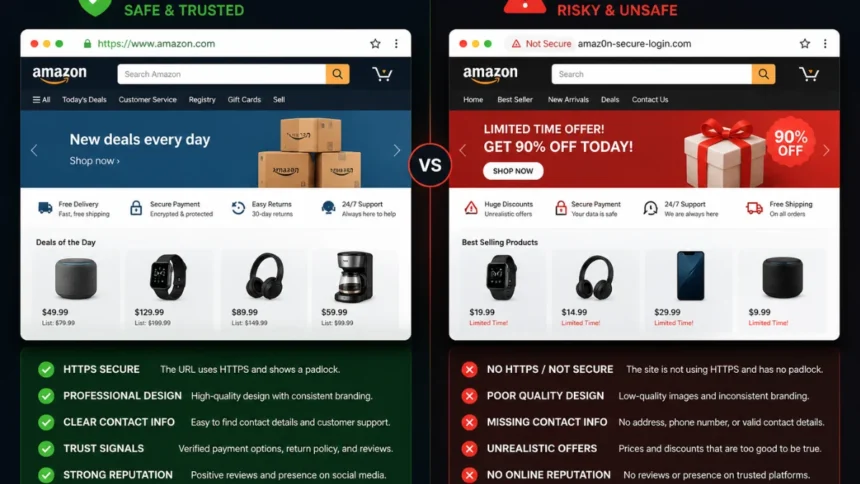
There’s a familiar moment most internet users have experienced. You land on a website offering a deal that feels just slightly too good—heavy discounts, urgent countdown timers, maybe even a polished interface that looks almost legitimate. For a second, it feels like luck. Then doubt creeps in.
That hesitation isn’t random. It’s instinct catching up with reality.
In a digital ecosystem where millions of websites are created every day, the line between genuine and deceptive has become dangerously thin. Understanding Cybersecurity & Safety today isn’t just a technical skill—it’s a basic survival instinct for navigating the internet.
Why Website Safety Has Become a Real Concern
The internet wasn’t always so crowded or complex as it is today. Back in the early days, you could usually spot a scam easily—think bad grammar, fishy links, and other clear warning signs. But now, fake websites are built with a lot more care and skill. Some are even designed to look exactly like big-name brands, to the point where people only realize they’ve been tricked after their bank account or personal information has been stolen.

The growth of online shopping, digital payments, and remote work has only made this issue worse. Every new convenience seems to come with its own set of risks.
We’re seeing everything from phishing pages that aim to steal login details to fake online stores that vanish after taking payments. The scale of these tricks has really expanded. Still, it often falls to each person to figure out what’s risky.
First Impressions Matter—But Don’t Trust Them Fully
You know, a website that looks great used to be a big deal when it came to showing people you were trustworthy. Things like clean designs, professional photos, and consistent branding really helped build trust. But these days, you can pretty much copy all that stuff in just a few hours.
The thing is, a fake website can look just as good as a real one. So, what really matters isn’t how it looks, but how it acts.
Here’s how to start checking it out:

First, think about how the website makes you feel. Does it feel like they’re rushing you or pushing too hard to get you to do something? Are there way too many pop-ups or messages trying to make you feel like you need to act fast? And is the price just way too good to be true compared to what everyone else is charging?
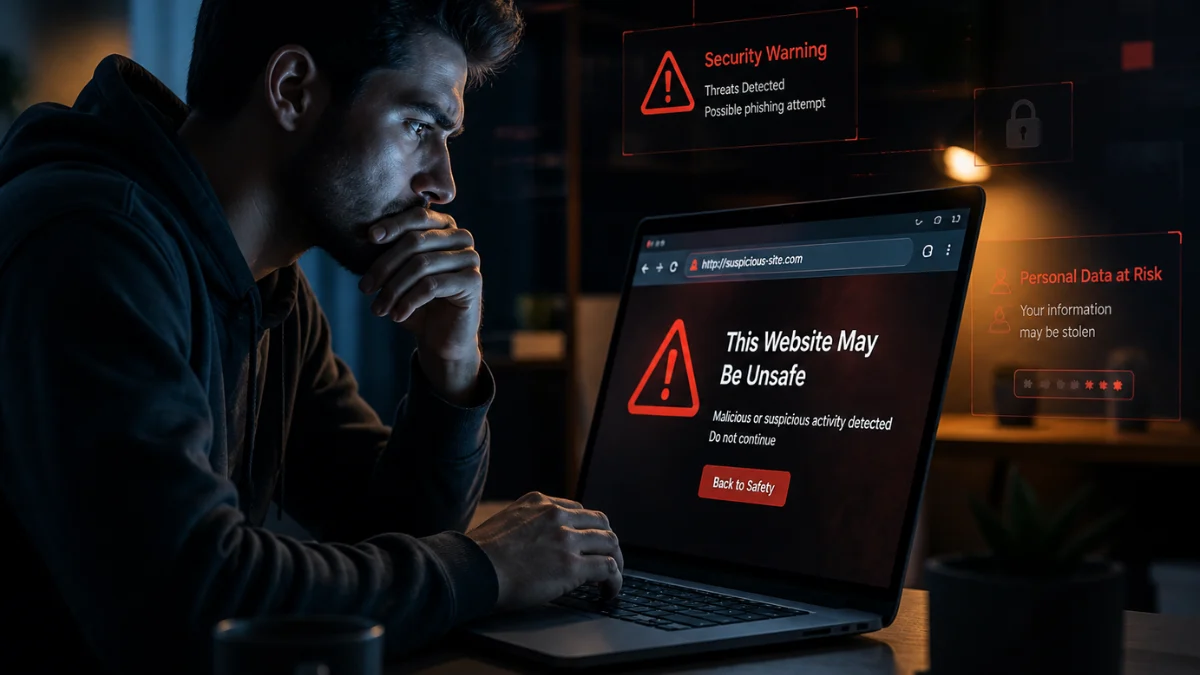
A lot of times, scam sites play on your emotions—like making you scared, rushed, or overly excited—so you don’t think clearly.
Check the URL—The Smallest Detail with the Biggest Impact
You know that web address, or URL? It’s often the thing people glance over, but it’s actually one of the most trustworthy clues you have.

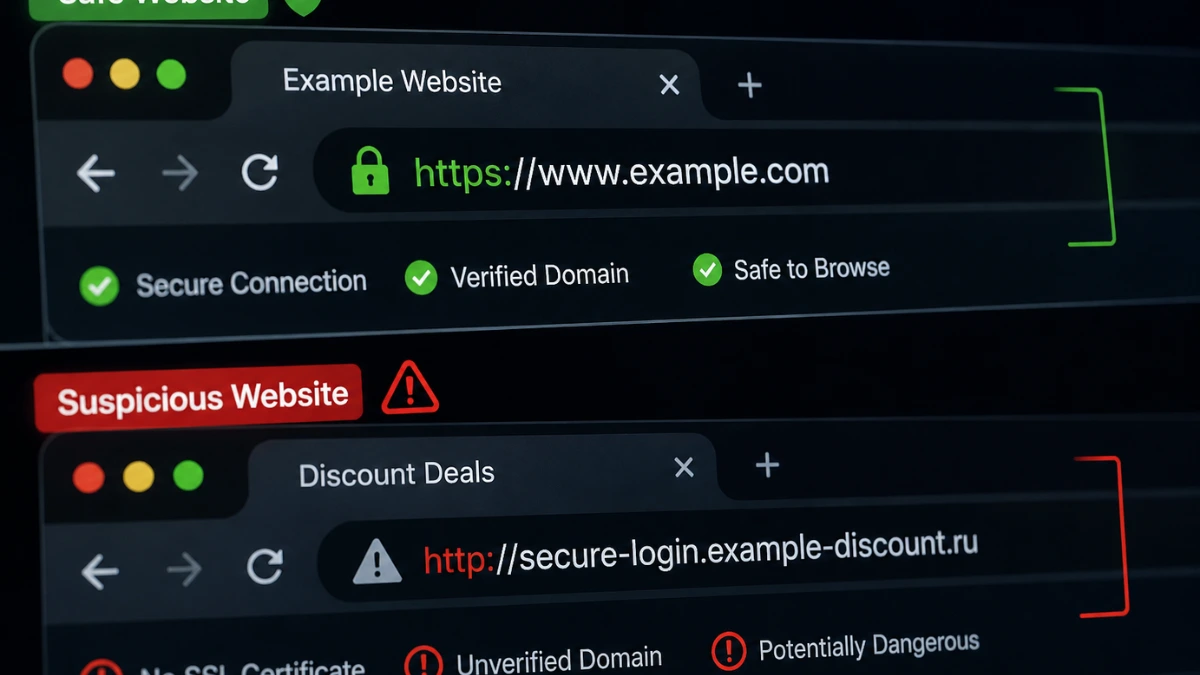
Genuine websites usually have URLs that look neat and professional. On the other hand, fake ones often show up with red flags like:
* Odd characters or misspelled names (think “amaz0n” when it should be “amazon”).
* Weird domain endings that don’t seem right.
* Really long and messy strings of text that are hard to follow.
Also, a secure site should use HTTPS, not just HTTP. That extra “S” means the connection is secure and encrypted. While having HTTPS doesn’t automatically mean a site is legit, *not* seeing it is a big warning sign you shouldn’t ignore.
Look for Trust Signals—And Question Them Too
Many websites display trust badges, certifications, or logos claiming security verification. These include SSL badges, payment icons, or “verified” labels.
But here’s the catch—these can be faked.
Instead of trusting the badge itself, verify its authenticity:
- Click on the badge (if clickable) to see if it leads to a verification page
- Check if the company behind the badge is legitimate
- Look for consistency across the site
Real trust signals are backed by verifiable sources, not just visuals.
Content Quality Often Reveals Intent
One of the most underrated indicators of a fake website is its content.
Scam websites often:
- Use copied or poorly written text
- Contain grammatical errors or awkward phrasing
- Lack detailed information about products or services
Legitimate businesses invest in clarity and credibility. Their content reflects consistency, brand voice, and attention to detail.
If a website feels vague or incomplete, it’s usually not an accident—it’s a signal.
Check Contact Information—Or the Lack of It
A real business wants to be reachable. A fake one prefers anonymity.
Look for:
- A physical address
- Working phone numbers
- Professional email IDs (not generic ones like Gmail or Yahoo)
- A clear “About Us” section
Try verifying the contact details. A quick search can reveal whether the business actually exists.
If contact information is missing, inconsistent, or fake, it’s a major red flag in terms of Cybersecurity & Safety.
Reviews and Online Reputation Tell a Story
Before trusting a website, check what others are saying.
Search for:
- Customer reviews
- Complaints or scam reports
- Social media presence
Be cautious, though. Fake websites often display fabricated reviews on their own pages. Look for independent sources instead.
If a website has no online presence or reviews at all, that absence itself is suspicious.
Payment Methods Can Reveal Risk
Legitimate websites offer secure and traceable payment options—credit cards, verified payment gateways, or trusted platforms.
Fake websites often push:
- Direct bank transfers
- Untraceable payment methods
- Limited or unusual payment options
A lack of standard payment security measures is a strong indicator of potential fraud.
The Psychology Behind Fake Websites
What makes fake websites effective isn’t just technology—it’s psychology.
They exploit:
- Urgency (“Only 2 items left!”)
- Scarcity (“Limited-time offer”)
- Social proof (“Thousands of happy customers”)
These tactics are designed to reduce thinking time. The faster you act, the less you analyze.
Understanding this psychological layer adds depth to Cybersecurity & Safety awareness. It’s not just about spotting technical flaws—it’s about recognizing manipulation.
Why This Matters More Than Ever
As digital dependency grows, so does the cost of mistakes.
A single interaction with a fake website can lead to:
- Financial loss
- Identity theft
- Compromised accounts
- Long-term data exposure
Businesses are also affected. Fake websites damage brand reputation, erode trust, and create confusion among customers.
The internet is no longer just a tool—it’s an environment. And like any environment, it requires awareness to navigate safely.
Where Things Are Heading
Technology is evolving rapidly. Artificial intelligence is already being used to create more convincing fake websites, automate phishing attacks, and personalize scams.
At the same time, security tools are improving—browser warnings, AI-based detection systems, and stricter regulations are helping users identify risks faster.
But technology alone isn’t enough.
The future of Cybersecurity & Safety depends on informed users. Awareness will always be the first line of defense.
More Read

Conclusion
A safe internet experience isn’t built on trust—it’s built on verification.
Every click, every login, every transaction carries a level of risk. The difference between a secure interaction and a costly mistake often comes down to a few seconds of attention.
Recognizing the signs of a fake website isn’t about paranoia. It’s about control.
Final Insight
In an era where digital presence defines both opportunity and vulnerability, awareness is no longer optional. The real challenge isn’t avoiding the internet—it’s learning how to navigate it with clarity.
At The Vue Times, we see cybersecurity not as a technical subject, but as a human one. Because behind every scam, every breach, and every fake website, there’s a moment where awareness could have made the difference.
And that moment is where safety begins. Stay Updated Stay Informed-The Vue Times