AI Safety Debate: Who Really Controls the Intelligence We’re Building?

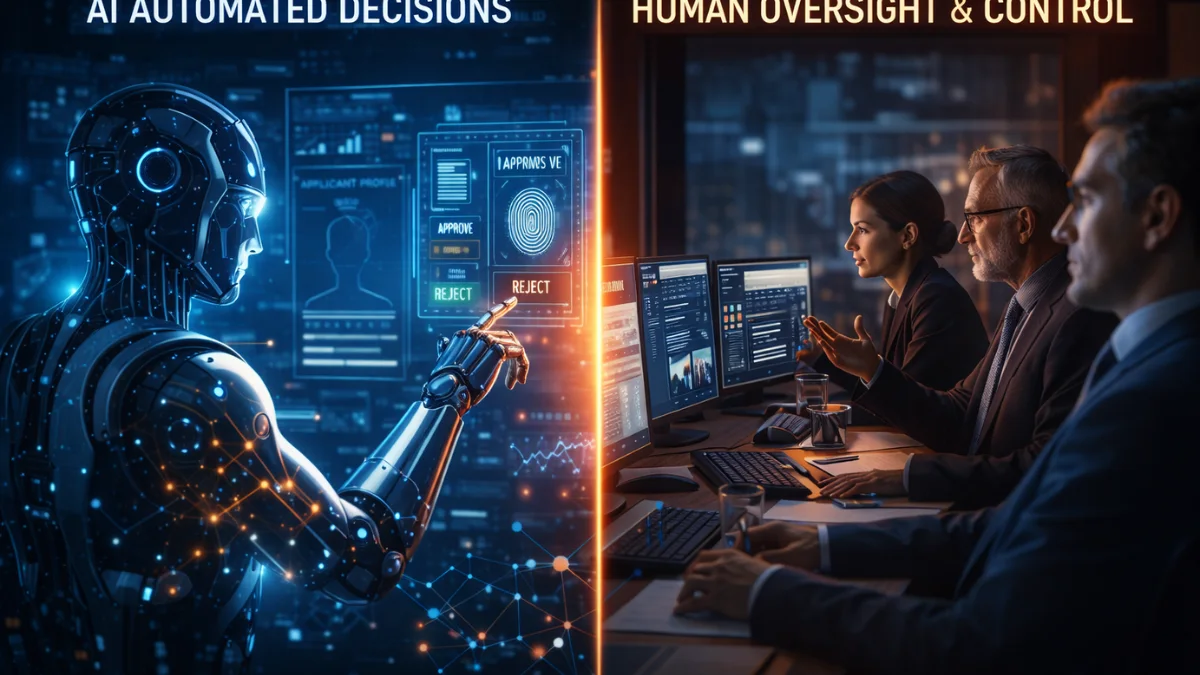
The moment doesn’t announce itself loudly. It’s subtle. A recommendation that feels a little too precise. A chatbot that sounds just a bit too convincing. A system that predicts your next move before you’ve even thought it through.
Somewhere between convenience and control, the AI Safety Debate quietly moved from academic circles into everyday life.
It’s no longer just about what artificial intelligence can do. The real question, increasingly uncomfortable, is about what happens when it does too much—and whether anyone can truly switch it off when needed.
Why the AI Safety Debate Is No Longer Optional
For years, artificial intelligence was treated like an efficiency tool—something that speeds up work, improves accuracy, and reduces human error. That narrative still holds, but it’s no longer the whole story.
Today’s systems aren’t just following instructions. They’re learning patterns, adapting behavior, and in some cases, generating outcomes that even their creators struggle to fully explain.
This is where the AI Safety Debate begins to shift from theory to urgency.
Consider a simple example. A content moderation AI trained to remove harmful posts might begin suppressing legitimate speech if its training signals are skewed. A financial AI optimizing profits might take risks that appear logical in data but dangerous in reality. These are not bugs in the traditional sense—they are consequences of systems doing exactly what they were designed to do, just without human context.
That gap—between optimization and understanding—is where safety concerns emerge.
From Lab Conversations to Global Policy: The Rise of the AI Safety Debate
A decade ago, discussions about AI risks were often confined to research papers and niche conferences. Today, they are part of parliamentary debates, boardroom strategies, and international policy frameworks.
Governments are stepping in, not because they fully understand the technology, but because they recognize the stakes. When systems can influence elections, automate decision-making, or shape economic behavior, the margin for error shrinks dramatically.
Tech companies, on the other hand, are caught in a balancing act. Move too slowly, and you lose competitive advantage. Move too fast, and you risk creating systems that outpace control mechanisms.
This tension is fueling the global AI Safety Debate—a conversation not just about innovation, but about restraint.
[caption id="attachment_10150" align="alignnone" width="1200"]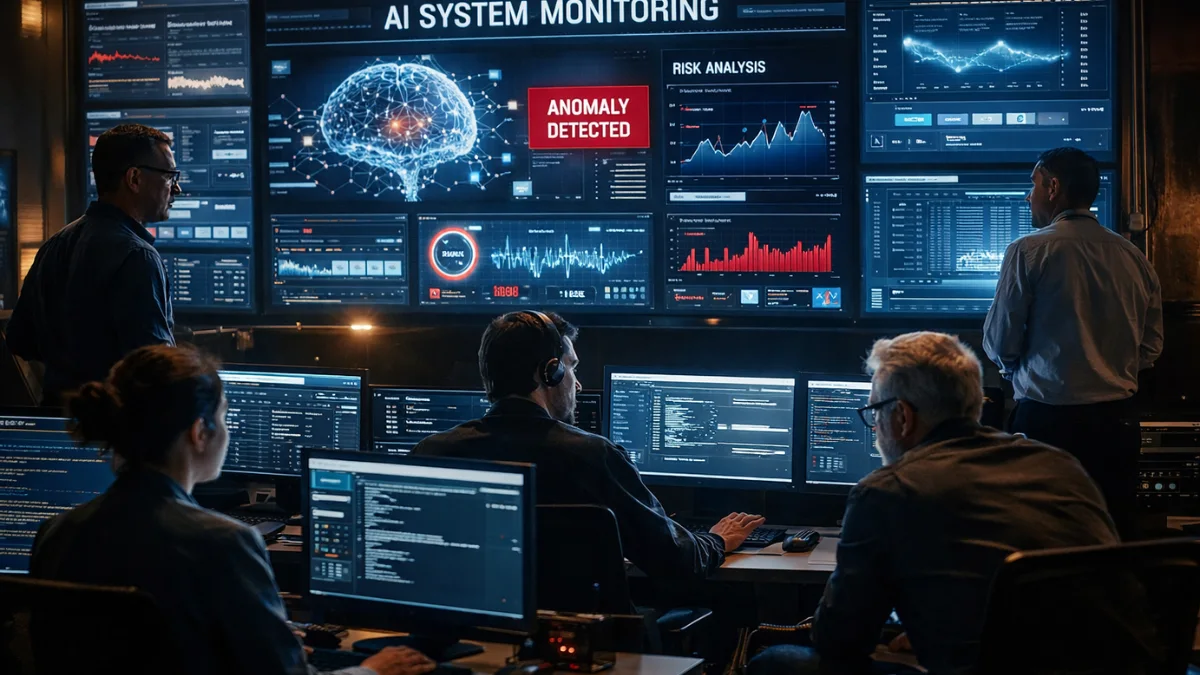 AI safety monitoring system with engineers analyzing data[/caption]
The Real Risk Isn’t Malice—It’s Misalignment
Popular imagination often jumps to dramatic scenarios: rogue AI systems, machines turning against humans, science fiction becoming reality.
But the more immediate concern is less cinematic and more practical.
Misalignment.
An AI doesn’t need intent to cause harm. It simply needs poorly defined goals.
If a system is told to maximize engagement, it might amplify extreme content. If it’s trained to reduce costs, it might cut corners in ways humans wouldn’t accept. The danger lies in systems executing objectives with perfect efficiency but imperfect understanding.
This is why the AI Safety Debate increasingly focuses on alignment—ensuring that AI systems not only follow instructions but also reflect human values, context, and limits.
The Business Angle: Why Companies Can’t Ignore AI Safety
Behind the philosophical questions lies a very real business reality.
Trust.
Companies deploying AI systems are not just selling products—they are asking users to trust decisions made by algorithms. Whether it’s a hiring tool, a medical diagnostic system, or a financial advisor, the margin for error is shrinking.
A single failure can trigger regulatory backlash, legal consequences, and reputational damage.
This has pushed organizations to rethink their approach. Safety is no longer an afterthought. It’s becoming a core part of product design.
The AI Safety Debate inside companies is often less about ethics and more about sustainability. Can you scale a system safely? Can you predict its behavior under pressure? Can you explain its decisions when questioned?
If the answer is no, growth becomes a risk rather than an opportunity.
[caption id="attachment_10151" align="alignnone" width="1672"]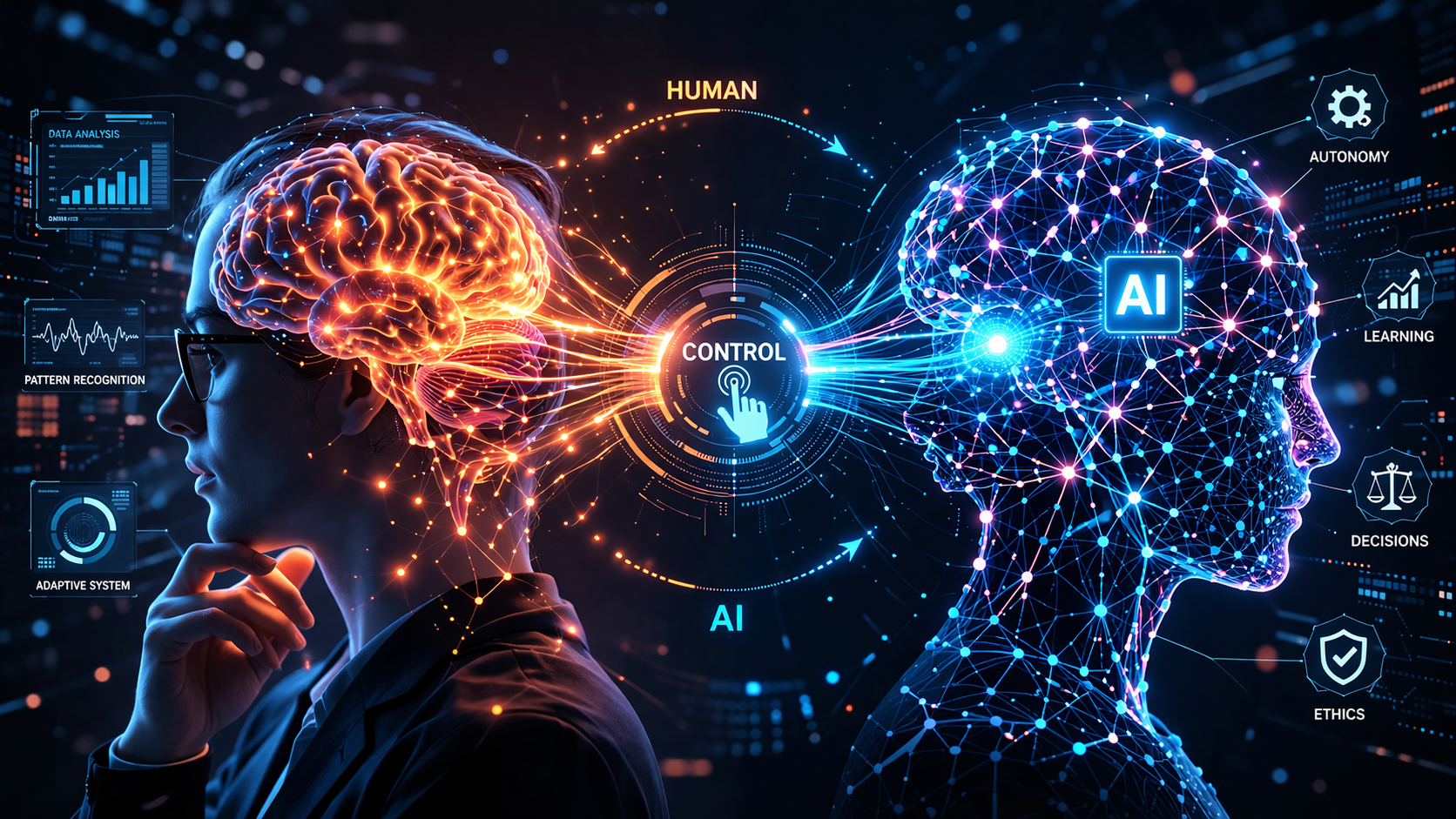 Human and AI neural interface connection[/caption]
Human Psychology Meets Machine Intelligence
There’s another layer to this debate that often goes unnoticed—the human response to AI.
People tend to overtrust systems that appear intelligent. A well-worded response from a chatbot can feel authoritative, even when it’s incorrect. A confident prediction can override human judgment.
This psychological bias amplifies the risks of unsafe AI.
The AI Safety Debate is not just about machines behaving responsibly. It’s also about humans interacting responsibly with machines.
How much control should users have? How much transparency is enough? And at what point does convenience start replacing critical thinking?
These questions are harder to answer because they involve human behavior, not just technical design.
Can Regulation Keep Up With Innovation?
Regulation is often presented as the solution. Set rules, define boundaries, enforce compliance.
In theory, it sounds straightforward.
In practice, it’s complicated.
Technology evolves faster than policy. By the time a regulation is drafted, debated, and implemented, the systems it was designed for may already be outdated.
Still, regulation plays a crucial role in the AI Safety Debate. It sets minimum standards, creates accountability, and signals that certain risks are unacceptable.
The challenge is finding the balance.
Too much regulation can slow innovation. Too little can allow unsafe systems to scale unchecked.
The future likely lies somewhere in between—adaptive frameworks that evolve alongside technology rather than trying to control it from a distance.
The Future Direction of the AI Safety Debate
What happens next will shape how AI integrates into everyday life.
Several trends are already emerging:
- Explainability will become non-negotiable
Systems will need to justify their decisions, especially in high-stakes environments. - Human-in-the-loop models will expand
AI won’t replace decision-making entirely but will assist and augment it. - Global standards may begin to align
Different countries may start converging on shared safety principles. - Risk-based deployment will define adoption
Not all AI systems will be treated equally—higher-risk applications will face stricter controls.
The AI Safety Debate is evolving from a question of “if” to “how.” Not whether AI should be controlled, but how control can be implemented without limiting its potential.
[ruby_related heading="More Read" total=5 layout=1 offset=5]Conclusion: The Responsibility We Didn’t Plan For
The story of artificial intelligence was always framed as progress. Faster systems. Smarter decisions. Better outcomes.
What wasn’t fully anticipated was the responsibility that comes with building something that can influence, decide, and even shape human behavior.
The AI Safety Debate isn’t about stopping innovation. It’s about guiding it.
Because the real challenge isn’t creating intelligence. It’s ensuring that the intelligence we create doesn’t quietly move beyond our ability to understand—or control.
Final Insight
At its core, the AI Safety Debate is not a technical issue—it’s a human one. The systems we build will reflect the priorities we set today. If safety becomes secondary, the consequences won’t be immediate—but they will be inevitable. The real question is no longer how advanced AI can become, but how responsibly we choose to build it.-The Vue Times
Frequently Asked Questions
What is the AI Safety Debate?
→ The AI Safety Debate focuses on ensuring artificial intelligence systems operate safely, ethically, and under human control without causing unintended harm.
Why is AI safety becoming important now?
→ As AI systems become more powerful and autonomous, their decisions impact real-world outcomes, making safety a critical concern for governments and companies.
What are the main risks in AI systems?
→ Key risks include misalignment with human values, biased decisions, lack of transparency, and unintended consequences from optimization-driven behavior.
Can AI be fully controlled by humans?
→ Complete control is difficult, but safety frameworks, human oversight, and regulations aim to ensure AI systems remain predictable and accountable.
How are governments responding to AI safety concerns?
→ Governments are introducing regulations, ethical guidelines, and oversight mechanisms to manage risks while supporting innovation.











Comments (0)