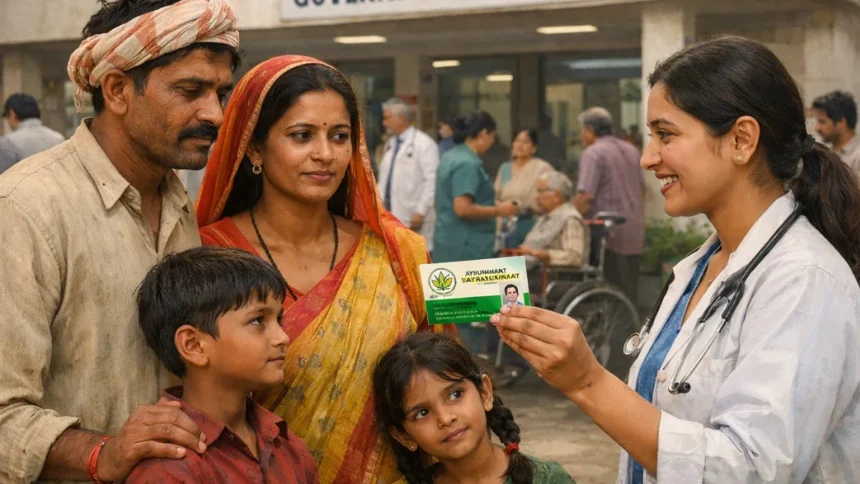
There’s a familiar scene in many district hospitals across India: a family huddled outside a billing counter, anxiously calculating costs before a surgery. In recent years, that moment of hesitation has begun to shift. A plastic card—often worn at the edges—emerges from a wallet, and the conversation changes. Treatment is no longer a question of affordability, at least not immediately.
This is where the Ayushman Bharat Scheme enters the frame—not as a headline-grabbing reform, but as a silent intervention altering how millions approach healthcare.
The Ayushman Bharat Scheme: A Structural Shift in Public Health
Launched in 2018, the Ayushman Bharat Scheme was never just another welfare program. It aimed to correct a structural imbalance: India’s overwhelming reliance on out-of-pocket healthcare spending.
At its core lies the Pradhan Mantri Jan Arogya Yojana (PM-JAY), offering health insurance coverage of up to ₹5 lakh per family per year for secondary and tertiary care. The target group—economically vulnerable households—was identified through socio-economic caste census data, ensuring scale without universalization.

But what makes the scheme noteworthy is not just its size—it’s the model. Instead of building everything from scratch, it leverages both public and private hospitals, creating a hybrid healthcare ecosystem. This blending of state support and market infrastructure reflects a pragmatic shift in policy thinking.
Why the Ayushman Bharat Scheme Matters Today
Healthcare has moved from being a social sector concern to a political and economic priority. Rising medical inflation, increasing lifestyle diseases, and post-pandemic awareness have amplified the urgency.
The Ayushman Bharat Scheme sits at the intersection of these pressures. It doesn’t just offer financial protection; it changes behavior. Families that once delayed treatment now seek care earlier. Hospitals in smaller towns are witnessing higher patient inflows.
There’s also a deeper economic angle. When healthcare shocks no longer push families into poverty, consumption patterns stabilize. In a country where a single hospitalization could derail finances for years, that’s no small shift.
Ayushman Bharat Scheme in Practice: Gains and Gaps
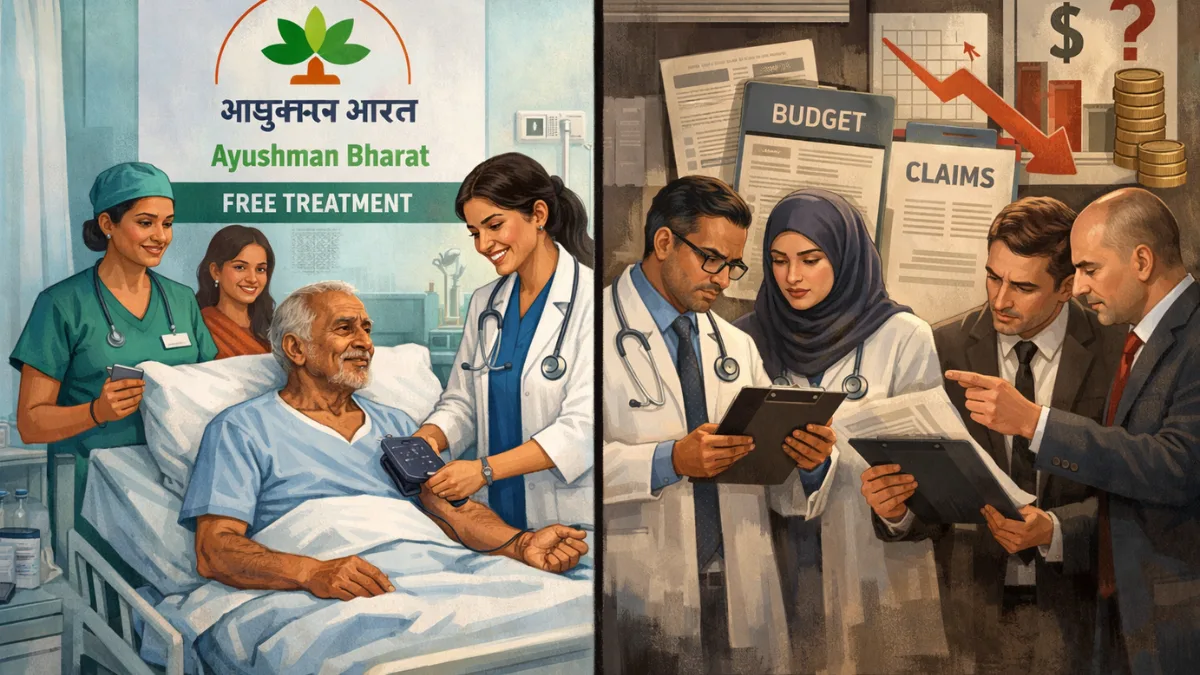
On paper, the scheme is ambitious. On the ground, it’s uneven—sometimes impressively effective, sometimes frustratingly inconsistent.

In states like Gujarat and Tamil Nadu, where pre-existing health infrastructure and administrative systems were robust, implementation has been relatively smooth. Beneficiaries report faster admissions and reduced financial stress.
But in parts of northern and eastern India, challenges persist. Awareness gaps remain significant. Many eligible families are still unaware they are covered. Others struggle with documentation or hospital refusals.
Private hospitals, while empaneled, occasionally show reluctance. The reimbursement rates under the scheme are often cited as too low, leading to selective participation or subtle discouragement of patients.

This tension—between policy intent and market incentives—is perhaps the most critical fault line in the Ayushman Bharat Scheme.
Beyond Insurance: The Missing Primary Healthcare Link
A less discussed aspect of the scheme is its dual structure. While PM-JAY focuses on hospitalization, the broader Ayushman Bharat initiative also includes Health and Wellness Centres (HWCs) aimed at strengthening primary care.
This is where the long-term success of the Ayushman Bharat Scheme will likely be decided. Insurance can manage financial risk, but it cannot replace preventive care.
India’s disease burden is shifting toward chronic illnesses—diabetes, hypertension, cardiovascular diseases. These require continuous management, not just episodic hospitalization.
If HWCs fail to deliver consistent, quality primary care, the system risks becoming reactive rather than preventive—treating illness rather than reducing it.
The Political Economy of Health Coverage
There’s a reason the Ayushman Bharat Scheme frequently appears in policy debates and election narratives. Healthcare is deeply political.
Unlike infrastructure projects, its benefits are personal and immediate. A surgery funded, a life saved, a debt avoided—these are tangible outcomes that resonate with voters.
Yet, the scheme also raises questions about fiscal sustainability. As utilization increases, so does the financial burden on the government. Balancing expansion with efficiency will be crucial.
There’s also the question of federal dynamics. Health is a state subject in India, and states have adopted the scheme differently. Some have integrated it with their own programs, while others have modified or even resisted it.
This layered governance adds complexity but also reflects the diversity of India’s health landscape.
Technology as the Silent Backbone
One of the understated strengths of the Ayushman Bharat Scheme is its digital infrastructure.
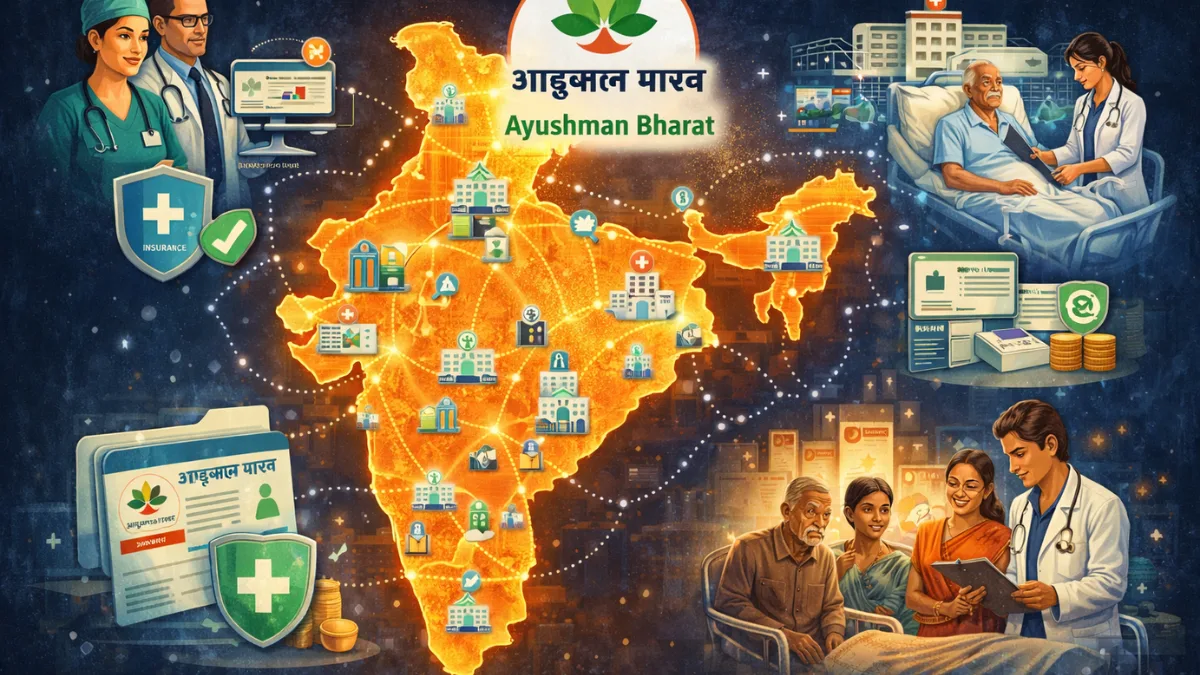
From beneficiary identification to hospital empanelment and claim processing, much of the system operates through an integrated IT platform. This reduces leakages, improves transparency, and enables real-time monitoring.
However, technology is only as effective as its last-mile execution. In regions with limited digital literacy or connectivity, the benefits can be diluted.
Bridging this digital divide will be essential if the scheme is to achieve uniform impact.
Looking Ahead: Evolution or Expansion?
The future of the Ayushman Bharat Scheme will likely be shaped by two competing impulses—expand coverage or deepen quality.
Expansion seems politically attractive. Bringing more families under the scheme, increasing coverage limits, or including outpatient care are all possibilities.
But depth matters just as much. Improving hospital participation, ensuring timely reimbursements, strengthening primary care, and enhancing patient experience could yield more sustainable outcomes.
There’s also a growing conversation around integrating the scheme with digital health records and telemedicine platforms. If executed well, this could transform not just access, but continuity of care.
More Read

Conclusion: A Policy That Changed the Conversation
The Ayushman Bharat Scheme has done something few policies manage—it has shifted expectations.
Healthcare is no longer seen purely as a private burden. There is an emerging belief, especially among lower-income households, that the state has a role in ensuring access to treatment.
That belief, fragile as it may be, is powerful. It changes how people plan, how they respond to illness, and how they engage with the system.
The real test now is not whether the scheme can grow—but whether it can mature without losing credibility. Because in healthcare, trust is the most valuable currency of all.
Final Insight
At Vue Times, we believe healthcare policy matters most when it changes real lives. Stay with us for more clear, grounded analysis of the ideas shaping India’s future.
Frequently Asked Questions
What is the Ayushman Bharat Scheme?
→ It is a government health insurance program that provides up to ₹5 lakh coverage per family annually for secondary and tertiary care to economically vulnerable households.
Who is eligible for the Ayushman Bharat Scheme?
→ Eligibility is based on socio-economic caste census data, primarily covering low-income rural and urban families identified by specific deprivation criteria.
Is treatment completely free under the scheme?
→ Yes, treatments covered under the scheme are cashless at empaneled public and private hospitals, though some exclusions and limitations apply.
How does Ayushman Bharat differ from other health schemes?
→ Its scale, nationwide portability, and integration of public-private healthcare providers make it more expansive compared to earlier state-level schemes.
Can private hospitals refuse Ayushman Bharat patients?
→ Empaneled hospitals are expected to provide services, but some may limit participation due to reimbursement concerns.
What are Health and Wellness Centres under Ayushman Bharat?
→ These are primary healthcare centers aimed at providing preventive, promotive, and basic curative services, forming the foundation of the broader scheme.