Introduction
In a world where influence is no longer measured only by military strength or economic dominance, nations are increasingly shaping global narratives through culture, ideas, and values. This is where the concept of soft power becomes critical. Understanding the soft power India meaning is essential to grasp how India is positioning itself on the global stage—not just as a rising economy, but as a cultural and intellectual force.
From Bollywood films and yoga to digital innovation and diaspora networks, India’s global presence is expanding in subtle yet powerful ways. At the same time, debates continue over how effective and authentic this influence truly is.
This article explores India’s soft power in depth—its origins, current relevance, controversies, and future potential—while examining how media, policy, and perception shape the country’s global influence today.
Background and Context
Soft power as a concept was introduced to describe a country’s ability to influence others without coercion. Instead of force, it relies on attraction—culture, political values, and foreign policy.

India’s soft power roots are deeply historical. For centuries, its influence spread through:
- Ancient philosophies like Buddhism and Hinduism
- Trade routes that carried art, language, and traditions
- Cultural exchanges across Asia, Africa, and the Middle East
Unlike many modern nations, India’s influence did not begin with industrialization or colonization. Instead, it evolved organically through ideas and cultural diffusion.
In the modern era, post-independence India continued this legacy by promoting non-alignment, democracy, and cultural diplomacy. Over time, this foundation expanded into media, technology, and global diaspora engagement.
Today, the india global influence media ecosystem plays a central role in amplifying this legacy.
What Is Happening Right Now in Soft Power India Meaning
The soft power India meaning is becoming increasingly relevant in today’s global landscape, as India expands its influence beyond traditional economic and military metrics. In recent years, India’s global presence has been shaped by a combination of cultural exports, digital transformation, and strategic international positioning. This shift highlights how india global influence media is playing a central role in amplifying the country’s reach.

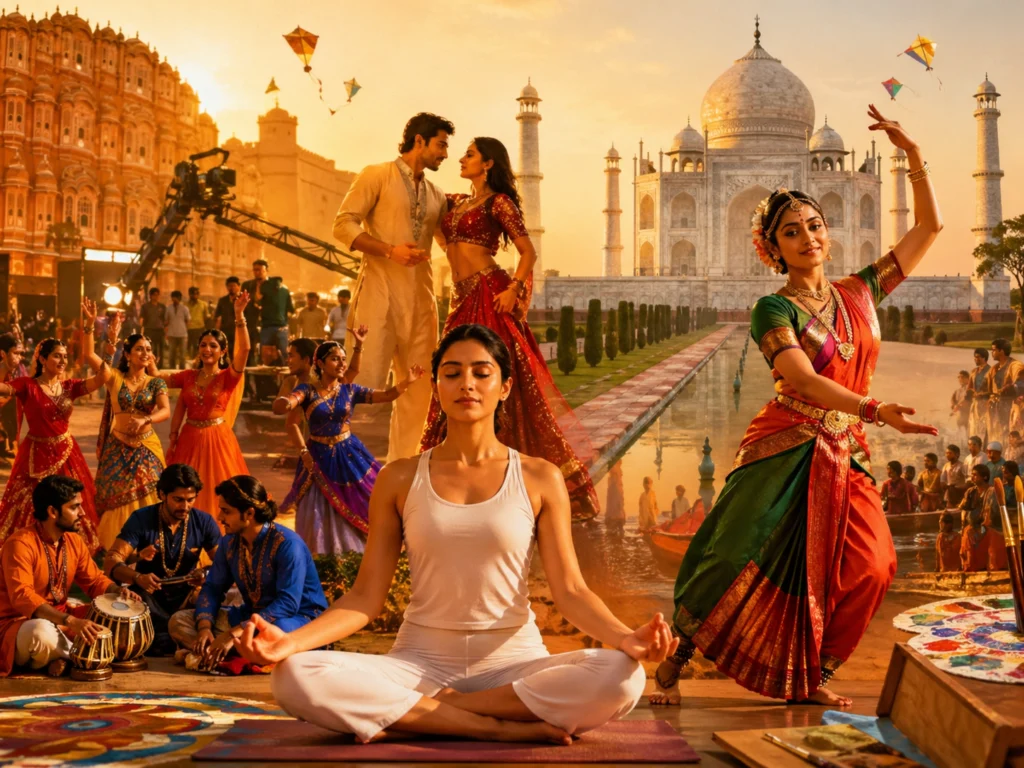
One of the most significant drivers of India’s soft power today is the rapid growth of digital platforms. With the rise of streaming services, social media, and content-sharing ecosystems, Indian films, web series, music, and regional storytelling are reaching audiences across continents. Bollywood continues to be a major contributor, but regional cinema industries such as Telugu, Tamil, and Malayalam are also gaining international recognition. This diversification strengthens India’s cultural footprint globally.
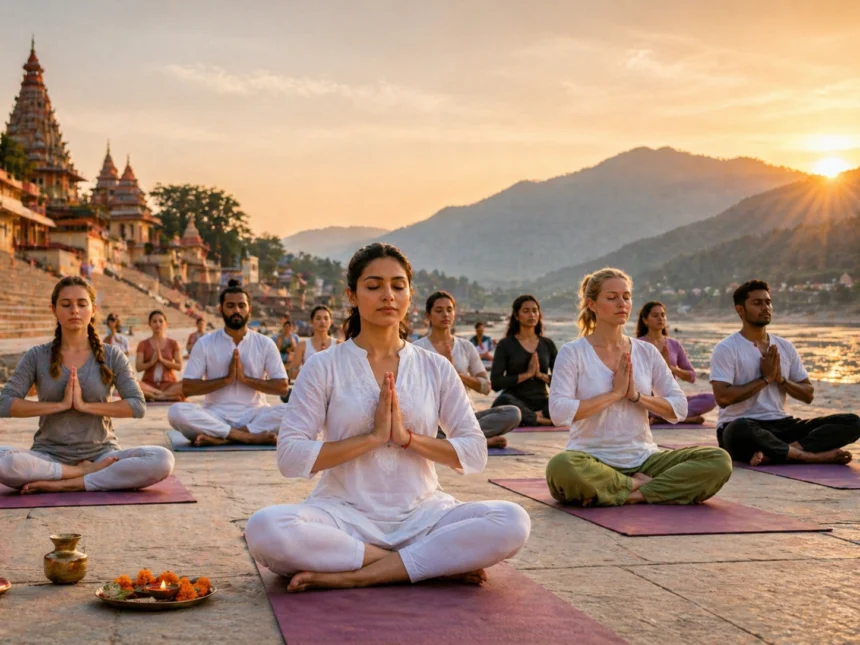
Another important factor is the global popularity of Indian wellness traditions. Practices like yoga and Ayurveda have evolved from cultural heritage into mainstream global wellness movements. International Yoga Day, celebrated worldwide, is a clear example of how India has successfully positioned its traditional knowledge as a universal offering. This not only enhances cultural visibility but also builds trust and credibility in global health and lifestyle sectors.
India’s role in global diplomacy is also contributing to its soft power narrative. The country has increasingly positioned itself as a voice for developing nations, advocating for issues such as climate change, digital inclusion, and equitable growth. Participation in international forums and multilateral organizations has helped India project an image of leadership and cooperation.

At the same time, social media has transformed how influence is created and distributed. Indian creators, entrepreneurs, educators, and influencers are now able to connect directly with global audiences. Platforms like YouTube, Instagram, and LinkedIn have enabled individuals to become cultural ambassadors, further strengthening india global influence media.
Additionally, both government initiatives and private sector investments are focused on branding India as a hub of culture, innovation, and talent. Campaigns promoting tourism, startups, and digital infrastructure are designed to enhance India’s global perception. The rise of India’s startup ecosystem and digital public infrastructure also contributes to a modern, forward-looking image.
However, this growing influence is not without challenges. Questions around authenticity, consistency, and long-term impact remain. While India’s cultural presence is strong, translating that visibility into sustained global influence requires strategic alignment and credibility. This ongoing evolution makes the topic both dynamic and complex.
Why This Topic Is Controversial in Soft Power India Meaning
Despite its growing prominence, the soft power India meaning remains a subject of debate among policymakers, analysts, and global observers. The controversy arises from the gap between perception and measurable influence, as well as differing interpretations of India’s global role.
One of the central issues is the disconnect between global perception and domestic realities. While India is often celebrated for its culture, diversity, and democratic values, there are ongoing internal challenges that can influence how the country is viewed internationally. This creates a tension between image and reality, which is a common challenge in soft power dynamics.
Another major point of debate is whether cultural exports actually translate into tangible influence. While Indian films, music, and traditions are widely consumed, critics argue that popularity does not always equate to geopolitical or economic leverage. In other words, being culturally visible does not automatically mean having decision-making power on the global stage.
The politicization of culture is also a sensitive issue. Some observers believe that cultural elements are increasingly being used to promote specific narratives, which can impact their authenticity and global acceptance. When culture is perceived as a tool of political messaging, it may lose its universal appeal.
Differences in how global audiences interpret Indian narratives further add to the complexity. What resonates positively in one region may be viewed differently in another. This variation makes it challenging to maintain a consistent global image.
There is also a divide in opinion regarding whether India’s soft power is underutilized or overstated. Some experts argue that India has immense untapped potential that is not being fully leveraged due to lack of coordination and strategic planning. Others believe that the current narrative overestimates India’s influence without पर्याप्त measurable outcomes.
Another critical question is whether soft power can compensate for limitations in economic or geopolitical strength. While soft power can enhance a country’s image and relationships, it is often seen as complementary rather than a substitute for hard power.
These debates highlight why the topic is multi-dimensional. The soft power India meaning cannot be understood in isolation—it must be analyzed in the context of global competition, domestic realities, and evolving media landscapes.
Different Perspectives on Soft Power India Meaning
Supporters’ View
Supporters of India’s soft power argue that it is one of the country’s most valuable and sustainable global assets. They believe that India’s influence lies in its ability to connect with people through culture, ideas, and shared human experiences.
One of the strongest arguments in favor is India’s cultural diversity. With hundreds of languages, traditions, cuisines, and art forms, India offers a rich and varied cultural experience that appeals to a global audience. This diversity allows India to resonate with different regions in unique ways.
The global reach of Indian cinema is another key factor. Bollywood, along with regional film industries, has built a strong international following. Indian movies are not only entertainment products but also cultural narratives that shape perceptions about the country.
Yoga and Ayurveda are often cited as prime examples of successful soft power. These practices have transcended cultural boundaries and are now part of global wellness trends. Their widespread adoption reflects India’s ability to influence lifestyle choices worldwide.
The Indian diaspora also plays a crucial role. Spread across countries, the diaspora acts as a bridge between India and the world. They contribute to local economies while maintaining cultural connections, thereby strengthening India’s global presence.
Supporters also highlight India’s democratic framework and pluralistic society as key strengths. These values enhance credibility and make India an attractive partner in global cooperation.
From this perspective, soft power is not just about visibility—it is a long-term strategic advantage that builds trust, relationships, and influence over time.
Critics’ View
Critics, however, present a more cautious and analytical perspective on the soft power India meaning. They acknowledge India’s cultural strengths but question the effectiveness and consistency of its global influence.
One of their primary arguments is that cultural popularity does not necessarily translate into political or economic power. While Indian films and traditions are widely appreciated, they may not significantly impact global policy decisions or negotiations.
Critics also point out that global narratives about India can be inconsistent. Media coverage, geopolitical developments, and domestic issues can shape perceptions in ways that are not always aligned with India’s intended image.
Another concern is the lack of a cohesive and long-term strategy. Unlike some countries that actively manage their global branding, India’s soft power efforts are often seen as fragmented or organic rather than coordinated.
Domestic challenges, such as economic disparities or social issues, can also influence international perception. Critics argue that these factors can undermine the credibility of India’s soft power narrative.
Additionally, there is a question of whether India is fully leveraging its cultural assets. While the country has immense potential, some believe that it relies too heavily on natural cultural appeal rather than strategic promotion.
This perspective emphasizes the gap between potential and execution. It suggests that while India has strong foundations for soft power, achieving sustained global influence requires more structured efforts.
Facts vs Claims in Soft Power India Meaning
To fully understand the soft power India meaning, it is important to distinguish between verified facts and widely circulated claims. This helps in building a balanced and accurate perspective.
Verified Facts
- India is one of the largest film-producing countries in the world, with multiple regional industries contributing to global content.
- Yoga is practiced in more than 150 countries, making it one of India’s most successful cultural exports.
- The Indian diaspora is among the largest globally, playing a significant role in cultural and economic exchange.
- Digital content from India is increasingly consumed worldwide, especially through streaming platforms and social media.
These facts highlight the tangible aspects of India’s soft power and its growing global reach.
Common Claims
- India is a global cultural superpower
- Bollywood dominates international entertainment
- Indian values are universally influential
While these claims contain elements of truth, they often simplify a more complex reality. For example, Bollywood has a strong presence but faces competition from Hollywood, Korean entertainment, and other global industries. Similarly, cultural influence varies across regions and audiences.
The role of india global influence media is crucial here, as media narratives can amplify both facts and claims. This makes it essential to approach the topic with critical thinking and avoid overgeneralization.
Maintaining a clear distinction between facts and narratives ensures a more nuanced understanding of India’s soft power. It also helps in identifying areas where perception aligns with reality—and where it does not.
What People Might Be Missing
A key insight often overlooked is that soft power is not static—it evolves.
India’s influence is not limited to traditional culture. It now includes:
- Startups and innovation ecosystems
- Digital public infrastructure
- Educational and intellectual contributions
Another missed aspect is the role of storytelling. Influence is not just about what a country offers, but how it communicates those offerings.
Additionally, soft power works best when aligned with credibility. Perception must match reality for influence to sustain.
Understanding these nuances helps avoid oversimplification.

Impact on Society / Economy / Users
India’s soft power has tangible effects across multiple areas.
Society
- Increased global cultural exchange
- Greater visibility of Indian traditions
- Strengthening of identity among diaspora communities
Economy
- Growth in tourism and cultural industries
- Expansion of media and entertainment exports
- Opportunities for startups and digital platforms
Individuals
- More global opportunities for creators and professionals
- Increased access to international audiences
- Greater cultural recognition
However, the impact is uneven. Not all sectors benefit equally, and challenges remain in scaling influence effectively.
Role of Media and Narrative
The india global influence media landscape plays a central role in shaping perception.
Media acts as both a mirror and a magnifier:
- Films and series project cultural narratives
- News platforms influence global opinion
- Social media accelerates reach and engagement
At the same time, media can also create distortions.
Selective coverage, algorithm-driven content, and geopolitical biases can shape how India is perceived internationally.
This makes narrative control a critical aspect of soft power.
Countries that manage their storytelling effectively often gain a stronger global presence.
Bigger Picture / Future Outlook
Looking ahead, India’s soft power is likely to evolve in several directions:
Digital Expansion
Technology will play a major role in amplifying influence. Platforms, apps, and digital ecosystems will become key tools.
Cultural Hybridization
Indian culture will continue to blend with global trends, creating new forms of expression.
Strategic Positioning
India may increasingly use soft power as part of its foreign policy toolkit.
Challenges
- Maintaining authenticity
- Balancing domestic and global narratives
- Competing with other cultural powerhouses
The future of India’s soft power depends on how effectively it integrates culture, technology, and policy.
Conclusion
The soft power India meaning goes far beyond cultural exports. It represents a complex interplay of history, identity, media, and strategy.
More Read

India’s influence is growing, but it is not without challenges. While its cultural richness and global reach provide a strong foundation, the effectiveness of its soft power depends on consistency, credibility, and strategic alignment.
As the world becomes more interconnected, the ability to shape narratives and build meaningful connections will become increasingly important. India has the potential to play a significant role in this space—but realizing that potential requires more than visibility.
It requires clarity of purpose, thoughtful storytelling, and a balanced approach to global engagement.
The real question is not whether India has soft power—but how it chooses to use it in the years ahead.