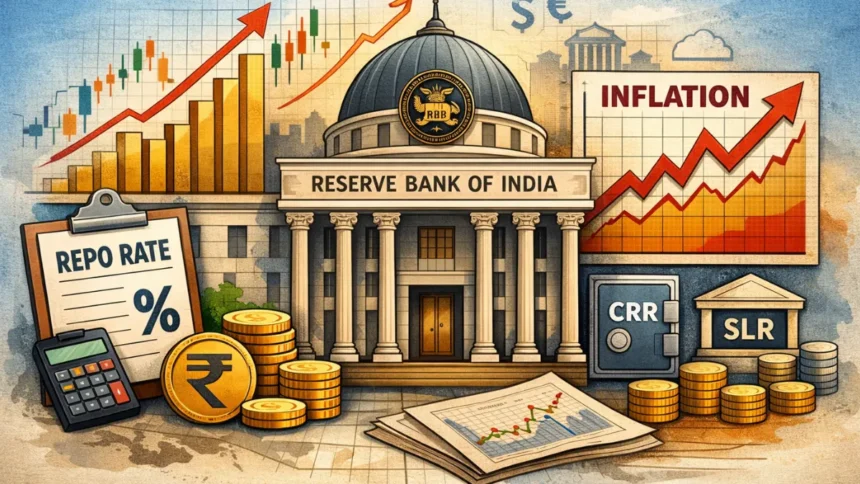
The Role of RBI in India is one of the most frequently asked yet poorly structured topics in government exams. Aspirants often understand the basics but fail to present answers in a policy-linked, analytical format. This article provides a structured strategy to help you convert conceptual clarity into marks.
Problem Statement
Most aspirants treat “Role of RBI in India” as a static topic. They list functions like issuing currency, controlling inflation, and regulating banks—but miss policy linkage and analytical depth.
Where students lose marks:
- Writing generic points without linking them to economic policy
- Ignoring tools of monetary policy India (repo rate, CRR, etc.)
- Lack of structure (introduction-body-conclusion mismatch)
- No real-world examples (inflation control, liquidity management)
Exam Reality:
Questions are no longer asking what RBI does, but how RBI influences India’s economic policy framework.

Concept Clarity
Understanding the Role of RBI in India
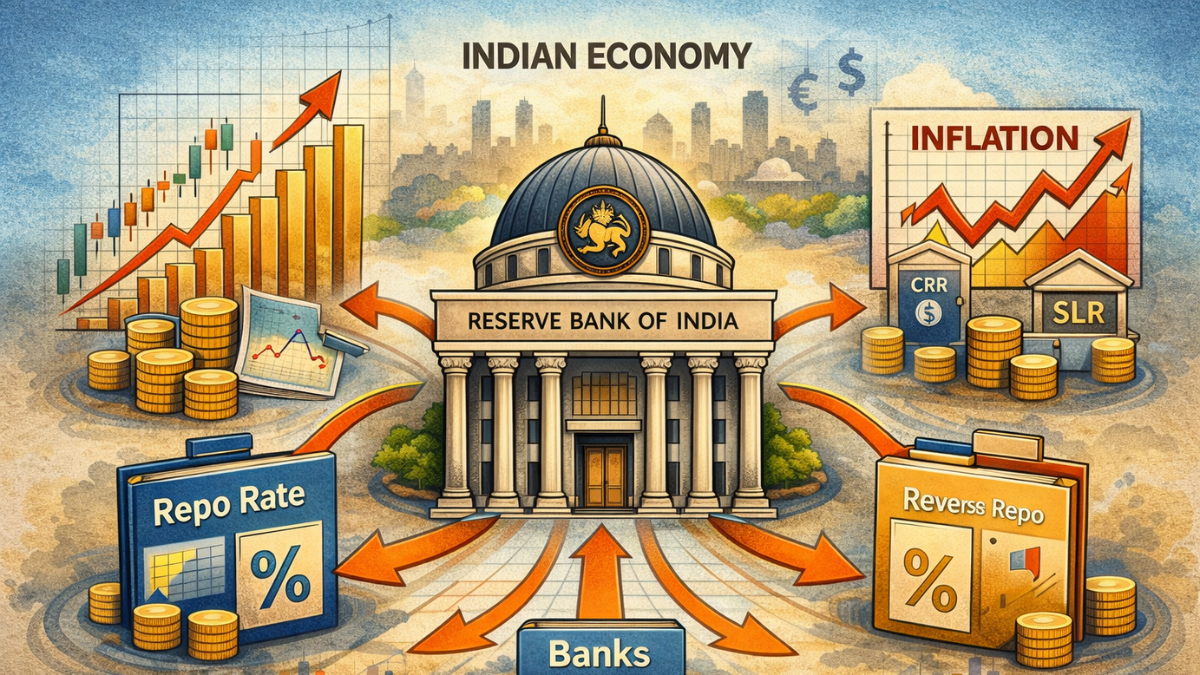
The Reserve Bank of India (RBI) is not just a regulator—it is the central pillar of India’s macroeconomic stability.
Core Idea:
RBI connects monetary policy India + financial regulation + economic stability.
Key Dimensions You Must Cover
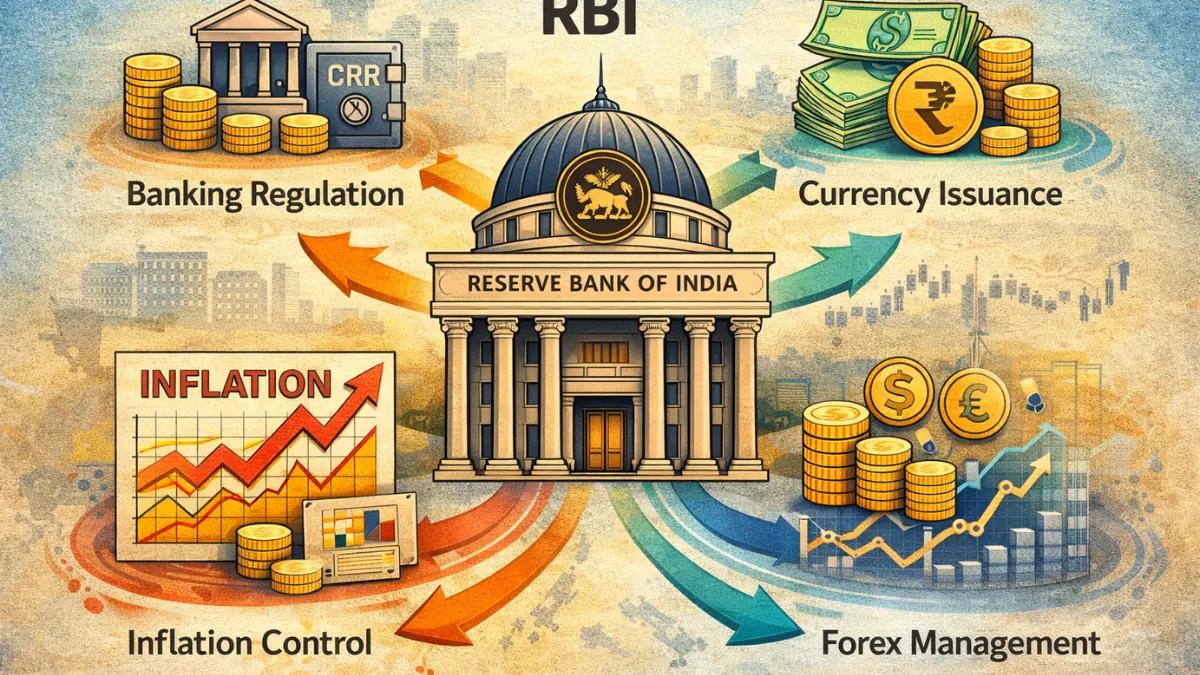
- Monetary Policy Authority
- Controls inflation
- Maintains price stability
- Uses tools like repo rate, reverse repo rate
- Financial System Regulator
- Supervises banks and NBFCs
- Ensures financial stability
- Currency Issuer
- Manages currency supply
- Maintains trust in the financial system
- Government Banker
- Manages public debt
- Acts as advisor to the government
- Foreign Exchange Manager
- Controls forex reserves
- Maintains exchange rate stability
Key Insight for Exams:
Always connect each function to economic outcomes (growth, inflation, stability).
Practical Framework
Step-by-Step Answer Writing Approach
Define with Context (2–3 lines)
Explain RBI’s role in shaping economic policy—not just its functions.
Categorize Functions
Divide into:

- Monetary policy role
- Regulatory role
- Developmental role
Link with Economic Outcomes
Explain why each function matters.
Add Current Example
Example:
- Inflation targeting framework (4% ±2%)
- Repo rate adjustments
Conclude with Policy Impact
Highlight RBI’s role in balancing growth vs inflation.

Example Answer Structure
Q: Discuss the Role of RBI in India’s economic policy framework.
Introduction:
The Role of RBI in India extends beyond banking regulation to shaping monetary policy, ensuring financial stability, and supporting economic growth.
Body:
- Monetary Policy Role
- Financial Regulation
- Currency & Liquidity Management
- External Sector Stability
Conclusion:
RBI acts as a balancing institution ensuring macroeconomic stability in India’s evolving economic framework.
Mistake vs Correct Approach
| Mistake | Correct Approach |
|---|---|
| Lists functions only | Explains impact on economy |
| No structure | Clear headings + flow |
| No examples | Adds inflation targeting, repo rate |
| Static content | Dynamic + policy linkage |
Model Answer Snippet (Short Format)
“The Role of RBI in India lies at the intersection of monetary policy, financial regulation, and macroeconomic stability. Through tools like repo rate adjustments and inflation targeting, RBI ensures price stability while supporting growth. Additionally, its regulatory oversight of banks strengthens financial resilience, making it central to India’s economic policy framework.”
Common Errors
1. Treating RBI as a Static Institution
Students memorize functions but fail to explain policy relevance.
2. Ignoring Monetary Policy Tools
Terms like repo rate, CRR, SLR are either missing or incorrectly used.
3. Lack of Analytical Language
Words like:
- “ensures”
- “balances”
- “regulates”
are missing from answers.
4. No Current Affairs Integration
RBI’s recent actions (inflation control, liquidity measures) are ignored.
5. Weak Conclusions
Most answers end abruptly without reinforcing RBI’s importance.
Tactical Application
How This Strategy Improves Marks
- Clarity = Better Evaluation
Structured answers are easier to check. - Analytical Depth = Higher Scores
Linking RBI to economic policy shows understanding. - Keyword Optimization
Using terms like “monetary policy India” improves answer quality. - Balanced Perspective
Shows understanding of both growth and inflation control.
Improvement Plan
Daily Practice (20 Minutes)
- Pick one topic (e.g., RBI, fiscal policy)
- Write a 150-word structured answer
- Focus on:
- Definition
- 3 core points
- Conclusion
Weekly Plan
- Practice 3 full answers
- Revise:
- Monetary policy tools
- Current RBI developments
- Compare with model answers
Answer Writing Drill
Day 1: Role of RBI in inflation control
Day 2: RBI vs Government economic roles
Day 3: Monetary policy transmission
Internal Link Placeholders
- Understanding Monetary Policy Tools in India
- Difference Between Fiscal Policy and Monetary Policy
- How Inflation Targeting Works in India

Conclusion
The Role of RBI in India is not limited to controlling banks or issuing currency. It is central to shaping the country’s economic policy through monetary regulation, financial stability, and inflation management. For exam answers, the key is not listing functions but linking them to economic outcomes and policy impact. Stay Updated-The VUE TIMES
Final Insight
If your answers still read like textbook summaries, you are losing marks. Start structuring every answer around function → impact → policy linkage. This shift alone can significantly improve your score in economy-related questions.
FAQs
1. What is the main role of RBI in India?
The RBI manages monetary policy, regulates banks, and ensures financial stability.
2. How does RBI control inflation?
Through tools like repo rate, CRR, and open market operations.
3. Why is RBI important for economic policy?
It balances inflation and growth, ensuring macroeconomic stability.
4. What are the tools of monetary policy India?
Repo rate, reverse repo rate, CRR, SLR, and open market operations.
5. How to write a good answer on RBI in exams?
Use structure: definition → functions → policy impact → conclusion.