Monday, 29 Jun 2026

Exclusive insights, data, and analysis for financial market experts.

Explore Now
The Vue Times
  • TVT +
  • India / National
  • Latest
  • Daily News
  • Business & Economy
  • India News
  • General Awareness
  • Viral / Trending Now
  • Politics
The Vue TimesThe Vue Times
Font ResizerAa
  • Home
  • Blog
  • Contact
Search
  • Home
  • Blog
  • Contact
Follow US
Latest

Harish Rana Case: From a Devastating Fall to India’s First Passive Euthanasia Case — Full Story, Court Orders & Final Moments

Mamta Rani
Last updated: June 29, 2026 12:31 pm
Mamta Rani
Share
6 Min Read
Court hearing in Harish Rana case showing legal struggle
SHARE

NEW DELHI — The story of Harish Rana is not just about a tragic fall from a building. It is about what happens after survival becomes suffering.

Contents
What Happened That DayImmediate FailuresNature of InjuriesA Life Between Existence and ConsciousnessHarish Rana’s Statement: A Rare Voice from SufferingThe Legal Shift: From Negligence Case to Right to Die DebateWhy?Passive Euthanasia: The Legal FrameworkWhat is Passive Euthanasia?Court Observations in Harish Rana CaseKey ObservationCourt Orders: A Sensitive but Historic Decision✔ Medical Board Evaluation✔ Family Consent✔ Judicial Oversight✔ Withdrawal of Life Support (Passive Euthanasia)Why This Case MattersInfrastructure NegligenceHealthcare RealityLegal EvolutionEthical DebatePublic ReactionSupport:Concern:Final ReflectionConclusionFinal Insight Some stories are not meant to be forgotten.

At just 31, Harish became one of the rare cases in India where the courts had to confront a deeply uncomfortable question:

What if survival itself becomes unbearable?

His journey—from a fall that changed everything to becoming a landmark case linked to passive euthanasia—forced both society and the legal system to look beyond medical survival and into human dignity
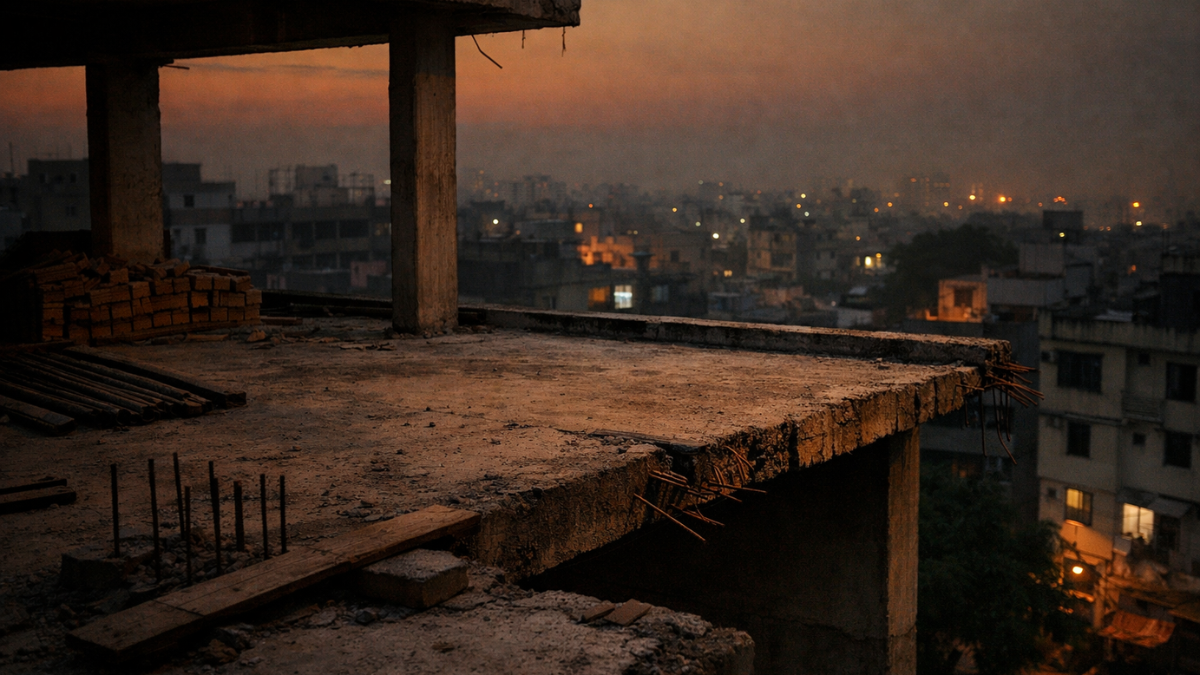
Harish Rana building fall accident site with unsafe terrace

What Happened That Day

According to available accounts:

  • Harish had gone to a building where construction or repair work was ongoing
  • The upper floors were not secured properly
  • There were no guardrails or safety barriers
  • Lighting conditions were poor

As evening approached, visibility dropped. While moving near the edge of the structure:

Harish lost balance and fell from a significant height

Immediate Failures

  • No safety personnel present
  • No emergency system on-site
  • Delay in medical response

By the time he reached the hospital, the damage had already escalated.

Nature of Injuries

  • Severe traumatic brain injury
  • Multiple fractures
  • Extensive internal damage

Doctors placed him on life support.

For weeks:

  • He remained unconscious
  • Showed minimal neurological response
  • Required continuous ventilation

A Life Between Existence and Consciousness

This is where the story shifts from medical to emotional.

Harish did not die.

But he did not fully recover either.

He entered a prolonged state where:

  • Movement was extremely limited
  • Communication was nearly impossible
  • Dependence on machines and caregivers became permanent

For his family, this created a painful paradox:

He was alive… but not living the life he once had.

Harish Rana’s Statement: A Rare Voice from Suffering

At a later stage, when Harish showed limited awareness and intermittent communication, what he expressed became central to the case.

Reportedly, he conveyed:

“I cannot live like this… this is not life.”

This was not just emotional distress.
It became legal evidence of his condition and mental state.
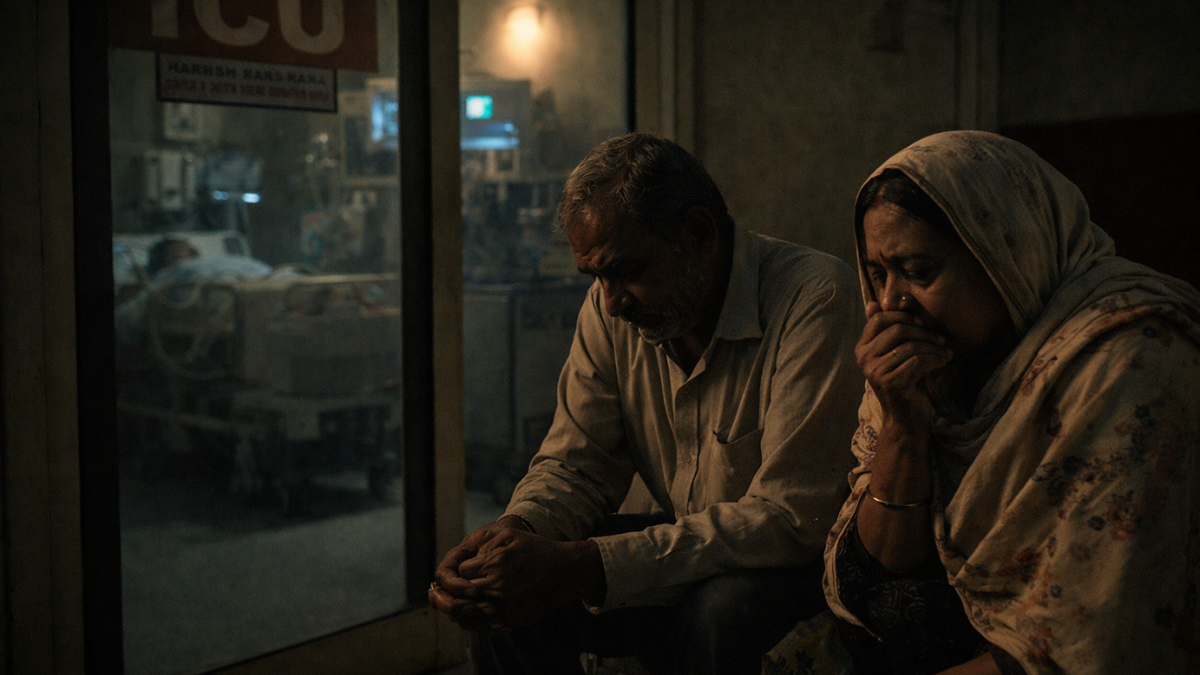
Parents waiting outside ICU during Harish Rana treatment

The Legal Shift: From Negligence Case to Right to Die Debate

Initially, the case focused on:

  • Negligence in building safety
  • Lack of protective measures
  • Accountability of those responsible

But over time, the case transformed.

Why?

Because Harish’s condition did not improve.

Instead, it led to a new legal question:

Does a person have the right to refuse prolonged suffering?

The matter reached higher judicial consideration under constitutional principles.

It involved interpretation of:

  • Article 21 of the Constitution of India
  • Right to life with dignity

Passive Euthanasia: The Legal Framework

The court examined precedents including:

  • Aruna Shanbaug Case

This case had earlier allowed passive euthanasia under strict conditions.

What is Passive Euthanasia?

  • Withdrawal of life support
  • No active intervention to cause death
  • Decision taken under legal and medical supervision

Court Observations in Harish Rana Case

The court acknowledged:

  • Prolonged suffering without recovery
  • Lack of meaningful quality of life
  • Emotional and financial burden on family

Key Observation

“Life under Article 21 includes dignity, not mere biological existence.”

Court Orders: A Sensitive but Historic Decision

The court allowed a structured process:

✔ Medical Board Evaluation

A panel of doctors assessed Harish’s condition

✔ Family Consent

Parents were involved in the decision

✔ Judicial Oversight

Court monitored the entire process

✔ Withdrawal of Life Support (Passive Euthanasia)

Permitted under strict guidelines

Harish remained under care at AIIMS Delhi.

After the legal process:

  • Life support was gradually withdrawn
  • He passed away peacefully

His death marked the end of suffering—
but the beginning of a national conversation.

Why This Case Matters

Harish Rana’s case is important because it connects:

Infrastructure Negligence

Unsafe buildings can destroy lives.

Healthcare Reality

Survival can become prolonged suffering.

Legal Evolution

Courts must interpret dignity beyond survival.

Ethical Debate

Where does life end and dignity begin?

Public Reaction

The case triggered mixed reactions:

Support:

  • Right to dignity
  • Relief from suffering

Concern:

  • Ethical boundaries
  • Possibility of misuse

Final Reflection

Harish Rana’s story is not just about a fall.

It is about:

  • A moment of negligence
  • Years of suffering
  • A legal system forced to respond
  • And a family that faced the hardest decision possible

More Read

Simple steps like enabling two-factor authentication can significantly improve personal cybersecurity.
Why Cybersecurity Awareness Is Now a Life Skill Everyone Needs
GPU Shortage in India: Is It Slowing Down the AI Revolution?
Privacy Importance: The Quiet Power You Don’t Notice Until It’s Gone
Should AI Tools Be Public Infrastructure? India’s Policy Debate Explained
Indore’s No Car Day: How the City Cut Emissions and Saved Fuel

Conclusion

From a fall in an unsafe building
to becoming part of India’s passive euthanasia discourse—

Harish Rana’s life changed not just his family,
but also how the country looks at life, dignity, and death.

Final Insight 

Some stories are not meant to be forgotten.

They are meant to force society to think.

Follow Vue Times — where stories go beyond headlines and reveal the truth beneath.
You Might Also Like

GST Council’s Two-Rate Reform: A Turning Point in India’s Tax Journey
Gold Jewellery Buying Guide Making Charges, GST & Hallmarking
Haryana Floods 2025: 3 Lakh Acres, Faridabad Alert
What Is AI Agents? The Quiet Shift Toward Autonomous Intelligence
Barawafat: The Global Significance of Prophet Muhammad’s Birth Anniversary
TAGGED:AIIMS Delhi casebuilding fall accident Indiacourt order living will IndiaHarish Rana caseliving will Indiapassive euthanasia Indiavictim rights IndiaVue Times story
Share This Article
Facebook Copy Link Print
3kFollowersLike
5kFollowersFollow
2kFollowersFollow
4.2kSubscribersSubscribe
WhatsAppFollow
2.5kFollowersFollow
Most Read

Geography of India: A Comprehensive Guide to India’s Diverse Landscape

India Lands on the Moon – Chandrayaan-3 Makes History

Mukesh Ambani Meets Donald Trump and Qatar Emir in Doha

India is Free! – The Night the British Raj Ended (August 15, 1947)

Tsunami waves crash into Japan's northern coastline after 8.7 earthquake

Tsunami Hits Japan & Russia After 8.7 Quake | The Vue Times

You Might Also Like

Smart city infrastructure with automation and robotics in everyday use
Latest

Robots in Daily Life: The Quiet Transformation Around Us

June 29, 2026
Everyone is the main character concept illustration showing interconnected lives
Latest

Main Character Syndrome: When Life Feels Like a Personal Movie

June 29, 2026
Mohsin Naqvi and the Asia Cup Final Controversy
Cricket

Mohsin Naqvi and the Asia Cup Final Controversy

June 29, 2026
Urban highway with mix of human-driven and autonomous vehicles, digital sensors and data streams visualized, high-detail editorial style”
Latest

What Is Autonomous Vehicles? And Why the Road Ahead Is Not Just About Car

June 29, 2026
The Vue Times

About US

The Vue Times is a modern digital news platform dedicated to delivering accurate, timely, and insightful coverage of the stories that matter. From breaking news and business updates to technology, lifestyle, entertainment, and global affairs, we strive to keep our readers informed with credible journalism and balanced perspectives.

Top Categories
  • Bollywood
  • Business & Economy
  • Crime & Law
  • Daily News
  • Education & Career
  • Entertainment
  • Health & Wellness
  • India / National
Usefull Links
  • Home
  • Blog
  • Contact
  • Privacy Policy
  • Cookie Policy
Pune Rape-Murder Case
Crime & Law

Pune Rape-Murder Case Shocks India: Death in 55 Days

Read More
Maharashtra TET Paper Leak
Education & Career

Maharashtra TET Paper Leak Shocks 6 Lakh Aspirants

Read More

© The Vue Times. All Rights Reserved.

Welcome Back!

Sign in to your account

Username or Email Address
Password

Lost your password?