The agricultural hub of the Indian state of Punjab is experiencing one of the worst natural calamities in a long time. The crisis was reported as a statewide emergency impacting urban, rural and border areas, as on September 2, 2025, the state government went ahead and declared all 23 as flood-impacted areas. It has already taken the lives of 30 people, destroyed more than 1.48 lakh farmlands and had a direct effect on over 3.54 lakh of the people at the site with thousands more being evacuated.
Not only has the situation raised immediate humanitarian issues, it has also brought long-term questions regarding the agricultural model of Punjab, disaster preparedness, and coordination between Centres and States in managing climate related disasters.
How the Crisis Unfolded
The downpour experienced in August-September monsoon period took several Punjab rivers nearer to or even exceeding the danger level. No; now that the dams and reservoirs were already full, the release of excess water was also a contributing factor to the flood downstream.
Suttlej, Beas and Ravi rivers flooded neighboring districts with its tributaries filling villages, agricultural lands and settlements with inundation. By the end of August, the flood effects had expanded among 12 originally affected districts to include all 23 of the districts compelling the government to declare it a state-wide calamity.

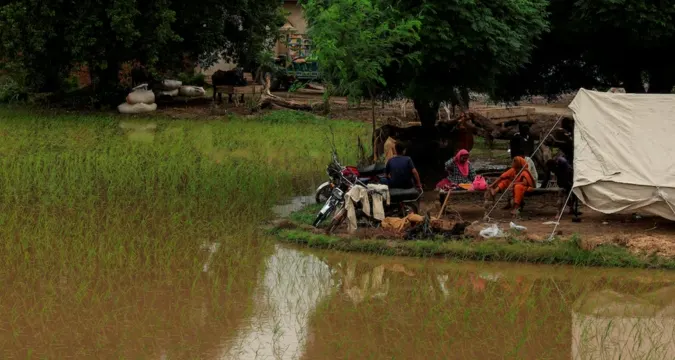
Worst Areas by District.
- Ferozepur: And all the villages are flooded; CM Bhagwant Mann went through it by boat.
- Tarn Taran: Heavy destruction of houses and arable land; Governor Kataria himself surveyed the situation.
- Amritsar: Farming families and migrant workers badly hit by countryside flooding.
- Kapurthala: Villages which are isolated by roads, the assistance being accessible by boat only.
- Mansa and Hoshiarpur: A lot of crop damage has been reported, especially in paddy fields.
- Gurdaspur: The border villages are flooded, and the security concerns humanitarian issues.
The number of affected villages in Punjab only has reached 1,400 and thousands of households displaced.
Humanitarian Toll: Lives Uprooted
State officials estimate that there are 3,54,626 individuals who have been directly affected. Almost 20,000 residents have been displaced and most of them now reside in temporary relief shelters, schools and civic centers.
The Human Struggle
- Families are trapped, starving in Kapurthala and Amritsar; they await boats to give them rations.
- Farmers at Mansa claim that lakh-worth of standing crops have been devastated.
- In the Ferozepur border villages, animals die in large numbers and this further compiles as an economic upset in the long term as they are both a source of income and of food security among the rural families.
When it comes to children and the elderly there is an even more deplorable state of affairs. The threat of waterborne diseases like diarrhea, cholera, and dengue has already been identified by medical workers working in the problem areas.

Rescue and Relief: Multi-Agency Operation
The intensity of rescue operations indicates that the situation of flooding is serious. The state has been able to organize several national forces to coordinate evacuations and relief.
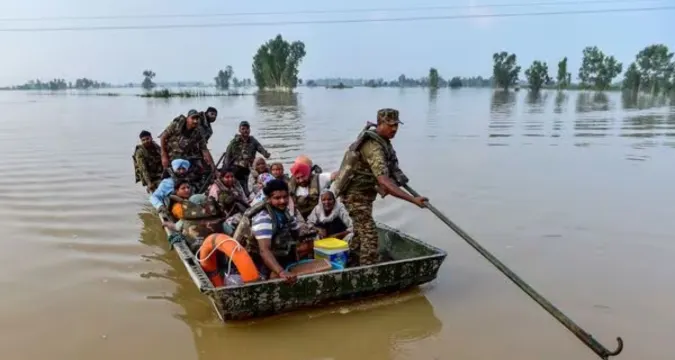
Key Numbers:
- 23 NDRF (National Disaster Response Force) teams on-site.
- Became pressed into service 12 columns of the army and 2 columns of engineers.
- The Army, Air Force, and Navy supply drops and rescues with 35 helicopters.
- One helicopter of the state and 114 boats were used.
- BSF forces that aid in border states, especially Gurdaspur and Ferozepur.
Simultaneously, 818 medical groups are distributed across Punjab in the framework of its Health Ministry to deliver first aid, vaccines, and steps to control the disease. Our aim is not to leave even one left behind, said Health Minister Balbir Singh.

Agricultural Impact: A Blow to the Food Bowl of India
It is a well known fact that Punjab is a grain granary of India making huge percentage of paddy and wheat to be bought in the national food buffer. The kharif crop period has come right after the floods, when paddy fields are nearly approaching maturity.
Scale of Crop Damage
- 1,48,590 hectares of standing crops were destroyed.
- Important agricultural produce being lost include: Paddy, maize, pulses and certain fodder crops.
- Amritsar, Mansa, Hoshiarpur, Kapurthala among the worst hit in crop damage.
To most farmers, the losses are devastating. The cumulative loss in agriculture, which excludes the damage to infrastructure, loss in soil fertility, and livestock loss, is something to the tune of 3,000 crore according to the projections of agricultural economists.
When such floods have stagnant waters, specialists are worried that the damage would extend into the rabi season where wheat will be planted. The occurrence of crop damage and debt following the doubling would drive many of the minor farmers to ruin, as a Ludhiana-based agrarian analyst told me.
Political Dimensions: Mann vs Centre
There is also the political storm that was caused by the floods.
The relief norms of the Centre have been termed meagre by Chief Minister Bhagwant Mann, who is seeking to ensure an increase in compensation packages. He also called on the Union government in January 2014, to make available instantly 60,000 crore of pending funds in Punjab, referring to it as its right, but not charity.

Governor Gulab Chand Kataria, on the other hand, has stressed on the intention of giving farmers the right to ownership of this land so that they can claim benefits of crop losses and other government schemes through a better approach.
This scenario has therefore been connected to traditional scholarly arguments on Centre-state fiscal relations, farm rights and agrarian reforms.
Financial and Economic Losses
The floods are also hurting the Punjab rural economy and infrastructure (not in agriculture only):
- Roads and bridges: A number of highways, and some major connecting routes, to Amritsar and Ferozepur are partially waterlogged or broken.
- Electrical system: Berlin acknowledged that some blackouts had been experienced locally because of flooded transformers.
- Small enterprises: Rural shops and mandis and service givers have lost inventory and assets.
- Public assets: Structures of school buildings, health centers and panchayat halls used as relief shelters have been damaged.
Economists estimate that the overall economic loss might go beyond 8000-10000 crore once the infrastructure, housing, and long-term agricultural expenditure is completely evaluated.
Climate Change Angle: A Pattern of Extremes
It is not the first experience of flood in Punjab over the last few years that is of a bad omen. According to climate specialists, irregular monsoon rain, cloudbursts and extreme weather events are increasing in north India.
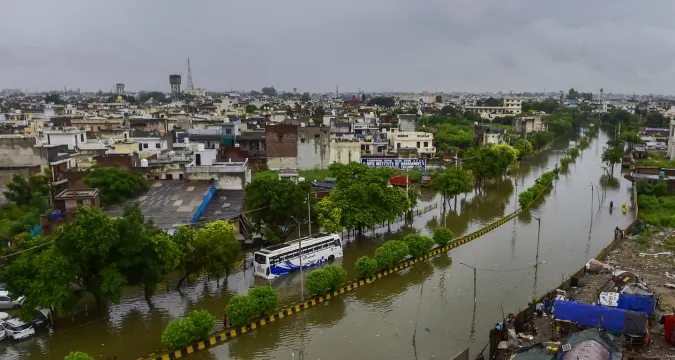
The absence of flood control facilities and the activity of water-concentrated development of paddy predisposes Punjab to it in particular. The excessive use of ground and river water to irrigate the land has also diminished natural resilience of the ecosystems to absorb the shocks.
The climate recycled in Punjab should urgently reconsider its crops and make investments in climate resistant farming, said a climate researcher in IIT Ropar. Otherwise, such catastrophes will be repeated with even greater frequency.
Relief from Neighbouring States
Haryana provided 5 crore non-credible support to flood relief in Punjab and Jammu & Kashmir. They are symbolic, but according to experts, much larger national and international aid could be required to stabilize the recovery in Punjab.
The civil societal groups, the gurdwaras as well as local NGOs are also contributing significantly towards the same. Some districts have established langeras (community kitchens), so that displaced families can at least receive one meal per day.
The Road Ahead: Rehabilitation and Policy Change
The immediate problem is evident: how to save the people stuck and to avoid a civil health catastrophe. Structural reforms and long-run investment will be the determining factor on whether Punjab will recover or not.
Most Important areas of interest moving forward:
- Farmer Compensation: This ensures no debt spirals by paying crop losses in a transparent manner, with timely liability.
- Disaster Relief Funds: Centre updated its norms to more effectively reflect agrarian losses.
- Flood Infrastructure: Enhanced embankments, drainage and new dam management systems.
- Climate Resilience: Most of its water-intensive agricultural products such as paddy will be diversified to sustainable options.
- Land Rights Reform: Provide tenure clarity to tenant farmers to receive relief and insurance benefits.
Conclusion
When Punjab announces that this is the moment when its 23 districts are submerged, it is not a simple administrative declaration, but a humanitarian alarm call. When 30 people died, more than 3.5 lakh human beings were affected, and crops were lost on 1.5 lakh hectares, the state became a victim of the crisis that will resonate way beyond a monsoon.
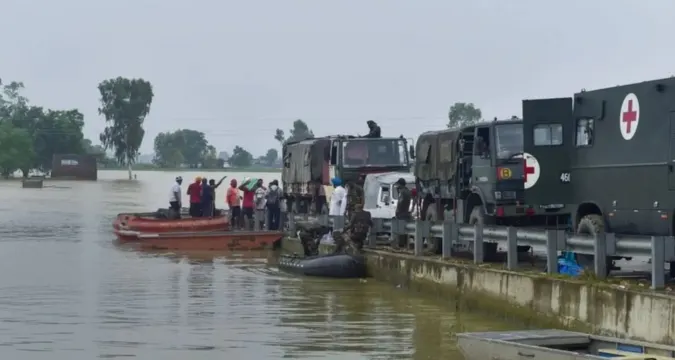
What Punjab desperately needs at this point is national unity, a massive inflow of funds, and a promise of climate-conscious agriculture. This cannot, of course, be reduced to simple destruction that the flood crisis of 2025 brought, but it must also be remembered as the wake-up call that enabled India to understand that it badly needed to prepare its food bowl to meet the requirements of the era of extreme weather.