A Journey of Patience, Empathy and Constitutional Stewardship
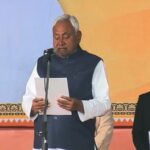
When Justice Surya Kant took the oath as the fifty third Chief Justice of India on a crisp November morning at Rashtrapati Bhavan, the moment carried the weight of both personal triumph and institutional responsibility. The oath administered by President Droupadi Murmu marked the culmination of a remarkable journey that began in the quiet fields of Petwar village in Haryana and has now reached the highest judicial office of the world’s largest democracy.

The ceremony was attended by Vice President CP Radhakrishnan, Prime Minister Narendra Modi, senior cabinet ministers and distinguished members of the judiciary. For many observers of India’s constitutional landscape, Justice Surya Kant’s elevation brings both expectation and confidence, for he is a judge known equally for his clarity of thought, administrative skill, and rare human sensitivity.
His appointment comes at a defining moment. The Supreme Court carries close to ninety thousand pending cases. Many constitutional issues are awaiting final resolution. The justice delivery system requires renewed vigour, faster processes, and deeper focus on mediation. Within this context, Justice Surya Kant’s vision may prove transformative.

Rise of a Village Boy to the Apex of the Judiciary
Justice Surya Kant was born on February ten, nineteen sixty two in the Narnaud region of Hisar in Haryana. His early education took place in local village schools, and those formative years among farming communities left a lasting imprint on his perspectives. In nineteen eighty four, he completed his law degree from Maharshi Dayanand University in Rohtak and immediately began legal practice at the Hisar district court. Very soon he shifted to Chandigarh, where he built an impressive legal practice at the Punjab and Haryana High Court, specialising in constitutional, service and civil law.
His rise in the profession was steady and noteworthy. At only thirty eight years of age, he became the youngest Advocate General of Haryana in the year two thousand. He was designated a Senior Advocate in two thousand one and elevated as a judge of the Punjab and Haryana High Court in two thousand four. His scholarly approach to law continued even while serving on the bench, and he completed a master’s degree in law from Kurukshetra University with first class first.
In October two thousand eighteen, he assumed charge as Chief Justice of the Himachal Pradesh High Court. A year later, in May two thousand nineteen, he was elevated to the Supreme Court of India, beginning a tenure that would place him at the heart of several landmark constitutional developments.
Contributions at the Supreme Court: A Judicial Record of Breadth and Depth
Over six years at the Supreme Court, Justice Surya Kant authored more than three hundred judgments. His presence on major Constitution Benches shaped several historic decisions.
Constitutional Bench on Abrogation of Article 370
He was part of the Bench that upheld the abrogation of Article 370, a ruling that redefined the constitutional and political relationship between the Union of India and the former state of Jammu and Kashmir. His approach was marked by meticulous attention to precedent, federal principles and the constitutional structure of special provisions.

Verdict on Section 6A of the Citizenship Act
Justice Kant served on the Bench that examined the validity of Section 6A relating to citizenship issues in Assam. The ruling required careful navigation of historical agreements, demographic realities and constitutional morality.
Pegasus Spyware Matter
He played a key role in the hearings that dealt with allegations related to the Pegasus surveillance issue. His insistence on transparency, procedural fairness and the right to privacy reflected his commitment to the rule of law in emerging technological contexts.
Interim Bail for Former Delhi Chief Minister Arvind Kejriwal
Justice Kant was also on the Bench that granted interim bail to former Delhi Chief Minister Arvind Kejriwal while affirming the legality of the arrest. The judgment balanced individual liberty with statutory procedure and highlighted the judiciary’s role as a protector of constitutional rights.

Presidential Reference on Timelines for Assent to Bills
Most recently, he was part of the Bench that adjudicated the presidential reference on whether governors and the President must decide on state bills within a reasonable timeline. The ruling clarified a long standing debate on constitutional responsibility and federal balance.
Leadership at NALSA: A Judge Who Believes in Service
As Executive Chairman of the National Legal Services Authority, Justice Surya Kant launched the Veer Parivar Sahayata Yojana twenty twenty five. The scheme provides free legal aid to soldiers, veterans and their families. His leadership emphasised accessibility, compassion and institutional support for those who serve the nation.

This initiative reflects a broader pattern. Justice Kant has consistently argued that justice must be accessible, humane and sensitive to social context. His belief that the law must ultimately serve people rather than remain confined to technical doctrines has shaped his administrative and judicial work.
The New Chief Justice’s Philosophy: Patience, Empathy and Humanistic Judging
In an interview shortly before taking office, Justice Surya Kant articulated a judicial philosophy that blends discipline with empathy. He described himself as shaped by two powerful influences: a farmer’s patience and a poet’s empathy.
The Farmer’s Patience
Growing up on a farm taught him that growth requires time, care and resilience. According to him, justice resembles cultivation. It cannot be forced. It must be nurtured with diligence, supported by the natural rhythm of due process, and harvested only when it has fully matured. This worldview distances him from rushed adjudication or populist tendencies.
The Poet’s Empathy
His reference to a poet’s empathy reveals something essential. He believes that judges must look beyond legal papers to understand the lived realities behind every dispute. Human stories matter. Litigation involves anxiety, despair, hope and dignity. The law may offer a framework, but its application must remain humane.
A Humanistic Philosophy
Justice Kant describes his approach as humanistic. He sees judges primarily as neutral interpreters bound by fairness and consistency, yet conscious of social context. This balance between strict interpretation and empathetic understanding is likely to influence the Supreme Court’s tone in the months ahead.
Administrative Vision: Discipline and Institutional Strength
Justice Surya Kant also brings a reputation for administrative rigour. As former Chief Justice of the Himachal Pradesh High Court, he emphasised punctuality, effective case management, and institutional discipline. He believes that courts are collective bodies, not merely individuals in robes. Their credibility depends on consistency, professionalism and efficiency.
His immediate administrative priority is clear. With nearly ninety thousand cases pending in the Supreme Court, reducing arrears will be a central focus.
Clearing Bottlenecks and Reviving First Level Adjudication
Justice Kant noted that many matters remain stuck at the Supreme Court for years, preventing lower courts from addressing related issues. He intends to identify such cases, constitute appropriate benches and ensure timely decisions. This approach aims to revive the healthy practice of first approaching lower courts rather than directly invoking the jurisdiction of the Supreme Court.
Strengthening Procedures and Infrastructure
He highlighted the need to improve procedural guidelines, upgrade court infrastructure and enhance the digital ecosystem. Even small improvements, according to him, can create transformative efficiency.
Emphasising Preparedness and Professional Conduct
His stress on punctuality, thorough preparation and communication underlines his belief that institutional culture is essential to judicial credibility.
Mediation at the Heart of Reform: Reducing Pressure on Courts
One of the most striking features of Justice Kant’s reform agenda is his strong advocacy for mediation. He believes mediation can become a game changing solution for the judiciary.
According to him, government departments and agencies must adopt mediation more readily. A substantial portion of litigation in India involves government entities. Directing such matters to mediation can significantly reduce the burden on courts and resolve disputes in a less adversarial manner.
His stance aligns with global best practices where mediation is an integral part of justice delivery. In India, where delays are a longstanding concern, strengthening mediation could drastically improve timelines, reduce costs, and enhance satisfaction among litigants.
The Human Side of Judging: Why His Approach Matters for India Today
Justice Surya Kant’s emphasis on empathy, discipline and administrative efficiency arrives at a time when public trust in institutions is more important than ever. India is experiencing rapid technological transformation, social change and political debate. The judiciary must evolve to meet new challenges.
His belief that every case carries a human story is particularly relevant. Increasing digitization, complex regulatory frameworks and intense public scrutiny often create a sense of distance between citizens and institutions. A humanistic approach can bridge this gap.
Moreover, his insistence on collective institutional responsibility reinforces the idea that the Supreme Court is greater than its individual members. Consistency, clarity and discipline are essential for the long term integrity of the judiciary.

What Justice Surya Kant’s Tenure Could Mean for the Future
Justice Surya Kant’s tenure offers an opportunity for renewed focus on efficiency, sensitivity and constitutional clarity. Several developments can be expected in the coming months.
Faster Resolution of Constitutional Questions
His commitment to dealing with old cases and pending constitutional issues could bring long awaited clarity to several important matters.
Deepening Technological Adoption
Digital processes, virtual hearings and electronic record management are likely to receive strong emphasis.
Strengthened Mediation Ecosystem
With his personal commitment, mediation may finally become a central pillar of the justice delivery system.
Revitalisation of Grassroots Judiciary
His remarks on reviving the practice of approaching lower courts first suggest a focus on strengthening district level and high court systems. This decentralisation could reduce burden on the Supreme Court and improve access to justice across India.
Humanistic Judicial Ethic
His philosophy will likely shape the tone of the Court, prompting a more compassionate and people centric approach to adjudication without compromising legal rigour.

A Moment of Transition and Promise
Justice Surya Kant’s story embodies the larger story of India. It is the story of a young boy from a farming village who rose to the highest judicial office through perseverance, learning, sensitivity and integrity. It is also the story of an institution that continues to evolve as the nation changes.
As he takes charge amid rising pendency, technological transformation and complex constitutional questions, his leadership will be closely watched. The coming months will test his vision, administrative skill and judicial philosophy. Yet the tone he has set is promising: patient, empathetic, disciplined, people focused and deeply committed to the rule of law.
For a nation that looks to the Supreme Court not only for legal correctness but also for moral guidance, Justice Surya Kant’s tenure begins with trust and anticipation. His stewardship may well become a defining chapter in the story of modern Indian justice.