
There’s a particular kind of confidence you see online these days. Not the polished, LinkedIn-approved version, but something far more playful — a wink at reality, a shrug at probability. Someone tweets that they’ll accidentally bump into their celebrity crush at a café. Another insists their situationship is secretly in love with them despite evidence to the contrary. The replies don’t argue. They cheer: “Stay delulu.”
The phrase lands somewhere between a joke and a worldview. And like many internet-born ideas, it says more about our collective psyche than it first appears.

Delulu Meaning: More Than Just “Delusional”
At its simplest, the delulu meaning is a slang abbreviation of “delusional.” But the internet rarely settles for simplicity. In digital culture, “delulu” doesn’t describe clinical delusion or irrationality in the traditional sense. It’s intentionally exaggerated belief — often romantic, sometimes absurd — embraced with full awareness.
It’s aspirational denial, but self-aware.

Someone saying they’re “delulu” usually knows their belief is unlikely or even impossible. That’s the point. It’s a playful rejection of realism in favor of imagination. Not ignorance, but intentional fantasy.
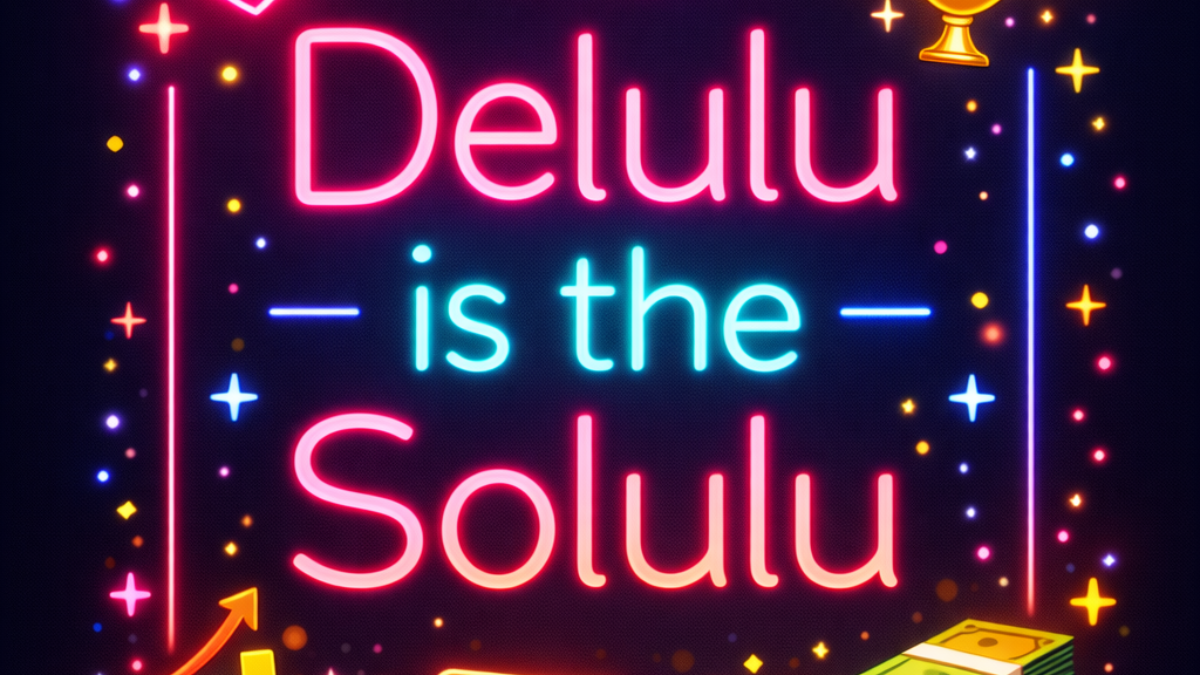
The phrase often appears alongside the now-viral mantra: “Delulu is the solulu” — loosely meaning that being a little delusional might actually be the solution to life’s frustrations.
On the surface, it sounds unserious. But underneath, there’s something sharper: a commentary on ambition, escapism, and the emotional fatigue of modern life.
Where Did the Delulu Meaning Come From?
The term gained traction through K-pop fandoms, where fans would jokingly describe themselves as “delulu” for imagining relationships or scenarios involving idols. In those communities, the word carried an affectionate, self-aware tone rather than criticism.
From there, it migrated to platforms like TikTok, Instagram, and X (formerly Twitter), evolving along the way. What began as niche fan slang turned into a broader cultural shorthand — one that now applies to career ambitions, dating fantasies, and even financial aspirations.

A student claiming they’ll land a dream job despite average grades. A content creator manifesting viral success before posting consistently. A hopeless romantic convinced that “this time it’s different.”
All delulu. All, strangely, encouraged.
Why the Delulu Meaning Is Trending Now
The rise of the delulu meaning isn’t accidental. It’s arriving at a moment when realism often feels limiting, even suffocating.

Young adults today navigate a world of rising costs, uncertain job markets, algorithm-driven visibility, and constant comparison. Traditional pathways — stable careers, predictable progress — no longer feel guaranteed. In that environment, optimism grounded strictly in evidence can seem… insufficient.
Enter delusion, rebranded.
Being “delulu” offers a form of psychological relief. It allows people to imagine better outcomes without being constrained by present circumstances. It’s not that reality disappears — it’s temporarily sidelined.
There’s also a performative element. Social media rewards boldness, confidence, and narrative. Saying “I might succeed” doesn’t travel far. Saying “I will succeed, obviously” — even ironically — captures attention.
Delulu fits perfectly into that ecosystem.
Delulu Meaning and the Psychology of Belief
Strip away the humor, and the concept brushes up against something psychologists have studied for decades: the power of belief in shaping outcomes.
There’s a thin line between delusion and what’s often called “positive illusion.” Research suggests that slightly inflated self-perception — believing you’re more capable or more likely to succeed than statistics suggest — can actually improve motivation and persistence.
Athletes visualize wins before competitions. Entrepreneurs talk about success before revenue exists. Artists imagine audiences before they have one.
In that sense, being a little “delulu” isn’t entirely irrational. It can function as a coping mechanism, even a strategic one.
But the key difference lies in awareness.
Healthy delulu acknowledges reality but chooses optimism anyway. Harmful delusion rejects reality altogether.
The internet version tends to hover somewhere in between, depending on how seriously it’s taken.
The Fine Line: Confidence or Escapism?
Not all delulu is created equal.
On one end, it’s harmless — even beneficial. Someone uses exaggerated belief to push through self-doubt. They apply for jobs they feel underqualified for. They create content before feeling ready. They take risks.
On the other end, it can slip into avoidance.
Believing a failing relationship will magically fix itself. Ignoring clear professional setbacks while insisting success is inevitable. Refusing to adjust strategy because “manifestation will handle it.”
This is where the trend becomes complicated.
The phrase “delulu is the solulu” works as humor, but it can also obscure accountability. Success rarely comes from belief alone. It demands action, iteration, and sometimes uncomfortable realism.
The healthiest version of delulu isn’t blind faith — it’s bold imagination paired with grounded effort.
The Business Angle: Why Brands Are Paying Attention
Internet language has a short shelf life, but while it’s fresh, it’s powerful. Brands have started to notice.
The delulu meaning aligns with aspirational marketing — selling not just products, but possibilities. Beauty brands promise transformation. Fashion brands sell identity. Tech companies pitch future lifestyles.
Delulu amplifies that narrative. It encourages consumers to imagine themselves as more successful, more attractive, more influential than their current reality suggests.
Some campaigns have subtly leaned into this mindset, framing purchases as steps toward an imagined, idealized self.
But there’s risk here too.
If overused or misapplied, the tone can feel dismissive. Consumers are increasingly aware of performative optimism. They can tell when fantasy is being sold without substance.
The brands that succeed are the ones that balance aspiration with authenticity — offering tools, not just dreams.
Delulu Meaning in Relationships and Identity
Perhaps nowhere is the concept more visible than in modern dating culture.
The idea of being “delulu” about a partner’s feelings has become both a joke and a warning. It reflects a broader tension: the desire to believe in connection versus the fear of misreading it.
In some cases, delulu becomes a shield against rejection. It’s easier to imagine mutual interest than confront uncertainty. In others, it’s a form of storytelling — turning ambiguous situations into emotionally satisfying narratives.
It also ties into identity. Declaring oneself “delulu” can be a way of reclaiming perceived irrationality. Instead of being criticized for unrealistic expectations, individuals lean into the label.
There’s empowerment in that. But also vulnerability.
The Future of the Delulu Meaning
Like most internet slang, “delulu” will evolve or fade. But the mindset behind it is unlikely to disappear.
As long as uncertainty defines modern life, people will look for ways to imagine better outcomes — even improbable ones. The language may change, but the impulse remains.
What’s interesting is how openly this generation acknowledges the tension between fantasy and reality. Previous eras might have hidden unrealistic optimism behind confidence. Today, it’s labeled, joked about, and shared.
That self-awareness may be the defining feature.
Being delulu isn’t about ignorance. It’s about choosing belief — sometimes against logic — while knowing exactly what you’re doing.
More Read
Conclusion
The delulu meaning captures something uniquely modern: a blend of irony, ambition, and emotional survival. It’s not purely a joke, nor entirely a philosophy. It sits in between — playful on the surface, revealing underneath.
Used wisely, it can push people beyond hesitation, encouraging risk and creativity. Used blindly, it can become an escape from reality rather than a tool to reshape it.
The real value lies in balance.
A little delusion can open doors. Too much can make you ignore them entirely.
And perhaps that’s the quiet truth behind the trend: belief matters, but only when it’s willing to meet reality halfway.
Final Insight & CTA — The Vue Times
At The Vue Times, we track not just trends, but the thinking behind them. “Delulu” isn’t just slang — it’s a signal of how ambition, identity, and uncertainty are evolving in a digital-first world.
Stay ahead of the culture shaping tomorrow. Follow The Vue Times for sharp insights that go beyond the surface.
Frequently Asked Questions
What is the delulu meaning?
Delulu is internet slang derived from “delusional,” used playfully to describe unrealistic beliefs that are knowingly exaggerated, often for humor or motivation.
Is being delulu a bad thing?
Not necessarily. In moderation, it can boost confidence and creativity. But taken too far, it may lead to ignoring reality or avoiding necessary action.
What does “delulu is the solulu” mean?
It’s a viral phrase suggesting that being a little delusional can help solve problems, especially by encouraging optimism and bold thinking.
Where did the term delulu come from?
It originated in K-pop fan communities and later spread across social media platforms like TikTok and X, gaining mainstream popularity.
How is delulu used in daily life?
People use it to describe ambitious beli