Power Without Noise: Silent Power Of Bureaucrats
The democracy of India is one of the clamorous ones. Election campaigns enchant streets, televisions are full of political rhetoric, social media go on over ministerial utterances and rebuttals of the opponent. In popular conception, power itself is performative, which is quantified in terms of speeches, phrases, and the number of seats.
Nevertheless, the biggest decisions which influence life in India every single day are not often taken on TV screens or on the floor of parliament.
Quietly, inside ministries, district offices and secretariats, they are created by bureaucrats who do not run against each other and have no public to please.
The bureaucracy of India is a parallel centre of power: constitutionally guaranteed, procedurally dominant and mostly invisible. Governments come and go, and political priorities evolve, but the bureaucrats establish continuity, read between the lines and usually dictate results.

This paper looks at the way bureaucratic authority can and does work in India, why this unspoken power is increasingly becoming a hallmark of the governance in the largest democracy in the world and why this unspoken power is so important anyway.
Bureaucratic Authority and the Constitutional Foundation of Bureaucratic Authority
The civil services of India are not just the instruments of administration, they are constitutional institutions.
Articles 308 through 323 to the Constitution aim to create and secure government services and attach civil servants:
- Security of tenure
- Guarantee against unwarranted termination
- Political cycle independence
This framework was influenced by the post-partition realities. The founders of India were afraid that a weak administration system would disintegrate the national unity.
Architect of India civil services, Sardar Vallabhbhai Patel, believed that a stable and politically diverse nation needed a permanent bureaucracy as a stabilizer.

This constitutional insulation is a reason why bureaucrats continue to play their role no matter which party is in power.
The Bureaucracy of Power Through Reach in Scale of India
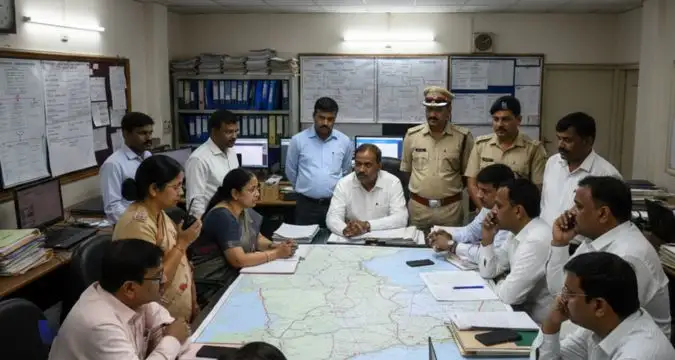
The bureaucracy of India is magnified by its size and extent. It does not only control policy, but also execution in extensive geographical settings.
Indian Administrative System Inclusivity
| Category | Approximate Numbers |
| The employees of the Central Government | ~3.1 million |
| State Government Employees | ~8.5 million |
| IAS Officers in Service | ~6,700 |
| IPS Officers in Service | ~5,000 |
| Indian Foreign Service Officers | ~800 |
Within India, the number of civil servants per person is lower than most of the OECD countries, despite the country ruling an original population of more than 1.4 billion people. This paucity redounds discretionary authority on all levels, from district collectors to secretaries.

The small number of officers, coupled with the high level of responsibility and control over processes, leads to a governance atmosphere in which individual bureaucrats count too much.
The Real Decision Making: Outside Parliament
The Illusion of Legislative Supremacy
Parliament passes laws. It is the bureaucrats who determine the meaning of those laws.
In India, most of the legislation is intentionally extensive, with operational specifics being found in:
- Rules
- Notifications
- Guidelines
- Office memorandums
These tools are written in nearly all forms by the bureaucrats, and usually without discussion by parliament.
A statute that offers guaranteed access can subsequently be contracted under the requirements of eligibility. Through compliance structures, a regulatory reform can be watered down. It is through bureaucracy that the divide between the political will and the impact on the citizen is reduced, and transformed.
This is not an exception. It is the norm.
The File System: India as Quiet Power Corridor
The administration of India remains file-based (physically or digitally). All big decisions are passed through a maze of bureaucratic reviews.
Why Files Are More Significant Than Announcements
- Files determine priority
- The perception of risks is influenced by language in notes
- Delay need not involve rejection, but merely indecision
The mere wording of one phrase that requires further examination can hold up a project forever.
Project Clearance Delays: The Data
| Indicator | Pre-Reform | Post e-Office |
| Average Clearance Time | 18–30 months | 6–12 months |
| Percentage of Delays as a result of Inter-Departmental problems | ~60% | ~45% |
| Ministerial Intervention Role | Limited | Situational |
Digitisation has brought in speed but still, there is discretion. Technology has never minimized power, it facilitated movement.
Bureaucrats vs Politicians: An Unequal Partnership
Continuity vs Volatility
Ministers are elected to be legitimate. Permanence gives bureaucrats power.
| Position | Average Tenure |
| Union Minister | 2–3 years |
| Union Secretary | 4–6 years |
| District Collector | 1–2 years |
A large number of bureaucrats in the senior positions represent and are facing different governments and thus they easily adjust to changing priorities with the political environment as also they provide institutional checks and balances.
Bureaucrats commonly influence policy in more decisive ways than in politically led ministries, particularly where the minister in charge is not deeply in domain, as is the case in technically complex ministries like finance, defence and environment.
The Politics of Interpretation: New Rules That Remake Rights
India is not ruled by Act of parliaments but by delegated legislation.
Rules framed after laws:
- Identify compliance impediments
- Identify enforcement mechanisms
- Frequently flee society
Sectors that have been most impacted are:
- Environmental regulation
- Digital governance
- Taxation
- Labour laws
To the citizens, it is not the legal but the rulebook by bureaucrats, which controls everyday life.
Crisis Governance: Bureaucracy Takes Centre Stage
COVID-19 as a Case Study
The pandemic demonstrated the proper functioning capacity of the Indian bureaucracy.
| Indicator (March–June 2020) | Data |
| Executive Orders that have been issued | 200+ |
| Parliamentary Sitting Days | <30 |
| Primary Decision-Makers | District Collectors |
| Enforcement Authority | Civil administration and police |
During this period:
- District administrations dictated the movement
- The decisions made on health infrastructure were decentralised
- Distribution of relief was in the hands of bureaucrats
Bureaucrats implemented, interpreted and enforced but political leadership provided a general direction.
The Culture of Caution: Why Innovations Fail
Indian bureaucracy has been criticised as inert. It is not because of incompetence, it is a risk structure.
The Safer of the Two Evils
- Retrospective audits
- Vigilance inquiries
- Investigatory interrogation years after
- Due process is lacking in media trials
Decisions made and not files delayed are more likely to land an officer into trouble.
This creates a system where:
- Status quo is rewarded
- Political protection is necessary in relation to innovation
- Ambition of policy is generally watered down

The Power Without the Access: Bureaucracy and the Citizen
To the majority of Indians, the most obvious face of the state is the bureaucracy:
- Police stations
- Land offices
- Welfare departments
- Municipal bodies
Nonetheless, it is the least transparent.
Online desks have minimized friction at the front end, but discretion behind the rear end is the same. Technology has enhanced access, not accountability.
Transfers and Posting: The Undetectable Control Viability
Bureaucrats are never immune to pressure, unlike the protection granted to them constitutionally.
Transfer Data Reality
| Indicator | Data |
| Average IAS District Tenure | 12–18 months |
| Minimum Recommended by Supreme Court | 2 years |
| Transfers in Politically Sensitive States | 3–5 per year |
Transfers serve as:
- More signals of political infelicity
- Tools of compliance
- Informal control mechanisms
The most powerful officers are usually those who are both neutral and adaptive.
Reform Debates: Why Change Is So Difficult to Find
Discussion on administrative reform is decades old and there is little progress.
Reform Outcomes in Numbers
| Reform Area | Status |
| Lateral Entry Officers (Since 2018) | <70 |
| Senior Posts by way of Lateral Entry | <2% |
| Performance-Based Appraisal | Limited impact |
| Fixed Tenure Enforcement | Inconsistent |
The opposition to reforms is found in:
- Bureaucratic reliance on politics
- Resistance to water down authority by a bureaucracy
- Institutional inertia
Once established power does not tend to reform itself.
The Importance of Bureaucratic Power Like Never Before
Bureaucrats shape:
- Infrastructure timelines
- Welfare access
- Regulatory burdens
- Crisis response
- Daily state-citizen engagement
Such power is not unequivocally bad. It is a source of continuity and stability. But unaccountable opaqueness is dangerous to democracy.
Conclusion: Making the Invisible Visible
The problems with the governance of India are not rooted in the absence of leadership or laws. They are products of an intention-action disjuncture.
Bureaucracy meets that void.
To comprehend bureaucratic power, one needs:
- Democratic accountability
- Policy effectiveness
- Citizen empowerment
Until this non-linear authority is more transparent, the debate among the population will not be full-fledged.
India is ruled as little by the ballot and the speech, as it is by files and rules and by those who possess them.
More Read

FAQs: The Power of Bureaucracy in India
Why are Indian bureaucrats so potent?
Since they are constitutional in nature, procedural and continuity across governments, they allow them to influence implementation no matter whether there is a change in power.
Are there less powerful ministers than bureaucrats?
Bureaucrats usually decide timelines and means of execution and interpretation; this process makes them more powerful in practice than ministers who determine political direction.
Has digitalisation minimized bureaucratic discretion?
The digitisation has increased speed and access without much reduction in decision-making discretion or power.
Why is it so slow in terms of reforming bureaucracy?
Reforms are risky in both political and administrative systems because they undermine already established power systems.
Is it possible to make bureaucracies more accountable?
Yes, through fixed tenure, open rulemaking, performance-based appraisals and more legislation being monitored.
Vue Times Editorial Pledge
The Vue Times still explores the topic of governance behind the headlines, making readers see how power actually works in India.