

It rarely begins with a dramatic warning.
No alarms. No flashing red lights. Just a login that doesn’t work, an email that feels slightly off, or a transaction you don’t remember making. For most people, the first encounter with cyber risk is almost… ordinary. That’s what makes it dangerous.
We’ve built lives that exist partly on screens—banking, conversations, identity, even memory. And yet, the systems holding all of it together remain largely invisible. That’s where the real story of What Is Cybersecurity? begins—not as a technical definition, but as a silent layer of defense most people only notice when it fails.
What Is Cybersecurity? A Practical Understanding
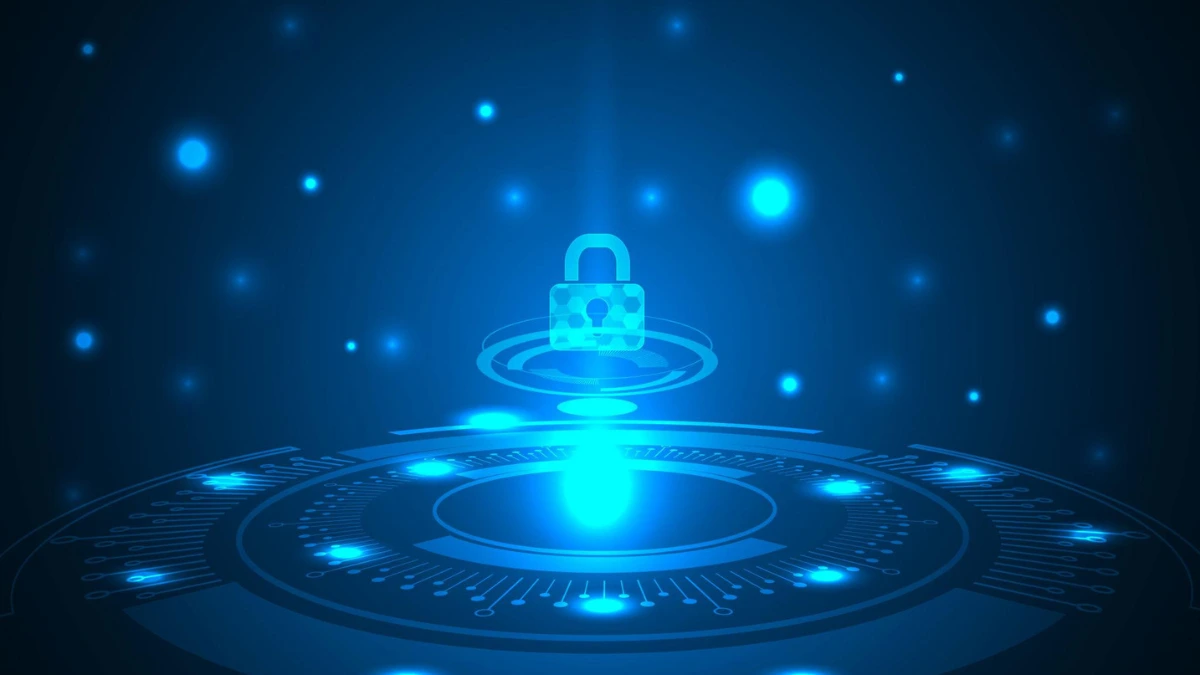
Strip away the jargon, and cybersecurity is about protection—specifically, protecting systems, networks, and data from unauthorized access, damage, or theft.
But that definition feels incomplete.
Cybersecurity today isn’t just about locking digital doors. It’s about anticipating how those doors might be broken into. It’s about understanding human behavior as much as it is about understanding machines.
When a phishing email tricks someone into sharing credentials, the failure isn’t technological—it’s psychological. When a company suffers a data breach, the damage isn’t just operational—it’s reputational, financial, and sometimes even political.
So, when we ask What Is Cybersecurity?, the more honest answer is this:
It’s a constantly evolving system of defenses designed to protect not just data, but trust.

Why “What Is Cybersecurity?” Is Suddenly Everywhere
There was a time when cybersecurity was a niche concern—something handled quietly by IT departments in large organizations.
That time is over.
Today, cybersecurity sits at the intersection of economics, politics, and everyday life. A ransomware attack can shut down hospitals. A leaked database can expose millions of users. A compromised system can disrupt entire supply chains.
The scale has changed. But so has the frequency.
Cyberattacks are no longer rare events—they’re routine. And they’re becoming more sophisticated, often powered by automation and, increasingly, artificial intelligence.
For businesses, this means one thing: cybersecurity is no longer optional infrastructure. It’s core strategy.
For individuals, it means something more unsettling: your personal data is part of a global ecosystem of risk.
The Real Threat Isn’t Always Technical
It’s easy to imagine hackers as highly skilled programmers breaking through complex systems. And sometimes, that’s true.
But often, the weakest link is simpler.
A reused password.
A careless click.
An unverified link.
Cybersecurity professionals will tell you that many breaches don’t require advanced hacking—they rely on predictability. Humans tend to trust what looks familiar. Attackers exploit that.
This is why cybersecurity is increasingly focused on behavior. Training employees. Educating users. Designing systems that assume mistakes will happen—and limit the damage when they do.
In that sense, cybersecurity is less about perfection and more about resilience.
What Is Cybersecurity? Inside the Layers That Protect You
If cybersecurity were a building, it wouldn’t rely on a single lock. It would have multiple layers—each designed to slow down, detect, or stop an intruder.
At a broad level, these layers include:
Network Security – Protecting the infrastructure that connects systems, often through firewalls and monitoring tools.
Application Security – Ensuring software is built to resist attacks from the start.
Data Security – Safeguarding sensitive information through encryption and access controls.
Identity and Access Management – Controlling who gets access to what—and verifying it continuously.
Endpoint Security – Protecting individual devices like laptops and smartphones.
What’s interesting is how these layers interact. A failure in one doesn’t necessarily mean a total breach—if the others hold.
That’s the philosophy behind modern cybersecurity: assume something will fail, and design systems that can absorb the impact.
The Business Cost of Ignoring Cybersecurity
For companies, cybersecurity is often viewed as an expense—until it becomes a crisis.
A single breach can cost millions. Not just in direct losses, but in regulatory penalties, legal battles, and lost customer trust. And trust, once broken, is hard to rebuild.
Consider how quickly public perception shifts when a company announces a data breach. The conversation moves from product quality to reliability, from innovation to negligence.
This is why cybersecurity is now part of boardroom discussions. It’s no longer just a technical issue—it’s a business risk.
And increasingly, it’s becoming a competitive advantage. Companies that can demonstrate strong security practices are more likely to earn customer confidence.
The Psychology Behind Cybersecurity
There’s a human story underneath all of this.
Cybersecurity works best when people behave predictably in secure ways—but humans are anything but predictable. We prioritize convenience over caution. We trust familiar patterns. We underestimate risks we don’t fully understand.
Attackers know this.
Phishing emails mimic trusted brands. Fake websites replicate real ones almost perfectly. Social engineering tactics rely on urgency—“act now,” “verify immediately,” “limited time.”
These aren’t technical tricks. They’re psychological ones.
So when asking What Is Cybersecurity?, it’s worth recognizing that it’s as much about influencing behavior as it is about building systems.
The Role of Governments and Global Tensions
Cybersecurity isn’t confined to individuals or businesses anymore. It has become a matter of national security.
Governments around the world are investing heavily in cyber defense—and, in some cases, cyber offense. Digital infrastructure is now considered critical infrastructure. Power grids, communication systems, financial networks—all potential targets.
This introduces a new dimension: cyber warfare.
Unlike traditional conflict, cyber attacks can be subtle, deniable, and continuous. They don’t always aim to destroy—they often aim to disrupt, destabilize, or gather intelligence.
Which means cybersecurity is no longer just about protection—it’s about maintaining stability in an increasingly digital world.
Where Cybersecurity Is Headed Next
The future of cybersecurity will likely be shaped by two forces: complexity and automation.
As systems become more interconnected—through cloud computing, IoT devices, and AI—the attack surface expands. There are simply more entry points to defend.
At the same time, security itself is becoming more automated. AI-driven systems can detect anomalies, respond to threats, and even predict attacks before they happen.
But this creates a paradox.
The same technologies that strengthen cybersecurity can also be used by attackers. AI can generate more convincing phishing emails, automate attacks, and identify vulnerabilities faster.
The result is an ongoing cycle—a digital arms race where both sides evolve continuously.
More Read

Conclusion: Security as a Habit, Not a Feature
Cybersecurity isn’t something you install and forget. It isn’t a product or a one-time fix.
It’s a practice.
For individuals, it’s about small, consistent habits—strong passwords, cautious clicking, regular updates.
For businesses, it’s about integrating security into every layer of operation.
For societies, it’s about building systems that can withstand disruption.
The question What Is Cybersecurity? doesn’t have a static answer because the threat itself isn’t static.
And perhaps that’s the most important insight: in a world where everything is connected, security isn’t just protection—it’s survival.
Final Insight
The digital world runs on trust. Every login, every transaction, every interaction assumes that the system will behave as expected. Cybersecurity exists to protect that assumption.
But as threats grow more sophisticated, the real challenge isn’t just building stronger systems—it’s building smarter users.
Because in the end, the strongest firewall is awareness.