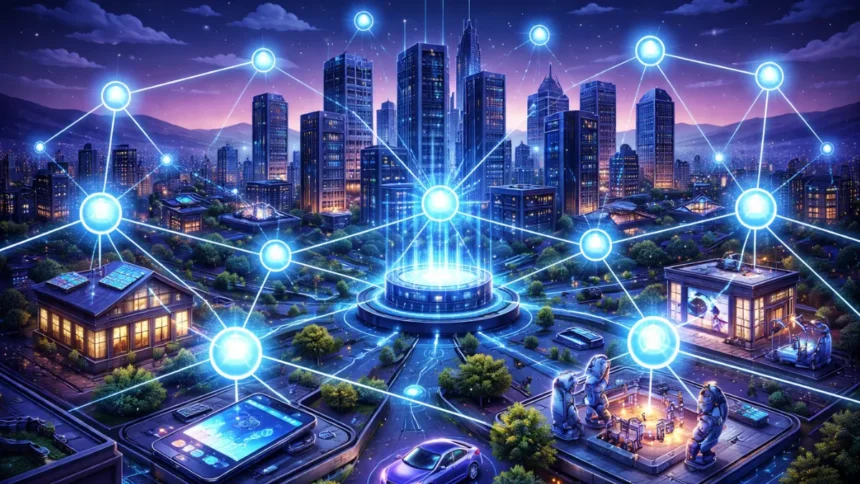
A car slows down before the driver even notices the obstacle. A smartwatch flags an irregular heartbeat instantly, without waiting for a server halfway across the world. A factory machine predicts its own failure and shuts down just in time. These moments feel almost intuitive — as if technology has learned to think on its feet.
Behind that responsiveness is a shift that’s easy to overlook but impossible to ignore: intelligence is moving closer to where life actually happens.
What Is Edge AI? A Clear Look at Intelligence at the Source
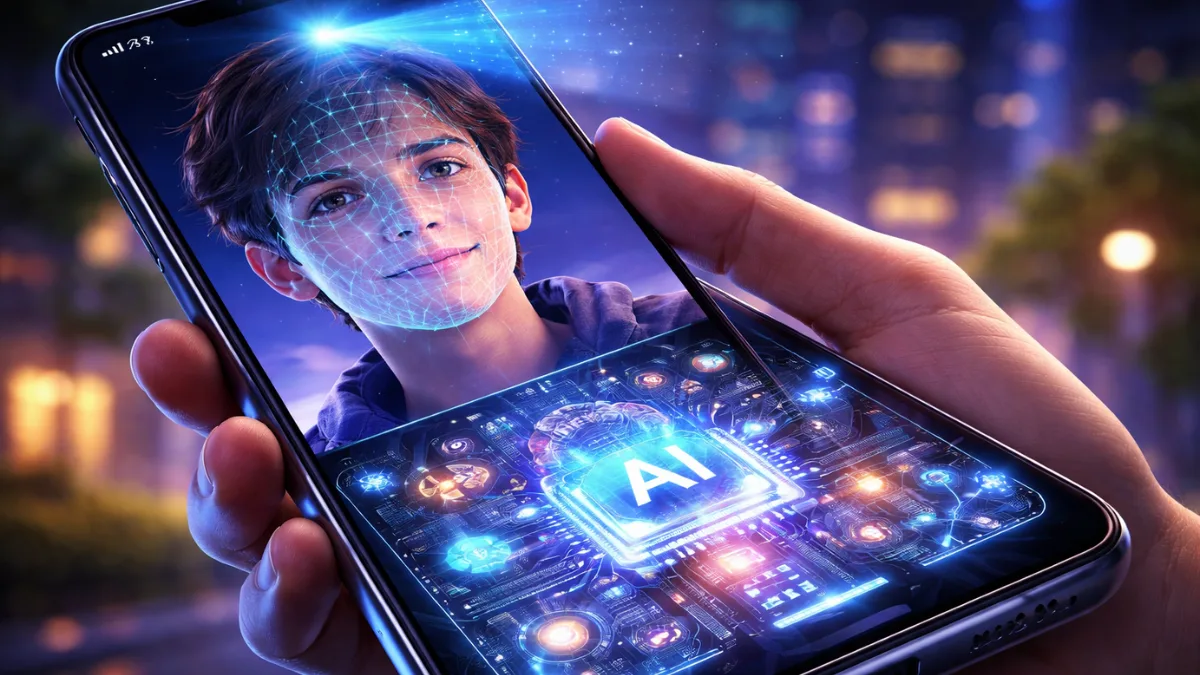
The question “What Is Edge AI?” sounds technical, but the idea is surprisingly straightforward. Edge AI refers to artificial intelligence that runs directly on devices — smartphones, cameras, sensors, vehicles — instead of relying entirely on centralized cloud servers.
Traditionally, AI systems depended heavily on cloud computing. Data was collected, sent to remote servers, processed, and then returned as insights or actions. It worked, but it came with delays, bandwidth costs, and privacy concerns.

Edge AI flips that model.
Instead of sending everything to the cloud, it processes data locally — at the “edge” of the network. The result is faster decision-making, reduced latency, and often greater control over sensitive data.
In simpler terms: the device doesn’t just collect data anymore. It understands it.
Why “What Is Edge AI?” Matters More Now Than Ever
The rise of Edge AI isn’t happening in isolation. It’s being driven by a convergence of real-world needs and technological readiness.
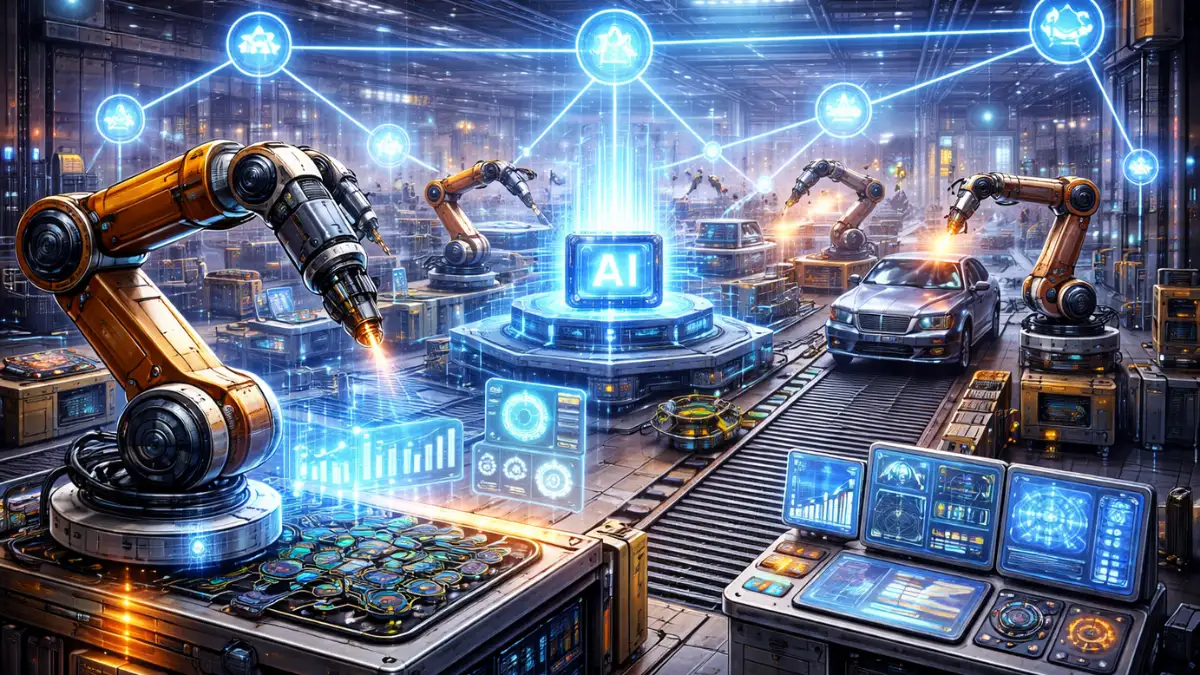
First, speed. In environments like autonomous driving or healthcare monitoring, milliseconds matter. Waiting for cloud responses isn’t just inefficient — it can be dangerous.

Second, scale. Billions of devices are now connected through the Internet of Things (IoT). Sending all that data to centralized systems is both expensive and impractical.
Third, privacy. As data becomes more personal, the idea of processing it locally — without constant transmission — feels not just efficient, but necessary.
And finally, reliability. Edge devices can function even when connectivity is weak or unavailable. That independence is critical in remote locations, industrial settings, or emergency scenarios.

Put together, these factors make Edge AI less of a trend and more of an inevitable evolution.
From Cloud to Edge: A Shift in Thinking
To understand the significance of Edge AI, it helps to look at what it’s replacing — or rather, complementing.
Cloud AI still plays a massive role. It’s powerful, scalable, and essential for training large models. But it’s not always practical for real-time execution.
Edge AI introduces a hybrid model.
The cloud trains the intelligence. The edge applies it.
Think of it like education and instinct. The cloud is where knowledge is built and refined. The edge is where that knowledge is used instantly, without hesitation.
This shift is changing how systems are designed. Developers now think about distributing intelligence, not centralizing it. Devices are no longer passive endpoints; they’re active participants.
Real-World Examples That Make Edge AI Tangible
The concept becomes clearer when you see it in action.
A smartphone unlocking via facial recognition doesn’t need to send your face to a remote server. It processes that information locally, instantly, and securely.
In retail, smart cameras analyze customer movement patterns in real time, helping stores adjust layouts without storing identifiable data externally.
In agriculture, sensors monitor soil conditions and trigger irrigation systems automatically, even in areas with limited connectivity.
Healthcare is perhaps the most compelling example. Wearable devices can detect anomalies and alert users immediately, rather than waiting for periodic uploads to cloud systems.
Each of these scenarios shares a common thread: decisions are made where the data is generated.
The Business Angle: Efficiency, Cost, and Competitive Edge
For businesses, the appeal of Edge AI goes beyond performance.
Reducing data transfer lowers bandwidth costs. Local processing decreases dependency on cloud infrastructure. Faster insights enable quicker decisions — often the difference between staying competitive and falling behind.
There’s also a strategic advantage.
Companies that adopt Edge AI can offer more responsive products and services. Think smarter home devices, more reliable industrial systems, or personalized user experiences that feel instantaneous.
At the same time, Edge AI introduces new challenges. Hardware must be capable of running AI models efficiently. Security becomes more distributed. Managing updates across thousands — or millions — of devices requires robust systems.
But for many organizations, the benefits outweigh the complexity.
The Psychology of Instant Intelligence
There’s an interesting human layer to all this.
As technology becomes faster and more responsive, expectations shift. Users begin to assume immediacy. Delays that once felt normal now feel like failures.
Edge AI feeds into this psychology.
When a device responds instantly, it feels smarter, more intuitive — almost human. That perception matters. It builds trust, engagement, and reliance.
But it also raises questions.
If devices are making decisions independently, how transparent are those decisions? How much control do users really have? And where do we draw the line between convenience and autonomy?
These aren’t purely technical concerns. They’re cultural ones.
What Is Edge AI’s Role in the Future of Technology?
Looking ahead, Edge AI is poised to become foundational.
As 5G networks expand, the combination of high-speed connectivity and local processing will unlock new possibilities — from smart cities to advanced robotics.
Autonomous systems will rely heavily on edge intelligence. So will augmented reality, where real-time processing is essential for immersive experiences.
Even industries that seem distant from AI — logistics, construction, energy — are beginning to integrate edge-based solutions.
The trajectory is clear: intelligence will be distributed, embedded, and increasingly invisible.
What matters is not just that devices are smart, but that they’re smart in the right place, at the right time.
More Read

Conclusion
The question “What Is Edge AI?” is less about definition and more about direction.
It represents a shift from centralized intelligence to localized awareness. From delayed responses to immediate action. From dependence on distant systems to autonomy at the source.
It’s not replacing the cloud. It’s redefining how intelligence is shared between systems.
And perhaps most importantly, it’s changing how we experience technology — making it faster, more personal, and, in subtle ways, more human.
The edge isn’t just a technical boundary anymore. It’s where decisions happen.
Final Insight & CTA — The Vue Times
At The Vue Times, we focus on the technologies shaping tomorrow’s behavior — not just the headlines. Edge AI isn’t a buzzword; it’s a structural shift in how intelligence is delivered and experienced.
Follow The Vue Times for deeper insights into the innovations quietly redefining the world around you.
Frequently Asked Questions
What is Edge AI?
Edge AI refers to artificial intelligence that processes data directly on devices like smartphones, sensors, or cameras, rather than relying solely on cloud servers.
How is Edge AI different from cloud AI?
Cloud AI processes data on remote servers, while Edge AI handles data locally. This makes Edge AI faster, more private, and less dependent on internet connectivity.
Where is Edge AI used in real life?
It’s used in smartphones (face recognition), healthcare devices (real-time monitoring), autonomous vehicles, smart homes, and industrial automation systems.
Why is Edge AI important?
It reduces latency, improves data privacy, lowers bandwidth costs, and enables real-time decision-making in critical applications.
Does Edge AI replace the cloud?
No, it complements the cloud. The cloud is often used for training AI models, while Edge AI applies them locally for faster responses.