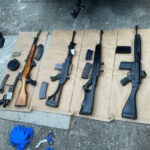
On a summer evening meant for faith, family and celebration, Australia confronted one of its darkest moments in recent memory. What unfolded at Sydney’s Bondi Beach during a Hanukkah gathering in December 2025 was not only a mass shooting. It was a targeted act of terror that challenged long held assumptions about domestic security, social cohesion and the resilience of multicultural Australia.
This article presents a comprehensive, fact based account of the Bondi Beach Hanukkah shooting. It examines what happened, who was affected, why the attack has been classified as terrorism, and why this incident marks a turning point for Australia’s internal security and social fabric.
What Happened at Bondi Beach on December 14, 2025
Bondi Beach, one of Australia’s most iconic public spaces, was hosting a public Hanukkah by the Sea event attended by hundreds of people, including families, elderly worshippers and children. The gathering marked the first day of Hanukkah, a festival symbolizing resilience, faith and light in Jewish tradition.
According to New South Wales Police, gunfire erupted suddenly in the crowd during the evening celebrations. Panic spread rapidly as people attempted to flee the beachfront area, using parked cars, kiosks and nearby streets as cover.

Within seconds, multiple shots were fired at civilians. The attack was later confirmed to be targeted at the Jewish community present at the event.
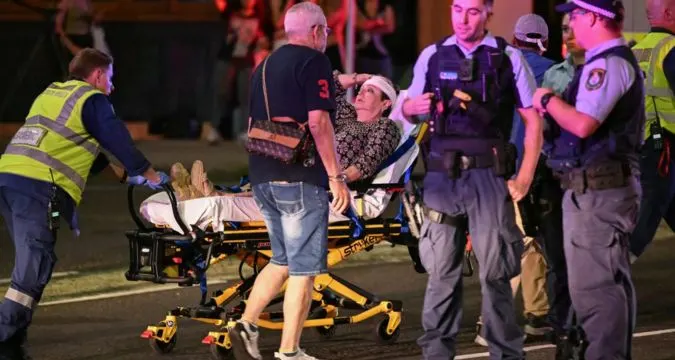
Police have stated that at least 15 people were killed at the scene, with a subsequent death bringing the toll to 16. Twenty nine people were injured and transported to hospitals across Sydney, including at least one child.
Read Blog: A Life Lost Too Soon
Timeline of the Attack
Early Evening
Hundreds gather at Bondi Beach for the Hanukkah celebration, an annual community event held in an open public space.
Gunfire Begins
Shots are fired without warning. Witnesses report confusion, screaming and people running in multiple directions.

Civilian Intervention
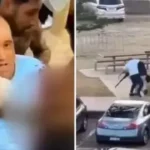
Video footage later circulating online shows an unarmed bystander, later identified as Ahmed Al Ahmed, confronting one of the gunmen from behind. Despite being shot twice, he manages to disarm the attacker and force him to the ground.
Police Response
Armed police arrive within minutes. One alleged gunman, a 50 year old man, is shot dead at the scene by police.
Hospitalization and Arrest
A second alleged gunman, the attacker’s 24 year old son, is critically injured and taken into custody while receiving treatment.

Terrorism Declared
New South Wales Police formally declare the incident a terrorist attack following preliminary investigation.
Victims and Casualties Confirmed by Police
Authorities confirmed that the victims included Australian citizens and at least one Israeli national. The Israeli foreign ministry acknowledged the death of its citizen and extended condolences to the families affected.
The injuries ranged from minor wounds to critical gunshot injuries. Hospitals across Sydney were placed on emergency footing as trauma teams worked overnight.
The diversity of victims, including families and children, underscored the indiscriminate nature of the violence and intensified national grief.
The Alleged Gunmen and Police Findings
Police identified the two alleged attackers as a father and son duo. The father, aged 50, was killed at the scene after engaging police. His 24 year old son remains hospitalized in critical condition.
Authorities have not released extensive details about the attackers’ background but confirmed that the act was premeditated and ideologically motivated. Investigators are examining digital footprints, associations and possible radicalization pathways.
The choice of target, timing and symbolism led police to conclude that the shooting was not random but a deliberate act of anti Jewish terrorism.
The Terrorism and Antisemitism Context
The Bondi Beach attack has been officially classified as a terrorist incident due to its ideological motivation and targeted nature.
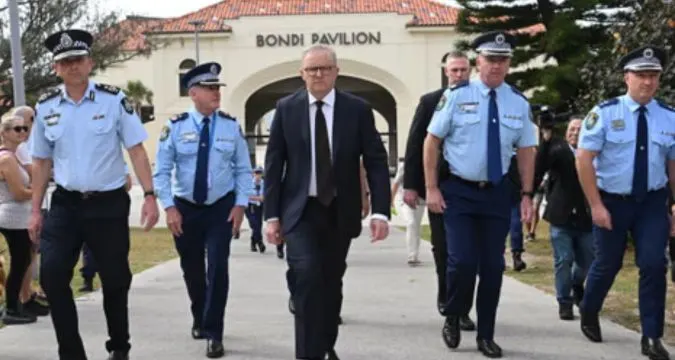
Prime Minister Anthony Albanese described the shooting as an act of antisemitism and terrorism that struck at the heart of Australian values.
In his address, he stated that an attack on Jewish Australians is an attack on every Australian. His remarks emphasized national unity and zero tolerance for hate driven violence.
The attack occurred amid heightened global tensions and increased reports of anti-Semitic incidents worldwide. Jewish community leaders in Australia have long warned about rising hostility, vandalism and threats against synagogues and community centers.
For many observers, the Bondi Beach shooting marked the most extreme manifestation of these warning signs.
The Heroism That Saved Lives
Amid the horror, one act of extraordinary courage stood out.
Ahmed Al Ahmed, a 43 year old fruit seller, happened to be passing by when the shooting began. Unarmed and without any formal training, he chose to intervene.
Video footage shows him hiding momentarily behind parked cars before sprinting toward the gunman from behind, tackling him and wresting away his rifle. He was shot twice during the confrontation and later underwent surgery.
Police and witnesses have credited his actions with preventing further mass casualties. Prime Minister Albanese publicly described him as a hero, echoing widespread public sentiment.
Ahmed’s actions have become a powerful reminder that individual courage can still make a decisive difference even in the face of terror.
National Security Response and Emergency Measures
Following the attack, Australia’s national security committee was convened urgently.
Security was heightened around Jewish institutions, schools and places of worship nationwide. Police patrols were increased in major cities, and intelligence agencies were tasked with reassessing threat levels related to ideological violence.
Officials have indicated that counter terrorism strategies will be reviewed, particularly regarding lone actors and family based extremist cells, which can evade traditional surveillance models.
The attack has also reopened debates about online radicalization, foreign ideological influence and the adequacy of early intervention systems.
Global Reactions and Diplomatic Impact
International leaders expressed solidarity with Australia and condemned the attack.
Israeli Prime Minister Benjamin Netanyahu accused the Australian government of contributing to a climate of rising antisemitism, referencing policy disagreements earlier in the year. His comments sparked diplomatic tension but also highlighted the global sensitivity surrounding anti-Semitic violence.
World leaders, Jewish organizations and human rights groups echoed calls for stronger action against hate driven extremism.
Impact on Australia’s Jewish Community
For Jewish Australians, the Bondi Beach shooting was not just a news event. It was deeply personal.
Community leaders described fear, grief and anger, but also resilience. Many families questioned their safety in public spaces previously considered secure.
Synagogues increased security, some schools temporarily closed, and counselling services were expanded. At the same time, interfaith solidarity events emerged, with Australians from diverse backgrounds attending vigils and memorials.
The tragedy reinforced the vulnerability of minority communities during periods of global ideological tension.

How This Compares to Past Mass Shootings in Australia
Australia is often cited globally for its strict gun control laws enacted after the 1996 Port Arthur massacre. Since then, mass shootings
have been rare.
However, the Bondi Beach attack demonstrates that terrorism driven violence does not always rely on widespread access to firearms. It can exploit public gatherings, symbolic dates and ideological hatred.
Unlike previous incidents driven by individual pathology or domestic disputes, this attack was explicitly ideological, targeted and symbolic.
This distinction is why many experts see Bondi Beach as a turning point rather than an anomaly.
Why the Bondi Beach Shooting Changes Australia’s Security Conversation
The attack has reshaped several assumptions.
First, it challenges the belief that strong gun laws alone can prevent mass casualty events. While essential, they are not sufficient against ideologically motivated attackers.
Second, it exposes vulnerabilities in protecting open public celebrations, particularly those tied to religious or cultural identity.
Third, it highlights the growing intersection between global ideological conflicts and domestic safety.
Australia now faces the task of strengthening intelligence, community engagement and early warning mechanisms without eroding civil liberties.
More Read

A Nation at a Crossroads
The Sydney Hanukkah shooting of 2025 will be remembered not only for its tragedy, but for what it revealed about modern threats and moral courage.
It showed the devastating impact of hatred, the limits of existing security models, and the extraordinary power of individual bravery in moments of crisis.
As investigations continue and communities mourn, Australia stands at a crossroads. The choices made now about security, inclusion and social cohesion will shape the nation’s future far beyond Bondi Beach.
In confronting this moment with clarity, compassion and resolve, Australia has the opportunity to reaffirm the values that extremists seek to destroy.