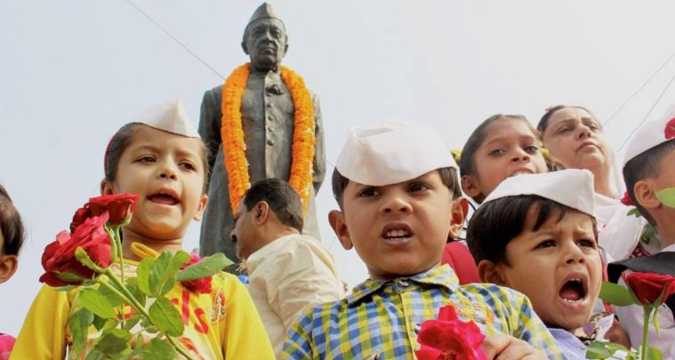
Children’s Day in India is not merely a ceremonial date on the calendar. It is a moment of national reflection anchored in history and propelled by the possibilities of tomorrow. Every year on 14 November, India pays tribute to Pandit Jawaharlal Nehru, the country’s first Prime Minister, by celebrating its youngest citizens. The day is observed in schools, communities, and households across the nation, reminding people that children are not passive inheritors of the future but active sculptors of the society India hopes to become.
In 2025, the conversation around Children’s Day holds renewed relevance. India stands on the brink of unprecedented technological transformation, social transition, and global ambition. In this landscape, revisiting Nehru’s philosophy provides a framework for understanding how India can nurture empowered, creative, and resilient young citizens ready to meet the challenges of this century.
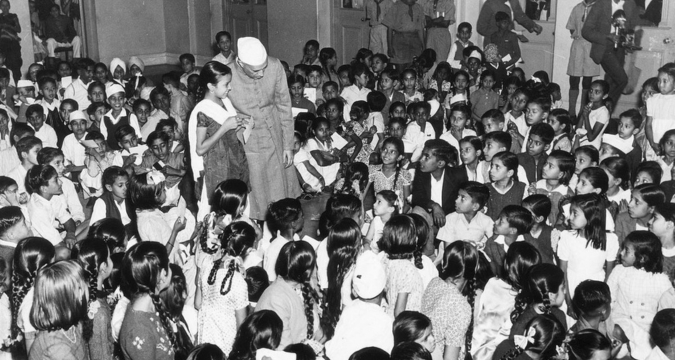
This blog explores Nehru’s vision for children, the evolution of Children’s Day in India, the opportunities and anxieties shaping modern childhood, the state of education and welfare systems, the digital revolution, and how the country can reposition its youth as strategic assets in a rapidly changing world.
Also Read: Forgotten Hero

1. Understanding Nehru’s Philosophy: Why Children Were His Symbol of Hope
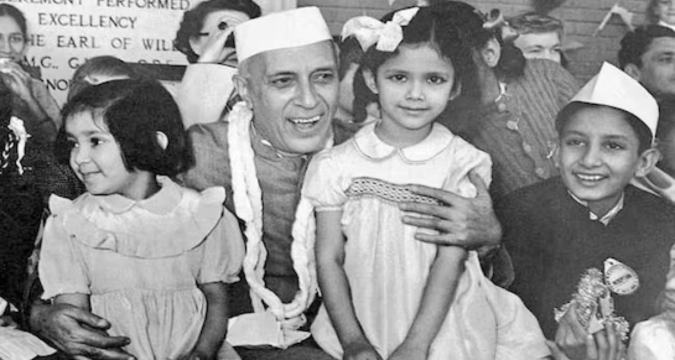
Jawaharlal Nehru was not sentimental when he referred to children as the soul of a nation. His affinity for young people came from a philosophical conviction rooted in his global exposure, scientific temperament, and humanist worldview. He believed that the destiny of a newly independent India depended not on its political leaders alone but on its children, who would someday inherit the responsibility of shaping the country’s future.
Several elements of his philosophy stand out even today.
1.1 Children as creators of national identity
Nehru envisioned India as an inclusive, curious, and progressive society. He believed that children imbibe national values more deeply than adults because they absorb their environment without prejudice. Therefore, nurturing children meant nurturing the future fabric of India’s democracy, pluralism, and cultural confidence.
1.2 Education as a tool for liberation
For Nehru, education was not a privilege but a pathway to liberation from poverty, inequality, and social stagnation. His leadership period saw the establishment of critical institutions that eventually shaped modern India. These include the Indian Institutes of Technology, the All India Institute of Medical Sciences, and a network of national laboratories. He understood that the earlier a society invests in its children, the more sustainable its development becomes.
1.3 Scientific thinking as a foundational skill
Unlike many leaders of the time who prioritized political stability, Nehru emphasized scientific temper as essential for national progress. To him, children were natural scientists. They asked questions, experimented freely, and challenged norms. This curiosity, if nurtured properly, could fuel a generation capable of innovation and discovery.

1.4 Emotional wellbeing as a national priority
Nehru admired the innocence and sincerity of children. He believed that a healthy childhood required emotional nourishment, joy, and encouragement. Long before modern psychology popularized the concept, Nehru highlighted the need for holistic development that includes empathy, creativity, and emotional balance.
2. The Evolution of Children’s Day in India: More Than a Celebration
Children’s Day did not begin as a nationwide event. It grew gradually as schools and organizations adopted the date as a way of recognizing the potential of young minds. Over the years, it evolved in three distinct phases.

2.1 The early decades after independence
During the first few years after 1947, educational institutions were still adjusting to the new national realities. Children’s Day at that time was largely restricted to activities such as cultural programs, debates, picnics, and community events. It served as a reminder of Nehru’s personality and his passion for young people but remained limited in scale.

2.2 The expansion from the 1980s to the early 2000s
As India liberalized its economy and expanded its education sector, Children’s Day became an opportunity to talk about child rights, access to education, and the importance of extracurricular learning. Awareness of the Right to Education, child nutrition programs, and child labour laws increased, and the day transformed into a meaningful blend of celebration and activism.
2.3 Children’s Day in the twenty first century
The rise of digital platforms, youth centric innovation, and government schemes aimed at child development turned Children’s Day into an important civic moment. Schools use it to discuss issues ranging from mental health to cyber safety. Parents view it as a reminder to invest time in understanding their child’s aspirations. Government bodies use it to highlight data on education, health, and policies.
In 2025, Children’s Day stands at the intersection of tradition, societal responsibility, and future readiness.
3. Childhood in 2025: Opportunities and New Age Challenges
The idea of childhood has undergone a dramatic transformation. Children today are not simply growing up in a fast-changing world. They are growing up inside it, shaped by both its strengths and its uncertainties.
3.1 The digital frontier
Technology has shifted from being a tool to being an environment. From smartphones and online learning to AI assistants and virtual classrooms, a child’s world is increasingly influenced by algorithms and screens. This presents opportunities for personalized learning and skill development but also raises concerns about screen addiction, cyberbullying, misinformation, and privacy.
3.2 Academic pressure and expectations
India’s education system still places considerable emphasis on marks, performance, and competition. While coaching centers and digital learning platforms have created more pathways for growth, they have also amplified pressure. Many children struggle to navigate this environment without structured emotional support.
3.3 The rise of climate anxiety
Children and adolescents today are deeply aware of global environmental issues. Extreme climate events, pollution, and conversations around sustainability influence their sense of security. Many express fear about the future, demanding a stronger commitment from adults and institutions.
3.4 Health and wellbeing
Lifestyle diseases and mental health issues among children have risen steadily. Increased indoor living, reduced physical activity, and the intricacies of online socialization have altered the emotional mix of childhood. The need for structured mental health support in schools is more evident than ever.
3.5 Unequal access to opportunities
Despite progress, access to quality education and healthcare varies significantly between urban and rural areas. The digital divide remains a major challenge. Children from marginalized communities often face systemic barriers that prevent them from unlocking their full potential.
Also Read: 10 Forgotten Indian Freedom Fighter
4. Nehru’s Vision in the Age of AI: A Modern Reinterpretation
One of the most remarkable aspects of Nehru’s legacy is that it adapts effortlessly to the digital age. Many of the values he championed find strong resonance today, especially in the age of artificial intelligence.
4.1 Scientific temper in the era of technology
Nehru encouraged Indians to embrace scientific thinking. In today’s digital era, this translates into teaching children how to analyse information, distinguish facts from misinformation, understand algorithms, and think critically. These skills are essential for navigating an AI driven society.
4.2 Encouraging creative and innovative exploration
The global economy increasingly rewards innovation. Nehru’s emphasis on curiosity can help foster a generation that excels in fields like robotics, design, biotechnology, quantum computing, and space science. Creativity and originality must be at the core of teaching methodologies in Indian classrooms.
4.3 Holistic learning as a lifelong habit
Nehru believed that education extends beyond textbooks. This idea aligns with the modern emphasis on multidisciplinary learning. Students today must be encouraged to integrate arts, sports, science, technology, and ethics to develop a balanced worldview.
4.4 Emotional intelligence as an educational priority
Nehru valued empathy and emotional expression. In a world where AI manages many tasks, emotional intelligence has become a key differentiator in leadership, communication, and innovation. Schools and families must create environments that nurture emotional resilience.
5. Building a Stronger Foundation: India’s Path Forward for Child Development
Children’s Day is not simply about acknowledging children. It is about understanding national priorities. For India to remain competitive and compassionate, it must focus on strengthening every aspect of childhood.
5.1 Creating equitable and modern learning systems
India’s National Education Policy emphasizes flexibility, skill development, and holistic learning. However, its success depends on implementation. Schools must adopt modern teaching practices, remove rote learning as a primary method, and integrate digital tools meaningfully.
5.2 Strengthening mental health support
Every school must have trained counsellors, accessible support systems, and structured programs that help students deal with pressure and emotional complexity. Mental health should be treated as equal in importance to physical health.
5.3 Bridging the digital divide
Equal access to devices, high speed internet, and digital literacy training is essential. Rural and underserved areas must receive greater investment and attention to ensure that technology becomes an enabler, not a divider.
5.4 Encouraging sports, arts, and extracurricular learning
Children must be given opportunities to explore creative fields, sports, and non academic interests. These activities build confidence, leadership, teamwork, and emotional balance.
5.5 Strengthening child safety and rights
Laws protecting children must be enforced with strictness. Online safety frameworks, child protection committees in schools, and awareness programs for parents are essential components of modern child welfare.
5.6 Supporting parents as partners in development
Parents play a crucial role in nurturing values and confidence. The modern household must move beyond academic supervision and participate in emotional and creative development. Parenting styles must adapt to the new world.
Also Read: Future of India
6. The Power of Children in Nation Building: A Forward Looking View
India is home to one of the youngest populations in the world. Nearly one third of its citizens are under the age of seventeen. This demographic advantage means that children are not only future workers, innovators, and leaders but also strategic contributors to national resilience and growth.
6.1 India’s youth as global competitors
From science contests to international start-up competitions, Indian children have demonstrated remarkable capability. Preparing them for global challenges requires investment in research, innovation ecosystems, and creative learning.
6.2 The growing influence of young voices
Today’s children are more aware of social issues than any previous generation. They participate in climate marches, humanitarian initiatives, and entrepreneurial activities. Encouraging this civic engagement helps build responsible citizens.
6.3 The rise of social entrepreneurship among adolescents
Young people increasingly show interest in solving community challenges through innovation. Schools and institutions must support this by providing mentorship, incubation environments, and platforms for collaboration.
7. Why Children’s Day Remains Relevant Today
Children’s Day is not simply a tribute. It is a national reminder that India’s future is being shaped in classrooms, playgrounds, homes, and digital spaces. It encourages society to pause and ask critical questions.
Are children receiving the education they deserve?
Are they developing emotional resilience?
Are they being protected from harm?
Are they being prepared for a world where innovation decides national success?
When these questions guide public policy and community action, Children’s Day becomes more than tradition. It becomes a roadmap for national progress.
Conclusion: Carrying Nehru’s Legacy Into the Future
More Read

Jawaharlal Nehru believed that the children of India carried the promise of a progressive and confident nation. His legacy continues to offer guidance in an era of rapid change.
As India moves deeper into the twenty first century, the country must transform Nehru’s philosophy into concrete action. It must create learning environments that value creativity over rote learning. It must offer emotional support to children navigating the pressures of a modern world. It must use technology not to overwhelm but to empower. It must ensure equality of opportunity and treat childhood as a national priority.
Children’s Day is a celebration of innocence, inspiration, and possibility. More importantly, it is a reminder of India’s responsibility to invest in its youngest citizens with vision, care, and courage. In honoring Nehru, India honors its own future.
If India can nurture a generation that is confident, compassionate, curious, and resilient, it will not only fulfil Nehru’s dream but also position itself as a global leader shaped by the strength of its people.