The Night That Started with a Scratch
It was an ordinary October evening in southern Bengaluru, the kind that hums with the restless pulse of India’s startup city. Delivery riders zigzagged through dimly lit lanes carrying everything from biryani to electronics, while private cars idled impatiently at intersections. Among them was 24-year-old Darshan, a young delivery partner, racing against the clock to complete one more order before the platform’s cut-off.
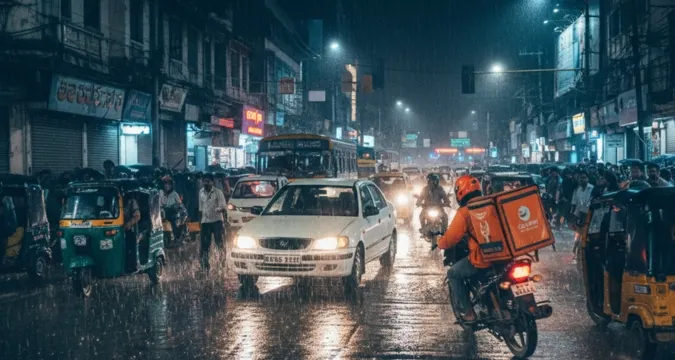
It took three minutes to end his life
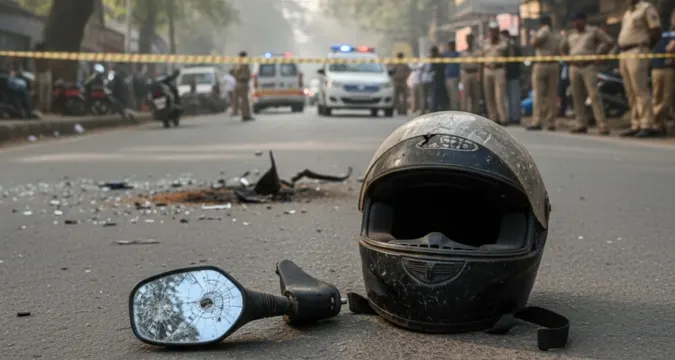
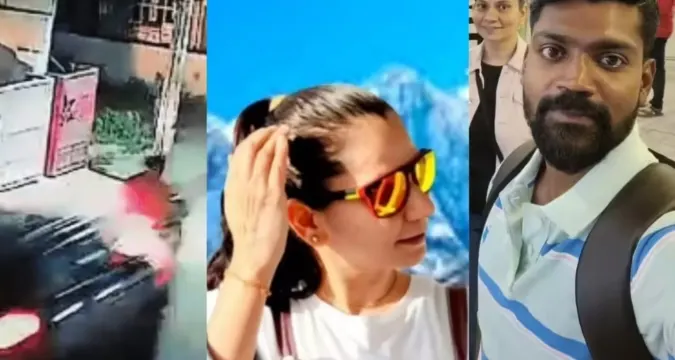
Investigators said the two-wheeler that Darshan was riding hit the side mirror of a vehicle that was driven by a 32 year old Manoj Kumar, a trainer in the ancient martial arts used in schools, the one who was local in the area. His wife Aarti Sharma was sitting next to him. The mirror cracked slightly. In another world it could have been a simple apology, a shrug and each going on. However, what ensued made a casual road-rage killing one of the most outrageous in Bengaluru over the last few years.
Darshan made apologetic advancement. There was a delay, witnesses tell us, before Kumar made his mind up–then he made up his mind. The scooter started being chased by his car, which suddenly started to make a U-turn. In seconds what started off as irritation changed to intention.
It took three minutes before Darshan was dying on the asphalt, his scooter broken by his side. His pillion rider was spared and would give an account of the chase in cold blood.

From Brush to Blood: The Chronology of Violence
A Reconstructed Timeline
| Approx. Time | Event Summary |
| 9:00 PM | Darshan’s scooter lightly brushes Kumar’s car mirror on Nataraja Layout Road. Darshan apologizes verbally and rides on. |
| 9:01 PM | The couple exchange heated words inside their car. Kumar, reportedly enraged, makes a sharp turn to follow the scooter. |
| 9:02 PM | The car accelerates rapidly, closing the distance. Witnesses later recall hearing horns and screeching tires. |
| 9:03 PM | The car hits the scooter from behind. Both riders fall. The impact kills Darshan almost instantly. |
| 9:10 PM | Locals rush to help. The car flees the scene. |
| 9:15 PM | CCTV cameras capture the same vehicle returning; both occupants step out wearing masks to retrieve broken parts from the crash. |
| 9:25 PM | Police and ambulance arrive; the victim is declared dead at the hospital. |
| Next Morning | Surveillance tracking leads to the couple’s arrest at their residence. |
The precision of this sequence, verified through multiple CCTV cameras, is what led the police to classify the act not as negligent driving, but as murder with intent.
Portraits Behind the Violence
Darshan: A Life on Two Wheels
The life story of Darshan is of a million urban Indians. Born into a humble family in the rural areas of Karnataka, he had moved to Bengaluru to find the chance in life. Delivery work, though it was hard-bodied, required him to be mobile and at least get a modest pay although small. To friends, he was polite, soft-spoken, a man who seemed to choose the long road when it would should an argument take place with impatient motor drivers.
He resided in a rented single room apartment and helped his parents back in the village. For the greater part of the riders, he had long working hours, but few breaks, and had to go riding through traffic that was constantly in a bad temper.
One of his colleagues said:
“We work with the city’s pulse. But the same roads that feed us also kill us.”

Manoj Kumar and Aarti Sharma: The Martial Artist and the Mirror
The defendant, Manoj Kumar, was not just any motorist. He was a Kalaripayattu performer and owned a small martial arts training center within the neighborhood. His students were largely children and his classes were more focused on control, concentration and mental equilibrium and this is where his actions look almost paradoxical.
The neighbors talked about the couple as being very private but sometimes hot-tempered. Others reported past incidents involving parking or noise. However, nobody thought that Kumar would become so violent.
Psychologists interviewed and The Vue Times report that it is concerning because when people who have undergone any form of combat or follow the arts of power emission, they cannot regulate their emotions and, thus, the reflexes may serve to increase anger instead of suppress it.

The Anatomy of Road Rage
What Makes One Use Anger to Violence?
Indian road rage is by no means a recent development, however, under the pressures of urban living, anonymity, and tattered civil disposition, it has come to exert itself with greater intensity. This case involved numerous overlapping layers of behavior.
- Ego Injury:
Relationships on the road are intimate. To a good number of people, their car becomes part of their identity. A slash has ceased to be a technical problem but an individual insult.
When Darshan bumped his scooter against the mirror, the damage itself was not the cause but it was the presumed lack of respect that set the fire.
- Anonymity and Power:
Physically and emotionally, one is closed in when inside a car. Invincibility lets one behave in a way that one would not manifest in real life. The highway turns into an armored car, the street into a battlefield.
- Absence of Emotional De-escalation:
The city lifestyle does not give a chance to exercise self-control. Triggers pile up. The tiniest incident turns into a container of bottled frustration in work, money, or relationships.
- The Lack of a Social check:
In town or rural areas, individuals are familiar with each other. In cities, no one does. Lack of social presence increases radical responses.
When Justice Arrives After Death
Police Investigation and Legal Framing
The order of events was detected on CCTV and reacted to by Bengaluru police quickly. Vehicle registration helped to trace the accused couple and arrested them within 24 hours. Investigators confiscated the vehicle with a dented bumper and missing components that corresponded to those present at the crime scene.
The murder charges were renewed to a second degree case initially charged as a case of culpable homicide not satisfying the conditions of a murder, which was later reclassified as murder with deliberate intent. The fact that the couple returned to the scene to recover evidence was another factor that enhanced the case of prosecution.
Senior officers, speaking anonymously, said:
“It was not an accident. It was an act of rage that crossed into criminal territory. The intent was clear, and the chase footage proves it.”
The upcoming trial will likely test how Indian courts interpret intentional vehicular homicide, a legal gray area between rash driving and murder.
A City Losing Its Temper
The City of Frayed Nerves is another name that Bengaluru, the so-called Silicon Valley of India, has garnered amongst commuters.
Traffic jams, limitless building, and stressful work make an inflammable atmosphere. Law enforcement statistics indicate that the city has over 3,000 cases each year starting as minor road accidents but culminating in an attack, destruction, or grave harm. Most go unreported.
Urban sociologists explain this by the process of social atomization, i.e. people doing things in seclusion, devoid of the communal restraint. Empathy is killed before the engine ignites when all the drivers feel offended and all the riders feel unseen.
The Silent Suffering of Delivery Workers
No conversation on this tragedy can be complete without addressing the precarity of gig-economy delivery riders.
- Constant Time Pressure:
App algorithms reward fast deliveries, penalizing delays even those caused by traffic or harassment. This forces riders to take risks, skip meals, and often face verbal abuse on roads. - No Insurance for Rage Incidents:
While most companies provide basic accident cover, deliberate assault or murder during duty falls into ambiguous legal territory, leaving families uncompensated. - Invisible Status:
For many car owners, delivery riders are invisible and seen as obstacles rather than workers. This dehumanization normalizes aggression toward them.
A riders’ association in Bengaluru has now called for a “Safety and Respect Charter,” demanding mandatory in-app panic buttons, on-road CCTV coverage, and awareness campaigns against aggression toward gig workers.
What the Experts Say
1. Traffic Enforcement Officials
A senior traffic enforcement officer said:
“We have technology to detect speed and red-light violations but not human rage. Cities must evolve from punishing infractions to preventing emotional explosions.”
He suggested integrating real-time surveillance AI that flags chase-like patterns, sudden acceleration following contact and alerts patrol units.
2. Psychologists on Urban Aggression
Clinical psychologist Dr. Ritu Menon explains:
“Indian cities are emotionally overheated spaces. People wake up angry and go to sleep anxious. The road becomes an outlet for suppressed emotion. What’s worrying is the normalization of small violence honking, verbal abuse, tailgating which are early symptoms of this psychological decay.”
She emphasizes that “discipline without empathy,” such as in martial arts training without moral grounding, can lead to impulsive domination behaviors.
3. Legal Experts’ View
Legal analyst Harish Prabhu argues:
“India urgently needs to codify ‘vehicular aggression homicide’ as a separate category. Current laws force judges to choose between accident and murder, which rarely fits complex road rage cases.”
He recommends a three-tier classification of negligent driving, rage-induced homicide, and premeditated vehicular murder with corresponding sentencing ranges.
Policy Blueprint for Safer Roads
To prevent another Bengaluru tragedy, experts propose a combination of enforcement, education, and empathy-based reform.
A. Institutional Measures
- AI-Driven Monitoring Systems:
Install smart cameras capable of detecting pursuit behavior and issue instant alerts to police. - Mandatory Road Behavior Modules:
Add emotional regulation and conflict de-escalation training in driving schools and martial arts programs. - Stricter Licensing Norms:
Require psychological evaluation for individuals involved in repeated traffic altercations. - Corporate Accountability:
Delivery platforms must ensure round-the-clock rider assistance helplines and on-call legal aid.
B. Cultural and Educational Initiatives
- “Respect the Road” Campaigns:
Public awareness ads showing real-life consequences of rage incidents can reshape driver behavior. - School Curricula on Emotional Intelligence:
Teaching children self-control in driving simulations or civic classes can create generational change. - Public Recognition of Responsible Drivers:
Incentivizing courteous behavior can gradually shift cultural norms.
Beyond Bengaluru: A National Epidemic
While this killing shocked Karnataka, similar road-rage deaths have occurred across India in recent years from Delhi to Pune and Hyderabad. In most cases, the triggers are absurdly minor: scratched mirrors, overtaking maneuvers, horn disputes.
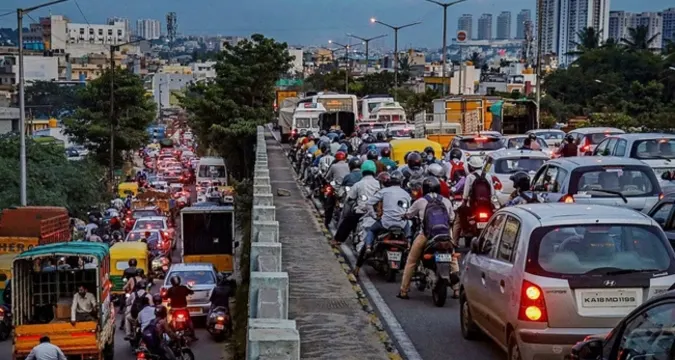
What unites them is a fatal combination of ego, anonymity, and absence of restraint. The problem is national, not local, and it reflects a growing crisis of civic morality.
When Discipline Fails: The Paradox of the Martial Mind
The fact that the killer in this case was a martial arts trainer deepens the tragedy. Kalaripayattu, one of the world’s oldest combat forms, was historically bound by spiritual and ethical codes. Practitioners were trained not just to fight, but to channel violence into balance and humility.
Kumar’s actions represent the opposite, a misuse of training that betrays the very discipline he preached. It has reignited debate in the martial arts community about ethical accountability: should instructors face stricter background checks or periodic psychological evaluations?
Reclaiming India’s Roads: A Human Project
After all, this is not just a crime story. It is the reflection of what a long way we have gone out of the principles of Indian civilisation: patience, forbearance, compassion.
Any urban dweller has experienced the burst of impotence in a traffic congestion; few of them get to take action in this manner. But every honk, stare, and wanton act increases culture that embraces aggression.
Taking back our roads means taking back our humanity.
It cannot be done by traffic management, law enforcement, or infrastructure. It requires a moral return where the acceptance of apology is not sneered but rather curbed, and it is a sign of power.
More Read

Epilogue: A City Reflects
During the period after Death of Darshan, candle lamps made their way to big food-delivery centers. Not only to lament a fellow rider, but also to express the all-inclusive fatigue. There were others carrying placards which belonged to the phrases, we deliver food, not fights.
His family, which cannot be consoled, is awaiting justice. The martial arts academy is still closed. The broken mirror which started the whole mess is in a police evidence locker room, a mute allegory about a broken society brought on itself through its own impatience.
Read More: Anesthesia Of Death
If there is a lesson, it is this:
Even the life of a person can be lost, a family may fall, and another piece of the conscience of a city can be lost during the moment of pressing the accelerator.