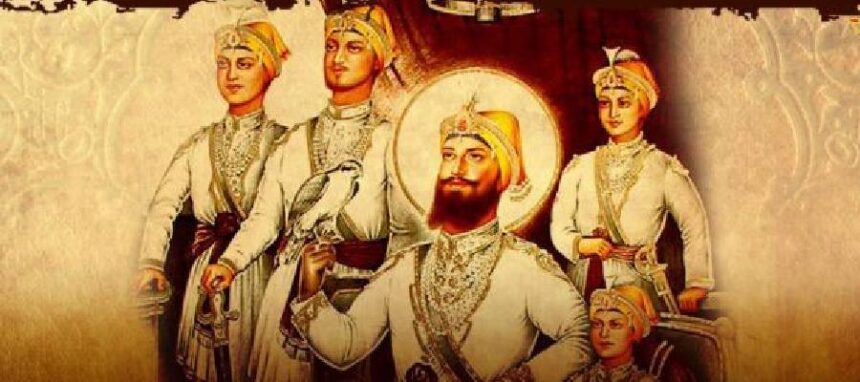
History of India is not composed of only kings, wars and political power. It is also conditioned by moral heroism, sacrifice, and readiness to champion truth even on sacrificing a life. The story of the four sons of Guru Gobind Singh Ji The Char Sahibzaade is one of the strongest yet least known books in Indian history.
Char Sahibzaade will be an unfamiliar term to many Indians who are not conversant with Sikhism. But their martyrdom symbolizes Indian values, those of religious liberty, anti-evil action, heroism against oppression and respect over existence. Their martyrdom is commemorated in particular the months of December in the Sikh Shaheedi Diwas and Veer Bal Diwas and thus is an essential aspect of the December Sikh history in India.
This comprehensive explicatory post will make the Sikh history simple enough to be understood by people who are first introduced to the tradition or religion, and demonstrate why the project of Char Sahibzaade has an important place in the life of every Indian, not just the Sikh community.
Char Sahibzade: What Does That Mean?
The name Char Sahibzaade simply translates to the four sons of the Guru. These were the four sons of Guru Gobind Singh Ji who was the tenth Guru of Sikhs.

They were:
- Sahibzada Ajit Singh Ji
- Sahibzada Jujhar Singh Ji
- Sahibzada Zorawar Singh Ji
- Sahibzada Fateh Singh Ji
Sahibzaade are not remembered in Sikh history because of their birth or authority, but because of their decision to die instead of abandoning their religious belief. The emotional and ethical heart of Sikh martyrdom is their lives and the way they die.
To any person who may be asking what is Char Sahibzaade in Sikhism, the answer to the question is that Sikhism considers the truth, justice and opposition to tyranny as their ultimate aim even at the expense of life itself.
Late 17th Century India: History
To interpret the story of Char Sahibzaade one should know the India they experienced.
In India the late sixteenth century was characterized by:

- Mughal imperial dominance
- In most areas, religious persecution.
- Forced conversions
- High taxation and social injustice.
Under Guru Gobind Singh Ji, Sikhs have been a strong advocate of religious freedom not only Sikhs. This opposition transformed the Sikh people into a victim of state violence.
The Mughal government considered Sikh resistance a threat – not due to the desire of Sikhs to rule anybody, but due to the unwillingness to give in spiritually or morally.
The Sikh Freedom Struggle and Guru Gobind Singh Ji
Guru Gobind Singh Ji was a spiritual leader, but above all a moral force shaping the nation. He introduced the Khalsa and pointed out:

- Equality
- Courage
- Discipline
- Willingness to sacrifice
His Sikh freedom struggle was not all about to overthrow a ruler in pursuit of a throne. It concerned defending the right of all human beings to worship their Gods freely.
This is critical in explaining the reason why the martyrdom in Sikhism is not by chance- it is highly ideological.
Who Were the Char Sahibzaade?
The four Sahibzaade are expressions of courage of various facets.
The eldest Sahibzaade: Ajit Singh Ji and Jujhar Singh Ji.
The first son was Sahibzada Ajit Singh Ji. The second son was Sahibzada Jujhar Singh Ji. They were trained in:
- Spiritual discipline
- Martial skills
- Ethical leadership
In 1704 when the Sikhs were having a small group, they were pitted against an enormous Mughal army during the Battle of Chamkaur. Against all odds, the older Sahibzaade came up to volunteer to fight.
They went to war knowing that they would not come back.
They did not die out of desperation, but in their choice based on faith. It is one of the most bright illustrations of Sikh courage and sacrifice.
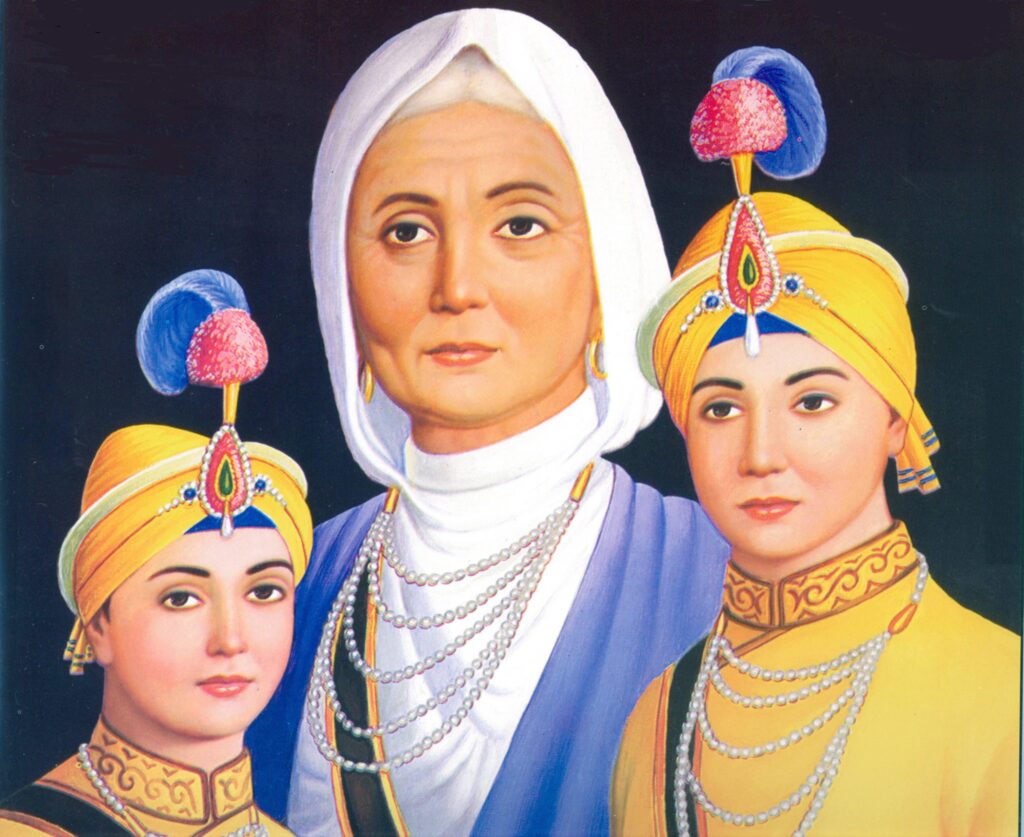
The Battle of Chamkaur: When Courage Outflood Armies
Chamkaur Battle is an example of a struggle in Sikh Indian history.
Key facts:
- The Sikh army was much outnumbered.
- The Mughal army assured them of safety in case Sikhs surrendered.
- The offer was rejected
Elder Sahibzaade came out one after another to battle. They died on the battlefield, and did not want to give up what was right.
To India, this war is a lesson to be remembered forever: morality can overcome military forces.
The Younger Sahibzaade: Zorawar Singh Ji and Fateh Singh Ji
In case the martyrdom of the elder Sahibzaade provokes admiration, the small Sahibzaade martyrdom does not make the nation silent.
The age of Sahibzada Zorawar Singh Ji was nine. The age of Sahibzada Fateh Singh Ji was seven years old.
They were taken following the Battle of Chamkaur, and taken to Sirhind.
The Abdication at Sirhind: Confession or Reason
At Sirhind the personnel of the Mughals presented the children with an option:
- Repent and lead a comfortable life.
- Refuse and face death
- Both Sahibzaade did not renounce their religion despite their age.
Instead, they were stoned in a wall and were meant to be bricked in a wall to break their spirit.
The wall was brought down even before the completion and they were executed.
This incident stands as one of the darkest but most powerful incidents in the history of the Sikh martyrdom of December.
The Reason to Remember Sahibzaade in December
The month of December is particularly significant to the history of Sikh religion as:
- The Battle of Chamkaur was held in December.
- Sirhind martyrdom had happened in December.
- The celebrations of Sikh Shaheedi Diwas December are held.
A current-day observance in India is 26 December having become known as Veer Bal Diwas, and in remembrance of the courage of the younger Sahibzaade.
The Sikh history in December is not however just about remembrance- national reflection.
Char Sahibzaade Beyond Sikhism
Then why must non-Sikh Indians take an interest in the Char Sahibzaade?
Their martyrdom is on behalf of:
- Freedom of belief
- Oppression of forced conversion.
- Human dignity
- Moral courage
The process of Char Sahibzaade sacrifice is not just a Sikh identity. It appeals to the Indian beliefs in civilization.
Sikh Martyrs and the Greater Indian Freedom Story
Sikh martyrs India provided the moral basis of resistance long before the 1857 uprising or in the modern freedom movement.
Their martyrdom has had the effect:
- Resistance movements in the community.
- Notions of fearless citizenship.
- The notion of freedom as the moral right.
The subject of Sikh martyrdom assists Indians to get acquainted with the origin of pluralism in India.
Sikhism History, Beginners: Why Martyrdom Matters
To the layman, a simplified Sikh history describes that martyrdom in Sikhism has nothing to do with the glorification of death.
It is about:
- Standing for truth
- Refusing injustice
- Protecting the weak
- Defending freedom
That philosophy influenced Sikh reaction to oppression over centuries.
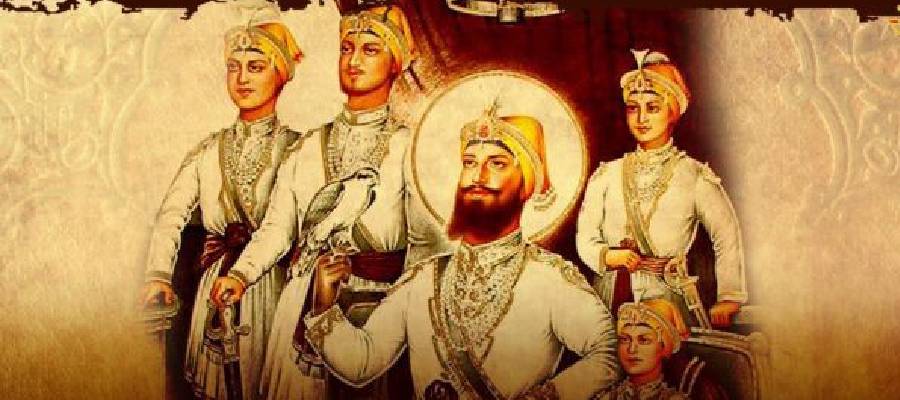
What India today Recalls of the Char Sahibzaade
The Char Sahibzaade are remembered in the modern India as:
- Gurudwara commemorations
- Educational programs
- Veer Bal Diwas observances
Courage and ethics: societal debate.
Sikh history India is being addressed more often in moral education in schools.
Lessons for Today’s India
The Char Sahibzaade story has valuable teachings that can be applied in contemporary Indian society.
For students
- Stand by your values
- Study out the bravery in history.
- Understand freedom’s cost
- For professionals
- Convenience is less important than ethical power.
- Sacrifices are expected in leadership.
For society
- Tolerance of religion is out of the question.
- Liberty has to be actively preserved.
Why Every Indian ought to Know This Story
It is not why Sikhs do remember the Char Sahibzaade, but why India should.
Their story:
- Strengthens national unity
- Promotes inter-religious respect.
- Strengthens values of the constitution.
- Not only Sikh martyrs but Indian martyrs of conscience.
The Future Relatability of Char Sahibzaade
In a world of polarities and fake news, the Char Sahibzaade story will help India to remember that:
- Faith should never be forced
- Conscience can never be put to silence by power.
- Bravery is even possible among children.
- The teachings are as applicable in the current times, as it was centuries ago.
The story of the Char Sahibzaade is not only relevant to the historical books but is also very relevant to contemporary India. Their lives are a reminder to us that moral courage should be the foundation of patriotism, a time when identity, belief, and freedom is frequently discussed in society. Sahibzaade did not struggle to gain power or territory and personal interests but to demand the right to believe. This value is very much in line with the constitutional principle of India of religious freedom and human dignity. Recollection of Sikhs martyrdom is thus no action of backwardness but it is a strengthening of the moral base of the nation.

Conclusivism, Remembering More Than History
Char Sahibzaade Explained is not exactly a lesson in Sikh history–it is a lesson in Indian humanity.
Through their martyrdom, people come to learn that great power cannot be gained through being dominating, but rather being standalone in their values. In the process of recalling the Char Sahibzaade, it is a national maturity in the face of Sikh Shaheedi Diwas in December and Veer Bal Diwas as observed in India.
The story of the Char Sahibzaade is a strong counter-narrative to fear and conformity, particularly among young Indians, the lesson of it is that at a moment when there is more pressure than an elephant, doing what is right is what makes up one. Their martyrdom asks the present day India to defend tolerance, eradicate coercion and defend justice as a national duty.
Their tale is that of all Indians.