
A designer sits in front of a screen, staring at a blank canvas. Minutes pass. Nothing feels right. Then, almost casually, they type a prompt into an AI tool—and within seconds, dozens of polished visual ideas appear.
It’s efficient. It’s impressive. It’s unsettling.
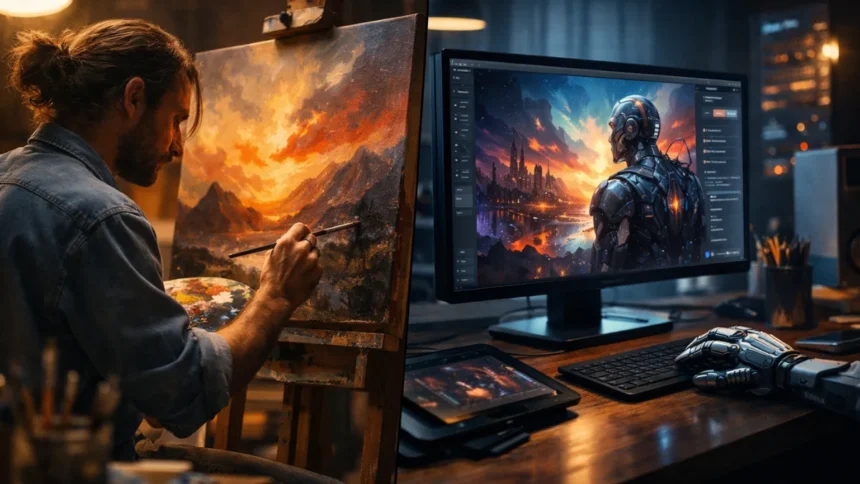
The conversation around AI vs Human Creativity isn’t just about technology anymore. It’s about authorship, originality, and something deeper—what it means to create in the first place.
AI vs Human Creativity: A Shift, Not a Replacement
The rise of AI-generated content has triggered a familiar anxiety: will machines replace human creativity?
The reality is less dramatic—and more complex.
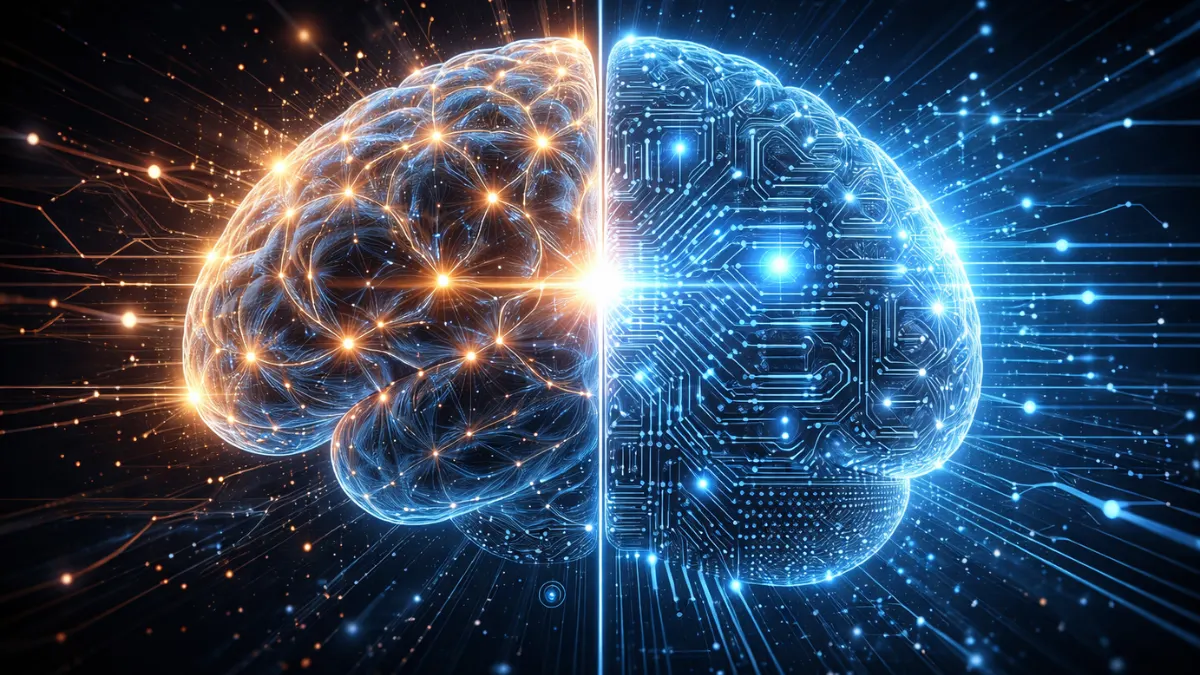
AI doesn’t “create” in the way humans do. It predicts. It recombines. It identifies patterns from vast datasets and produces outputs that feel original. The illusion of creativity comes from speed and scale, not lived experience.
Human creativity, on the other hand, is messy. It’s shaped by memory, emotion, cultural context, and often, contradiction. A writer doesn’t just assemble words—they interpret the world.
This difference matters.
Because when we talk about AI vs Human Creativity, we’re not comparing two equal systems. We’re comparing simulation with intention.
Why This Debate Is Everywhere Right Now
The conversation has intensified because AI tools are no longer experimental—they are accessible.
Students use them to draft essays. Marketers use them for campaigns. Designers use them for inspiration. Entire industries are quietly reshaping workflows around AI-assisted creativity.
What used to take hours now takes minutes.
That efficiency creates pressure. If AI can generate 50 ideas instantly, the value of a single human idea begins to feel… negotiable.
But speed has never been the sole measure of creativity.
In fact, some of the most impactful creative work emerges from slow thinking—iteration, doubt, revision. AI eliminates friction. Humans often need it.
The Psychology Behind Human Creativity
Human creativity is not just about producing something new. It’s about meaning.
A musician composing a melody draws from personal experience—loss, joy, nostalgia. A filmmaker frames a scene not just for aesthetics, but for emotional impact.
These layers are difficult for AI to replicate because they aren’t data-driven alone—they’re lived.
Even when AI produces something visually or structurally “perfect,” it often lacks a sense of why. The output exists, but the intention behind it is absent.
That’s why people can often sense the difference, even if they can’t immediately explain it.
There’s a subtle gap between something that looks creative and something that feels creative.
AI vs Human Creativity in Real Work Environments
The most interesting shift isn’t replacement—it’s collaboration.
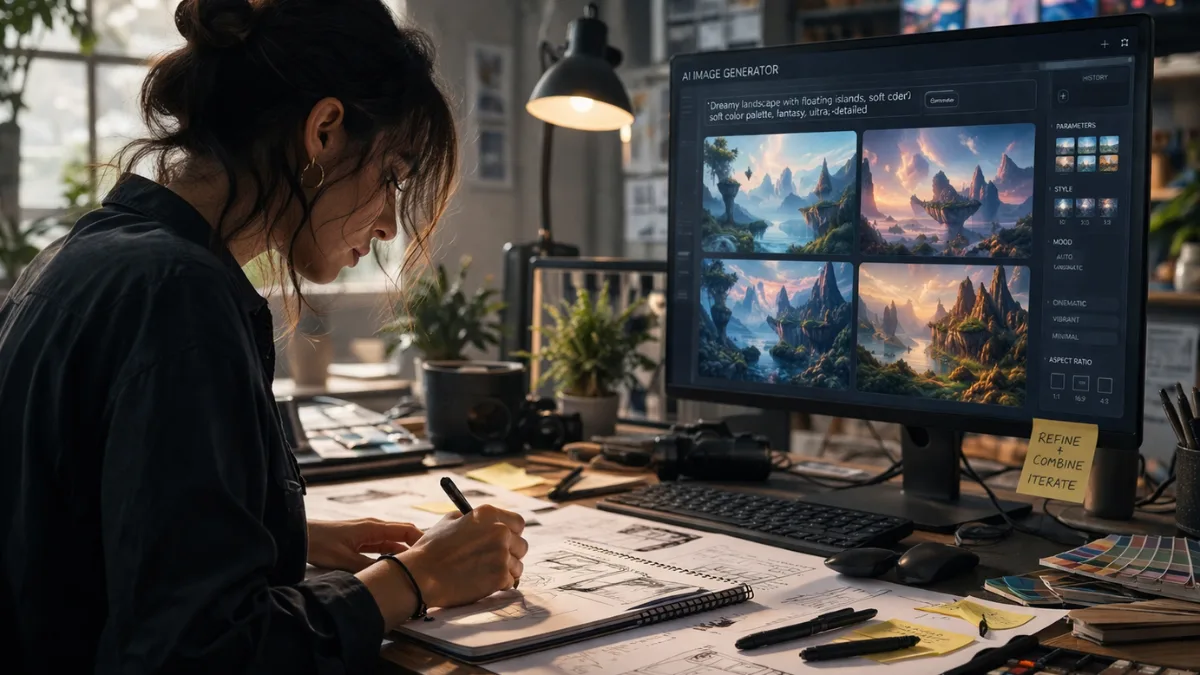
Writers use AI to overcome creative blocks. Designers generate variations before refining a final concept. Filmmakers experiment with AI-generated storyboards.
In these cases, AI becomes a tool, not a competitor.
But there’s a catch.
Over-reliance on AI can flatten creativity. When everyone uses the same tools trained on the same datasets, outputs start to look similar. Trends accelerate—but originality can suffer.
This creates a paradox:
AI expands creative possibilities, yet risks standardizing them.
The differentiator then becomes not what is created, but how it is curated, refined, and contextualized.
The Business Angle: Creativity as Output vs Creativity as Insight
From a business perspective, AI is incredibly attractive.
It reduces costs. It increases output. It scales content production in ways that were previously impossible.
For companies, creativity is often measured in deliverables—ads, visuals, campaigns, scripts. AI excels at producing these quickly.
But high-level creativity—the kind that defines brand identity or shifts cultural narratives—still relies heavily on human thinking.
Because insight cannot be automated as easily as output.
A brand campaign that resonates doesn’t just look good—it understands people. Their fears, aspirations, contradictions. That depth rarely comes from pattern recognition alone.
So while AI changes the economics of creativity, it doesn’t fully replace its strategic core.
The Risk of Confusing Efficiency with Creativity
One of the biggest misconceptions in the AI vs Human Creativity debate is equating speed with originality.
AI can generate faster. But faster doesn’t always mean better.
When creative processes become too optimized, they risk losing unpredictability—the very quality that makes ideas stand out.
Human creativity often thrives in inefficiency. In unexpected connections. In mistakes.
AI, by design, minimizes error. Humans, by nature, learn from it.
And sometimes, the most powerful ideas emerge not from precision, but from imperfection.
What the Future of AI vs Human Creativity Looks Like
The future is unlikely to be a clear winner-takes-all scenario.
Instead, it will be layered.
Routine creative tasks—basic content generation, repetitive design, templated outputs—will increasingly be handled by AI.
Human creators will shift toward roles that require judgment, storytelling, and conceptual thinking.
In other words, creativity will become less about production and more about direction.
Those who succeed won’t necessarily be the fastest creators—but the most thoughtful ones.
People who can guide AI, question outputs, and inject meaning where machines cannot.
More Read

Conclusion: Creativity Is Not Just What You Make—It’s Why You Make It
The debate around AI vs Human Creativity often misses a crucial point.
Creativity isn’t just about producing something new. It’s about expressing something real.
AI can generate endless variations. Humans create significance.
And in a world increasingly filled with content, significance becomes the rarest currency.
Final Insight
At The Vue Times, we believe the future of creativity will not be decided by machines or humans alone—but by those who understand the difference between generating ideas and giving them meaning.
The real question isn’t whether AI can create.
It’s whether we will continue to think deeply enough to create something worth remembering.
Frequently Asked Questions
What is AI vs Human Creativity?
AI vs Human Creativity refers to the comparison between machine-generated outputs and human-driven creative processes. While AI relies on data and patterns, human creativity is shaped by emotions, experiences, and intent.
Can AI replace human creativity completely?
AI can assist and automate certain creative tasks, but it cannot fully replace human creativity. Deep storytelling, emotional depth, and original thinking still rely heavily on human input.
Is AI-generated content considered original?
AI-generated content can appear original, but it is typically based on existing data patterns. True originality often involves human interpretation and unique perspective.
How is AI changing creative industries?
AI is speeding up production, reducing costs, and enabling rapid experimentation. However, it also raises concerns about originality, quality, and over-standardization.
Why does human creativity still matter in the AI era?
Human creativity adds meaning, context, and emotional depth to content. These elements are essential for impactful storytelling and cannot be fully replicated by AI.