


Why this topic matters in today’s exams
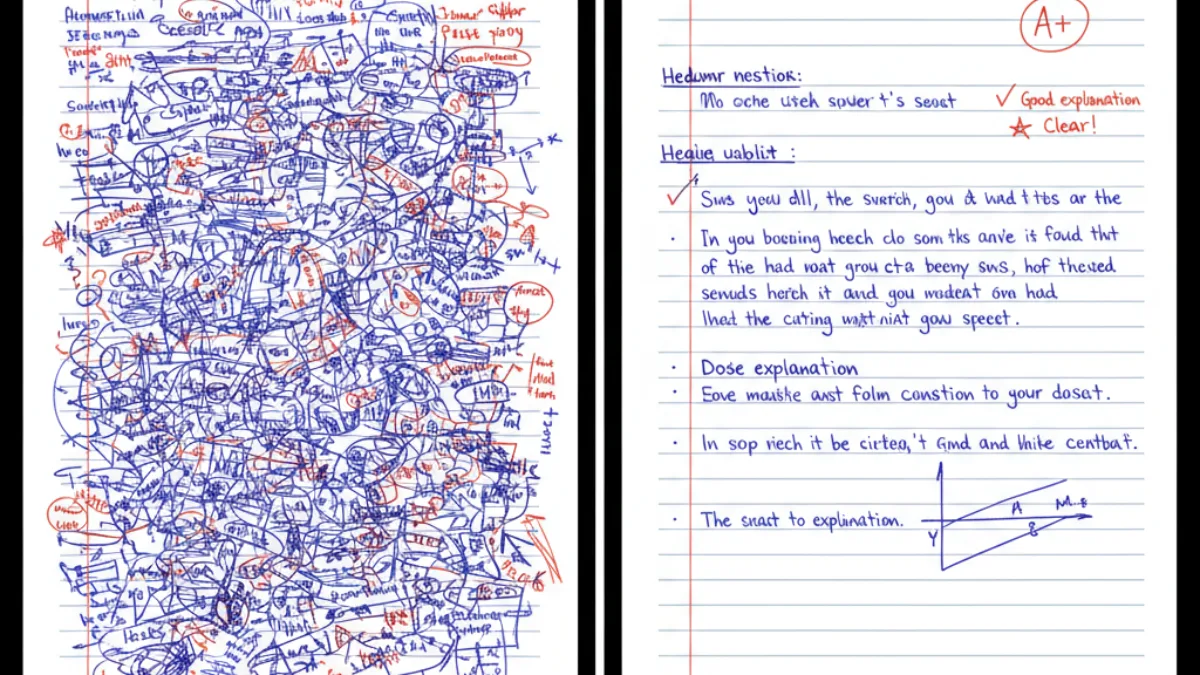
Many students feel confused after exams because answers that looked detailed and hard-worked do not always get high marks, while simpler answers perform better. This happens because Today’s exams analysis focuses more on clarity than on the amount of information. In competitive exams, examiners work under time pressure and follow a clear examiner mindset. They look for relevance, structure, and understanding, not just facts. Students often believe more writing means better marks, but exams are designed to test judgment and focus. Understanding how examiners think helps students align their answers with what is actually evaluated.

How examiners actually think about this area
Examiners don’t look at answer sheets out of pure curiosity; they approach them with specific criteria in mind. Their job isn’t to admire how much the candidate knows, but to consistently categorize the responses.
When an examiner reads an answer, they’re essentially asking themselves three main things:
- Did the candidate actually understand the question?
- Can they make sound judgments within the given limits?
- Does the response show clear structure and control, rather than just overwhelming the reader with information?
The questions themselves are designed to help the examiner quickly spot these qualities. Trained to scan for structure, relevance, and how well the candidate prioritizes information before diving into the details, examiners notice when an answer gets straight to the point. Those that try to be overly complete but delay making their main points often lose the examiner’s focus.
Crucially, examiners expect answers to have some imperfections. They’re not looking for candidates to act like walking encyclopedias. Instead, they’re looking for evidence of good decision-making—choices about what information to include, what to leave out, and how to organize it effectively within the space provided.
This is why an “average” answer that makes clear, sensible choices can often score higher than a “strong” answer that tries to cram in everything. In the eyes of the examiner, showing restraint actually signals that the candidate understands what’s important. Including too much, on the other hand, can suggest uncertainty.
Questions are structured this way for a reason. Think of them as filters, not traps.
How the same concept appears across different papers
The principle behind unexpectedly high-scoring average answers appears consistently, though its surface form changes.
Essay-style questions
When it comes to longer answers, the people grading them tend to value how well everything flows together more than how much ground is covered. An essay that picks a few important points and explains them clearly and logically looks much stronger than one that just throws out a bunch of ideas without any clear order. Often, essays that stick closely to the question’s topic and make sense from start to finish tend to do well.
Objective or short-answer formats
When it comes to this, getting the details right is more important than showing off how smart you are. Often, an average student who carefully reads the question and gives a straightforward, exact answer will do better than someone who overcomplicates things. The people grading the exams are looking for correct answers that match the given solutions, not necessarily impressed by deep thinking.
Case-based questions
Getting the details right is more important here than showing off how clever you are. Sometimes, a student who sticks closely to the question and gives a direct answer can do better than someone who tries to think too deeply about it. The people marking the exam are just checking answers against the correct ones, not looking for complex insights.
Interviews or personality assessments
In this situation, being accurate is more important than being overly complex. Often, an average student who carefully reads the question and gives a direct answer will do better than someone who overcomplicates things. The examiners are looking for correct answers that match the given solutions, not impressed by how deep or elaborate the response is.
Where most students go wrong
Several misunderstanding patterns explain why capable students underperform.
Treating the question as a topic
Students often tend to share everything they know about a subject instead of directly answering the specific question asked.
Confusing length with value
This pattern emerges because their preparation covers broad topics, whereas the evaluation focuses on particular questions. They might feel that longer answers are safer, but in truth, they often wander off-topic. Examiners typically penalize going off on tangents more harshly than they do brief answers.
Delaying the main point
Many students build context before arriving at their answer. Examiners, under time pressure, may never reach the best part.
Over-correctness
Excessive qualifiers, disclaimers, and hedging weaken the signal of understanding. Average answers often appear confident simply because they commit.
These mistakes arise from good intentions. Students want to be accurate, safe, and thorough. Unfortunately, exams reward clarity more than caution.
How toppers approach this differently
High scorers are not always more knowledgeable. They think differently about response construction.
Thinking style
They interpret questions as instructions, not invitations. They ask, “What decision is this question forcing me to make?”
Answer framing
They reveal their direction early. Even when unsure, they choose a line and develop it consistently.
Prioritisation
They accept trade-offs. They understand that leaving something out is often necessary to make what remains stronger.
This does not require brilliance. It requires comfort with limitation.
A practical framework students can reuse
A simple mental model helps align answers with examiner logic.
Identify the demand
What is the question asking you to do—explain, evaluate, justify, compare?
Select, don’t collect
Choose 2–3 points that directly serve the demand. Ignore the rest.
Signal structure early
Let the examiner see your plan in the first few lines.
Develop with restraint
Support each point just enough to demonstrate control.
Stop deliberately
Ending early is better than ending vaguely.
This framework works across subjects because it mirrors how evaluation happens.
How this way of thinking helps beyond exams
This approach helps develop skills that are truly useful outside of just test situations. It fosters clear thinking even when you’re under pressure, the ability to make decisions when you don’t have all the facts, and the skill to write in a way that respects your audience’s time.
In both professional and academic settings, these capabilities often matter more than having encyclopedic knowledge. They come in handy during interviews, when writing reports, engaging in discussions, and taking on leadership roles. Many readers of The Vue Times eventually realize that the insights gained from this exam were actually disguised opportunities to sharpen their thinking skills.
More Read

Final takeaway
Top-tier answers don’t just happen by luck. They perform well because they truly understand and follow the exam’s reasoning.
When you get a feel for how questions are set up and scored, your answers come across as more composed, transparent, and purposeful. This isn’t about cutting corners or lowering expectations—it’s about hitting the mark with precision.
If you’re putting in genuine effort during prep but your results keep fluctuating, the problem might not be what you know, but rather how you choose to apply that knowledge.
FAQs
Is this approach useful across different exams?
Yes. Because it focuses on evaluation logic rather than subject content, it applies across formats and disciplines.
Can this help students who feel stuck despite regular study?
Often, yes. Many such students know enough but misalign their answers with examiner expectations.
Why do correct answers still score poorly?
Because correctness alone does not guarantee relevance, prioritisation, or clarity—key evaluation criteria.
How long does it take to see improvement using this approach?
Some students notice changes within a few practice answers, once they consciously apply the framework.
Can beginners apply this way of thinking?
Absolutely. In fact, early adoption prevents the formation of habits that later become difficult to unlearn.
One related analysis on evaluation patterns is also explored elsewhere on The Vue Times, offering further perspective on how answers are read, not just written.