

In the world’s largest democracy, India, regional political parties have emerged as fundamental players—often not only influencing state politics, but shaping national outcomes, governance, and the architecture of federalism. The phrase “regional parties” refers to political organisations whose primary base is in one or more states (rather than pan-India), often focusing on regional identity, linguistic or cultural distinctiveness, state development, or local leadership. Over time, the rise of regional parties has helped transform Indian democracy—making it more representative, decentralised, competitive and connected to local realities.
In this essay we will examine:
-
The historical context and origins of regional parties in India.
-
The roles and contributions of regional parties to democracy, federalism, political representation and governance.
-
Case-studies to illustrate their influence.
-
The challenges, criticisms and potential drawbacks of regional party dominance.
-
The way forward: what this means for Indian democracy in the 21st century.
Historical Context: Emergence of Regional Parties
Early Phase: One-Party Dominance and Marginal State Parties
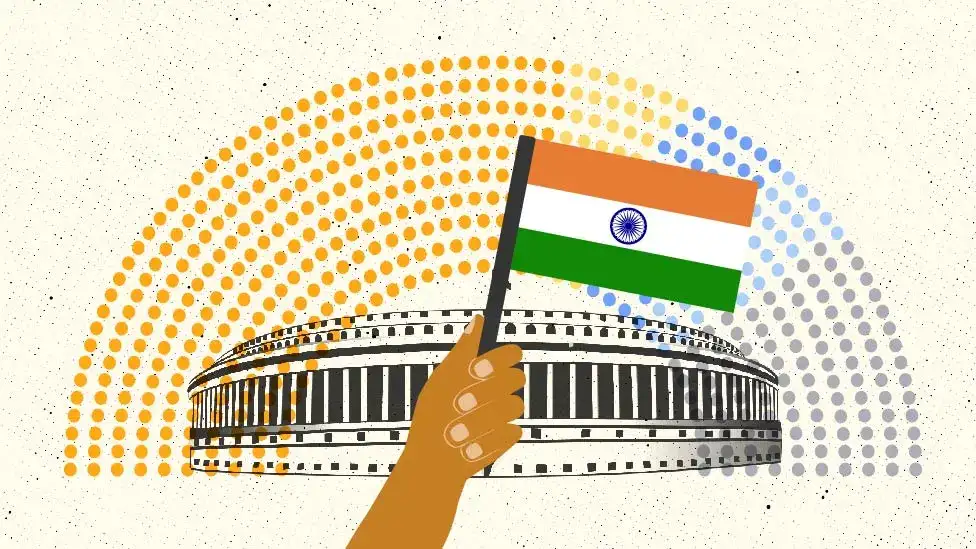
In the decades following independence (1947), the Indian National Congress (INC) held dominant sway in Indian politics, both at the Centre and in most states. The state-units of Congress were often extensions of the national party, and the space for distinct regional parties was limited. The national parties tended to subsume regional interests, and the institutional architecture of states was quite centralised.
Growing Regional Discontent and Rise of State-Parties
Over time, factors began to favour the rise of regional parties:
-
Linguistic reorganisation of states (1950s-60s) helped sharpen regional identity and state-level politics.
-
Economic & development disparities across states generated regional grievances (jobs, resources, infrastructure).
-
Failure of national parties to fully address local issues or to include regional leaders in power structures.
-
Rise of charismatic regional leaders and social movements asserting state-based or sub-national identity (caste, language, ethnicity).
-
Shifts in electoral politics from single-party dominance to multi-party competition (particularly from the 1970s and 1980s onward).
Thus, by the 1980s-90s the Indian party system began to change: regional parties gained strength in states, the era of coalition politics began, and the national parties’ hegemony weakened. The study “Rise and Decline of Regional Parties and Changing Dynamics of Indian Democracy” argues that the decline of one-party hegemony enabled regional parties to assert themselves.
Institutional Enablers
Several institutional dynamics facilitated the regional party rise:
-
The federal constitutional framework gives states significant powers under the Indian Constitution.
-
The decline of dominance of a single national party created space for state-level alternatives.
-
Electoral decentralisation and the growth of state legislative politics gave regional leadership platforms.
-
As coalition politics became the norm at the national level, regional parties gained bargaining power.
Contributions of Regional Parties to Strengthening Indian Democracy
Regional parties play a number of roles in deepening democracy, improving representation, and enhancing federal governance. Below are some key contributions.
1. Enhancing Representation & Local Voice
One of the most significant roles of regional parties is giving voice to state-specific, local or minority interests that national parties may overlook or subsume. Regional parties often reflect linguistic, cultural, ethnic or social identities specific to their state. As one source observes: “Regional parties provide a platform for expressing regional aspirations and identities. They ensure that the unique cultural, linguistic, and ethnic characteristics of different regions are represented in the political arena.”
By focusing on state-level concerns—such as agrarian distress in a particular state, linguistic rights, or regional infrastructure—they make democracy more responsive. For example, regional parties have brought local issues (river-water disputes, land rights, tribal autonomy) to the forefront of politics.
Hence, regional parties help make democracy more inclusive by providing avenues for under-represented groups or regions to engage in electoral politics meaningfully.
2. Strengthening Federalism and Centre-State Balance
India’s constitutional design envisages a federal structure: states have powers, and the Centre has others. Regional parties contribute to the balancing of power, preventing over-centralisation, and ensuring that state interests are not disregarded. For instance, one source states: “They act as a bridge between the Centre and the states by ensuring that local concerns are represented in national policymaking … Their presence prevents excessive centralization of power and promotes cooperative federalism.”
When regional parties win state elections, govern those states, and even join national coalitions, they help ensure that policy-making is not purely top-down but includes back-and-forth with sub-national units.
3. Promoting Political Competition and Accountability
The dominance of a single national party tends to reduce competitive pressure, which can weaken accountability and responsiveness. The rise of regional parties has challenged one-party dominance (for example, the dominance of Congress in earlier decades). This competition forces parties — both national and regional — to perform better, be more responsive to voters, and focus on governance and delivery.
In states where regional parties provide serious alternatives, voters can express discontent with incumbents and choose alternatives, strengthening democratic choice.
More Read

4. Improving Governance and Innovation at State Level
Regional parties often govern states and can innovate policies tailored to state-specific needs. Because they are closer to local issues, they may more easily tailor welfare programmes, reforms, or governance models. For example, regional governments have pioneered schemes in education, public health, self-help groups, local infrastructure, which later are scaled up or serve as models. This state-level experimentation contributes to the overall governance ecosystem across India.
5. Coalition Politics and Inclusive Governance
In the era of coalition governments (from the 1990s onward), regional parties have often been king-makers. Their participation in national alliances has meant that governance at the Centre must take into account regional interests. This amplifies the voices of states in national decision-making and makes national policy more pluralistic. According to one source: “Regional parties often become indispensable players in forming coalition governments at the national level… their support can make or break central governments, giving them significant leverage in shaping national policies.”
Thus, regional parties help ensure that democracy at the national level remains attentive to multi-regional, multi-ethnic, multi-lingual India.
Case Studies and Illustrations
Case Study: Dravida Munnetra Kazhagam (DMK) & All India Anna Dravida Munnetra Kazhagam (AIADMK) in Tamil Nadu
In Tamil Nadu the politics has been dominated by regional Dravidian parties rather than national parties for decades. The DMK and AIADMK have shaped state politics, emphasised Tamil identity, regional development, and welfare measures. Their governance and political mobilisation have given Tamil Nadu an example of how regional parties can dominate state politics, represent local identity, and pursue state-level policy innovations.
Case Study: Trinamool Congress (TMC) in West Bengal
TMC emerged from regional currents in West Bengal and has dominated West Bengal politics, focusing on Bengali cultural identity, state welfare issues, and governance distinctly different from national party templates. Its rise shows how regional parties can challenge national parties and craft state policy and political identity.
Case Study: Coalition Era of 1990s onwards
From the 1990s, when no single national party was able to secure majority at many times, regional parties had outsized influence. They could negotiate policy concessions, shape coalition governments, influence central scheme allocations, and embed state-specific developmental demands into national agendas. For example, many states led by regional parties used their bargaining power to secure extra funds, special status, resource allocation, etc. (See the wider literature on coalition politics).
Case Study: Representation of Marginal Communities
Several regional parties have centred their politics around marginalized communities (tribals, Dalits, minorities) which national parties sometimes overlooked. By giving those groups a political voice within the state, regional parties help deepen democratic inclusion. For example, as the IJMER study notes: regional parties “champion rights of marginalized and under-represented communities, including Dalits, tribal groups, and ethnic minorities.”
Challenges, Criticisms and Limitations
While regional parties contribute significantly to Indian democracy, they also face criticism and pose potential risks.
1. Narrow Regionalism vs National Interest
One criticism is that some regional parties focus excessively on narrow regional interests, identity politics (linguistic, caste, ethnic) or local patronage, at times at the expense of national interest or broader developmental goals. They may prioritise short-term populist schemes rather than structural reforms. As one source notes: “They have undermined national interests in lieu of narrow regional interests.”
2. Political Fragmentation and Instability
The proliferation of regional parties—and the fragmentation of votes they bring—can lead to unstable governments, frequent coalition shifts, or undermined governance continuity. The multiplicity of small regional actors sometimes complicates policy-making and undermines administrative coherence.
3. Limited National Reach and Resource Constraints
Regional parties, by their nature, often have limited geographic reach and resources compared to national parties. This can restrict their influence in states beyond their region, and limit their capacity to contest broadly. They may struggle with funding, national-level organisational infrastructure.
4. Politics of Identity and Vote-Banking
Some regional parties are criticised for relying excessively on identity politics—caste, religion, language—rather than programme-based politics or governance. They may focus on rent-seeking, patronage and clientelist networks. This can weaken democratic quality, reduce policy focus and entrench regional cleavages. Sources raise concerns about regionalism, casteism, linguism and regional parties being vehicles for narrow sectional interests.
5. Centre-State Conflict & Policy Paralysis
At times, the assertion of state interests by regional parties can lead to conflict with the Centre, delays in policy implementation, inter-state disputes (water, resources, boundaries). This may hamper national coherence, but also reflects the complexity of a plural federal democracy.
The Way Forward: Future Prospects and Implications for Indian Democracy
Strengthening Regional Autonomy Within a Strong Federation
The success of regional parties underscores the importance of genuine decentralisation and federalism. Indian democracy can be strengthened further if regional parties push for greater state autonomy, participation in national policy, and constructive Centre-State partnerships. Policymakers should ensure that states have requisite resources, responsibilities and capacities to govern effectively.
Evolving into Programme-Driven, Not Just Identity-Driven Parties
Regional parties that move beyond mere identity-mobilisation and clientelism, and instead focus on governance, policy innovation, and long-term development will strengthen democracy further. When regional leaders emphasise education, health, infrastructure, climate resilience, digital governance, they deliver real benefits and deepen democratic legitimacy.
Constructive Participation in National Politics
As national politics moves towards multi-party coalitions or alliances, the role of regional parties becomes even more important. Their participation can enrich policy debates, ensure diverse regional voices in the national arena, and promote inclusive governance. However, this demands maturity: balancing regional interests with national policy imperatives, avoiding opportunistic alliances, and sustaining coherence in governance.
Institutionalising Accountability and Internal Democracy
To improve the functioning of regional parties and thus strengthen democracy, internal party democracy, transparency of finances, accountability of elected representatives, and mechanisms for policy-informed leadership must be strengthened. Many regional parties face challenges of dynastic control, weak organisational structures or limited internal debates. Reforming these will boost their democratic credentials.
Bridging the Gap Between Regional and National Integration
While regional parties emphasise local governance, they must also engage with national challenges—climate change, economic globalization, foreign policy implications of state actions, digital economy, migration. A healthy democracy requires that regional voices are integrated into national frameworks, not siloed.
Addressing Small-State Inequalities and Under-represented Regions
Some regions (especially remote, tribal, North-East, Himalayan) rely more heavily on regional parties for representation. Ensuring that regional parties from under-represented regions strengthen their governance capacity and are integrated into national politics is important. The article “NPP can become NE’s unified political voice” illustrates this trend in the Northeast.
Conclusion
The rise and role of regional parties in India is more than a mere footnote in the country’s democratic journey. These parties have contributed significantly to making Indian democracy more plural, decentralised, representative and competitive. They have strengthened federalism, given voice to regional identities and local issues, improved political participation, and shaped national coalitions.
At the same time, the journey is not unalloyed: the challenge remains for regional parties to transcend narrow identity politics, prioritise good governance, align regional aspirations with national coherence, and institutionalise internal democratic norms.
In sum: regional parties are both a reflection and a driver of India’s complex democratic polity. Their continued evolution—towards policy-driven governance, structural accountability, and constructive national engagement—will be central to how India’s democracy matures in the decades ahead. If India is to ensure that its democracy remains robust in a culturally, linguistically and regionally diverse society, then regional parties are not relics—they are vital agents of democratic deepening.