There’s a quiet moment that often goes unnoticed—when your phone predicts the next word you’re about to type, or when a recommendation feels strangely personal. It’s easy to dismiss these as clever features. But beneath that smooth interaction is something far more complex, almost unsettling in its efficiency: a system that has learned patterns in a way that mirrors human intuition.
Understanding How Neural Networks Work is less about decoding a technical manual and more about observing how machines are beginning to interpret the world—not through rules, but through experience.
How Neural Networks Work in Simple Terms
At their core, neural networks are pattern recognition engines. They don’t “know” things in the human sense; they learn relationships.
Imagine teaching a child to recognize a dog. You don’t provide a checklist—four legs, fur, tail—you show examples. Over time, the child builds an internal sense of “dog-ness.” Neural networks operate on a similar principle, except instead of neurons and experiences, they rely on data and mathematical weights.

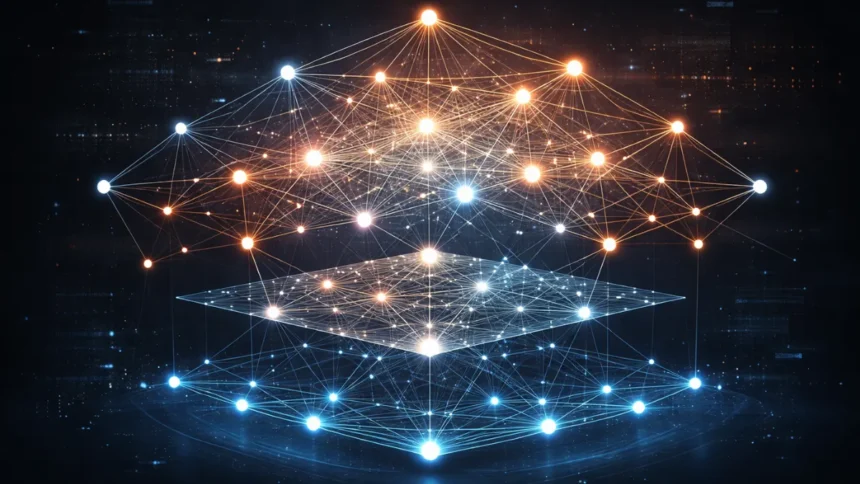
A neural network consists of layers:
- Input layer: Where raw data enters (images, text, numbers)
- Hidden layers: Where the actual learning happens
- Output layer: Where predictions or decisions are made
Each connection between these layers has a weight, a number that adjusts as the system learns. The process is iterative, almost obsessive—adjust, test, correct, repeat.
What’s striking is not the structure itself, but how it evolves. The network doesn’t just process data; it reshapes itself around it.
The Origin Story: From Biology to Algorithms
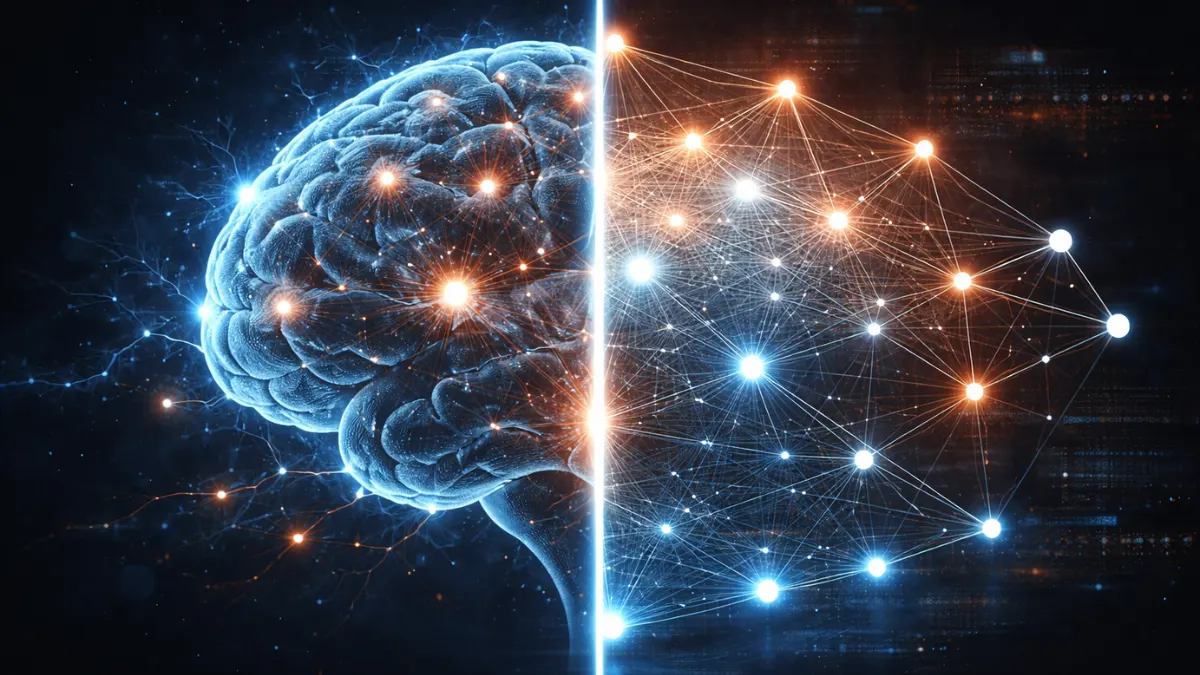
The idea of neural networks isn’t new. It traces back to attempts to mimic the human brain—specifically, how neurons fire and communicate.
Early models in the mid-20th century were simplistic and limited. Computing power wasn’t ready, and the ambition seemed ahead of its time. But the concept lingered.

Fast forward to the 2010s, and something changed. Data became abundant. Processing power exploded. Suddenly, neural networks weren’t just theoretical—they became practical, even dominant.
Today’s deep learning models are essentially neural networks with many layers—“deep” not in intelligence, but in structure. More layers mean more abstraction, allowing machines to move from recognizing edges in an image to identifying objects, faces, even emotions.
Why Understanding How Neural Networks Work Matters Now
There’s a reason this topic has moved from research labs into everyday conversations.

Neural networks are no longer confined to tech companies. They are embedded in finance, healthcare, education, and even governance. Loan approvals, medical diagnostics, hiring filters—many decisions now pass through systems trained on data rather than guided by explicit human logic.
That shift raises an important question: if machines are learning from data, what happens when the data itself is flawed?
The concern isn’t theoretical. Neural networks can inherit biases, amplify patterns, and make decisions that are statistically sound but ethically questionable. Understanding How Neural Networks Work becomes less about curiosity and more about accountability.
How Neural Networks Learn: The Hidden Process
Learning in a neural network is driven by a mechanism called training.
Here’s how it unfolds:
- Data is fed into the network
- The network makes a prediction
- The prediction is compared to the correct answer
- The error is calculated
- The system adjusts its internal weights to reduce that error
This adjustment process is known as backpropagation, though the term itself hides a simple idea: learning from mistakes.
Over thousands—or millions—of iterations, the network becomes better at minimizing errors. It doesn’t understand why something is correct; it simply becomes more accurate at predicting it.
There’s something almost human about this. Repetition, correction, gradual improvement. But unlike humans, neural networks don’t tire, don’t forget, and don’t question the patterns they absorb.
The Black Box Problem: When Intelligence Isn’t Transparent
One of the most debated aspects of neural networks is their opacity.
As models become more complex, their decision-making becomes harder to interpret. You can see the input. You can see the output. But the reasoning in between often remains unclear.
This is what researchers call the black box problem.
For example, a neural network might correctly identify a tumor in a medical scan. But explaining how it arrived at that conclusion can be difficult—even for the engineers who built it.
This lack of transparency introduces a paradox: the more powerful the system, the less we understand its inner workings.
In industries where accountability matters, that’s not a small issue.

Business, Behavior, and the Rise of Predictive Systems
From a business perspective, neural networks are less about intelligence and more about prediction.
They don’t replace decision-making; they reshape it.
- In e-commerce, they predict what you’re likely to buy
- In finance, they assess risk profiles
- In content platforms, they determine what you see next
Over time, these predictions influence behavior. If a system consistently shows you certain types of content, your preferences begin to align with those patterns. The machine doesn’t just learn from you—it quietly nudges you.
This feedback loop is where neural networks move from being tools to becoming environments.
Where This Is Heading: The Future of Learning Machines
The trajectory is clear: neural networks are becoming more capable, more integrated, and more influential.
But the future isn’t just about bigger models or faster training. It’s about control and understanding.
There’s growing interest in:
- Explainable AI (XAI): Making neural networks more transparent
- Efficient models: Reducing energy consumption and computational cost
- Human-AI collaboration: Designing systems that assist rather than replace
The next phase may not be about machines getting smarter, but about humans staying meaningfully involved.
More Read
Conclusion
Understanding How Neural Networks Work isn’t about mastering equations or diving into code. It’s about recognizing a shift in how decisions are made, how patterns are interpreted, and how intelligence itself is being redefined.
We are moving from systems that follow instructions to systems that learn from data. That transition changes not just technology, but responsibility.
Because when machines learn from the world we give them, the real question is no longer how they work—but what they’re learning from.
Final Insight
Neural networks don’t think like humans—but they shape human experiences more than ever before. The real challenge ahead isn’t building smarter systems; it’s ensuring they reflect the kind of intelligence we actually trust.-The Vue Times
Frequently Asked Questions
What is a neural network in simple terms?
→ A neural network is a computer system designed to recognize patterns in data, similar to how the human brain learns from experience.
How do neural networks learn?
→ They learn by processing large amounts of data, making predictions, identifying errors, and adjusting their internal parameters to improve accuracy over time.
Why are neural networks important today?
→ They power many modern technologies like recommendation systems, voice assistants, and medical diagnostics, making processes faster and more predictive.
Are neural networks the same as artificial intelligence?
→ Neural networks are a subset of AI. They are one of the key techniques used to build intelligent systems.
What is the biggest limitation of neural networks?
→ One major limitation is the lack of transparency—many neural networks operate as “black boxes,” making their decisions hard to interpret.