
Walk into any modern co-working space today and you’ll notice something subtle but telling. Conversations about apps and platforms are slowly being replaced by discussions around ownership, tokens, and “control.” Not control in the traditional corporate sense—but control by users themselves.
This shift, still quiet but unmistakable, is where the Web3 Future begins to take shape.
For decades, the internet has felt open—but operated like a gated system. A handful of platforms held the keys. They decided visibility, monetization, and even identity. Now, that structure is being questioned—not by regulators first, but by developers, creators, and increasingly, everyday users.
Understanding the Web3 Future Without the Buzzwords
At its core, the Web3 Future is less about technology and more about restructuring power.

The first version of the internet—Web1—was static. You could read, but not interact much. Then came Web2, the social internet. You could create, share, and build audiences—but platforms owned the infrastructure and the data.
Web3 attempts to flip that equation.
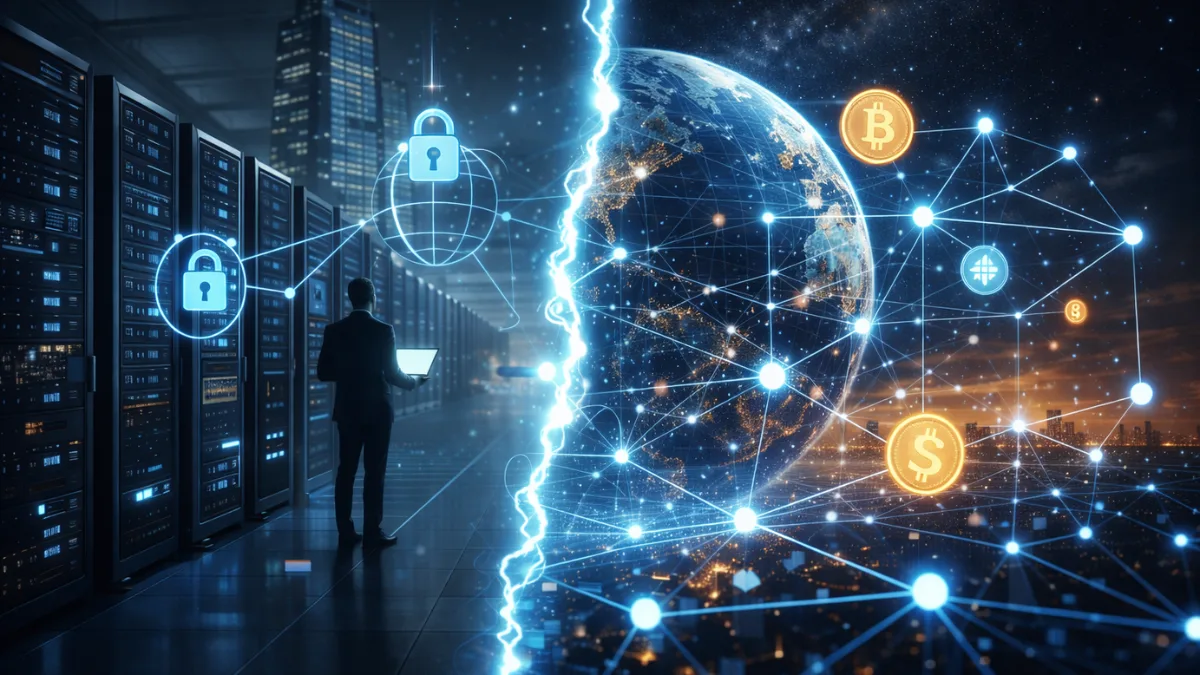
Instead of centralized servers, it relies on decentralized networks. Instead of companies owning your data, users hold digital ownership through cryptographic systems. Instead of trust being placed in intermediaries, it’s embedded in code.
That sounds abstract until you see where it’s already happening.
Artists selling digital work without middlemen. Gamers owning in-game assets. Writers publishing content that isn’t controlled—or demonetized—by platform algorithms. These aren’t theoretical ideas anymore; they’re early signals of a broader structural change.

Why the Web3 Future Is Suddenly Everywhere
There’s a reason the term Web3 Future keeps surfacing in conversations across industries.
Part of it is timing.
Trust in centralized platforms has been quietly eroding. Data breaches, algorithm manipulation, opaque monetization systems—these issues have accumulated over time. Users may not fully understand blockchain, but they understand the feeling of losing control.

Another factor is economic.
Digital assets—whether NFTs, tokens, or decentralized finance instruments—have introduced new ways of thinking about value. Ownership is no longer tied only to physical assets or traditional finance. It’s programmable, transferable, and often global by default.
Then there’s the developer ecosystem.
Thousands of builders are now experimenting outside traditional tech stacks. They’re not asking how to improve existing platforms—they’re asking how to redesign the system entirely.
That mindset shift matters more than any single technology.
The Psychology Behind the Web3 Shift
The rise of the Web3 Future is not just technical—it’s psychological.
For years, users accepted a trade-off: free services in exchange for data and control. It worked, largely because the value exchange felt fair. But over time, that balance tilted.
Creators realized they were building audiences they didn’t own. Businesses saw dependency risks on platforms they couldn’t control. Even users began questioning why their digital identity was fragmented across multiple systems.
Web3 taps into a deeper instinct: autonomy.
Ownership—even digital ownership—changes behavior. When people feel they own something, they invest differently. They participate more actively. They think long-term.
This is why Web3 communities often feel different from traditional user bases. They’re not just users—they’re stakeholders.
Business Models in the Web3 Future
If Web3 succeeds, the biggest disruption won’t be technological—it will be economic.
Traditional internet businesses rely heavily on intermediaries. Platforms sit between creators and audiences, buyers and sellers, data and value.
Web3 challenges that structure.
Smart contracts can automate transactions without middlemen. Tokens can align incentives between users and platforms. Decentralized autonomous organizations (DAOs) can redefine governance itself.
But here’s where the conversation becomes more grounded.
Not every business needs decentralization. Not every problem requires blockchain. The real shift lies in selective adoption—where decentralization adds value, not complexity.
For example:
- Financial systems benefit from transparency and programmability
- Digital content benefits from ownership and monetization flexibility
- Supply chains benefit from traceability
The Web3 Future isn’t about replacing everything. It’s about rethinking where control should exist.
The Reality Check: Challenges Nobody Can Ignore
For all its promise, the Web3 Future is far from stable.
Scalability remains a major issue. Many blockchain networks struggle to handle large volumes efficiently. User experience is still complex—wallets, keys, gas fees—these are not intuitive systems for mainstream users.
Regulation is another layer.
Governments are still trying to understand how to classify digital assets, decentralized systems, and token economies. This uncertainty creates friction, especially for businesses looking to build at scale.
And then there’s trust.
Ironically, while Web3 aims to remove the need for trust in intermediaries, it still requires trust in code, developers, and systems that are often new and evolving.
The gap between promise and practical usability is where the real battle lies.
Where the Web3 Future Is Already Taking Shape
Despite the noise, certain areas are clearly moving faster.
Finance is one of them. Decentralized finance (DeFi) has already demonstrated how lending, borrowing, and trading can operate without traditional institutions.
Gaming is another.
Players are beginning to own in-game assets that can be traded, sold, or transferred across platforms. This fundamentally changes the relationship between users and digital environments.
Digital identity is perhaps the most important frontier.
Instead of logging into multiple platforms with separate identities, Web3 proposes a unified, user-controlled identity system. That idea alone could reshape how the internet functions at a basic level.
These aren’t isolated experiments—they’re early infrastructure layers.
The Future Direction: Evolution, Not Revolution
The most realistic version of the Web3 Future is not a sudden replacement of the current internet.
It’s a gradual integration.
Web2 platforms may adopt decentralized elements. Hybrid systems may emerge. Users might not even realize they’re interacting with blockchain-based systems—they’ll just notice better control, transparency, and ownership.
This is how most technological shifts happen.
Not through abrupt disruption, but through quiet integration until the new model becomes the default.

Conclusion
The conversation around Web3 often swings between extremes—either it’s the future of everything or just another overhyped trend.
The truth sits somewhere in between.
The Web3 Future is not about replacing the internet we know. It’s about renegotiating its terms—who owns, who controls, and who benefits.
And that question, more than any technology, is what makes this shift worth paying attention to.
Final Insight
The next version of the internet won’t be defined by faster apps or smarter algorithms. It will be defined by who holds power—and whether users finally become participants, not just products.-The Vue Times
Frequently Asked Questions
What is Web3 Future?
→ The Web3 Future refers to the next phase of the internet built on decentralization, blockchain, and user ownership instead of centralized platforms.
How is Web3 different from Web2?
→ Web2 relies on centralized platforms controlling data and services, while Web3 focuses on decentralized systems where users own their data and digital assets.
Is Web3 already being used today?
→ Yes, Web3 is already visible in areas like decentralized finance (DeFi), NFTs, blockchain gaming, and digital identity systems.
What are the main challenges of Web3?
→ Key challenges include scalability, complex user experience, regulatory uncertainty, and the need for broader adoption.
Will Web3 replace the current internet?
→ Not completely. Web3 is more likely to integrate with existing systems, creating a hybrid internet rather than replacing Web2 entirely.